To avoid these ads, REGISTER NOW!

Adding Generator Readyness To Electric

FarmerPete

Well-known member
Joined
Jul 24, 2013
Messages
258
Location
Lansing, MI
So, I was toying with this before, but after a 5 day power outage, I think it's time to pull the trigger on getting my house ready for future power outages.

My main panel is a 100 amp Pushmatic. It's also installed in a spot where I can't easily use one of the transfer switches that ties in to your main panel. I have a 60 amp sub panel installed in my garage. The only real thing that I'd care about in a power outage that runs off of that is my microwave which has a dedicated 20 amp line from the sub panel.

Here is my current plan. Please feel free to critique as necessary. I'd like to install a generator ready sub panel from Reliance Controls I would install that in a different room in my basement from my main panel. I would then run a 4 gauge wire from a 70 amp breaker on my main panel to the new sub panel. I would then start transferring circuits form my main panel to the sub panel. I would certainly move everything to the new sub panel that I want to use in an emergency, (fridge, freezer, some lights, furnace, water heater, etc), and leave a few of the higher draw items as they are (electric stove, dryer, and AC). Part of my long term plan would be to eventually move everything to the sub panel and make it my main panel, but that may be years down the road.

Of course, I would run a 10 or 8 gauge wire out to an approved twist-lock receptacle on my deck, where I can hook up my generator. My basement ceiling above my current main panel is a drop ceiling. I'd certainly need a big junction box to extend the wires to the new location, or I may use some of those NM cable splice kits, depending on cost.

Anyone see any immediate issues with my plan? I'm figuring with this plan, I could probably get just about everything wired up and ready for the generator for under $1000 if I do it myself. Then, I can get a ~5000 watt generator for $400-800. I was thinking of going with a propane model generator, since I wouldn't have to worry about fouling the carburetor.

The only other option would be to go with something like this. It's around the same cost, but obviously there would be more significant costs involved with the install. I'm hoping I could get it in to place myself, but I would need someone to run NG to it, (depending on placement issues specs, I may be able to put it right next to the gas meter), and while I have no idea how an ATS works, I imagine I may need an experienced electrician to do the work. I do have a power shutoff switch at my meter, so I could safely work on the supply side of my main panel myself.

Thoughts?
 
To avoid these ads, REGISTER NOW!

Yardbirdaa

Member
Joined
Feb 20, 2010
Messages
20
Location
Snow Belt
If you can install a new circuit into a breaker box, then you can install an ATS. It's not much more complicated than running a sub panel. The NG install isn't more difficult than running pipe properly. Just make sure you check codes for your area.
 
OP
F

FarmerPete

Well-known member
Joined
Jul 24, 2013
Messages
258
Location
Lansing, MI
I'll second the NG / Propane Gen Set

That's what we were installing for local police depts. to power their 911 dispatch systems


If you can install a new circuit into a breaker box, then you can install an ATS. It's not much more complicated than running a sub panel. The NG install isn't more difficult than running pipe properly. Just make sure you check codes for your area.

Maybe I'll get a quote or two on it. I like having no fuel supply issues. I also wouldn't mind running the generator when I'm not home if it was stationary. I still don't think I'll try to do the ng myself. Maybe I'll see if anyone I know can run ng.

Sent from my Nexus 4 using Tapatalk
 

2ManyProjects

Well-known member
Joined
Jul 18, 2013
Messages
757
So, I was toying with this before, but after a 5 day power outage, I think it's time to pull the trigger on getting my house ready for future power outages.

Anyone see any immediate issues with my plan?

The first thing which jumps out at me is your mention of having an electric range. The clothes dryer and the air conditioning can be reasonably considered "luxury" items which will not be essential during an outage; but in terms of meal preparation, you can only do so much, for so long, with only a microwave. Also, what about the domestic water heater -- electric or gas?

Given that, even that 7kW Generac would likely be marginal, at best. And you can pretty much forget any ~5kW "portable" genset (which would be a bad idea for other reasons anyway).

I'm figuring with this plan, I could probably get just about everything wired up and ready for the generator for under $1000 if I do it myself. Then, I can get a ~5000 watt generator for $400-800. I was thinking of going with a propane model generator, since I wouldn't have to worry about fouling the carburetor.

No $400-800 portable generator will be satisfactory for this job. First, they're simply not made for the sort of continuous duty it would get in an extended outage; and that's exactly when you DON'T want it to break down. Second, the noise would be unbearable, especially after you (and your neighbors) have been listening to it for hours on end. Furthermore, portable gensets should NEVER be left running "unattended". Which effectively means you'll have no power (and no heat, and no lights) overnight.

The only other option would be to go with something like this. It's around the same cost, but obviously there would be more significant costs involved with the install. I'm hoping I could get it in to place myself, but I would need someone to run NG to it, (depending on placement issues specs, I may be able to put it right next to the gas meter), and while I have no idea how an ATS works, I imagine I may need an experienced electrician to do the work. I do have a power shutoff switch at my meter, so I could safely work on the supply side of my main panel myself.

Overall, this is a MUCH better idea. The only question is the capacity, vis-a-vis your anticipated loads. As I said above, the electric range will be a big factor there; but don't ignore things like the coffee pot, any power tools you might need to run to make emergency repairs, etc.

As for fuel, there are only two practical choices, propane and natural gas, and each have their own pros & cons...

With propane, you are the master of your own destiny, so to speak. Some folks try to use "portable" propane tanks; but this means swapping out the empties for fresh ones every few hours, and puts you at the mercy of the local vendor for renewed supplies -- which, during an extended outage, is likely to be a major problem. Alternately, you can obtain a permanently installed tank of sufficient capacity to carry you through the longest expected outage; at which point, you only need to make sure that you keep it topped off on a regular basis.

With natural gas, you have a completely "hands off" (and, in theory, unlimited) source of fuel, which requires NO effort or intervention on your part to maintain. BUT... As shown during Sandy, this fuel supply is not 100% reliable; NJNG shut off perhaps half of Ocean County for WEEKS, while they made repairs to their infrastructure. So you MIGHT be left with no fuel at all, and no easy way to work around that. But OTOH, if you also use natural gas to run your furnace, and the outage occurs mid-winter, you have larger problems anyway.

As for the transfer switch... I'm generally a fan of the fully automatic type; but this is in part dependant on just how much of your house you have set up to run off the generator. If you go the "whole house" route, then I consider an ATS essential.


CNGsaves

Well-known member
Joined
Sep 26, 2012
Messages
13,233
Location
KS and OK
Only SAFETY issue I see in your plan is that new subpanel that you intend to re-wire "critical" circuits will need to have INTERLOCK Main breaker. Thus, only power from genset can come through, is when subpanel main breaker is off. Thus, have to prevent any potential dangerous backfeeding.

Also, you may have issue of this work constituting "remodel" and bring up issue that ALL electrical would need brought up to current code (ie GFCI, grounding, potentially consider Pushmatic panel as obsolete, etc).
 

brewchief

Well-known member
Joined
Sep 20, 2008
Messages
2,370
Location
Michigan
How about simply replacing the old pushmatic panel with a new one that will except a breaker interlock to allow for safe backfeeding of generator power.


2manyprojects, I had multiple friends without power in the same area as the OP and they all ran off portable generators with no problems, my 4200 watt generator kept a friends house warm for a couple days without issue.
 
OP
F

FarmerPete

Well-known member
Joined
Jul 24, 2013
Messages
258
Location
Lansing, MI
Only SAFETY issue I see in your plan is that new subpanel that you intend to re-wire "critical" circuits will need to have INTERLOCK Main breaker. Thus, only power from genset can come through, is when subpanel main breaker is off. Thus, have to prevent any potential dangerous backfeeding.

Also, you may have issue of this work constituting "remodel" and bring up issue that ALL electrical would need brought up to current code (ie GFCI, grounding, potentially consider Pushmatic panel as obsolete, etc).

The panel I posted the link to is designed for a generator. It has an integrated interlock, as well as voltage meters built in.

5a14af89-8909-4e76-b583-6b9d97815dc2_65.jpg


As far as the code stuff, I had assumed that I would have to make sure that any circuits I moved over would be up to code. I didn't think I would have to modify any old circuits since I'm not messing with them. I suppose if I moved everything except for the 240v fuses, I would have to up every thing to code pretty much anyways.
 
OP
F

FarmerPete

Well-known member
Joined
Jul 24, 2013
Messages
258
Location
Lansing, MI
The first thing which jumps out at me is your mention of having an electric range. The clothes dryer and the air conditioning can be reasonably considered "luxury" items which will not be essential during an outage; but in terms of meal preparation, you can only do so much, for so long, with only a microwave. Also, what about the domestic water heater -- electric or gas?
I've got a toaster oven that could fit quite a bit. I also can fire up the outside grill or use my gas smoker as an oven if necessary. I'm not expecting to have a 100% normal life when the power is out, but I would like to be able to keep our food safe, the heat on, and have some luxury items like light and internet. The water heater is an energy efficient gas tank. It does require a standard 120v electric outlet to power the electronics, including a small fan and the ignition.

No $400-800 portable generator will be satisfactory for this job. First, they're simply not made for the sort of continuous duty it would get in an extended outage; and that's exactly when you DON'T want it to break down. Second, the noise would be unbearable, especially after you (and your neighbors) have been listening to it for hours on end. Furthermore, portable gensets should NEVER be left running "unattended". Which effectively means you'll have no power (and no heat, and no lights) overnight.
During this last outage, I was able to survive by running the fridge/freezer and the furnace off of a 5550 watt generator. I only ran it when I was home. Which meant that I had to run back and forth to the house a few times more than I would want to. Having said that, If my choice is to spend $1000 for electrical work and $800 for a generator vs $1800 for a generator and $1000 for the install, I would probably be willing to do some extra running around. Plus, if I can get the system easy enough (which it will be with the interlock), I wouldn't be against having my wife stay home. She also wouldn't feel quite so helpless being in a house if she can use the lights and whatnot.

As far as the duty cycle goes, I don't necessary disagree. I'll have to make sure I follow the maintenance schedule and do regular start tests to make sure things are in good condition. I don't need a 100% reliable system. I just want a good chance, and hopefully I can fix any issues that come up in a real disaster. Loosing the contents of my fridge isn't as much of a concern as my freezer. That gives me at least 24hrs to fix any issues before the freezer starts to become a concern.

As for fuel, there are only two practical choices, propane and natural gas, and each have their own pros & cons...

With propane, you are the master of your own destiny, so to speak. Some folks try to use "portable" propane tanks; but this means swapping out the empties for fresh ones every few hours, and puts you at the mercy of the local vendor for renewed supplies -- which, during an extended outage, is likely to be a major problem. Alternately, you can obtain a permanently installed tank of sufficient capacity to carry you through the longest expected outage; at which point, you only need to make sure that you keep it topped off on a regular basis.
I certainly wont get a large tank. The biggest tank I would get is one that I can carry. The part I like about the propane option is that I can store it indefinitely. I also feel like it's more likely to be available if the gas stations are without power. The fact that it doesn't go bad and can't foul a carburetor is also a big plus.

With natural gas, you have a completely "hands off" (and, in theory, unlimited) source of fuel, which requires NO effort or intervention on your part to maintain. BUT... As shown during Sandy, this fuel supply is not 100% reliable; NJNG shut off perhaps half of Ocean County for WEEKS, while they made repairs to their infrastructure. So you MIGHT be left with no fuel at all, and no easy way to work around that. But OTOH, if you also use natural gas to run your furnace, and the outage occurs mid-winter, you have larger problems anyway.
You've described the pluses and minuses of NG very well. Since it's all underground lines, I feel it's inherently more secure than overhead lines, but you're at the mercy of the NG company. I like the idea of NG, but I'm not sure if I want to spend the $$$. I guess it all depends on if I have enough space where I would want it, but I don't think I'm going to have enough room. That means I'd have to run NG at least 40 feet to get behind my house.
 

2ManyProjects

Well-known member
Joined
Jul 18, 2013
Messages
757
I've got a toaster oven that could fit quite a bit. I also can fire up the outside grill or use my gas smoker as an oven if necessary. I'm not expecting to have a 100% normal life when the power is out, but I would like to be able to keep our food safe, the heat on, and have some luxury items like light and internet.

Fair enough. These things are all judgement calls anyway. At the end of the day, only YOU can decide how much inconvenience you're willing to put up with vs. how much money you're willing to spend to avoid that inconvenience. But I DO want to make the point that, by the time you do a PROPER standby generator installation, complete with a proper interlock and/or ATS, a gas line or (permanent) propane tank to feed it, the misc. site work, etc., the incremental cost to upgrade to a somewhat larger (read: WAY more "convenient") generator is really not all that much in the overall scheme of things.

The water heater is an energy efficient gas tank. It does require a standard 120v electric outlet to power the electronics, including a small fan and the ignition.

Still, if it uses Natural Gas as its primary energy source, it won't put a significant load on the generator.

During this last outage, I was able to survive by running the fridge/freezer and the furnace off of a 5550 watt generator. I only ran it when I was home. Which meant that I had to run back and forth to the house a few times more than I would want to.
Plus, if I can get the system easy enough (which it will be with the interlock), I wouldn't be against having my wife stay home. She also wouldn't feel quite so helpless being in a house if she can use the lights and whatnot.
As far as the duty cycle goes, I don't necessary disagree. I'll have to make sure I follow the maintenance schedule and do regular start tests to make sure things are in good condition. I don't need a 100% reliable system. I just want a good chance, and hopefully I can fix any issues that come up in a real disaster.

Like I said above, it's a balancing act, and a judgement call. But FWIW, I think you are trying a bit too hard to "save" on the initial expense, as opposed to considering it an investment for the future and focusing on the benefits it can provide.

Let's presume that the useful life of this system is maybe 20 years (which, with quality equipment and proper maintenance, should be a reasonable place to throw a dart -- and notably, you sure as He__ can't say that about a portable genset, especially a cheap "contractor grade" special). If you spend even an additional $2,000 to "do it really right", vs. taking the very cheapest way out at every turn, that's only about $2.00 per week you're spending for the convenience and peace-of-mind factors. Seems damn cheap, to me.

I certainly wont get a large tank. The biggest tank I would get is one that I can carry. The part I like about the propane option is that I can store it indefinitely. I also feel like it's more likely to be available if the gas stations are without power. The fact that it doesn't go bad and can't foul a carburetor is also a big plus.

You've described the pluses and minuses of NG very well. Since it's all underground lines, I feel it's inherently more secure than overhead lines, but you're at the mercy of the NG company. I like the idea of NG, but I'm not sure if I want to spend the $$$. I guess it all depends on if I have enough space where I would want it, but I don't think I'm going to have enough room. That means I'd have to run NG at least 40 feet to get behind my house.

Disclaimer: I've not (yet) done any formal investigation of the relative costs; so I may have a warped perception of the situation. OTOH, I'm going out to dinner tonight with a fellow who buried a 2,000-gallon LP tank in his side yard when he built a new home about ten years ago; so if I remember, I'll pick his brain.

All that said, were it me (and it might be, once a few other projects are out of the way), I would lean toward on-site propane storage as my "first choice" option, precisely because it would make me REALLY independent of all outside utilities. However, both of my homes are currently heated with natural gas, as well as using it for domestic hot water production and (in one case) cooking. So I'd have to take a long hard look at the value of converting those appliances to propane, for the on-site fuel supply approach to really do me all that much good.

In any case, you DO NOT want to be dependent on schlepping portable cylinders back and forth to a retailer who may or may not be sold out in any sort of major "event", let alone having to manually swap them out to feed the generator every few hours -- talk about a "wife-unfriendly" situation!

 
Last edited:

Charles (in GA)

Well-known member
Joined
Jan 11, 2006
Messages
12,489
Location
50 mi south of Atlanta
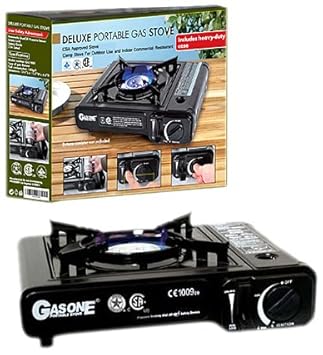
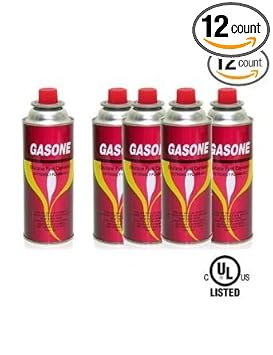
I have a wide electric griddle ($19 at Walmart) and a single burner butane cook stove and spare butane bottles, both stored away for emergencies. The butane burners are commonly found at Oriental groceries for some reason.

Lots of cooking options.

Electric frying pan (mom used one virtually every day)
Fry Daddy or similar
Microwave
Toaster oven
Electric griddle
Electric single burner hot plate
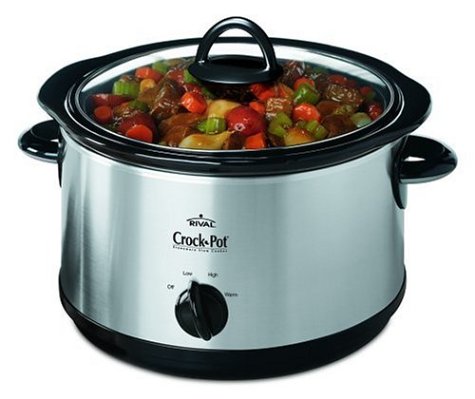
Crock Pot

Charles

http://www.amazon.com/dp/B00BS4RP7S/?tag=atomicindus08-20

51e4QVSruOL._SY355_.jpg


413BdRdtwcL._SY355SX273_SY355_CR,0,0,273,355_PIcountsize-12,TopRight,0,0_SX273_SY355_CR,0,0,273,355_SH20_.jpg


md_n125693.jpg


31VrNvOP6rL._SY355_.jpg


crockpot.jpg
 
Last edited:

Jim_No_Garage

Well-known member
Joined
Jan 15, 2011
Messages
3,301
Location
Millington NJ
In any case, you DO NOT want to be dependent on schlepping portable cylinders back and forth to a retailer who may or may not be sold out in any sort of major "event", let alone having to manually swap them out to feed the generator every few hours -- talk about a "wife-unfriendly" situation!


The folks across the street from my Dad had an interlock installed and had something like a 5,000W Generator to run things.

They had just come home from the hospital with their first child when Hurricane Sandy hit. The husband DID NOT have any gasoline storage capacity (extra gas cans on hand) and spent hours daily waiting in gas lines for gasoline. The wife was more than a little angry that he wasn't available to help her with the baby . . .

Once things calmed down afterwards they installed a NG powered generator with ATS and sold the gasoline powered generator.

I see LOTS of NG powered generators being installed around here. Hope the NG infrastructure is up to the increased demand when the next major electrical outage occurs . . .

Cheers

Jim
 

willf650

Well-known member
Joined
Mar 10, 2010
Messages
783
Ill go against the grain here but I just have a portable 5500 watt generator setup for emergency power. Call me cheap but I have about $1000 in the whole setup and in the process of installing it right now. The generator itself has has powered my parents house for 3 days staight during a snow storm. If I didn't already have the generator I would consider that small genrac posted in the link. I also consider this my for now house and don't wan't to invest a ton of money.

My cheap man setup is as follows:
It's basicly a 60 amp subpanel with a 60 amp breaker for feed from main panel with a 30 amp breaker wired to an external 30 amp twist lock power inlet plug. It has a breaker interlock between the two mains. This has enough room for 8 circuits and I'm moving my furnace, hotwater heater, refigerator, sumpump and a couple lighting circuits into it.

Cost break down as follows.

Subpanel $92
Misc breakers $20
Misc material $50
Power inlet Plug $50
30 amp Gen cord $47
Generator $550
Natural gas conversion kit $150
Gas hose $50


We used to run portable generators all day at the jobsite weeks at a time so I don't see why they couldn't run for several days at your house. Granted the jobsite wasn't 24hrs but why couldn't it be. My current generator has run 3 days straight power a house. Natural gas is definately a plus. After having to fill the gas tank twice a day during the last outage I bought a natural gas conversion kit.

This is the subpanel I bought:60 amp GE genrator panel Since I only have a smaller generator I swapped the generator breaker for a 30 amp. I'm installing the power inlet plug next to my gas meter and putting in a tee in the gas line before it enters my house to feed the generator. I have a 10' natural gas hose and a 20' power cord.

Natural gas conversion kits: Tri fuel kit.

This setup is pretty inexpensive, allows me to use my generator other places and I can run the generator on natural gas, propane and gasoline.
 
Last edited:

Twiggss

Well-known member
Joined
Jul 3, 2011
Messages
425
Location
middle
No $400-800 portable generator will be satisfactory for this job. First, they're simply not made for the sort of continuous duty it would get in an extended outage; and that's exactly when you DON'T want it to break down. Second, the noise would be unbearable, especially after you (and your neighbors) have been listening to it for hours on end. Furthermore, portable gensets should NEVER be left running "unattended". Which effectively means you'll have no power (and no heat, and no lights) overnight.

Tell that to my neighbor who had one running 24/7 for a week while getting some main electrical work done to her house. :mad: I damm near sugared the gas tank on that thing.
 
OP
F

FarmerPete

Well-known member
Joined
Jul 24, 2013
Messages
258
Location
Lansing, MI
There are some decent enough looking portable units that do propane or gas, 5000 watts, and are under $700. O figure the propane would be the preferred way to go, but having a backup fuel would be helpful as well. I'll have to sit down and do a more comprehensive cost comparison between the options.

The spot I would install a standby generator is right next to my air conditioner. There aren't any windows around, but it is relatively close to the intake and vent for my furnace. There is also a window on the second floor above the spot. Anyone know if either of those are issues?

Sent from my Nexus 4 using Tapatalk
 
To avoid these ads, REGISTER NOW!

sberry

Banned
Joined
Jun 18, 2005
Messages
35,747
Location
Brethren, Michigan
You don't want it blowing in to the furnace intake but that much should be obvious and as long as there are no open windows things are fine. Yes, it may run unattended all night. Its done all the time.
 
OP
F

FarmerPete

Well-known member
Joined
Jul 24, 2013
Messages
258
Location
Lansing, MI
You don't want it blowing in to the furnace intake but that much should be obvious and as long as there are no open windows things are fine. Yes, it may run unattended all night. Its done all the time.

I guess I'm curious how many feet from the furnace intake the generator needs to be.

Sent from my Nexus 4 using Tapatalk
 

frankzlt1

Well-known member
Joined
Sep 5, 2011
Messages
80
Location
Beacon Falls ct
Depending on brand generator. Generac on air cooled units 5' from any openings. Other wise 18" from the back of the generator 3' on the sides and front need to be clear. Briggs same as generac. Kohler 5' from anything, until the new 20 kw only Kohler will have the 18" -36" rule.
No mater what you have to be 5' from any opening, windows, vents, exhaust ducts, drier vents etc.
 
Last edited:

frankzlt1

Well-known member
Joined
Sep 5, 2011
Messages
80
Location
Beacon Falls ct
Also keep in mind when a generator runs, unless its a 1800 rpm generators normally run at 3600 rpms. That would be equal to 95 mph. Now if you put 125 hr's on a generator its realistically 11,800 miles the generator went and its hard running miles. A lot of people don't realise how hard generators run. Just make sure you maintain the poor guy.
 
OP
F

FarmerPete

Well-known member
Joined
Jul 24, 2013
Messages
258
Location
Lansing, MI
Looking at costs, I decided a standby generator wasn't practical right now. That leaves me with trying to get a transfer switch installed. After doing some thinking, I have two potentially cheaper options. First, I could get an interlock kit from Square D for my subpanel in my garage. It's a 60amp panel. Downside is that I would have to move several critical circuits to it, which means less capacity for my garage activities. Option 2 is I could replace the fused disconnect that's outside under my meter with a new outside transfer switch. Downside is that I would need an electrician to do the install. Plus side on that is that it would be done quickly and correctly.


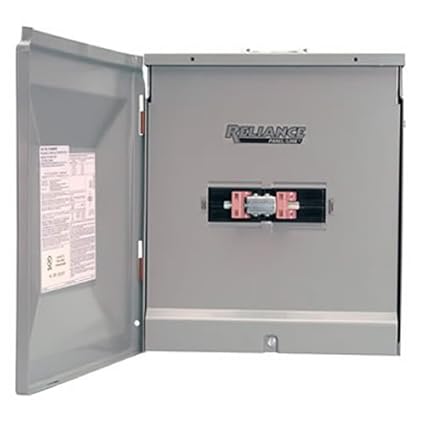
Does anyone know if a transfer switch like this http://www.electricgeneratorsdirect.com/Reliance-Controls-TCA1006DR/p1105.html would work as a disconnect for your main panel?

41n-xGNMLEL._SX425_.jpg

Or would I need to get something where the circuits can be operated independently such that they could both be OFF at the same time. Something more like this http://www.homedepot.com/p/Reliance-Controls-200-Amp-Outdoor-Transfer-Panel-TWB2006DR/202216488

c262323b-8e9a-4738-85af-31ffdb83d281_1000.jpg
 

Mustang51js

Well-known member
Joined
Jan 24, 2014
Messages
1,734
Location
Haskell nj
I have a 30 amp twist lock off my shed panel out in the yard, if I loose power for any long amount of time I just back feed it into the plug and shut my main breaker. Powers the house, is it legal,no but it works if I need it. I rarely loose power though and if I do it's usually no longer than an hour. I don't have a problem turning off my main but I know some people don't like to. From what I see you can get the interlock kit for your sub panel and move some wires around'thats prob your cheapest and legal option.
 

theoldwizard1

Well-known member
Joined
Feb 22, 2011
Messages
43,077
Location
SE MI
I have a 30 amp twist lock off my shed panel out in the yard, if I loose power for any long amount of time I just back feed it into the plug and shut my main breaker. Powers the house, is it legal,no but it works if I need it. I rarely loose power though and if I do it's usually no longer than an hour. I don't have a problem turning off my main but I know some people don't like to.

Yeah like the linesman you kill/injure the one time you forget to kill the main breaker and backfeed the whole neighborhood !
 

Mustang51js

Well-known member
Joined
Jan 24, 2014
Messages
1,734
Location
Haskell nj
I wouldn't forget to turn it off,it's part of my system that the first thing I do is turn off the main and I'm the only one in my house that touches it.
 
OP
F

FarmerPete

Well-known member
Joined
Jul 24, 2013
Messages
258
Location
Lansing, MI
I wouldn't forget to turn it off,it's part of my system that the first thing I do is turn off the main and I'm the only one in my house that touches it.

Yeah, if I wanted to do this illegally, I could just tie my 10-4 rubber cord directly into a spare 30 amp double pole breaker. Total cost would be $0. Sure, maybe I could justify it to myself that it's alright since I'll never screw up. I'm sure that will be a real comfort if someone got hurt because of me. I'd rather be cold and have my food go to waste than do that. Even if the odds are 1,000,000 to 1, I still wouldn't take that chance. For the poor guy who dies from electrocution from a backfeed to a generator, he died 100% of the time. Explain your selfishness to his next of kin.

I'm looking for code compliant methods only. I'm just looking for the most cost effective way to do it given the components I've already got if possible.
 

theoldwizard1

Well-known member
Joined
Feb 22, 2011
Messages
43,077
Location
SE MI
I'm looking for code compliant methods only. I'm just looking for the most cost effective way to do it given the components I've already got if possible.

IMHO you have 3 choices


  • Full automatic transfer switch. Expensive. Requires a generator sized to the total load of the building. Next to zero "brain power" to use. (Make sure there are no red lights on the monitor panel.)
  • Generator transfer panel. You must decided at installation time which circuits you might want to have covered by the generator. Works well with temporary generator hookups. The panels are not too expensive. Wiring is somewhat of a pain. Changing your mind on what is covered and what is not is more pain. Does require some knowledge on how to use.
  • If your existing panel has 2 slots available (or can be made available) and a factory or aftermarket interlock kit is available, this is the lowest cost and simplest to install, solution. If not, you need a new panel set up with generator interlock. Works well with temporary generator hookups. You choose the size of generator you want. Easy to to upgrade the generator. Requires a bit more knowledge to use.
 
Last edited:

2ManyProjects

Well-known member
Joined
Jul 18, 2013
Messages
757
Looking at costs, I decided a standby generator wasn't practical right now.

Before getting to your actual question, I'm going to beat the drum one more time for you to SERIOUSLY reconsider this. That little Generac 7kW system you linked to earlier (http://www.homedepot.com/p/Generac-...or-with-50-Amp-Transfer-Switch-5837/202214401 and/or http://www.electricgeneratorsdirect.com/Generac-5837-Standby-Generator/p5524.html) typically sells for well under $2,000, INCLUDING an automatic transfer switch. That's really a pretty damn good value, especially as compared to ANY "jury rigged" portable genset. And as a not-insignificant bonus, it would neatly side-step your current conundrum.

That leaves me with trying to get a transfer switch installed. After doing some thinking, I have two potentially cheaper options. First, I could get an interlock kit from Square D for my subpanel in my garage. It's a 60amp panel. Downside is that I would have to move several critical circuits to it, which means less capacity for my garage activities.

It would also add a great deal of complication and cost to the installation, especially if this is a detached garage. All those individual branch circuits from the house would have to be run out to the garage, in order to connect to the sub-panel.

Option 2 is I could replace the fused disconnect that's outside under my meter with a new outside transfer switch. Downside is that I would need an electrician to do the install. Plus side on that is that it would be done quickly and correctly.

An additional down-side is that this would provide no means to segregate the rest of the house from the circuits/loads which "should" be powered from the generator. This in turn can (and probably will, sooner or later) lead to overloading the generator. Not good. So...


Does anyone know if a transfer switch like this http://www.electricgeneratorsdirect.com/Reliance-Controls-TCA1006DR/p1105.html would work as a disconnect for your main panel?
{image deleted}

Or would I need to get something where the circuits can be operated independently such that they could both be OFF at the same time. Something more like this http://www.homedepot.com/p/Reliance-Controls-200-Amp-Outdoor-Transfer-Panel-TWB2006DR/202216488
{image deleted}

As near as I can tell, either one COULD work; but the problem is you'd still need to add a sub-panel in order to do the circuit/load segregation required.

Also, the first one is limited to 100A TOTAL load, including that from the PoCo service feed. Now I realize that in your initial post, you said you currently only have 100A service anyway. But I, for one, would NOT want to erect yet another roadblock to eventually upgrading that.

All in all, you would probably be better off reverting to the model you cited in your first post in this thread:

http://www.homedepot.com/p/Reliance...ady-Loadcenter-with-Meters-TTV2006C/202216486
5a14af89-8909-4e76-b583-6b9d97815dc2_300.jpg


and installing it more-or-less as you described back in December.

HOWEVER... Now you're up to ~$450, plus installation costs, PLUS the cost of a decent-size portable generator (cf. http://www.electricgeneratorsdirect.com/Generac-5798-Portable-Generator/p3424.html), PLUS the cost/hassle of installing a proper power inlet for that generator in an appropriate spot, PLUS the ongoing hassle of fueling that portable generator...

That 7kW Generac "CorePower" kit is looking better all the time, isn't it?. ;)


I have a 30 amp twist lock off my shed panel out in the yard, if I loose power for any long amount of time I just back feed it into the plug and shut my main breaker. Powers the house, is it legal,no but it works if I need it. I rarely loose power though and if I do it's usually no longer than an hour. I don't have a problem turning off my main but I know some people don't like to.

I'm with "theoldwizard1" here. That is downright irresponsible and potentially DEADLY. And you call yourself an electrician? You should be ashamed of yourself.

I wouldn't forget to turn it off

Famous last words. :(


IMHO you have 3 choices

  • Full automatic transfer switch. Expensive. Requires a generator sized to the total load of the building.

Actually, neither of those is necessarily the case. For example, the ATS provided with that Generac "CorePower" kit also includes an integral 8-slot sub-panel, so that the loads to be powered from the generator can be properly segregated from the rest of the house. One could argue that eight breaker slots is none too generous; but really, just how much do you plan to run off a 7kW generator anyway? And obviously, it is NOT prohibitively expensive, given that it comes as part of the kit.


Mustang51js

Well-known member
Joined
Jan 24, 2014
Messages
1,734
Location
Haskell nj
Haha you guys are funny, it's for my own house not for someone else. I'm sure everything you ever done was perfectly legal,give me a break and get over yourselves allready.
 

Mustang51js

Well-known member
Joined
Jan 24, 2014
Messages
1,734
Location
Haskell nj
Just go with a 20kw stand by generator with 200 amp transfer switch,swap your old pushomatic panel out since it's outdated.
 

Mustang51js

Well-known member
Joined
Jan 24, 2014
Messages
1,734
Location
Haskell nj
Do you have a main breaker in your sub panel,and two extra spaces. You can get the interlock kit and it's basically what I said before but safer. And btw I wasn't saying to do it that way just what I do in a pinch,only had to do it once. Other option is a reliance 8 circuit panel with the 30 amp twist lock on the box, it's around $300 but would need to move some breakers around.
 
To avoid these ads, REGISTER NOW!
Top Bottom