To avoid these ads, REGISTER NOW!

Adding Relays To Your Headlights, Low Beam & High Beam

gahrajmahal

Well-known member
Joined
Dec 12, 2008
Messages
2,527
Location
Cincinnati, Ohio
Why would you want to do this? Well, in the case of my 1968 Chrysler 300 Convertible, it is to give extended life to my original headlamp switch. Difficult to find replacements and very expensive too. Chrysler wiring systems run most everything through the switches with exception of the convertible top and the starter so high amperage loads over time corrode, pit and carry less voltage to whatever you are trying to operate electrically.

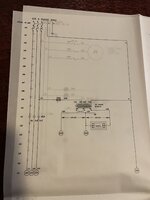
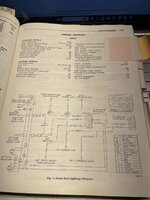
Most folks’ heads explode when asked to work on a vehicle electrical system and after getting a glimpse of my Chrysler service manual diagram, I can see why.

IMG_6784.jpg

And there are MANY MORE PAGES.

I’m not going to lie, electrical work takes many steps and can be a challenge, but I have some methods that help clarify it for me. And that is what this thread is going to address. I’m not going to get into wiring tools, connectors, wires etc. as there are many great threads that cover this.

What type of relay to buy?

I chose to purchase individual SPDT (single pole, double throw) means one source can be switched either normally closed (NC) or normally open (NO). 12 volt activated (by the existing headlamp switch) and the LOAD SIDE is able to carry 30 amps. The load side will be protected with a 30-amp circuit breaker instead of a fuse and come directly off of the battery.

IMG_6749.jpg

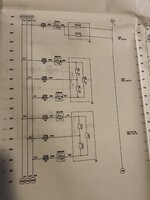
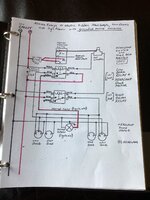
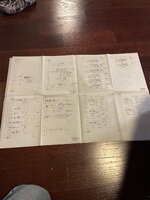
My method of sanity comes from using a type of electrical diagram (not wiring diagram) that defines all components for ONE function. In this case, turning on and off the headlights. This is a modified version (less complex) version of Ladder Logic Diagrams, used for industrial machines.

IMG_6767.jpgIMG_6768.jpgIMG_6769.jpgIMG_6770.jpg

If Ladder Logic Diagrams can make this industrial application understandable, using it as ONE TYPE of tool to understand the wiring in your car, then that is what I wish to show you.

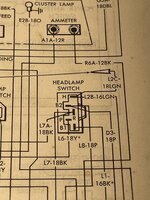
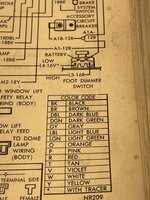
Here is a photo collage showing the original electrical components to make the headlamps turn off and on, High beam and Low beam.

photo slide show headlights.jpg

I am not adding the running lights, tail lamps or dash lights to the relays. There is a separate set of contacts in the original headlight switch. I don’t care so much about their brightness plus it is easy to retrofit these bulbs with LED bulbs that will pull less amperage.
 
To avoid these ads, REGISTER NOW!
OP
G

gahrajmahal

Well-known member
Joined
Dec 12, 2008
Messages
2,527
Location
Cincinnati, Ohio
CREATING YOUR ELECTRICAL DIAGRAM

Identify your components

photo slide show headlights 2.jpg

As you can see from my slide show, the original system consists of 12 volt battery, wired to the fuse box that then goes to the headlamp switch. From there, it goes down to the floor mounted dimmer switch. That dimmer switch is “single pole double throw” so the single energized wire is divided by the switch. In LOW beam mode, the power is directed to the LOW side of two bulbs. When you push on the button the original LOW beam stays energized and the HIGH beam wire is ALSO ENERGIZED. Power is then provided to the two HIGH BEAM bulbs.

To add relays, what additional components do you need? Well, TWO RELAYS. A separate one for the LOW circuit and a separate one for the HIGH circuit. The power, switched through the relays, will come DIRECTLY FROM THE BATTERY, so let’s protect that with a CIRCUIT BREAKER instead of a FUSE. If there is a temporary problem (in the dark!) and the circuit blows, I won’t have to replace a fuse in the dark. After 1 minute, this circuit breaker will automatically reset, allowing it to work again. A 30 amp circuit will benefit from using 12 gauge wires, so I purchased automotive grade wire, Red for hot, and Black for the ground. (Too heavy wire is OK, too small wire is NOT OK)

Sometimes a list is easier to understand. Here is mine when I re-wired this car many years ago

IMG_6760.jpg

Here to start my ladder logic wiring diagram, I drew the Negative - (Black) wire and positive + (Red) wire down the left side.

I then add the “Relay” Electrical Circuit Symbols. I didn’t invent these myself, they are printed on the device, show up in the installation manuals, and can be had on the interwebs as “standards” IEC, JIC, ANSI, IEEE etc.

Pick one that makes sense to you or print out this sheet when starting on your own diagram.

IMG_6785.jpg
 

DrinkMan

Well-known member
Joined
Sep 13, 2020
Messages
1,245
Location
Georgia, USA
This is a great project to do. Our '69 Alfa Spider switched all the lights through tiny contacts on the steering wheel mounted lever. After all the decades, those contacts just don't cut it. So I did the same project. The only difficulty I had was trying to figure out where to mount the relays. The easiest location was under the hood on the inner fender next to the harness going to the lights. But after a few years, I just didn't like how it looked under there. So, I relocated the relays under the dash next to the fuse box. Hard to work on and service but looked much better. I'm going to be interested to see where you install the relays and fuses.
 
OP
G

gahrajmahal

Well-known member
Joined
Dec 12, 2008
Messages
2,527
Location
Cincinnati, Ohio
I then add the “Relay” Electrical Circuit Symbols. I didn’t invent these myself, they are printed on the device, show up in the installation manuals, and can be had on the interwebs as “standards” IEC, JIC, ANSI, IEEE etc.

Pick one that makes sense to you, or print out this sheet when starting on your own diagram.

IMG_6741.jpg
I like to make several copies so I can start over when I screw it up. I can also make a tidy one to keep with the car for future reference.

I started by making a “Legend” for the relay that included all the information I could come up with. What color are the wires and where do they terminate inside the hidden switches? The “terminal numbers” can only be seen when you pull the relay out of the socket. Not handy at all while installing or troubleshooting later, but very helpful when trying to make your drawing accurate. Have a look, a picture tells a thousand words, or 10 or 20 in this instance.

IMG_6747.jpg

The Electrical Symbols for the stock Chrysler components I will use from the Chrysler Service Manual. I also make copies of the stock factory wiring diagram so I can color code and isolate the wires and how they connect. The factory manual puts the components in “the part of the car” where components may be. So, for example the dashboard is all together along with it’s wiring, but the Head Lamps show up in the “front of the car” section. Since they used a large 24 pin plug and socket between the engine compartment and the interior wiring, this electrical diagram made sense for those designers.


IMG_6733.jpg


IMG_6734.jpg


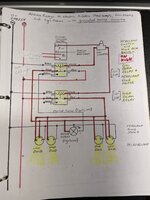
Below the relays I drew in the four headlamps. Notice the low beams have three terminals and the high beam has only two. The high beam is the simplest of electrical parts, because if you supply 12 volts POSITIVE to one terminal and 12 volts NEGATIVE to the other terminal it will light up. In fact, to wrap your head around how all these parts work, an electrical test light should be part of your tools for this project, (or you can just use a high beam bulb).

Once you have connected the components using your pencil it is sometimes difficult to see if you have them connected correctly. Make several copies of your finished drawing and get out your colored markers. In my examples I made one for LOW BEAMS and one for HIGH BEAMS. I then color the wires that will be hot red and see if they go where they should. Write notes on your page if that helps you clarify what is happening and for later troubleshooting.

IMG_1318.jpeg

IMG_6786.jpg

IMG_6757.jpg
 

Attachments

  • IMG_6746.jpg
    IMG_6746.jpg
    495 KB · Views: 34
Last edited:

LopezBart

Well-known member
Joined
Oct 13, 2023
Messages
2,533
Location
Lopez Island, WA
Excellent project! I'd label some points on the diagram as useful debug points; adding some LED indicators when the relays are on makes it easier to get answers to questions such as "Is it the relay, or the headlight bulb?".

Different styles of wiring diagrams are useful in different ways; ladder diagrams are wonderful to understand exactly what switches/relays could affect the headlights, say. The traditional auto wiring diagrams are easier if one is looking for a physical fault in the wiring since it makes tracing power routing easier. Either one or both can be confusing if one is not accustomed to using them.

When I was designing the robot electrical safety systems for a BFV turret welding cell, it was ladder diagrams all the way, even though we didn't use a PLC (programmable logic controller). For other purposes, a diagram more akin to the physical wiring layout is easier for novices to understand.
 
OP
G

gahrajmahal

Well-known member
Joined
Dec 12, 2008
Messages
2,527
Location
Cincinnati, Ohio
IMG_6787.jpgIMG_6788.jpg

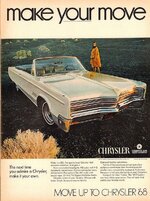
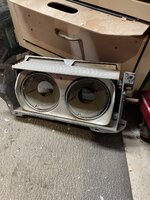
Those who have managed to study the Headlamps with Relays circuit may have noticed I have slipped something into my headlamp circuit. My Chrysler 300 has HIDDEN HEADLIGHTS. There are metal covers that rotate open when you turn on the headlights, then rotate closed when the lights are off.

brochure.jpgIMG_6755.jpgIMG_6756.jpg
 
OP
G

gahrajmahal

Well-known member
Joined
Dec 12, 2008
Messages
2,527
Location
Cincinnati, Ohio
IMG_6739.jpg

IMG_6740 (1).jpg


Look at my motor and you will see it is a gear motor. In the center is a square hole where the drive axle passes through. The motor has a set of internal switches and cams that allow the motor to rotate clockwise for a defined arc, and stop. This happens by providing positive power to ONE WIRE. The ground is provided through the motor housing and the body sheet metal. I have added a separate ground wire from the motor to the battery ground. Providing power to the second wire and the motor returns the opposite direction for a defined arc, then stops. In each stopped position the wire continues to be HOT. The connection to drive the motor is disconnected by contacts located inside it. Quite a bit of engineering, wouldn’t you say? So, look at the way I am using the Normally Closed leg of the relay and also the normally open leg of the relay to accomplish this “power to open”, “power to close”. This is another great thing about using relays for complicated electrical tasks.
 
OP
G

gahrajmahal

Well-known member
Joined
Dec 12, 2008
Messages
2,527
Location
Cincinnati, Ohio
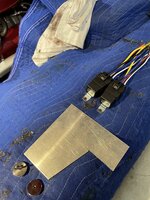
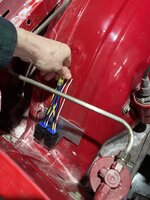
Ok, now to try and show and answer Drinkmans question: The wires for the front end go down the drivers side on top of the fender. As he has discovered, his first attempt at relay placement was less than satisfactory. Along side my battery and in the fender cavity there is copious room for two relays. I also wanted to add two Buss bars to eliminate the stacking of electrical connections as Chrysler followed. My first attempt was to use two holes in the radiator support. A through bolt and nut provided a stud. Once mounted there was zero chance I was going to be able to maintain or replace a relay. I got the idea to mount both relays to a plate. Add heavy capacity magnets to the plate, then, once wired stick it down alongside the battery. Easy to remove for service, but secure and not rattling around.

IMG_6777.jpg

IMG_6748.jpg

IMG_6776.jpg

IMG_6778.jpg

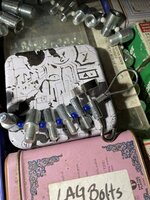
You can see photos of where the relays mounted to the plate will actually go don't really show in a photo. So, I took the plate and the relays to the passenger side where nothing is located to show where the plate will magnetically stick to. In the photo on the blue blanket you can see the heavy duty magnets I purchased online. They have screw in hooks, but of course it is impossible to know what threads they have. I will be removing the hooks and putting screws into them to hold the magnets under my mounting plate. Using my Thread Detective I was able to see I need to buy M4 .07 screws.

I have not finished the plate, bought the screws or completed my relay installation (I have the Low Beam side working) because it's TOO DARN COLD in the garage. That is why I decided a Garage Journal post on the project would be much more fun. Plus, if you can teach it to someone what you are doing, it is supposed to make it clearer what you are doing. Too soon to know that.

Let me know if I've helped or made a mess of it!
 
Last edited:
OP
G

gahrajmahal

Well-known member
Joined
Dec 12, 2008
Messages
2,527
Location
Cincinnati, Ohio
Excellent project! I'd label some points on the diagram as useful debug points; adding some LED indicators when the relays are on makes it easier to get answers to questions such as "Is it the relay, or the headlight bulb?".

Different styles of wiring diagrams are useful in different ways; ladder diagrams are wonderful to understand exactly what switches/relays could affect the headlights, say. The traditional auto wiring diagrams are easier if one is looking for a physical fault in the wiring since it makes tracing power routing easier. Either one or both can be confusing if one is not accustomed to using them.

When I was designing the robot electrical safety systems for a BFV turret welding cell, it was ladder diagrams all the way, even though we didn't use a PLC (programmable logic controller). For other purposes, a diagram more akin to the physical wiring layout is easier for novices to understand.

Hello LopezBart. On the second car I re-wired, our 1971 MGB. I did not use a pre-wired fuse block. I realized I wanted to know which circuits had power all the time (like headlamps) and what circuits had power when the key was turned on (like turn signals). I purchased two, 10 fuse panels with attached ground terminals. This was nice as I could run individual ground wires to a device, like the headlights, and it was easy to find both ends of the wire. The fuses I bought will light up once they blow, which is a really nice feature for troubleshooting. (You can retrofit any fuse box with these fuses, even late model cars) Be prepared as they are spendy $$

When I bought my relays I needed a lot because along with my headlights receiving them, I am also adding relays to my slow running power windows. That requires two relays per window, one for up one for down. My Chrysler has crazy reversing motors on the windows. Relays simplify this mind puzzle too. Check out that post when I do that one. It is too cold to pull the car out in the driveway to work on that one.

You can get lighted relays and I might just replace the two under the hood for their troubleshooting assistance. The car doors and quarter window relays will be hidden so I will keep the ones shown in this thread.

IMG_1319.jpeg
 

rattle_snake

Well-known member
Joined
Jun 25, 2015
Messages
5,178
Location
Chandler, AZ
Old headlights do consume a fair amount of power through the wiring harness. I was going to do the same, but ended up going to LED headlights and they use such a reduced amount that the relays became unnecessary. Similarly I added dedicated relays for the hvac blower motor and A/C clutch so the dash switch doesn't get inductive kickback and continue to arc and fry the switch that you can't buy.
 

no704

Well-known member
Joined
Apr 27, 2016
Messages
5,211
Might think about one relay coming on with the switch then feeding the second relay. Turn on the second relay also for high beams.
 

rdoty

ALLIANCE MEMBER
Joined
Feb 7, 2018
Messages
638
Location
Massachusetts
Gahrajmahal,

Great write up! A lot of planning with the ladder diagrams. I'm probably just getting old, but I now prefer to make my mistakes on paper where they are easy to erase rather than cut 'n hack with the real parts...

Interesting idea on using magnets to mount the relays; will be looking for updates on how that works out.

I hear you on the too cold! I was in the same situation a few years ago and decided "this just isn't fun" and headed inside. Life is much better now that the shop is insulated and heated!
 

DrinkMan

Well-known member
Joined
Sep 13, 2020
Messages
1,245
Location
Georgia, USA
Ah...nothing like having a large car with lots of room to place things. A friends keep telling me to collect big classic American cars (which they know that I love) just because there is so much more room.

I agree with @Beerhippie , connectors down is always better, even it using waterproof boots. I've been in enough reliability reviews of equipment from the field where many electronic/electrical failures can be traced to connector problems (and that includes equipment indoors in "dry" environments). We made connectors down one of our key design guidelines for our designers. Plus, you can read the part number on the relays if you need to replace them (or the next caretaker of your car will be able to read them).
 

Jagmandave

Well-known member
Joined
Nov 6, 2011
Messages
6,302
Location
Overland Park, Ks.
We have the same issues on English cars - lots of amps going thru small contacts on irreplaceable switches - relays to the rescue! It's even worse when numbnuts switch over to high amperage halogens from std sealed beams!

I run relays on all my English cars - it saves letting the smoke out of switches and wires.

I've seen so many guys wire up a high amperage draw audio amplifier or a brace of fog/driving lights on the front of their classic Mini and just wire the hot side straight to the battery, no fuses......nothing. Once the smoke clears it leaves a terrible mess!

Neighbor's WRX burned to the ground because he did exactly this with his bangin tunes.......


Beerhippie

Well-known member
Joined
Oct 13, 2023
Messages
9,709
Location
Far NE Oregon
Ah...nothing like having a large car with lots of room to place things. A friends keep telling me to collect big classic American cars (which they know that I love) just because there is so much more room.

I agree with @Beerhippie , connectors down is always better, even it using waterproof boots. I've been in enough reliability reviews of equipment from the field where many electronic/electrical failures can be traced to connector problems (and that includes equipment indoors in "dry" environments). We made connectors down one of our key design guidelines for our designers. Plus, you can read the part number on the relays if you need to replace them (or the next caretaker of your car will be able to read them).
I once had the job of installing rally lights and a spare battery on a first-gen Toyota Yaris. There was so little room in the engine compartment that I had a lot of difficulty just routing the wires, not to mention finding somewhere to anchor the relays!
 

no704

Well-known member
Joined
Apr 27, 2016
Messages
5,211
We have the same issues on English cars - lots of amps going thru small contacts on irreplaceable switches - relays to the rescue! It's even worse when numbnuts switch over to high amperage halogens from std sealed beams!

I run relays on all my English cars - it saves letting the smoke out of switches and wires.

I've seen so many guys wire up a high amperage draw audio amplifier or a brace of fog/driving lights on the front of their classic Mini and just wire the hot side straight to the battery, no fuses......nothing. Once the smoke clears it leaves a terrible mess!

Neighbor's WRX burned to the ground because he did exactly this with his bangin tunes.......

Guy I used to work with got a new Toyota FJ and installed a winch with no breaker. It shorted out burning up the brake lines. Toyota warranted it!
 
To avoid these ads, REGISTER NOW!
OP
G

gahrajmahal

Well-known member
Joined
Dec 12, 2008
Messages
2,527
Location
Cincinnati, Ohio
@gahrajmahal, is the headlight switch for your Chrysler different than other Mopars of that era?

I have at least 3 Mopar switches of that vintage in the shop, I think one is still in the box.

Hi Bad eye! I am told that the 1968 300 is a one year design, but if you look a year or two earlier you will see a lot of similarity between my car and other mopar models, Dodge, Plymouth and Chrysler. But as I have experienced many parts interchange and many do not. I got the idea for this winter’s project by reading rdoty’s threads about restoring his 1963 Chrysler Imperial. He added relays to his headlights and electric windows. Send me a personal message (PM) by clicking my avitar if you are interested in your switches finding a new home. My headlamp switch is really in fine shape. This modification should keep it that way. The switch I really need to replace is the four gang window switch that is really hard to find.

Excellent job!

The only thing I'd suggest is turning the relays up side-down from the way you have them shown. They're much more water resistant with the plugs facing downwards.

I will try and do this, but this really is a fair weather car. I don’t even have windshield wipers installed. I just have cool chrome bullets on the posts. I keep the wiper arms in the trunk.
 

Zebedeewesty

Well-known member
Joined
May 31, 2013
Messages
4,096
Location
Wales, UK
I've fitted relays to the headlights on all the aircooled VWs I've owned.
Made a massive difference to the headlight output. I'm now getting around 2v more at the bulb socket than I was before.
I suppose with the battery at the opposite end of the car theres a long wire run with about 1/2 a dozen or more connections, switches and terminals that all reduce the voltage by a bit.
 

Ohmthis

Well-known member
Joined
Jan 20, 2013
Messages
3,009
Location
Outside of Louisville KY
IMG_6787.jpgIMG_6788.jpg

Those who have managed to study the Headlamps with Relays circuit may have noticed I have slipped something into my headlamp circuit. My Chrysler 300 has HIDDEN HEADLIGHTS. There are metal covers that rotate open when you turn on the headlights, then rotate closed when the lights are off.

brochure.jpgIMG_6755.jpgIMG_6756.jpg
Great write up! I especially love the schematic! As an industrial electrician I appreciate the ease of looking at the drawings and instantly seeing what it’s supposed to do. I wish there was a way to easily draw professional looking drawings. I’m definitely following along!
 

Ohmthis

Well-known member
Joined
Jan 20, 2013
Messages
3,009
Location
Outside of Louisville KY
Excellent project! I'd label some points on the diagram as useful debug points; adding some LED indicators when the relays are on makes it easier to get answers to questions such as "Is it the relay, or the headlight bulb?".

Different styles of wiring diagrams are useful in different ways; ladder diagrams are wonderful to understand exactly what switches/relays could affect the headlights, say. The traditional auto wiring diagrams are easier if one is looking for a physical fault in the wiring since it makes tracing power routing easier. Either one or both can be confusing if one is not accustomed to using them.

When I was designing the robot electrical safety systems for a BFV turret welding cell, it was ladder diagrams all the way, even though we didn't use a PLC (programmable logic controller). For other purposes, a diagram more akin to the physical wiring layout is easier for novices to understand.
That’s a great idea on “debug” points. It’s can really expedites troubleshooting if needed.
 

Ohmthis

Well-known member
Joined
Jan 20, 2013
Messages
3,009
Location
Outside of Louisville KY
Might think about one relay coming on with the switch then feeding the second relay. Turn on the second relay also for high beams.
Many different ways to do it. I had thought about turning one relay on with my lighting switch. That relay would provide power to the High/Low relay. Low beams would be on the NC contact (so on as soon as the first relay gets power) and High on the NO contact. The foot switch would just turn the second (high/low relay on/off). It may save running wire around.
 
OP
G

gahrajmahal

Well-known member
Joined
Dec 12, 2008
Messages
2,527
Location
Cincinnati, Ohio
Great write up! I especially love the schematic! As an industrial electrician I appreciate the ease of looking at the drawings and instantly seeing what it’s supposed to do. I wish there was a way to easily draw professional looking drawings. I’m definitely following along!

Hello Ohmthis, I learned how to draw ladder logic diagrams on the job. I worked as a mechanical engineer in a busy company with 30 or so mechanical engineers and 10 or so electrical/electronic (printed circuit board) engineers. We had a tight knit little group of 4 mechanical engineers and were always designing versions of standard machines. The electrical guys would join us on a project and then go back to what they were doing. I wish I could remember the name of the guy who showed me how ladder logic diagrams work as I owe him a big dose of gratitude! The more you study them the more you learn about them. I am sure there are college level books that explain the rules, but I never had any. One of the most complex machines I designed I show in post #1. We were applying the first shot of glue to a toilet paper roll around 8 feet long. This was called “tail tying” we had at least 20 or so glue gun solenoids being controlled along with digital temperature controllers and sensors. We sensed the rpm of the cardboard tube before applying the glue for a split second. Guess how long it takes to start a roll, finish the roll and the machine starts to index to the next empty cardboard tube? (This was 20 years ago, it’s probably different now) 7 seconds! That 8 foot long roll of TP would then immediately be sheared into the rolls of toilet paper we all know using spinning rotary knives. It was exciting to see! Our “tail tying” glue station worked first time right out of the box. We just combined a whole bunch of off the shelf components but designed the mounting system and housing for everything. I wonder how long it was online and working for the company?

Many different ways to do it. I had thought about turning one relay on with my lighting switch. That relay would provide power to the High/Low relay. Low beams would be on the NC contact (so on as soon as the first relay gets power) and High on the NO contact. The foot switch would just turn the second (high/low relay on/off). It may save running wire around.

This is why I recommend you first identify the components.
Identify the Sequence how the original lights work.
Then study other relay wiring diagrams online to see if there is a good example you can use. They probably will not be drawn as ladder logic, which shows pictorially and includes ALL relevant technical information like fuses, wire gauge, amperage capacity etc.
Using relays is simplest when you use one relay per function, so one relay for low beams and one relay for high beam. In the case of my lighting I could have used a third relay for the headlamp door motor, but I found an example showing a circuit that used the normally closed circuit, then the normally open circuit from one relay.

Good luck! Make your own thread and run your ideas by the wise members of the Garage Journal. They will steer you towards a good solution!
 

Ohmthis

Well-known member
Joined
Jan 20, 2013
Messages
3,009
Location
Outside of Louisville KY
Hello Ohmthis, I learned how to draw ladder logic diagrams on the job. I worked as a mechanical engineer in a busy company with 30 or so mechanical engineers and 10 or so electrical/electronic (printed circuit board) engineers. We had a tight knit little group of 4 mechanical engineers and were always designing versions of standard machines. The electrical guys would join us on a project and then go back to what they were doing. I wish I could remember the name of the guy who showed me how ladder logic diagrams work as I owe him a big dose of gratitude! The more you study them the more you learn about them. I am sure there are college level books that explain the rules, but I never had any. One of the most complex machines I designed I show in post #1. We were applying the first shot of glue to a toilet paper roll around 8 feet long. This was called “tail tying” we had at least 20 or so glue gun solenoids being controlled along with digital temperature controllers and sensors. We sensed the rpm of the cardboard tube before applying the glue for a split second. Guess how long it takes to start a roll, finish the roll and the machine starts to index to the next empty cardboard tube? (This was 20 years ago, it’s probably different now) 7 seconds! That 8 foot long roll of TP would then immediately be sheared into the rolls of toilet paper we all know using spinning rotary knives. It was exciting to see! Our “tail tying” glue station worked first time right out of the box. We just combined a whole bunch of off the shelf components but designed the mounting system and housing for everything. I wonder how long it was online and working for the company?


This is why I recommend you first identify the components.
Identify the Sequence how the original lights work.
Then study other relay wiring diagrams online to see if there is a good example you can use. They probably will not be drawn as ladder logic, which shows pictorially and includes ALL relevant technical information like fuses, wire gauge, amperage capacity etc.
Using relays is simplest when you use one relay per function, so one relay for low beams and one relay for high beam. In the case of my lighting I could have used a third relay for the headlamp door motor, but I found an example showing a circuit that used the normally closed circuit, then the normally open circuit from one relay.

Good luck! Make your own thread and run your ideas by the wise members of the Garage Journal. They will steer you towards a good solution!
Great story from your past with manufacturing TP. It is amazing to see how things are built. The engineering in industry is amazing.
 

cpttuna

Well-known member
Joined
Oct 31, 2014
Messages
13,181
Location
napoleon ohio
I have three Jeep Cherokee XJ's that have sealed beam headlights. I purchased headlight relays from LMC Truck(part # 3580) for each of them. They work fine. The application is for GMC 47-57, but they work on my Jeeps.
 

Sumboodie

Well-known member
Joined
Mar 20, 2021
Messages
10,673
Location
AK
Guy I used to work with got a new Toyota FJ and installed a winch with no breaker. It shorted out burning up the brake lines. Toyota warranted it!
Common to direct wire a winch. Would need a very large breaker. 400+ amp
 
OP
G

gahrajmahal

Well-known member
Joined
Dec 12, 2008
Messages
2,527
Location
Cincinnati, Ohio
Hello again.

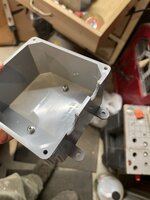
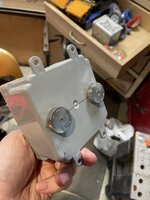
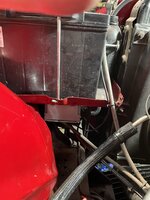
I am adding more to this thread as I have completed the wiring portion of my headlight to relays conversion. I have taken Beerhippie and DrinkMan's (related?) suggestion of mounting the relays, so the wiring points down. My version ditches the open plate mounting and puts the two relays into a PVC electrical enclosure, 4" x 4" x 2". I chose these as I am also adding relays to four of my power windows and I needed something other than a plate to place them in the doors (two doors). Once I had the box in hand I positioned it in a variety of spots under the hood, next to the battery etc. Then I saw that there was a good amount of space under the battery tray. It fit like it was made for it. Hopefully the photos will tell the rest of the tale and final installation of low beam and high beam relays.

IMG_6808.jpg

The relays attach to the lid, easier to service in the future.

IMG_6812.jpg

Measuring for two notches for wire to pass through the box

IMG_6813.jpg

IMG_6815 (1).jpg

Add the 80# magnets to the back of the box using metric screws I had to buy.

IMG_6816 (1).jpg

Test the holding power by sticking it to the side of my filing cabinet. It takes considerable effort to slide it or pull it off, so sticking it to the bottom of the battery tray should be OK. I also tried it there before wiring it up the rest of the way in case I changed my mind.

IMG_6817 (1).jpg
 

Dodgepu360

Well-known member
Joined
Oct 5, 2005
Messages
192
Location
Seguin, TX
Great write up! I especially love the schematic! As an industrial electrician I appreciate the ease of looking at the drawings and instantly seeing what it’s supposed to do. I wish there was a way to easily draw professional looking drawings. I’m definitely following along!
I'll echo every body else in saying this is a great write up.

If you want a free easy way to make some pro looking schematics check out TinkerCAD it's meant to teach kids CAD and there is a circuits section. There all sort of components to use, I don't even know what most of them are. You can simulate your circuit to see if it works and download a nice PDF schematic of it. You can even program an Arduino, that's how I found TinkerCAD, trying to learn Arduino, I haven't put much effort into it yet though.

I threw this together in a couple of minutes.
Don't mind the goofy name, it defaults with funny names unless you save it as something else.
 

Attachments

  • Fantabulous Duup.pdf
    4.5 KB · Views: 8
  • Screenshot 2025-03-19 102852.png
    Screenshot 2025-03-19 102852.png
    37.2 KB · Views: 8
  • Screenshot 2025-03-19 102835.png
    Screenshot 2025-03-19 102835.png
    37.2 KB · Views: 8

PhantomEB

Well-known member
Joined
Feb 6, 2006
Messages
6,728
Location
Medicine Hat, AB, Canuckistan
1972 Bronco…..don’t really care how the headlights are at this point, I hope the SilverStars are adeq enough…..I do have a 42” Lightbar at the top of the windshield frame. Pods will be going into the bumper to be angled out a bit And spread the light out more for night runs.
 

Beerhippie

Well-known member
Joined
Oct 13, 2023
Messages
9,709
Location
Far NE Oregon
1972 Bronco…..don’t really care how the headlights are at this point, I hope the SilverStars are adeq enough…..I do have a 42” Lightbar at the top of the windshield frame. Pods will be going into the bumper to be angled out a bit And spread the light out more for night runs.
Ditch lights--gotta have ditch lights for the suicide deer.
 

CoogarXR

Well-known member
Joined
Jan 11, 2016
Messages
6,852
Location
Ohio
I have been putting this project off for a while. I need to make up a relay harness for my fox-body cougar. The headlights are fine, but running the high-beams will trip the breaker after a few seconds (if you're lucky), and smoke the high-beam/turn signal switch (if you're unlucky). I have the high beam bulbs unplugged right now so I don't smoke another switch. They are getting too hard to find.

I bought all the relays and stuff a while back, but I never got around to installing them.
 
OP
G

gahrajmahal

Well-known member
Joined
Dec 12, 2008
Messages
2,527
Location
Cincinnati, Ohio
I have been putting this project off for a while. I need to make up a relay harness for my fox-body cougar. The headlights are fine, but running the high-beams will trip the breaker after a few seconds (if you're lucky), and smoke the high-beam/turn signal switch (if you're unlucky). I have the high beam bulbs unplugged right now so I don't smoke another switch. They are getting too hard to find.

I bought all the relays and stuff a while back, but I never got around to installing them.

The simplest way I know to do this is have one relay for each beam setting. If your cougar has separate wires coming from the dashboard to the headlight assemblies you simply cut the Hot supply wire for the low beam, splice that to the triggering solenoid in the relay (white in my case), then splice the cut end going to your bulbs to the normally open relay lead (blue in my case). To fuse the high load bulb part of the relay add a 30 amp inline fuse or breaker between it (red wire in mine) and your battery connection. Go direct to battery or a direct terminal under the hood.

Just duplicate the same again for the high beam. The hot signal for that comes through your turn signal stalk but since you are working on the circuit right near the bulbs you don’t have to interpret the column wiring.
 
To avoid these ads, REGISTER NOW!
Top Bottom