So what does this have to do with air. Its duty cycle and what it means to the diy type and even some shops. When its a single user a line can be managed 100% and doesn't matter if this hose reel is hooked to a 3/4 line with 1/2 drops especially if its regulated at the outlet. In the case of the power plant it was simply easier to let it go rather than micro manage it.
If one puts a T in to a line and runs 2 da sanders can feel a little drop when the second comes on but its not a natural disaster provided its got an adequate supply to begin with.
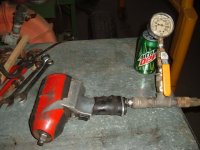
Contrary to belief can run a 5 hp sandblaster well out of air on a 3/8 hose. You can see an air gun test we ran around a 50 ft reel with 15 ft of hose, huge difference. Mechanics 2 stage air is designed to make up for this and the benefit to larger hose is on heavy impact with single stage, shorter hose works too, helps impacts which only work when the system may be completely pumped, also can simply charge portable air tank with feed hose and hook 3 ft hose to the gun, gain some tank size and reduce line loss.
1 man shop, 5 hp, 2 and 3 man 7.5 using common tools (not hogging all available air to sandblast) .
So if the same length of hose is ran back to the compressor it doesn't effect line loss, main size is irrelevant and there is some benefit to trunk and branch on long circuits, wide open with single user, with 2 users a home run to the unit is the same.
With Pex on water the hose is cheap, fittings expensive and often the cheapest easiest way is to run the line to a manifold at incoming vs using 2 different sizes and T in to it. Same with air, to run to a t 6 ft in a home system the line to the t doesn't need to be upsized or adding 5 more ft of 3/8 hose to 50 doesn't amount to much especially if its regulated between.
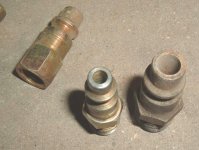
Doesn't mean I havn't seen restrictions in air, had a couple of my own got ignored and effected my 3/4 gun a little on top end but that was so rare it didn't mean much to the rest of the time.
The worry about loss in a home design is about like the worry over warranty over a Snapon wrench. As long as it gets enough air the rest of it is rarely a real factor. As long as the line prior to the regulator is as big as the one leaving there isn't appreciable loss on the main in most cases and had to qualify that with most,,,, very rare. The math is different than regulated gas or lp lines but follows the principle that its going to get regulated which leaves headroom making primary losses irrelevant.