Provincial
Well-known member
I hate using worm screw hose clamps to shorten/repair air hoses. They stick out and catch on things or scratch up paint or nice surfaces.
When I have to use these clamps, I use heat shrink tubing to cover them. This makes the repair less likely to do the bad things that uncovered hose clamps do.
I often use a layer of heat shrink tubing over the hose before installing the clamp. This protects the hose from the clamp and I believe helps spread the clamping force over a larger area. This layer of heat shrink also acts to spread out the bending force on the hose when it is forced into a bend.
I use 3M heat shrink tubing that I get from an electrical supply house. It is approved for insulating underground splices in electrical cables. It is more expensive than HF or the auto parts store, but it is much thicker and more flexible. It also has a very large shrink ratio.
I like the large shrink ratio for two reasons. First, it gives me more latitude in choosing a tube for a given diameter job. Second, if I choose tubing near the bottom of its size range for a given job, the resulting insulation layer is the maximum thickness and density. This is especially nice when the hose or electrical joint is exposed to mechanical damage.
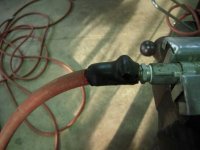
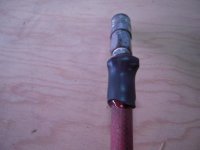
Here are photos of a hose end repair using both layers of shrink tubing.
When I have to use these clamps, I use heat shrink tubing to cover them. This makes the repair less likely to do the bad things that uncovered hose clamps do.
I often use a layer of heat shrink tubing over the hose before installing the clamp. This protects the hose from the clamp and I believe helps spread the clamping force over a larger area. This layer of heat shrink also acts to spread out the bending force on the hose when it is forced into a bend.
I use 3M heat shrink tubing that I get from an electrical supply house. It is approved for insulating underground splices in electrical cables. It is more expensive than HF or the auto parts store, but it is much thicker and more flexible. It also has a very large shrink ratio.
I like the large shrink ratio for two reasons. First, it gives me more latitude in choosing a tube for a given diameter job. Second, if I choose tubing near the bottom of its size range for a given job, the resulting insulation layer is the maximum thickness and density. This is especially nice when the hose or electrical joint is exposed to mechanical damage.
Here are photos of a hose end repair using both layers of shrink tubing.