To avoid these ads, REGISTER NOW!

Air-Line plumbing

CTester

Active member
Joined
Oct 26, 2012
Messages
32
Well for now the station closest to the compressor is the one that's going to be used most frequently, and the station farthest from the compressor will be used the least, probably only for airing up tires.

High pressure air for bead seating tires will be at station 2 (currently have 4 stations, plus 2 outlets on the compressor itself.)

That's alright, just use the loop and riser method, then filters. done..:thumbup:
 
To avoid these ads, REGISTER NOW!

OccupantRJ

Well-known member
Joined
May 15, 2009
Messages
11,046
Location
Eastern North Carolina
You haven't acquired a crimper yet lol. ;) . Yea , I went awhile before picking one up. Wished I would have much sooner than I did. Works surprisingly well every time..- So far anyway.

I'm not sure that I have a die for 1" with this one, - I think it's 7/8?. Hell, I'll go look.... Nope 15/16 is Max ID of hose Ferrules.
]

I thought I might see if I could find a few Oetiker clamps before I actually use the worm drive clamps. I do have a crimper for them, but finding four of that diameter in low volume might be tricky. The OD on the hose is about 1-1/2".
 

PetesPonies

Well-known member
Joined
Jan 1, 2010
Messages
120
I'm just getting moved in to my new shop. Everything was just crammed in there and I am finally beginning to build inside and get it set up for work. I am close to plumbing my compressed air as well, but I have an ace in the hole, I hope. I will be using this little gem . . to the right of the compressor in the picture. I think it will solve any moisture problems in the lines :) Anyone have any experience with one??

408235658.jpg
 

CTester

Active member
Joined
Oct 26, 2012
Messages
32
I thought I might see if I could find a few Oetiker clamps before I actually use the worm drive clamps. I do have a crimper for them, but finding four of that diameter in low volume might be tricky. The OD on the hose is about 1-1/2".

:lol: There's a few re-sellers out there that sell bags of 10. With Oetiker definitely have more of a selection. You have to hunt those down tho. You'll pay for the good clamps; you can smash the crimp after your thru and they won't break haha. Uknow,- at hose end connections, when attempting to make it a little less bulky. Easy to remove as well. :thumbup:

Worm clamps, -yea you can get away with that most of the time, if everything is sized right. Percentage of fail is fair right off, if you don't over tweak. Sometimes they last awhile, other times....
 

sberry

Banned
Joined
Jun 18, 2005
Messages
35,747
Location
Brethren, Michigan
The size of the air line here wont mean anything. A 3/8 hose from the tank to the header would be nearly as good. What are you guys using these comps for? I have 1/2 hyd hose to a 3/4 main, its short and delivers way more air than the whip line on the secondary does. These comps are small as are the air demands in these shops. Like a 50 ft hose reel, 3 ft whip of the same size connects it to the system.

Friction loss running a 1/2 gun on a 1/2 black line is about a pound in 100 ft. Where do we come with the absolute obsession about line size, is 2x enough overkill or do we need 4x?
 

sberry

Banned
Joined
Jun 18, 2005
Messages
35,747
Location
Brethren, Michigan
These ideas in the threads are all good ideas but we can leave the impression that they are "must" haves.
I remember when I first started out I asked old guys,,, how much does it matter? Most of them said,, not very much and stuck pretty much around code sizes or one better. This is for a couple reasons, one being duty cycle but,,,, real loss is across whips and inlets. A 50 ft hose reel may be 10 or 15 # drop and we are going to spend 500 more on a main and header to save .3 ??????????????
Shorten the hose when needed for cheap. The human operator could never tell the difference in use with a 3/4 or 1/2 pipe on a small comp. Even to a sandblaster too big for the air supply save 2# till it runs out of air. Maybe less depending on pipe length and turns.
 

OccupantRJ

Well-known member
Joined
May 15, 2009
Messages
11,046
Location
Eastern North Carolina
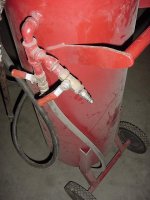
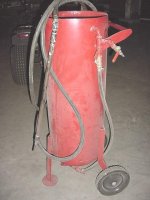
One reason I am doing my system this way is that after I retire, cabinet beadblasting and cabinet heavy media blasting will be one of my pursuits of extra cash. I have two 20 cfm compressors that will end up tied to the piping, and have a remote port outside the building to backfeed the system with a large portable if needed.

I have previously done blasting work at my former shop, and flow is where it's at. With CFM, you can up the nozzle size and get some work done.

Here is a link showing the larger blast cabinet in post #8.

http://www.garagejournal.com/forum/showthread.php?t=61583
 
Last edited:

sberry

Banned
Joined
Jun 18, 2005
Messages
35,747
Location
Brethren, Michigan
Cooling is great with 3/4 but the only time we need 3/4 is large impacts and in a production world with multiple users, then similar to water the main is tapped with a smaller short pipe to a hydrant, a pipe still 4 times the size of the hose too tool, in big systems may want some restriction so any given hydrant doesn't dump system pressure too low. Like the bathroom sink, it serves the need without opening a 3/4 valve all the way.

The object isn't to let all the air out we can, its to serve the demand. Its the reason the comps come with little port, doesn't do any good to make it bigger. In the end are hooking a 3/8 hose to it.
In a small garage with short runs, sub 100 ft even a run from another tool on 1/2 secondary is minimal and 99.9 + there is one user on a circuit.
 

sberry

Banned
Joined
Jun 18, 2005
Messages
35,747
Location
Brethren, Michigan
Yes,,, now we are talking air, 2 20 hp comps start to make some wind. Whoops,,, 20 cfm.
I run 40 down a 1/2 about 25 ft and then thru a 1/2 hose 25 ft. I agree about upping the nozzle but,,,, this you may know but for others at some point there is diminishing returns. I have extra air I can put on if I need but often guys may compare an experience at work with home. Having big plant air is different with a small blaster, I replace worn nozzle because its using too much air and it cant keep up, again reducing volume to match the air being made, even with the slight loss down my pipe and hose can still quickly run out of air.

If this was a 24 hr process 7 days a week I probably would have run a 3/4 the few ft to it but it would need 4 x the comp. I got 7 hp on 200 gallons of tanks and a few hundred ft of 3/4 and its easy to wind it, I got to add another unit from my truck to run good continuous. The real efficiency is in tuning air and flow rates.
 

Attachments

  • sand blaster.JPG
    sand blaster.JPG
    29.9 KB · Views: 16
  • sand pot valves.JPG
    sand pot valves.JPG
    33.6 KB · Views: 20
  • sand pot.JPG
    sand pot.JPG
    32.5 KB · Views: 18
Last edited:

PetesPonies

Well-known member
Joined
Jan 1, 2010
Messages
120
So it was definitely worth it huh? I think I will be happy, especially running the air munchers like DAs and such. Spraying was never an issue, but using a DA or whizzer always generated some water in the lines. I'm ready to be done with that :beer:
 
To avoid these ads, REGISTER NOW!

CTester

Active member
Joined
Oct 26, 2012
Messages
32
Wow lol.

Some info, -

Yea, 3/4" pipe not only cools quicker than 1/2", there's just about, (very close to) 3 times less psi drop per 50 @ 10-20 SCFM . General rule of thumb is the hard line should be at least 3 times the size of the air tool inlet. These things make major differences with system performance. The goal is to get the least amount of psi drop at system end as possible. You have to include your hoses, FRL flow and length with that figure. Configuring your system correctly for the air needed for whichever application your running. Having the ability to go blast whatnot, burn some metal, tear into a machine, tractor, truck or whatever; -something you may have had planned for the day and not deal with a half *** air system setup. Having to break from what your doing in order to work on a problematic, poorly designed air system lol. It would ****. There's some real good and cheap ways to set up your systems whether your using Reciprocating, Rotary Screw or a Centrifugal type system. Unfortunately there's always those who like to shoot at everything you say for some sort of wacked entertainment vs helping. So you have to look around for the good stuff. PM me for resources in obtaining such information.. I'll be happy to help.
 

akdiesel

Well-known member
Joined
Aug 8, 2008
Messages
2,617
Location
Wasilla, AK
Most of the moisture stays in the tank, but I still get some at the drain at the end of the main line. The photo is of just the blast cabinet drop. I have five other drops in the main part of the shop, including one with a 1/2" coalescing filter for when I build my power coating station.
I'm thinking about building a desiccant filter to be installed at the compressor, but I get so little moisture at the drops I don't know if it would be worth it.

J Persons

Not to discredit your system, it looks great, but some time and cost could be saved without the risers off of the mainline. The risers are to help keep moisture from getting to your air drops and then to your usage in theory, but as you have stated it is still getting to your air drop usage.
When a high demand of air is needed the air has not had enough time to cool completely and still contains moisture in the air flow until it has reached a pressure drop / restriction. The main pressure drops in a basic air system are the Tank, a Filter/regulator, and the air tool. So filters/regulators at the start and at every drop for added protection is ideal as you already have.
 

kingnba6

Well-known member
Joined
Dec 13, 2013
Messages
133
just read thru this thread. great info. i recently started using my home compressor for other stuff other than airing up tires lol. right now im using 1/2 piping. but i might upgrade to 3/4 when the time is right. thanks for the tips guys.
 
OP
M

MackMan

Well-known member
Joined
Jul 25, 2012
Messages
648
Location
Lexington, NC
Ok following up here. I finally got around to my "temporary" solution so that I can at least use the air lines. I'm trying to get an idea of all the things I need to get the hard line connection from the compressor to the existing 3/4" copper lines.

First off, I capped the old input line (outside the building) with one of these
http://www.lowes.com/pd_87190-58421...oduct_qty_sales_dollar|1&page=1&facetInfo=Cap
I don't see any pressure rating anywhere, but found it odd that it says the lower temp limit is 33 degrees, though I guess it makes sense for water lines. Don't see why that would matter for air. It is currently leak free. Is there any danger to keeping this type of cap permanently? I can get a standard cap and solder but this was quick and easy, albeit a little more expensive.

Now back inside, hydraulic line to primary iron line, got it.

Next up, my understanding is that I need iron pipe for my "cooling coil" between the compressor and the copper line. Is there going to be anything strange about going from iron to copper? Any special connector needed, etc?

I see Lowe's has 3/4" x 6' sections of iron pipe in both galvanized and black iron. Looks like the cost difference for everything I think I need would be about $13 total. Will the galvanized be a better long term solution or is black iron still better?
 

sberry

Banned
Joined
Jun 18, 2005
Messages
35,747
Location
Brethren, Michigan
The use of air and pressure drop concerns are wayyyyyyyyyyyyyyyyyy over estimated and then some. It must be a manly thing,,, I felt like some did at 20 and now at 55 know where the real use in a shop is likely to fall and most asking anything about this are not running a class 8 truck shops with multiple men.
On top of that shoving it down a small tool with a small hose at the end with a crummy fitting. Yes,,, a number like 3 times more resistance between a 1/2 and 3/4 may seem like a big deal,,,,,,,,,,,,,,,,, but when the loss is only a pound or 2, 3x more under hi demand (very minimal, not like this is 24/7, minutes max) or reduction of pressure drop (3x) which is even near meaningless if its 2 to begin with. The other 99.9 of the time its static is irrellevent.
 

sberry

Banned
Joined
Jun 18, 2005
Messages
35,747
Location
Brethren, Michigan
The upsize in line doesn't hurt anything but these are small compressors, the impression is left this is a "must have" and its not. 3 men, over 10 hp in a body shop with significant blasting yes, some factor.

We get some of the same when designing electric, everyone calcs V drop at 100 ft for 20A like every outlet will see this continuous, no plug in device will be above 80% and the duty cycle so low it never pays for a bigger wire, in saved wear or performance.

Same for air pipe, 2# sometimes screaming wide open on the main and 15 psi down the secondary,,, whips and fittings and then the tool. Wanna save,, use 1/2 short hose,,, but like any utility connected to a system the object isn't to unload it as fast as it can but to use it efficiently,,, especially part of a system, no reason to absolutely drop system pressure so low it effects all the rest of the connected equipment, it needs to serve the load.
 
Last edited:

b-body-bob

Well-known member
Joined
Oct 10, 2011
Messages
1,621
Location
Almost Heaven
First off, I capped the old input line (outside the building) with one of these
http://www.lowes.com/pd_87190-58421...oduct_qty_sales_dollar|1&page=1&facetInfo=Cap
I don't see any pressure rating anywhere, but found it odd that it says the lower temp limit is 33 degrees, though I guess it makes sense for water lines. Don't see why that would matter for air. It is currently leak free. Is there any danger to keeping this type of cap permanently? I can get a standard cap and solder but this was quick and easy, albeit a little more expensive.

That thing will probably last forever but I still wouldn't trust it any further than I could throw it. And it's small so I figure I could fling it a pretty fur piece :)

By the way, for air it'd be the upper temp limit you'd want to look at, but really only if you used it close to the compressor to where the air is still hot.
 

LS6 Tommy

Well-known member
Joined
Dec 27, 2013
Messages
26,162
Location
Northern NJ
no one has any experience with the compressed air chillers?


Technically, they're called refrigerated dryers. Graingers, Harbor Freight, Northern Tool & others sell them. Hankison & Speedaire units are more or less identical, but the Hankison's are a little less expensive.

Tommy
 
To avoid these ads, REGISTER NOW!
Top Bottom