To avoid these ads, REGISTER NOW!

Anchors in block behind drywall

Quaraxkad

Member
Joined
Feb 24, 2013
Messages
18
I have a block (don't know if it's cinder or concrete) wall behind drywall in a closet. I want to attach vertical shelving standards to it.

In my garage, the blocks are exposed so I used SnapToggle bolts in the hollow sections. These are extremely secure and I'm confident about whatever weight I want to put on those shelves. Inside the house I had another shelf to install, which was also block behind drywall, and I used genuine Tapcon bolts. I used the included drill bit so I know it was the right size, and a hammer drill. Some of the Tapcons felt loose and one or two stripped the hole right out. This shelf is for relatively light weight items so I was fine with the number of bolts that felt secure.

But now the shelves I'm installing will be holding hundreds of pounds, I need it to be rock-solid. I don't think I can use SnapToggle bolts because I can't see the blocks and have no way of knowing where the hollows are. And my prior experience with Tapcons didn't leave me with any amount of confidence in their abilities to hold significant weight.

The space I'm working with is 6' across, the vertical standards are 72', there will be a total of 6 shelves. I've estimated the weight to be 40lbs max per foot per shelf. That's 240lbs per shelf, 1440 total. The standards have 12 anchor holes each which breaks down to 20lbs per anchor if I do one standard per foot. Obviously rough estimates because the weight is not exact and the weight is not perfectly distributed across shelves and individual anchors. 20lbs doesn't seem like a lot, but I do want to be sure these shelves are as tough as possible.

So.... Are there any tricks to finding block hollows behind drywall so that I can use SnapToggles? Or is there a trick to ensuring a good tight Tapcon fit? Or some other anchoring method I haven't considered?
 
To avoid these ads, REGISTER NOW!

NUTTSGT

Super Moderator
Staff member
Joined
Sep 14, 2009
Messages
50,968
Location
Northern Central Ohio
If the drill bit wobbled and enlarged the hole, that can be an issue for the Tapcon. The other issue I have seen is actually hitting the mortar joint as it can sometimes break the mortar and not allow proper tightening.
 

lonestardiver

Well-known member
Joined
May 6, 2017
Messages
62
After drilling the holes for the tapcons, you may find a hollow space you can use a toggle bolt. Otherwise you may consider using an epoxy for concrete in the hole before installing the tapcon bolts.
 

Bert_

Well-known member
Joined
Dec 24, 2016
Messages
9,735
Location
NW Iowa
No furring strips that hold drywall to attach to?

If the tapcon is loose just stick a piece of copper wire in to tighten up the hole.
 

Dustball

Well-known member
Joined
Jun 25, 2011
Messages
2,081
Location
Hudson, WI
What kind of gap is there between the drywall and the concrete block?

I'd probably mount the standards to some nice stained or painted 1x3 wood that goes all the way down to the floor and is also glued to the drywall. Let the wood transfer the vertical weight to the floor and the combination of wall anchors into the block and glued wood to the drywall handle the horizontal load.
 

firebirdparts

Well-known member
Joined
Jun 8, 2016
Messages
10,630
Location
Kingsport, TN
Tap cons are certainly hit-and-miss. Plus, that is a pretty tiny cross section for real weight. I think a key for all these anchors is don’t over tighten. Tap cons will break and they will strip, so it’s like forward pass in football, only three things can happen and two are bad. In this case you can avoid the bad ones by stopping. Expanding anchors would be nicer to work with. Less touchy. I appreciate BD1 posting from his experience.
 
OP
Q

Quaraxkad

Member
Joined
Feb 24, 2013
Messages
18
If the drill bit wobbled and enlarged the hole, that can be an issue for the Tapcon. The other issue I have seen is actually hitting the mortar joint as it can sometimes break the mortar and not allow proper tightening.
Both are definite possibilities. It's not easy to hold a heavy hammer drill perfectly steady when drilling overhead! I don't know that I'm able to drill a reliable hole without a drill press, certainly not in a crumbly material like block. And if I hit mortar I may not have known it since I can't see behind the drywall.

After drilling the holes for the tapcons, you may find a hollow space you can use a toggle bolt.
That's one option, just try some pilot holes until I find a hollow space! At the very least that would get me one toggler per standard.

Otherwise you may consider using an epoxy for concrete in the hole before installing the tapcon bolts.
If the tapcon is loose just stick a piece of copper wire in to tighten up the hole.
I've heard the copper wire trick but wasn't sure how strong that really was. As for epoxy, would I just use something like this: https://www.amazon.com/dp/B0742BJ7KQ/?tag=atomicindus08-20, then fill in the hole or coat the Tapcon with it before installation?

No furring strips that hold drywall to attach to?
What kind of gap is there between the drywall and the concrete block?
Like Bert said ..... is the sheetrock attached to studs ? If so I would just attach the shelf supports to the studs.
There is maybe a half inch gap between the drywall and block. That's just a guess based on the last time I drilled into another wall. So there are some kind of strips in there but certainly not "proper" studs. This is a brand new house with ridiculously flimsy metal studs on all interior walls anyway. Assuming I was to put the standards along those strips, I don't know that I'd be able to locate their centers as they are probably not very wide. And would they even provide any amount of structural support being as thin as they are? Plus how many of them would there even be across a 6 foot closet interior?

I'd probably mount the standards to some nice stained or painted 1x3 wood that goes all the way down to the floor and is also glued to the drywall. Let the wood transfer the vertical weight to the floor and the combination of wall anchors into the block and glued wood to the drywall handle the horizontal load.
I don't know if that's easily done because there's a baseboard along the bottom so I couldn't go straight down to the floor. Nor do I have woodworking tools to cut out a notch to allow it!

We anchor into block all the time for heavy loads. Nothing better than double expansion anchors. For example.
https://www.amazon.com/dp/B00L1IJERK/?tag=atomicindus08-20
Those don't look like they'd be easy or even possible to install properly when the block is behind a drywall and air gap.
 

RandyIA

Well-known member
Joined
Oct 19, 2020
Messages
142
Location
Iowa
The big problem in selecting the correct anchor is not knowing how the wall was built. Whether the block is actual cinder block, or concrete, or other. Cinder block to my limited knowledge should never be used as a supporting wall (at least in newer construction it's not). But that's here, not there. I know they used to use cinder block down south a lot for homes.

Cinder block won't hold much horizontal weight regardless (unless it's filled with concrete and rebar). It's porous and loosely molded. Concrete block is structural and will hold large amounts of weight as long as it's set correctly.

If you can find the bottom or very top of the blocks or even a mortar joint (horizontal and vertical would be best), finding the center of each course is no problem if they are standard sized blocks. Expanding anchors come in many different forms, some for hollows, most for solids. A toggle (the type I'm seeing in my brain is an actual drywall toggle for holding lightweight pictures) is one kind. I'd never trust them with 20lbs of weight but that's me.

Then there's the expanding butterfly toggle (local terminology) for hollow block uses, they hold much more weight and come in different penetration depths/lengths.
iu


Unfortunately there's not as many styles of common hollow block wall anchors as there are solid concrete wall anchors. Many solid wall anchors can be used effectively in hollow walls but there has to be solid knowledge of where the inner surface of the void is to select the correct length of anchor so it expands in side the material where it gets tight instead of in the hollow where it still expands but stays loose or pulls out far enough before it contacts the inner surface and there's now a substantial portion outside the wall that gets in the way and is near impossible to cut off or grind down. Once an expanding anchor is in place and expanded it's sometimes impossible to remove it or push it in far enough to reuse that hole.

It was mentioned to use epoxy for tightening Tapcons. That is a good suggestion. Or just use coarse threaded rod epoxied in the holes and use ornate nuts on the outside if possible. Use a construction grade two part epoxy. The drawback here is that the threaded rod or Tapcon will likely never come out.

As for Tapcons themselves, if the holes are drilled out of round there might be the possibility that the next size up screw can be installed. I don't have a lot Tapcon experience because they were never strong enough for what we did. And they took a long time each to install. I seem to remember a self-tapping concrete screw, but again, not what we used so not a lot of experience there.

Friction fit expanding in hollow block is iffy for heavy loads. The wall thickness is just not there for that type of load. That load being stressed outwards (radially) through the material and horizontally under the tension of the attachment, not to mention any angular loads downwards trying to pry a section of wall out). They aren't designed for that. They can handle the horizontal loads better than the radial compression loads however. Not saying it won't work for your use but if it doesn't then you now have a huge hole in the wall where a cell wall broke/pulled out. BTDT.

My suggestion is the butterfly style, They hold fine, are designed for hollow walls, come in different strengths and can be had at any hardware store.

You still need to find the cell hollows to use them. Once you do, put a slight 90° bend on a wire that will fit a hole drilled into one, put the wire inside, pull back until it stops, mark that spot at the surface of the wall and you can come up with your length. Add a bit because cell walls are not uniformly flat on the inside. Buy a variety of lengths slightly longer and shorter. Take what you don't use back.

One last thought, if you've been successful drilling and anchoring into your walls before you can transfer those measurements to the room you want to do this project in most likely. All you really need is one or two good measurements. More often than not block is laid up uniformly across the entire project regardless of how many levels there are, especially if they tie in to each other at some point. Not always, but more often than not in my experiences from working on block wall buildings.
 
Last edited:

bczygan

Well-known member
Joined
Nov 4, 2009
Messages
22,002
Location
DETROIT! Arsenal of Scrappers
I have a block (don't know if it's cinder or concrete) wall behind drywall in a closet. I want to attach vertical shelving standards to it.

In my garage, the blocks are exposed so I used SnapToggle bolts in the hollow sections. These are extremely secure and I'm confident about whatever weight I want to put on those shelves. Inside the house I had another shelf to install, which was also block behind drywall, and I used genuine Tapcon bolts. I used the included drill bit so I know it was the right size, and a hammer drill. Some of the Tapcons felt loose and one or two stripped the hole right out. This shelf is for relatively light weight items so I was fine with the number of bolts that felt secure.

But now the shelves I'm installing will be holding hundreds of pounds, I need it to be rock-solid. I don't think I can use SnapToggle bolts because I can't see the blocks and have no way of knowing where the hollows are. And my prior experience with Tapcons didn't leave me with any amount of confidence in their abilities to hold significant weight.

The space I'm working with is 6' across, the vertical standards are 72', there will be a total of 6 shelves. I've estimated the weight to be 40lbs max per foot per shelf. That's 240lbs per shelf, 1440 total. The standards have 12 anchor holes each which breaks down to 20lbs per anchor if I do one standard per foot. Obviously rough estimates because the weight is not exact and the weight is not perfectly distributed across shelves and individual anchors. 20lbs doesn't seem like a lot, but I do want to be sure these shelves are as tough as possible.

So.... Are there any tricks to finding block hollows behind drywall so that I can use SnapToggles? Or is there a trick to ensuring a good tight Tapcon fit? Or some other anchoring method I haven't considered?

Use the snap toggle bolts.

Drill exploratory holes as needed to find the layout of the courses and block hollows. A few extra, or even a lot of extra holes in drywall, are no big deal to patch.

I don't trust Tapcons.

Bill
 

Bert_

Well-known member
Joined
Dec 24, 2016
Messages
9,735
Location
NW Iowa
This is a shelf in a closet. The guy isn't storing engine blocks on it. A few tapcons are fine.

I would guess that most shelves like this are held up with a few sheetrock screws, into a stud if you're lucky.
 
To avoid these ads, REGISTER NOW!

Dustball

Well-known member
Joined
Jun 25, 2011
Messages
2,081
Location
Hudson, WI
There is maybe a half inch gap between the drywall and block. That's just a guess based on the last time I drilled into another wall. So there are some kind of strips in there but certainly not "proper" studs.

The gap between the drywall and the block could be a problem since you wouldn't be able to torque the screws properly. Torquing the screws properly may result in the drywall collapsing towards the block. Torquing the screws only enough to not collapse the drywall may cause the standards to "slide" down the wall when fully loaded.

What I have done before was core the drywall large enough at each screw location in order to install spacers to transfer the load to the block wall properly.
 
OP
Q

Quaraxkad

Member
Joined
Feb 24, 2013
Messages
18
A toggle (the type I'm seeing in my brain is an actual drywall toggle for holding lightweight pictures) is one kind. I'd never trust them with 20lbs of weight but that's me.

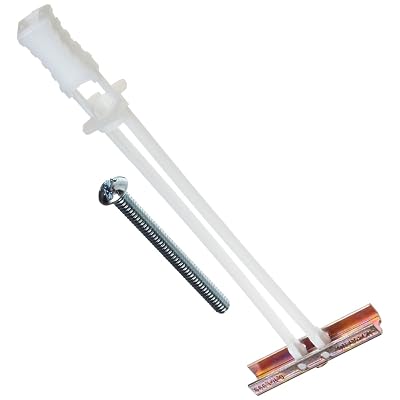
These are the SnapToggles I'm referring to:
614CEJ5UsTL._SL400_.jpg

Compared to butterfly toggles you mention, these are much more robust. In either case I will need to find the hollows, and I always go with the stronger option even if it's overkill. They also bypass the need to find the specific length of butterfly for each application.

One last thought, if you've been successful drilling and anchoring into your walls before you can transfer those measurements to the room you want to do this project in most likely.

The block is exposed in the garage so I know their exact dimensions. There are also other houses being built in the neighborhood using the same plans, I could possibly sneak into one mid-construction and get some measurements...

Use the snap toggle bolts.

Drill exploratory holes as needed to find the layout of the courses and block hollows. A few extra, or even a lot of extra holes in drywall, are no big deal to patch.

I'm definitely thinking this is my best option, but without drilling a *lot* of holes or cutting out few rather large chunks, I can't imagine how I'll get a good enough idea of where the block edges are to be able to calculate their centers. I have heard somewhere that an IR camera can be used to visually locate hollows, but I don't have one or know where I could go to borrow one.

This is a shelf in a closet. The guy isn't storing engine blocks on it. A few tapcons are fine.

I would guess that most shelves like this are held up with a few sheetrock screws, into a stud if you're lucky.

Yeah, it is just a closet shelf, but holding possibly up to 1.5K pounds total. A few Tapcons might meet that requirement by specs but that doesn't apply if they are not *all* installed optimally, which I can not guarantee.

Tapcons are fine. most failures are from overtightening ( IMO) especially in the 3/16 size.
1/4" have a lot more holding power , and the hole's aren't as finickity

I did use 1/4" on the previous shelf, and those are the ones I had problems with. Probably a combination of enlarged holes and over tightening. Both user errors that I can't be certain I won't make again! If I were a seasoned pro at installing concrete anchors I might be less wary of using Tapcons here.
 
OP
Q

Quaraxkad

Member
Joined
Feb 24, 2013
Messages
18
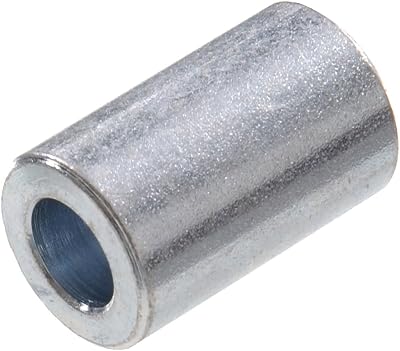
What I have done before was core the drywall large enough at each screw location in order to install spacers to transfer the load to the block wall properly.

That's a great idea! That was another concern I forgot to mention and didn't know how to resolve it. I can drill out the drywall and press in something like these, measured to contact the block and rest flush or just behind the drywall surface:
61jcixQjSPL._AC_SL400_.jpg


EDIT: And a large washer between the drywall and standard.
 
Last edited:

BillK

Well-known member
Joined
Aug 24, 2006
Messages
9,326
Location
Beautiful Southern Maryland
I just have to ask since nobody else has ....... what on earth are you going to put on the shelves that is going to weigh that much ??

If I was doing this and had no idea what was behind the wall I would probably put four 2 x 4's vertically to support the load. It does not take any special tools to notch the bottom for the base molding. A handsaw is all you need.
 

TonyJ

Well-known member
Joined
Sep 10, 2019
Messages
384
Location
West Virginia
If the closet wall is exposed in the garage I think I would just take a 1/8 bit and drill a hole all the way thru just about anywhere in the closet and go on the other side and see where it comes out at and from there you can measure and will know where all of your open spots are in the blocks
 

nadogail

Well-known member
Joined
Jan 23, 2009
Messages
31,961
Location
Coronado, CA
After reading almost all of the the previous posts I realize why for 70 years I have appreciated Genuine Molly Bolts. Not only do they hold in hollow walls they remain in place when you remove the bolt you used to set them with.
 

RandyIA

Well-known member
Joined
Oct 19, 2020
Messages
142
Location
Iowa
After reading almost all of the the previous posts I realize why for 70 years I have appreciated Genuine Molly Bolts. Not only do they hold in hollow walls they remain in place when you remove the bolt you used to set them with.

Yup^^^
Same bolts with a proper name. :rocker::beer:

We used so many different types of anchors we used slang terminology to describe, using that slang for so many years I forgot what the proper name was for them.

One thing though, they used to make these in aluminum, do not use! Use good ones obviously. If you have a Fastenall nearby or other fastener store talk to them, they are the experts (well, not likely, but they have the catalog anyway). Fastenall was our go-to in town so it's who I'm familiar with, but there's also McMaster-Carr, and a few others (none of whom I'm familiar with). Even Grainger if you want to pay double just because you can.
 

metlmunchr

Well-known member
Joined
Sep 10, 2011
Messages
1,278
If this is common 8" block with 2 cells, and laid in a running bond, all you need to find is one corner of one block.

An 8" block is sized such that center to center on horizontal mortar joints is 8" and the center to center on vertical joints is 16". From the center of the mortar joint at a corner, you measure 4" horizontally and 4" vertically, and that spot is the approximate center of a cell.

Additional cell centers will occur every 8" horizontally and every 8" vertically as measured from the spot you've determined as your initial center. By starting your measurements from a cell center both horizontally and vertically, any minor variations in width of the joints won't shift the block enough to make any difference as you'll still be well within a cell with each hole.

This would allow you to use toggle bolts which would be much simpler than coming up with a method of reliably installing any sort of expanding sleeve anchor given the drywall and the air space between it and the block.
 

rslaback

Well-known member
Joined
Jul 24, 2010
Messages
4,078
Location
Westcentral Wisconsin
If this is common 8" block with 2 cells, and laid in a running bond, all you need to find is one corner of one block.


An 8" block is sized such that center to center on horizontal mortar joints is 8" and the center to center on vertical joints is 16". From the center of the mortar joint at a corner, you measure 4" horizontally and 4" vertically, and that spot is the approximate center of a cell.


Additional cell centers will occur every 8" horizontally and every 8" vertically as measured from the spot you've determined as your initial center. By starting your measurements from a cell center both horizontally and vertically, any minor variations in width of the joints won't shift the block enough to make any difference as you'll still be well within a cell with each hole.


This would allow you to use toggle bolts which would be much simpler than coming up with a method of reliably installing any sort of expanding sleeve anchor given the drywall and the air space between it and the block.
Within a closet wall those dimensions absolutely will work just keep in mind that you can't always apply this on a large surface. When laying masonry the bed joints and head joints actually vary in size in order to not have to cut bricks or blocks. Nominally the block lays at 16x8 but in reality it could be bigger or smaller. There is a lot of math to laying masonry that most people never even notice.

Sent from my SM-G950U using Tapatalk
 
To avoid these ads, REGISTER NOW!
Top Bottom