For the record, quality sockets are normally made by the cold heading process from a spool of steel wire, not forged and broached as suggested earlier.
I have worked inside of a cold header manufacturing facility, where the main output was specialty automotive bolts and fasteners. As hi grade fasteners are made with the same process. It was interesting to see that threads were rolled onto the fastener not cut as you may think.
While there I saw that they were producing 3/8" deep well 6 point sockets. I inquired with the shop help as to who they were for and was told that they produce for Snap on and Craftsman. This was quite a few years back. I grabbed a couple of samples to look at. At this point in manufacturer it was completely formed but without any makers mark, and in a soft condition. I'm sure that the respective manufacturers would then send them to the next vendor of choice for the marking, heat treating, plating and then a quality control inspection.
Others seem to imply that these sockets were completely made in the same plant. I don't believe that to be the case. My guess is that at least four different vendors are required to produce the finished product. And with all of the required process there can be a great variance in the finished products due to the various batch processes that they go through.
I have also been to the heat treater's where they undergo the annealing and heat treating for the proper combination of toughness and hardness. Again bolts go through this same process. Heated to red hot for annealing, air cooled to a certain temperature, and then quenched in a bath of oil to produce the final hardening.
Plating is another specialty operation requiring a cleaning operation and dipping in many different baths to acquire the required coating. I suspect that most of the inspection that occurs happens at this stage. Plating is the finished product and provides the only corrosion protection. I'm sure the plater doesn't want to spend his process on plating junk parts and have a hard time getting paid for it.
These type operations require a special type equipment and processes and are not compatible with each other from a contamination point of view. In the cold header plant, oil was dripping from everything, the building was soaked from ceiling to floor, even the air had oil suspended in it. This type operation would be totally incompatible with the heat treater where furnaces with open flames abounded. Same go's for the plating, contaminates are a no no, for a proper job.
So in summary, finished quality depend on many factors and vendors. Starting with the raw steel composition, drawing the steel into wire, cold heading, marking, cleaning, plating and quality control. And I suspect that all manufacturers use different vendors at different points in time. Which results in varying finished product over time, as well as different batches from the same vendors. This is the responsibility of the manufacturers to keep their vendors in line for the price point and deal with the complaints from their customers to defend their reputation.
I don't buy many truck tools, but part of the price your paying for is for the quality control between processes. You don't often get inferior tools from the truck, it's bad for their reputation, but it comes at a price. What I look for is durability then price, the plating is something that comes last. I don't care if the tool is warranted for three lifetimes with free replacement or if it has no warranty. If it breaks when I need it, or worse, it's already broke, it's useless to me at any price. When at work in the field, I carry one set of tools and don't have time to go looking for a free replacement. If it breaks I try to find something better to avoid having to replace it again. Only you can determine what is acceptable for you use, and budget.
MTW



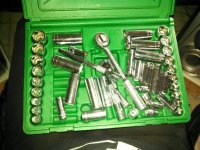


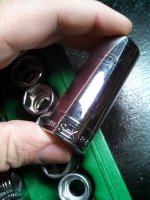

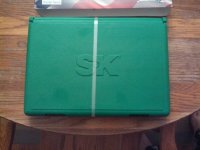


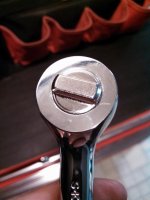
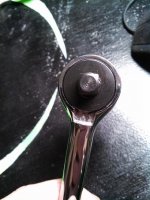

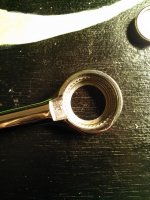
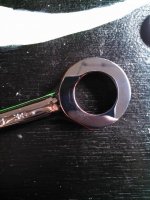
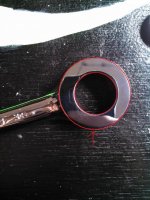
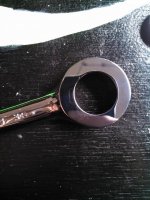
 It is probably easier to see in person but perhaps they had a new kid grinding the head down or something. It still ratchets well right?