OX1
Well-known member
On Fords IRS (my 17 Fusion Sport and 21 GT500 anyway), as soon as you loosen camber bolt, weight of vehicle wants to send bolt straight to inner end of camber adjustment slot built into rear subframe.The strings are the toe/thrust measurement device, not camber/caster. Your question seems to be about lifts. If the car is on a 4-post lift, obviously adjustments are easier than on the ground. This is the same for strings, toe plates, a $1000 used system from Canada, or a $25,000 computer alignment system.
The practical answer is that if you have to jack the car up to make adjustments, you restring it afterward. With my setup this takes about 30 seconds a side, so one minute total.
For mine, I use slip plates under all four wheels and can make many of the adjustments on the ground.
Due to this, you sometimes need a long pry bar to hold camber bolt in slot where you want it, while also trying to use dual "breaker bars" to really tighten down camber bolt (since it only relies on bolt torque/friction for actual placement). IMO, especially important on my Shelby that has seen well over a G in corners (on track). This (for me anyway), necessitates a leveled 4 post that allows me to jack car high enough I can walk under and use long pry/breaker bars.
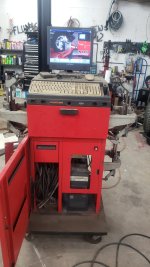
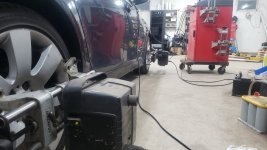
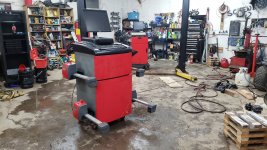
All that prying occasional shifts the entire rear of car on the rear slip plates. With a "real time" alignment system, I can be watching screen while all this is going on, and immediately know if this happened, as front toe will show it moved.
Could I do all that with strings. Probably, but I'd need 4 step ladders (or at least two for the front??) to get at string measurements every time I wanted new measurements, as tires/body are at eye level or higher. I also don't believe pulling rear of car back over on slip plates, would be timely with strings (timely is like ugly, different for everyone I realize
 ). Watching screen, it is easy doing things real time.
That said, I would eventually like to have a quickjack setup and string method available that I can use at the track. Someday, maybe....