To avoid these ads, REGISTER NOW!

Anyone done dense packed cellulose DIY?

biggziff

Well-known member
Joined
Apr 9, 2015
Messages
623
Location
Upstate NY
I've had dense packed cellulose on my list for the new shop since the planning stages. The more I look at the time, effort and costs (soft and hard) I start leaning towards R19 Kraft faced fiberglass. "It's a garage" keeps rolling through my head... A local warehouse has 90 sq ft rolls of R19 for $24 a roll. tempting.

So, anyone that's actually done their own dense packed cellulose, tell me about the time, effort, expense and mess.
 
To avoid these ads, REGISTER NOW!

vavet

Well-known member
Joined
Mar 6, 2012
Messages
5,323
Location
Ashland, VA
I'm planning to do it soon. I'm in the process of installing the fabric now. It's been an effort but not as bad as I expected. It would be helpful to have at least two other people to help.
The way I envision it is you cut the fabric to the approximate length you need. Each person takes an end and applies a little tension. The third person starts in the middle and starts stapling it to the studs.
Applying it solo means I have to get enough staples in it so that it doesn't tear when I apply tension, but then that means by the time I can get enough tension in it, I'm going to have wrinkles. It's a bit of a catch 22.
There are probably other ways. Just work along the straight edge and align that with the top plate. This helps reduce wrinkles.
 
OP
B

biggziff

Well-known member
Joined
Apr 9, 2015
Messages
623
Location
Upstate NY
I'm planning to do it soon. I'm in the process of installing the fabric now. It's been an effort but not as bad as I expected. It would be helpful to have at least two other people to help.
The way I envision it is you cut the fabric to the approximate length you need. Each person takes an end and applies a little tension. The third person starts in the middle and starts stapling it to the studs.
Applying it solo means I have to get enough staples in it so that it doesn't tear when I apply tension, but then that means by the time I can get enough tension in it, I'm going to have wrinkles. It's a bit of a catch 22.
There are probably other ways. Just work along the straight edge and align that with the top plate. This helps reduce wrinkles.

Thanks for the reply. May I ask what you used for fabric/netting? Have you estimated your sq ft costs?
 

Firebrick43

Well-known member
Joined
May 12, 2015
Messages
14,035
Location
West central Indiana
I have done it twice. I don't recall cost. Netting was a thin white netting and was bought from the local insulation supply house.

The netting it fine by yourself. Staple a corner then the corner below then the other side placing a few staples on the face of each stud. Then staple just inside of each stud to draw it tight. Then paint each stud/cloth with thinned wood glue and a 2" roller. I skipped this step the first time and regretted it

Second you need a pro blower unit that you can adjust the air flow and feed rates. Luckily my local menards had this style. The style that local Lowes/HD looks like a plastic 55 gallon trash can will not hack it.
 
Last edited:

theoldwizard1

Well-known member
Joined
Feb 22, 2011
Messages
43,156
Location
SE MI
Packed blown fiberglass video

Looks pretty easy, but you need a helper to make sure it get to the bottom and is paked and a second one to fill/operate the blower. Not sure what the cost difference is between cellulose and fiberglass.

Comment at 6:57
10 inch roof rafter packed full. 95 outside, still below 80 in the attic.

The netting it fine by yourself. Staple a corner then the corner below then the other side placing a few staples on the face of each stud. Then staple just inside of each stud to draw it tight. Then paint each stud/cloth with thinned wood glue and a 2" roller. I skipped this step the first time and regretted it.
.
.
.
Second, you need a pro blower unit that you can adjust the air flow and feed rates.

Excellent tips !
 
Last edited:

Rusty Bolt

Well-known member
Joined
Nov 12, 2017
Messages
87
Location
Carson City, NV
I was just looking into this.

The local insulation installers really don't want to install cellulose. What stopped me from doing it is that I can't find a place to rent or borrow a strong enough blower. Instead, I'll go with fiberglass batts in the walls and loose fiberglass in the attic. I'll install the wall insulation myself. The best bid that I got for wall insulation was almost 3 times what the materials will cost me, so I'll keep the $1,300 difference in my pocket.

I think dense pack cellulose is a better insulation than fiberglass batts but for some reason there's a big upcharge for cellulose. For R-38 loose fill cellulose in the attic, they want $5,456 versus $3,202 for loose fill fiberglass.

I think blowing cellulose is a 2 man job. One on the hose and one loading the hopper. At least in a 8+ foot wall or attic, unless you want a lot of exercise from running back and forth.
 

Firebrick43

Well-known member
Joined
May 12, 2015
Messages
14,035
Location
West central Indiana
Rusty bolt, while I understand and empathize with fiberglass batts in the walls,however, blown in fiberglass in the ceiling is nuts. You have to get a blower no mater what and cellulose in a ceiling application is so superior is not even funny

You are right that blowing insulation is a two person job, if not three.
 
Last edited:

tyme2par4

Well-known member
Joined
May 16, 2016
Messages
571
Location
NH
I just got a quote to insulate my house last week. Currently I have 40 year old R19 batts in my attic, which is far from adequate in NH. They quoted me $6500 to do my attic with cellulose, and the knee walls with 4" foam board. I priced it out, and I think I can do it for not much more than $1k if I do it myself. I'll just recruit my dad and my brother for a day to help.
 
OP
B

biggziff

Well-known member
Joined
Apr 9, 2015
Messages
623
Location
Upstate NY
I'm aware that this isn't a 1 man job. I know what equipment I need to rent and that it's available here for me. My questions were simple and I had hoped for someone with experience to chime in.
 
OP
B

biggziff

Well-known member
Joined
Apr 9, 2015
Messages
623
Location
Upstate NY
I have done it twice. I don't recall cost. Netting was a thin white netting and was bought from the local insulation supply house.

The netting it fine by yourself. Staple a corner then the corner below then the other side placing a few staples on the face of each stud. Then staple just inside of each stud to draw it tight. Then paint each stud/cloth with thinned wood glue and a 2" roller. I skipped this step the first time and regretted it

Second you need a pro blower unit that you can adjust the air flow and feed rates. Luckily my local menards had this style. The style that local Lowes/HD looks like a plastic 55 gallon trash can will not hack it.

Thanks!
 

vavet

Well-known member
Joined
Mar 6, 2012
Messages
5,323
Location
Ashland, VA
Thanks for the reply. May I ask what you used for fabric/netting? Have you estimated your sq ft costs?

I ordered this from Menard's.
https://www.menards.com/main/buildi...83-c-5776.htm?tid=-4972942657032078712&ipos=1


I estimated 632 sq ft of wall area with 2x4 studs. At R13, that brings me to about 10 bags of cellulose @ $11.47/bag. A total of $114.

For the ceiling, I figured 753 sq ft.
R30 requires 35 bags - $401.
R38 requires 46 bags - $527.

This is a 24x32 garage with a 12 foot ceiling.
One thing I grossly underestimated was the number of staples required. It's simple math, but that didn't figure into my calculations. At $11/box of 2500, they add up. I think I'm on the 6th box and I haven't touched the ceiling yet.
 
OP
B

biggziff

Well-known member
Joined
Apr 9, 2015
Messages
623
Location
Upstate NY
I ordered this from Menard's.
https://www.menards.com/main/buildi...83-c-5776.htm?tid=-4972942657032078712&ipos=1


I estimated 632 sq ft of wall area with 2x4 studs. At R13, that brings me to about 10 bags of cellulose @ $11.47/bag. A total of $114.

For the ceiling, I figured 753 sq ft.
R30 requires 35 bags - $401.
R38 requires 46 bags - $527.

This is a 24x32 garage with a 12 foot ceiling.
One thing I grossly underestimated was the number of staples required. It's simple math, but that didn't figure into my calculations. At $11/box of 2500, they add up. I think I'm on the 6th box and I haven't touched the ceiling yet.

Thanks. This is very helpful. I've already sheet-rocked my ceiling so blowing that in will be pretty easy. I have a 17 X 27' room up there.
 

Jarcese

Well-known member
Joined
Aug 17, 2010
Messages
194
Location
Boston, MA
I'm also looking to do blown in in 2x4 walls. Anyone done it after dry wall? My ceiling was done due to above master, but wall cavities were never insulated. I'm thinking of cutting cutting holes up at ceiling for the hose in every bay. Will this work or should I cut a high and low hole in every bay? Or should I just not bother. Garage is 22'x22'x10' two full walls and garage door wall needs to be done. Is it worth the trouble?

Sent from my SM-G930P using Tapatalk
 
OP
B

biggziff

Well-known member
Joined
Apr 9, 2015
Messages
623
Location
Upstate NY
I'm also looking to do blown in in 2x4 walls. Anyone done it after dry wall? My ceiling was done due to above master, but wall cavities were never insulated. I'm thinking of cutting cutting holes up at ceiling for the hose in every bay. Will this work or should I cut a high and low hole in every bay? Or should I just not bother. Garage is 22'x22'x10' two full walls and garage door wall needs to be done. Is it worth the trouble?

Sent from my SM-G930P using Tapatalk

I've seen insulation companies use holes at the midline and/or holes at the top to insulate homes that were not insulated when built. I'd probably use holes at the top.
 

shade

Well-known member
Joined
May 5, 2010
Messages
344
Location
Phoenix, AZ
I'm also looking to do blown in in 2x4 walls. Anyone done it after dry wall? My ceiling was done due to above master, but wall cavities were never insulated. I'm thinking of cutting cutting holes up at ceiling for the hose in every bay. Will this work or should I cut a high and low hole in every bay? Or should I just not bother. Garage is 22'x22'x10' two full walls and garage door wall needs to be done. Is it worth the trouble?

Sent from my SM-G930P using Tapatalk

I also did blown in cellulose in my garage. Makes a huge difference.
They cut holes every 16 inches between the studs way up top then blew it in.
They also did above the garage (2 story) and it made the room above it better as well.
 

theoldwizard1

Well-known member
Joined
Feb 22, 2011
Messages
43,156
Location
SE MI
I'm also looking to do blown in in 2x4 walls. Anyone done it after dry wall? My ceiling was done due to above master, but wall cavities were never insulated. I'm thinking of cutting cutting holes up at ceiling for the hose in every bay.
Regardless of how many holes you cut, I don't think you will ever get it as densely packed as the folks in the video I linked above !
 

TonyG109

Well-known member
Joined
Aug 22, 2016
Messages
94
Location
Maryland's Eastern Shore
I'm in the process of putting the finishing touches on a 30' x 50' pole building. I chose to do dense packed cellulose. It's a decision that I don't regret one bit despite the mess, cost and extra effort! The thermal stability of the building is amazing. Despite 90 plus degree days and 70 degree nights for over a week, the interior temperature only varies about 3 degrees. Sound transmission through the walls is nearly non-existent. Cellulose fills every nook and cranny so air infiltration is well controlled.

Installation of the polyester netting was easy. The walls are 12' and the netting came in 12' wide rolls! We simply rolled it out vertically while stapling along the top. We then stretched out the netting, temporarily stapled it and then rolled out thinned white glue through the netting onto the posts and girts to permanently secure it.

To blow in the cellulose we used the El-Cheapo blower that came rent free with a minimum purchase. A 6' length of PVC pipe with a slash end cut was attached to the hose and used to poke through the netting and blow/pack in the cellulose. It took a bit to get the hang of properly packing the cellulose but was totally doable.

The ceiling uses standard blown in loose fill cellulose. The depth varied from about 10" to nearly 2' on the back side of the building for better sound control. This extra depth helps prevent sound from escaping through the ceiling and out the eaves.

The entire process was done with a two man team. Yes, it is a bit messy. Not something I'd want to do with nice equipment, tools or electronics laying around. It is more time consuming than fiberglass batts and cost a bit more but the pain is temporary and the results permanent. I HIGHLY recommend it!
 
OP
B

biggziff

Well-known member
Joined
Apr 9, 2015
Messages
623
Location
Upstate NY
I'm in the process of putting the finishing touches on a 30' x 50' pole building. I chose to do dense packed cellulose. It's a decision that I don't regret one bit despite the mess, cost and extra effort! The thermal stability of the building is amazing. Despite 90 plus degree days and 70 degree nights for over a week, the interior temperature only varies about 3 degrees. Sound transmission through the walls is nearly non-existent. Cellulose fills every nook and cranny so air infiltration is well controlled.

Installation of the polyester netting was easy. The walls are 12' and the netting came in 12' wide rolls! We simply rolled it out vertically while stapling along the top. We then stretched out the netting, temporarily stapled it and then rolled out thinned white glue through the netting onto the posts and girts to permanently secure it.

To blow in the cellulose we used the El-Cheapo blower that came rent free with a minimum purchase. A 6' length of PVC pipe with a slash end cut was attached to the hose and used to poke through the netting and blow/pack in the cellulose. It took a bit to get the hang of properly packing the cellulose but was totally doable.

The ceiling uses standard blown in loose fill cellulose. The depth varied from about 10" to nearly 2' on the back side of the building for better sound control. This extra depth helps prevent sound from escaping through the ceiling and out the eaves.

The entire process was done with a two man team. Yes, it is a bit messy. Not something I'd want to do with nice equipment, tools or electronics laying around. It is more time consuming than fiberglass batts and cost a bit more but the pain is temporary and the results permanent. I HIGHLY recommend it!

Thanks for the reply. How bad were the static shocks? I'm thinking of grounding the PVC before I start.

Where did you get the 12' rolls of netting?

Thanks
 

Stuart in MN

Well-known member
Joined
Sep 8, 2005
Messages
23,111
Location
Minneapolis
Installation of the polyester netting was easy. The walls are 12' and the netting came in 12' wide rolls! We simply rolled it out vertically while stapling along the top. We then stretched out the netting, temporarily stapled it and then rolled out thinned white glue through the netting onto the posts and girts to permanently secure it.


I was following the posts of a contractor over on the Fine Homebuilding forums some years ago who used the same method - putting that glue on the posts (or studs, in a frame construction building) is apparently the key to a successful job.


It does seem like a great method for insulation, the air infiltration is minimal and like you said the sound deadening is good as well.
 
OP
B

biggziff

Well-known member
Joined
Apr 9, 2015
Messages
623
Location
Upstate NY
I was following the posts of a contractor over on the Fine Homebuilding forums some years ago who used the same method - putting that glue on the posts (or studs, in a frame construction building) is apparently the key to a successful job.


It does seem like a great method for insulation, the air infiltration is minimal and like you said the sound deadening is good as well.

The gluing of the netting to the studs makes a lot of sense. I've read a lot of DIY horror stories about the netting pulling loose...makes a big mess.
 
To avoid these ads, REGISTER NOW!

Firebrick43

Well-known member
Joined
May 12, 2015
Messages
14,035
Location
West central Indiana
It's no pulling loose that is the problem if stapled well enough. It's the little wads of cellulose that get between the stud and netting. Now you have issues with putting up drywall.
 

86turbodsl

Well-known member
Joined
Jul 1, 2005
Messages
6,556
Location
Michigan
I'm also looking to do blown in in 2x4 walls. Anyone done it after dry wall? My ceiling was done due to above master, but wall cavities were never insulated. I'm thinking of cutting cutting holes up at ceiling for the hose in every bay. Will this work or should I cut a high and low hole in every bay? Or should I just not bother. Garage is 22'x22'x10' two full walls and garage door wall needs to be done. Is it worth the trouble?

Sent from my SM-G930P using Tapatalk

I've done this several ways. In a house, i did exterior 1 in holes and put the cellulose hose into a cut off mountain dew bottle. It worked fine, as long as your feeder didn't try to go too fast. The house was quite a bit quieter inside and cheaper to heat. I also did this from the attic side on the pole barn. Just shove the hose down into the wall cavity and let it push up from below. when it gets to extruding from the cavity around the hose, you're there. It's easy.
 

mod34

Active member
Joined
Oct 27, 2015
Messages
25
Location
south central, pa
I am currently removing the cellulose from my house and replacing it with roxul rock wool. very dense, higher r value, excellent fire resistance, moisture does not render it useless, sound reduction and is easier to work with than fiberglass batts. insulation is not a place to go cheap when building. it is much easier to install during construction, than to retrofit into an existing structure, ask me how I know this). good luck with whatever you choose. by the way, mice LOVE cellulose!
 

Firebrick43

Well-known member
Joined
May 12, 2015
Messages
14,035
Location
West central Indiana
I've done this several ways. In a house, i did exterior 1 in holes and put the cellulose hose into a cut off mountain dew bottle. It worked fine, as long as your feeder didn't try to go too fast. The house was quite a bit quieter inside and cheaper to heat. I also did this from the attic side on the pole barn. Just shove the hose down into the wall cavity and let it push up from below. when it gets to extruding from the cavity around the hose, you're there. It's easy.

Blowing insulation into a cavity is not dense pack.

Dense pack is 3 time denser than blow on and due to the physics of blowing the insulation can only be performed with an open cavity and netting. The air has to be immediately able to exit and not back up the cavity.
 

Firebrick43

Well-known member
Joined
May 12, 2015
Messages
14,035
Location
West central Indiana
I am currently removing the cellulose from my house and replacing it with roxul rock wool. very dense, higher r value, excellent fire resistance, moisture does not render it useless, sound reduction and is easier to work with than fiberglass batts. insulation is not a place to go cheap when building. it is much easier to install during construction, than to retrofit into an existing structure, ask me how I know this). good luck with whatever you choose. by the way, mice LOVE cellulose!

Most of you facts are just NOT true.

Rock wool has r value of 2.2-2.7 per inch

Cellulose is over 3.5 to 4.0 and performs better than any other insulation except for solid and spray foam in air sealing as all batt products are going to have gaps.

While studies show that all insulation products are susceptibleto rodent damage, rock wool has no advantage over any of the others in this manner and certain spray foams and modern cellulose are better due to chemicals used to treat them for fire retardantcy also are an anti pest as well(borates). Mice infested cellulose is either blow in cavity with lots of cavities left that mice love or from a couple of years in the seventies when the cellulose wasn't treated with borates

Rock wool does have higher resistantance than fiber glass but dense pack is at least equal to and many building scientist believe superior.

Also again, rock wool is superior to fiberglass in sound suppression but not superior to dense pack cellulose.

Also while it's true that rock wool is water proof, who cares. If you have moisture in a cavity, you have bigger issues than the insulation in the cavity with rot and mold.
 

tyme2par4

Well-known member
Joined
May 16, 2016
Messages
571
Location
NH
Most of you facts are just NOT true.

Rock wool has r value of 2.2-2.7 per inch

Cellulose is over 3.5 to 4.0 and performs better than any other insulation except for solid and spray foam in air sealing as all batt products are going to have gaps.

While studies show that all insulation products are susceptibleto rodent damage, rock wool has no advantage over any of the others in this manner and certain spray foams and modern cellulose are better due to chemicals used to treat them for fire retardantcy also are an anti pest as well(borates). Mice infested cellulose is either blow in cavity with lots of cavities left that mice love or from a couple of years in the seventies when the cellulose wasn't treated with borates

Rock wool does have higher resistantance than fiber glass but dense pack is at least equal to and many building scientist believe superior.

Also again, rock wool is superior to fiberglass in sound suppression but not superior to dense pack cellulose.

Also while it's true that rock wool is water proof, who cares. If you have moisture in a cavity, you have bigger issues than the insulation in the cavity with rot and mold.

Most cellulose insulation is treated with borax now. It is both a rodent deterrent and a fire suppressant.
Rockwool is definitely better than fiberglass, and I'd probably choose it over cellulose for walls. But for attics, cellulose would be my choice.
But then again, I think Rockwoll is a fair amount more expensive than cellulose too.
 

TonyG109

Well-known member
Joined
Aug 22, 2016
Messages
94
Location
Maryland's Eastern Shore
Thanks for the reply. How bad were the static shocks? I'm thinking of grounding the PVC before I start.

Where did you get the 12' rolls of netting?

Thanks

Ha! I totally forgot about the PVC static! Yes, there definitely was some occasional bad static as I now recall. I believe the zaps occurred when I would finally ground myself after blowing in the insulation for a while. It didn't always happen and seemed to be intermittent. I must have been slowly leaking the static charge most of the time somehow. I did get only one big zap that almost produced smoke. That one hurt!

The netting I happened to have "in stock". It believe was a spun polyester "floating row cover" I purchased for the garden a year or two prior. I don't recall the weight but it was a bit light and if I did it again I'd use a slightly heavy version.

Gluing the netting to the wood posts/girts was definitely the way to go for us. It used a lot less staples, was easy to apply with a small paint roller, dried quickly and held great. If, after gluing, any of the netting seems a bit loose you can simply staple the netting slightly onto the "inside" of the wood (wrap it around the corner) to tighten it up a bit.

The one issue we had was that being a pole building, the cavities are very large. The relatively narrow cavities of stud walls tend to support the cellulose through friction and hold it on place. Unlike conventional stud construction that has 16" or 24" wide cavities, I had 96" cavities that were 8 1/2" deep! But I also had horizontal girts every 2' and these did a fine job of supporting the cellulose. The issue that arose is that horizontal girts acted like a belt on a beer belly. If not kept taut the netting, under the pressure of the packed cellulose, hung over the girts a bit. This didn't happen immediately but I didn't get the wallboard up for weeks and the "beer belly" grew a bit resulting in it getting "pinched" between the girt and the wallboard. The belly needed to be pushed up into place before fastening the wallboard. With drywall, the pressure of the belly would probably be an issue and may push the drywall out past the screws. We used 3/4" OSB so it worked out OK. The screws drew the board up tight without a problem.

Tony G
 

DC73

Well-known member
Joined
Dec 27, 2014
Messages
1,627
Location
Lubbock TX
Most of you facts are just NOT true.

Rock wool has r value of 2.2-2.7 per inch

Rock wool (mineral wool) has a much higher r-value than 2.2-2.7 per inch.


Roxul's R15 mineral wool batts are designed for a 3.5" deep stud bay. That's 4.28 per inch.


Here's a link to just one of many websites that show mineral wool is at worst the equal to cellulose for r-value. https://www.greatdayimprovements.com/insulation-r-value-chart.aspx


Dense pack cellulose is a great insulation. It's not as fireproof as mineral wool and has a slightly lower r-value per inch (3.5 lb - 4.0 lb density cellulose is R3.5 per inch) but when installed correctly, blocks air flow a little better than mineral wool. There are also some who believe that because cellulose is organic matter that it will decompose over time whereas mineral wool will not. Both are great insulating materials and both are superior to fiberglass.

If I was building a house today, I would probably use spray foam under the roof and dense pack cellulose in the walls, unless I thought I needed the better fire proofing of mineral wool.

DC
 
OP
B

biggziff

Well-known member
Joined
Apr 9, 2015
Messages
623
Location
Upstate NY
If I was building a house today, I would probably use spray foam under the roof and dense pack cellulose in the walls, unless I thought I needed the better fire proofing of mineral wool.

DC

I priced materials for foam on my garage build. The walls alone would be over $6000 for materials. That's well beyond outrageous.
 
Last edited:

Firebrick43

Well-known member
Joined
May 12, 2015
Messages
14,035
Location
West central Indiana
Rock wool (mineral wool) has a much higher r-value than 2.2-2.7 per inch.


Roxul's R15 mineral wool batts are designed for a 3.5" deep stud bay. That's 4.28 per inch.


Here's a link to just one of many websites that show mineral wool is at worst the equal to cellulose for r-value. https://www.greatdayimprovements.com/insulation-r-value-chart.aspx


Dense pack cellulose is a great insulation. It's not as fireproof as mineral wool and has a slightly lower r-value per inch (3.5 lb - 4.0 lb density cellulose is R3.5 per inch) but when installed correctly, blocks air flow a little better than mineral wool. There are also some who believe that because cellulose is organic matter that it will decompose over time whereas mineral wool will not. Both are great insulating materials and both are superior to fiberglass.

If I was building a house today, I would probably use spray foam under the roof and dense pack cellulose in the walls, unless I thought I needed the better fire proofing of mineral wool.

DC

Sorry yes I somehow read the wrong row on the charts. But according to all the charts including the one you listed, rock wool is marginally lower or equal r value to cellulose. The ruxwul product you site must be a typo? Or did the find some way of changing rock wool for the better?

Just as a note, I wasn't ripping rock wool. I am actually using it in two walls (with 1.5" of xps to the outside and 5.5" of rock wool to the inside) and in interior walls for sound attenuation.
 

DC73

Well-known member
Joined
Dec 27, 2014
Messages
1,627
Location
Lubbock TX
. . . The ruxwul product you site must be a typo? Or did the find some way of changing rock wool for the better?
. . .


Sorry for the delay. I've been busy and just getting back to GJ.


I used Roxul brand R15 batts in my workshop build (standard 2x4 construction). Got it from Lowe's. They no longer carry that brand but here's a link to a Johns Manville R15 batt for 2x4 walls: https://www.lowes.com/pd/Johns-Manv...Sound-Barrier-15-25-in-W-x-47-in-L/1000164871


And yes, I remember reading an article a few years back where they had improved the manufacturing of mineral wool batts so they could be rated at R15 instead of R13.


Most of the R-value charts list a range and the product has to be installed correctly to get the upper limit of the range. Most of the charts I've seen show the upper limits for rock wool to be just slightly higher than cellulose. For example, in the chart I linked, the upper limit for 1" of mineral wool blown in an attic is R4 while for cellulose, it's R3.7. That said, I've never actually seen mineral wool for blowing. All I can find around here are batts.


DC
 

Jarcese

Well-known member
Joined
Aug 17, 2010
Messages
194
Location
Boston, MA
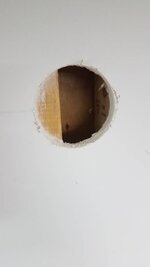
I ended up blowing in my garage after my post. I cut 4" holes in every bay about 8" from the ceiling. I probably should have cut 3" holes since the hose was 2.5" diameter. First time I pressed the on button it blew insulation in the hole and right back out and I got covered in insulation. I made a cup with my hands over the hose which let air come back out, but not insulation. I used 6 bags on 2x4 stud walls which was more than I calculated, hopefully that's a good thing. 53 bays, 16 O.C., 10' high.

I'll be checking how I did with a Flir thermal imaging gun this morning if it's cold enough outside.343703f11a97044d52201e8d487ea981.jpg377f471092b74355faa2aa2dadfbcce9.jpg

Sent from my SM-G930P using Tapatalk
 

Attachments

  • 377f471092b74355faa2aa2dadfbcce9.jpg
    377f471092b74355faa2aa2dadfbcce9.jpg
    43.3 KB · Views: 1
  • 343703f11a97044d52201e8d487ea981.jpg
    343703f11a97044d52201e8d487ea981.jpg
    22.2 KB · Views: 0
OP
B

biggziff

Well-known member
Joined
Apr 9, 2015
Messages
623
Location
Upstate NY
I ended up blowing in my garage after my post. I cut 4" holes in every bay about 8" from the ceiling. I probably should have cut 3" holes since the hose was 2.5" diameter. First time I pressed the on button it blew insulation in the hole and right back out and I got covered in insulation. I made a cup with my hands over the hose which let air come back out, but not insulation. I used 6 bags on 2x4 stud walls which was more than I calculated, hopefully that's a good thing. 53 bays, 16 O.C., 10' high.

I'll be checking how I did with a Flir thermal imaging gun this morning if it's cold enough outside.343703f11a97044d52201e8d487ea981.jpg377f471092b74355faa2aa2dadfbcce9.jpg

Sent from my SM-G930P using Tapatalk

Great work! Looking forward to the thermal images and your impressions of the comfort level in side the garage now.
 

Attachments

  • 377f471092b74355faa2aa2dadfbcce9.jpg
    377f471092b74355faa2aa2dadfbcce9.jpg
    42.1 KB · Views: 0
  • 343703f11a97044d52201e8d487ea981.jpg
    343703f11a97044d52201e8d487ea981.jpg
    22.2 KB · Views: 1

Jarcese

Well-known member
Joined
Aug 17, 2010
Messages
194
Location
Boston, MA
Found a spot I was unaware of. There's an obvious spot where a steal beam meets the wall just to show what the camera can do. Also a shot of the 3" bay that I totally missed. Hopefully will do some more pictures in the winter. It was about 55 degrees outside and 60 in the garage so images are faint, but it worked.603763cdcb0f86133403153d1ef4e9bf.jpg237fbe32ebe54fefe6e4bfe8e2a34fb2.jpg40753a58e94cd96ef0e125c0649145f5.jpg

Sent from my SM-G930P using Tapatalk
 

Attachments

  • 237fbe32ebe54fefe6e4bfe8e2a34fb2.jpg
    237fbe32ebe54fefe6e4bfe8e2a34fb2.jpg
    22.5 KB · Views: 2
  • 603763cdcb0f86133403153d1ef4e9bf.jpg
    603763cdcb0f86133403153d1ef4e9bf.jpg
    22.6 KB · Views: 2
  • 40753a58e94cd96ef0e125c0649145f5.jpg
    40753a58e94cd96ef0e125c0649145f5.jpg
    13.3 KB · Views: 0

crankshaftdan II

Well-known member
Joined
Feb 25, 2009
Messages
1,293
Location
Milwaukee, burbs.
I also did blown in cellulose in my garage. Makes a huge difference.
They cut holes every 16 inches between the studs way up top then blew it in.
They also did above the garage (2 story) and it made the room above it better as well.

Regardless of how many holes you cut, I don't think you will ever get it as densely packed as the folks in the video I linked above !

I'm in the process of putting the finishing touches on a 30' x 50' pole building. I chose to do dense packed cellulose. It's a decision that I don't regret one bit despite the mess, cost and extra effort! The thermal stability of the building is amazing. Despite 90 plus degree days and 70 degree nights for over a week, the interior temperature only varies about 3 degrees. Sound transmission through the walls is nearly non-existent. Cellulose fills every nook and cranny so air infiltration is well controlled.

Installation of the polyester netting was easy. The walls are 12' and the netting came in 12' wide rolls! We simply rolled it out vertically while stapling along the top. We then stretched out the netting, temporarily stapled it and then rolled out thinned white glue through the netting onto the posts and girts to permanently secure it.

To blow in the cellulose we used the El-Cheapo blower that came rent free with a minimum purchase. A 6' length of PVC pipe with a slash end cut was attached to the hose and used to poke through the netting and blow/pack in the cellulose. It took a bit to get the hang of properly packing the cellulose but was totally doable.

The ceiling uses standard blown in loose fill cellulose. The depth varied from about 10" to nearly 2' on the back side of the building for better sound control. This extra depth helps prevent sound from escaping through the ceiling and out the eaves.

The entire process was done with a two man team. Yes, it is a bit messy. Not something I'd want to do with nice equipment, tools or electronics laying around. It is more time consuming than fiberglass batts and cost a bit more but the pain is temporary and the results permanent. I HIGHLY recommend it!

I think that I have posted on this subject on this site with a different post??
I have done both ways with the cellulose-daughters home (1940's) drilled 1.5" holes thru plaster/lathe walls with carbide cutters-purchased cellulose from menards and got machine for free, holes were spaced accordingly between 16" stud walls-blew into holes until it spits back at you knowing that the cavity is packed. Don't remember the cost-did make the home much warmer in heating season and cooler in summer months-sound proof from what it was originally!

About two years ago decided to finish my garage (30x50x10) checked out foam, cellulose, fiberglass, rockwall/ruxall. I went with a portable contractor who had a very large box truck with a cat. diesel engine blower inside & stock bags. Three young men arrived @8:a.m.-used 12' rolls of mesh-looked somewhat like the wind stuff used to pass moisture thru walls, only thinner. They had air staplers and used a zillion staples to attach to the horozontial purlins(2x4's) thus creating a 5" cavity for side walls. ceiling was just 2x4's--they had a sharp metal probe to poke thru netting and blew walls in tight-slight bagging between sections. Ceiling received approx. 2' depth-walls 5". I also have 1.5" ex. wood siding, tyvek, 2" green board on sides. Made a world of difference inside. I also have 2" hi-density foam under the concrete floor for hyd. heat. If closed up in summer, it can be 80 degrees outside and very cool inside-likewise in cold weather. They also used 30+ bags and topped off the house attic(2'++ up there) were finished by 2 P.M.--cost was approx. $3500.00. Was it worth it? Yes a 1000 times over-never lifted a finger and the results were amazing-was it cost efficient? Time will tell-I also finished my interior walls with steel siding, so no problem with the little critters chewing into my cellulose-very sound proof-no drafts cold spots.
Foam(Green) would have been 7K+ just for the garage-and fiberglass/rockwool etc. would have been cheaper and my labor cost???
Do what you feel and also can afford for yours as all people have different ideas and $$$ to work with. Just my two cents worth! Good luck!
 

86turbodsl

Well-known member
Joined
Jul 1, 2005
Messages
6,556
Location
Michigan
Blowing insulation into a cavity is not dense pack.

Dense pack is 3 time denser than blow on and due to the physics of blowing the insulation can only be performed with an open cavity and netting. The air has to be immediately able to exit and not back up the cavity.

It is if you hold that hose in there and keep it running until you're extruding back out. Density is a flexible metric. Define dense pack!
 

4cyclic

Well-known member
Joined
Sep 30, 2013
Messages
104
Location
Grand Isle, Vt
I’ve done dense pack in my barn walls and loose for ceiling. Very effective insulation.
You need a good stapler, netting and a better blower than what’s available at HD.
The netting is stapled 1/4 in inside the studs and partitions to avoid having cellulose trapped on the studs. Gluing it seems like a good idea too.

You get the hang of it fairly quickly, but had to re-blow small pockets that had the cellulose settling after a day or 2.

In total about 360 bags, my son as an helper. It’s a good DIY project.
 

Firebrick43

Well-known member
Joined
May 12, 2015
Messages
14,035
Location
West central Indiana
It is if you hold that hose in there and keep it running until you're extruding back out. Density is a flexible metric. Define dense pack!

3.5 pounds per square foot density or higher. Typically on the 4.5 lbs sqft range.

Netting allows the air that is accelerating/transporting the cellulose to immediately exit to the side.

And enclosed cavity forces the air back up the cavity which cause air pockets and uneven density. Note I am NOT saying you shouldn't blow cellulose into the cavity as even with lower densities it does a wonderfull job conserving heat. What I am saying it shouldn't be called dense pack. They are not the same thing.
 

tyme2par4

Well-known member
Joined
May 16, 2016
Messages
571
Location
NH
3.5 pounds per square foot density or higher. Typically on the 4.5 lbs sqft range.

Netting allows the air that is accelerating/transporting the cellulose to immediately exit to the side.

And enclosed cavity forces the air back up the cavity which cause air pockets and uneven density. Note I am NOT saying you shouldn't blow cellulose into the cavity as even with lower densities it does a wonderfull job conserving heat. What I am saying it shouldn't be called dense pack. They are not the same thing.

Take a look at this video. With proper technique, you can get it packed pretty densely.

 
To avoid these ads, REGISTER NOW!
Top Bottom