To avoid these ads, REGISTER NOW!

Arc & fire

Copymutt

Well-known member
Joined
Sep 3, 2016
Messages
3,395
Location
Colorado
Headed to a buddy’s shop tomorrow.
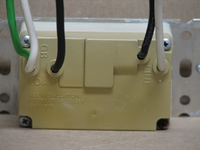
He lost a dedicated 20A circuit to the garage. Plugged in the compressor and the GFCI outlet went up in flames as well the breaker. I saw the outlet was back stabbed & thought perhaps the starting surge from the compressor caused the minimal physical contact to arc. Doesn't explain the breaker though. He Replaced both and it did the same thing.
I’ll ohm the run for a dead short and check the voltage and polarity at both the breaker and the outlet feed.
What could I be missing?I’m leaning toward a bad starting cap on the compressor.
 
To avoid these ads, REGISTER NOW!

rlitman

Well-known member
Joined
Oct 18, 2010
Messages
24,632
Location
Long Island
...the GFCI outlet went up in flames as well the breaker. I saw the outlet was back stabbed...
GFCI outlets are never back stabbed. They use back wire clamps, which are superior to side wire clamps in just about every way.

Bad caps are supposed to fail open, but they can fail short. Could also be a failed coil in the motor, or something more innocuous, but you're right in that there's got to be a dead short in there somewhere.
 

BrandonV

Well-known member
Joined
Jun 9, 2023
Messages
4,030
Location
Arizona
Doesn't explain the breaker though.

Did the breaker actually trip? I assume not. Imagine if a dead short didn't trip a breaker... you'd have some scary stuff on your hands.

Call me paranoid but that's why I like British style of wall plug.
 

rlitman

Well-known member
Joined
Oct 18, 2010
Messages
24,632
Location
Long Island
Did the breaker actually trip? I assume not. Imagine if a dead short didn't trip a breaker... you'd have some scary stuff on your hands.

Call me paranoid but that's why I like British style of wall plug.
You're missing the point of Kirchoff's law. Adding a fuse at the plug doesn't change the short-circuit current seen at the panel, or anywhere else in the circuit for that matter. In fact, on a British ring circuit, there's usually quite a bit more energy available at a typical plug than there would be at a residential American 20A outlet. However, the short-circuit current is NOT limited by the breaker or fuse size. It's limited by the impedance of the circuit, and at a 20A outlet that's physically close to a large commercial panel, the impedance could be very low, leading to the potential for enormous currents.
 

BrandonV

Well-known member
Joined
Jun 9, 2023
Messages
4,030
Location
Arizona
You're missing the point of Kirchoff's law. Adding a fuse at the plug doesn't change the short-circuit current seen at the panel, or anywhere else in the circuit for that matter. In fact, on a British ring circuit, there's usually quite a bit more energy available at a typical plug than there would be at a residential American 20A outlet. However, the short-circuit current is NOT limited by the breaker or fuse size. It's limited by the impedance of the circuit, and at a 20A outlet that's physically close to a large commercial panel, the impedance could be very low, leading to the potential for enormous currents.

My point was that it's more important to have an overcurrent device that actually functions, rather than a breaker just sitting there doing nothing. Fuses tend to always work (like the ones in almost every BS 1363), whereas breakers don't always perform as expected.
 

rlitman

Well-known member
Joined
Oct 18, 2010
Messages
24,632
Location
Long Island
My point was that it's more important to have an overcurrent device that actually functions, rather than a breaker just sitting there doing nothing. Fuses tend to always work (like the ones in almost every BS 1363), whereas breakers don't always perform as expected.
I guess. But my personal experience with thermo-magnetic breakers has been very good (barring typical coordination issues). To be fair, I have no personal experience with FPE. I've also seen the results of the wrong fuse being used, and it may not be so pretty, but yes, the correct fuse should be safe.

I was watching a video by Big Clive the other day about a failed breaker given to him, and it had me floored that the UK would allow a breaker to be made of thermoplastic, and have windows that allowed a flashover to travel from one breaker to it's two neighbors and trash three breakers with a single fault. None of that would fly on this side of the pond.
 

BrandonV

Well-known member
Joined
Jun 9, 2023
Messages
4,030
Location
Arizona
I guess. But my personal experience with thermo-magnetic breakers has been very good (barring typical coordination issues). To be fair, I have no personal experience with FPE. I've also seen the results of the wrong fuse being used, and it may not be so pretty, but yes, the correct fuse should be safe.

I was watching a video by Big Clive the other day about a failed breaker given to him, and it had me floored that the UK would allow a breaker to be made of thermoplastic, and have windows that allowed a flashover to travel from one breaker to it's two neighbors and trash three breakers with a single fault. None of that would fly on this side of the pond.

So I think circuit breakers have a good track record indoors... my experience with bad circuit breakers has been those exposed to the elements for decades.

Thank whoever thought putting them outside in Arizona was a good idea...
 

wyliesdiesels

Well-known member
Joined
Aug 14, 2012
Messages
20,038
Location
Modesto, CA
Headed to a buddy’s shop tomorrow.
He lost a dedicated 20A circuit to the garage. Plugged in the compressor
HP rating of compressor as listed on motor nameplate?
and the GFCI outlet went up in flames as well as the breaker.
literally 🔥 ??
I saw the outlet was back stabbed & thought perhaps the starting surge from the compressor caused the minimal physical contact to arc.
GFCIs do not have backstab terminals....so unless the screws were loose, this is unlikely culprit
Doesn't explain the breaker though. He Replaced both and it did the same thing.
where on the breaker did the flames come from?
I’ll ohm the run for a dead short and check the voltage and polarity at both the breaker and the outlet feed.
What could I be missing?I’m leaning toward a bad starting cap on the compressor.
no such thing as polarity on AC. even if hot and neutral were reversed it would still work and not cause the issue you described.

even a dead short should just cause the breaker to insta-trip due to its magnetic trip mechanism.... ive caused dead shorts on circuits and the breaker simply trips...
 

wyliesdiesels

Well-known member
Joined
Aug 14, 2012
Messages
20,038
Location
Modesto, CA
My point was that it's more important to have an overcurrent device that actually functions, rather than a breaker just sitting there doing nothing. Fuses tend to always work (like the ones in almost every BS 1363), whereas breakers don't always perform as expected.
unless the breaker is a shitsco (zinsco) or Fire Pacific Electric (FPE), or very worn out EOL breaker, its unlikely the breaker wouldnt have tripped. and catching on fire is even more unheard of... theres nothing in a breaker that would cause it to erupt in flames especially considering they are made of bakelite. Ive literally seen melted breakers that never had flames erupt from them....
 

wyliesdiesels

Well-known member
Joined
Aug 14, 2012
Messages
20,038
Location
Modesto, CA
So I think circuit breakers have a good track record indoors... my experience with bad circuit breakers has been those exposed to the elements for decades.

Thank whoever thought putting them outside in Arizona was a good idea...
strange we dont have that issue here in california where the majority of houses and even commercial buildings have meter mains... very rare to find a track home with a subpanel inside.
 

BrandonV

Well-known member
Joined
Jun 9, 2023
Messages
4,030
Location
Arizona
strange we dont have that issue here in california where the majority of houses and even commercial buildings have meter mains... very rare to find a track home with a subpanel inside.

Usually the issue is slow tripping not fires.

I assume its because of the dust storms here over decades of exposure. Last breaker I cut open was legitimately filled with sand.
 

KenC

Well-known member
Joined
Dec 20, 2009
Messages
2,590
Location
oklahoma
unless the breaker is a shitsco (zinsco) or Fire Pacific Electric (FPE), or very worn out EOL breaker, its unlikely the breaker wouldnt have tripped. and catching on fire is even more unheard of... theres nothing in a breaker that would cause it to erupt in flames especially considering they are made of bakelite. Ive literally seen melted breakers that never had flames erupt from them....
Back in the 80s I had a zinsco 2pole 40a fail spectacularly. It was hooked to my welder circuit in the shop. I struck an arc and the breaker blew a hole thru both halves! Huge hole through the body of the breaker. Huge arc flash, but mostly hidden in the panel and lots of smoke but no after fire. I was working 12-15 ft from the panel and it sounds like a bomb went off.

My guess is that the contacts were bad/high resistance, it did'nt trip from heat or load but created enough to physically damage the case.
 
To avoid these ads, REGISTER NOW!
OP
C

Copymutt

Well-known member
Joined
Sep 3, 2016
Messages
3,395
Location
Colorado
Findings,
Yes the GFCI had a back stab connection.
total disregard for basic wiring. Compressor pulls 15amp. Also connected was a 1500 watt heater. GFCI and breakers were 20 amp, but wire was 14 ga. 🙀. In the process of repair a black hot separate black wire was wire nutted to ground🫣. Lots of other wiring issues in the shop. So much for his neighbors knowledge as he wired the shop. Wired it correctly, tested it & advised to get some 12 ga. & I’d install that.
 

dscheidt

Well-known member
Joined
Apr 26, 2017
Messages
2,905
Im guessing youre mixing up push-wire terminals aka back stab, with backwire.

I have never seen a GFCI receptacle with back stab terminals

Post a pic of the GFCI

they were common in the 80s. The ones I took out of my basement were backstab only, no screw pressure terminals at all. I forget who made them, but it was one of the biggies. I suspect the UL listing requirements changed, and it's no longer allowed. probably about the same time the nec started limiting stab connections to 14 awg only.
 

PCustoms

Well-known member
Joined
Jul 23, 2011
Messages
23,213
Location
VT
In the process of repair a black hot separate black wire was wire nutted to ground🫣.

That would immediately trip.


You need to post pictures, or just close the thread. Further discussion it's pointless.
 

wyliesdiesels

Well-known member
Joined
Aug 14, 2012
Messages
20,038
Location
Modesto, CA
they were common in the 80s. The ones I took out of my basement were backstab only, no screw pressure terminals at all. I forget who made them, but it was one of the biggies.
If a GFCI lasted close to 40yrs that would be really surprising.
I suspect the UL listing requirements changed, and it's no longer allowed. probably about the same time the nec started limiting stab connections to 14 awg only.
It wouldnt be the NEC limiting the connections. Thats entirely up to the manufacturer and NRTL listing.
 

BrandonV

Well-known member
Joined
Jun 9, 2023
Messages
4,030
Location
Arizona
If a GFCI lasted close to 40yrs that would be really surprising.

Well you're expecting people to test them weekly right? ;)

Never seen one that accepted backstab connections and I have a weird quirk of collecting vintage GFCIs. Oldest I ever saw was a 3M (yes 3M branded) one from the 1970s that was in use until a year or two ago. Worked great except for the tripping part!

I'd be interested to see or acquire a GFCI which accepts backstabbed connections for my collection. Considering people are still selling recalled GFCIs on eBay 20+ years later... I'd believe anything.
 
Last edited:
To avoid these ads, REGISTER NOW!
Top Bottom