

You are using an out of date browser. It may not display this or other websites correctly.
You should upgrade or use an alternative browser.
You should upgrade or use an alternative browser.
Astro Hi-Vis Sockets
- Thread starter cjarvis
- Start date
Fedwrench
ALLIANCE MEMBER
Taiwan
I don't have them, but they sounded interesting so I looked into them a bit. After reading some reviews and watching a couple youtube videos about them, they don't seem to be as useful as many might be assuming. I don't think they glow in the dark at all, and I also can't find any examples of them shining under normal light like a construction worker's reflective vest would do. Everywhere I look it says they glow under UV light (a blacklight for example), and videos about them only show them glowing while a blacklight shines on them. Most people probably don't even own a blacklight, let alone have one handy while working in order to make a lost socket glow so it can be found.
Since real world usefulness seems very limited, I'm a bit surprised they aren't being sold by Sears for Father's Day. Maybe I'm getting it all wrong and there is a niche market for blacklight sockets out there. Night club stripper pole repair service truck drivers maybe? You don't want a stripper pole repairman to finish and leave the night club, only to have a stripper step on a forgotten unnoticed socket and hurt her back. People who carry a blacklight around everywhere they go in order to try and find bed sheet stains and get free hotel accomodations are probably an untapped tool market as well. People who enjoy working on their cars high on MDMA with their garage ceiling mounted strobe, laser, and blacklights going full blast while listening to techno music would probably love them as well. On second thought, Astro might actually be onto something here.
Since real world usefulness seems very limited, I'm a bit surprised they aren't being sold by Sears for Father's Day. Maybe I'm getting it all wrong and there is a niche market for blacklight sockets out there. Night club stripper pole repair service truck drivers maybe? You don't want a stripper pole repairman to finish and leave the night club, only to have a stripper step on a forgotten unnoticed socket and hurt her back. People who carry a blacklight around everywhere they go in order to try and find bed sheet stains and get free hotel accomodations are probably an untapped tool market as well. People who enjoy working on their cars high on MDMA with their garage ceiling mounted strobe, laser, and blacklights going full blast while listening to techno music would probably love them as well. On second thought, Astro might actually be onto something here.
Buckgnarly
Well-known member
I don't have them, but they sounded interesting so I looked into them a bit. After reading some reviews and watching a couple youtube videos about them, they don't seem to be as useful as many might be assuming. I don't think they glow in the dark at all, and I also can't find any examples of them shining under normal light like a construction worker's reflective vest would do. Everywhere I look it says they glow under UV light (a blacklight for example), and videos about them only show them glowing while a blacklight shines on them. Most people probably don't even own a blacklight, let alone have one handy while working in order to make a lost socket glow so it can be found.
Since real world usefulness seems very limited, I'm a bit surprised they aren't being sold by Sears for Father's Day. Maybe I'm getting it all wrong and there is a niche market for blacklight sockets out there. Night club stripper pole repair service truck drivers maybe? You don't want a stripper pole repairman to finish and leave the night club, only to have a stripper step on a forgotten unnoticed socket and hurt her back. People who carry a blacklight around everywhere they go in order to try and find bed sheet stains and get free hotel accomodations are probably an untapped tool market as well. People who enjoy working on their cars high on MDMA with their garage ceiling mounted strobe, laser, and blacklights going full blast while listening to techno music would probably love them as well. On second thought, Astro might actually be onto something here.
Every mechanic should own a black light. UV dye?
Every mechanic should own a black light. UV dye?
Homeowner vs professional tools.
That's possibly true. I have a blacklight that I use occasionally along with UV dye to help find leaks, but I don't think anyone else I know does. As Zewnten mentioned, I think of Astro (and other Taiwan made stuff in general) as making higher end home mechanic tools, not professional tools designed to handle long term constant use. Maybe they have changed, but last time I looked Astro also only sells sockets in sets, they don't offer additional sizes or individual replacement sockets for sale (except possibly as warranty replacements from their website). That dynamic is probably a bit of a deal breaker for many professional users who would be looking for more than basic socket size ranges.Every mechanic should own a black light. UV dye?
Who knows, maybe more career mechanics are using their stuff than I realize. I think the only Astro item I own is their 3/8 drive nano ratchet. A little more backdrag than I prefer, but it works well and it appears the internals are all metal. It's like any other Taiwan made tool I own. A good value for the price and it filled a need I had, but I would likely have chosen something better if it was a tool I would be using regularly or if I didn't already have some form of tool redundancy in place.
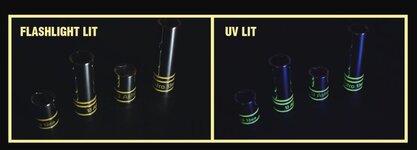
For reference purposes, I attached an image of the Astro sockets under regular flashlight illumination and under a blacklight, taken from their own "Product Information" pdf (located under the "Downloads" tab).
38-Piece Hi-Vis Glowing 1/4" & 3/8" Drive Shallow & Deep 6pt. SAE Socket Set | Astro Pneumatic Tools
NO LONGER AVAILABLE Find those pesky lost sockets with multiple Hi-Vis markings on each socket that also glow under UV light Comprehensive 38-piece set focu ...
 www.astrotools.com
Under a regular flashlight, the markings look like yellow paint, so make sure you have the right expectations going in if you want to buy one of these sets. Yellow paint might not be what you were expecting, but every little bit can be helpful, especially if you are someone who might be getting older and having a harder time reading the stamped size markings on sockets. Not everyone wants to hassle with using a paint pen to make their existing stamped sockets more readable.
Attachments
Last edited:
Odd-job
Well-known member
Taiwanese socketry generally decent enough. Astro has a no questions asked warranty. Just got my set as part of the Bogo so no long term durability of these sets specifically nor am I tool abuser.
Only immediate beef is the 1/4 metric set only goes up to 13mm. To me its not complete unless it goes up to 15mm and ideally 16mm.
Like that the depth compliments my USA craftsman (shorts are a little taller than craftsmans), mid depth gearwrench, and stubby powerbuilts. Having the perfect socket length is nice especially in 1/4 use scenarios where access is a priority.
Astro was smart with the 72 SL Bogo as I am now contemplating getting the SAE set.
Only immediate beef is the 1/4 metric set only goes up to 13mm. To me its not complete unless it goes up to 15mm and ideally 16mm.
Like that the depth compliments my USA craftsman (shorts are a little taller than craftsmans), mid depth gearwrench, and stubby powerbuilts. Having the perfect socket length is nice especially in 1/4 use scenarios where access is a priority.
Astro was smart with the 72 SL Bogo as I am now contemplating getting the SAE set.
Ahh yes, i see the "Astro makes DIY or home gamer tools" theory while when you step onto a Matco or Cornwell truck and end up still purchasing Astro (including sockets and hand tools) is still alive and well in 2022.
Remind me in 5 years to check again if people have figured it out.
Remind me in 5 years to check again if people have figured it out.
That's funny, I was just talking to my Matco dealer. I saw a new ratchet/serpentine set on the truck and I'm like oh, did gearwrench make a new set?
He's says no, it's Astro.
I'm holding my phone and look it up like, look, Astro doesn't make serpentine sets.
He said they make multiple set designs, but just for the tool trucks.
He's says no, it's Astro.
I'm holding my phone and look it up like, look, Astro doesn't make serpentine sets.
He said they make multiple set designs, but just for the tool trucks.
Ooooh, I like that.
I have two options,
1 buy a set. About $120 for both metric and sae.
2 take a Glow in the dark enamel and paint my duralast sockets. The advantage being that I can paint a set chartreuse/hi vis yellow, and the other hunter orange. About $10.
I have two options,
1 buy a set. About $120 for both metric and sae.
2 take a Glow in the dark enamel and paint my duralast sockets. The advantage being that I can paint a set chartreuse/hi vis yellow, and the other hunter orange. About $10.
That's true. The 4 rails aluminum rails alone from Olsa would be like $35. The 43 sockets for the remainder of that ($38?) ain't bad.
The Hi-Vis part of it is just sorta extra... which of course you could complain about it not irradiating like a nuclear reactor... or just treat like most Hi-Vis things.
The Hi-Vis part of it is just sorta extra... which of course you could complain about it not irradiating like a nuclear reactor... or just treat like most Hi-Vis things.
dnschmidt
Well-known member
As an ASTRO distributor I can tell you that ASTRO makes a TON of tools for Matco and many others. If you think they are just for home gamers you're very far off the mark. Matco's spiral pointed drill bits, which everybody and his brother raves about, (similar to Norseman's Vortex) come from ASTRO under an exclusive contract. Perhaps 40% of ASTRO's total business is branded ASTRO. The rest is high end private label like Matco and most of it they can't sell as ASTRO branded because of contractual commitments.
kudakev615
Well-known member
- Joined
- Jan 10, 2017
- Messages
- 178
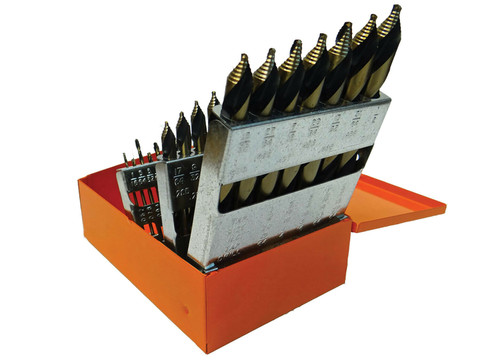
KnKut 29pc Mechanics Step Point Drill Bit Set 1/16"-1/2" (29KK10)
Achieve accurate holes with the KnKut 29pc Mechanics Step Point Drill Bit Set 1/16"-1/2". Includes 1/16" to 1/2" bits, featuring anti-slip shanks. Order yours today!
 www.jbtools.com
i was always under the assumption that matco's hyper step drill drill bits were made by knkut? so noremans are the oe for knkut? i cant keep up with who makes what for who these days

Fedwrench
ALLIANCE MEMBER
I just got mine from a BOGO deal on a new light. They're nice sockets, well finished inside and out, nice aluminum rails and they were free.  You people that posted that Astro was for the DIY crowd and not considered professional tools, not only are not in the ball park but, you don't even have a ticket to the game!!!
 Astro makes its bread and butter from making tool truck versions of their products. If that's not enough for you, then bebop over to You tube where you'll find many techs beating the snot out of Astro tools on a daily basis. You can also visit the torque test channel and see how their impact wrenches perform.
You people that posted that Astro was for the DIY crowd and not considered professional tools, not only are not in the ball park but, you don't even have a ticket to the game!!! Astro makes its bread and butter from making tool truck versions of their products. If that's not enough for you, then bebop over to You tube where you'll find many techs beating the snot out of Astro tools on a daily basis. You can also visit the torque test channel and see how their impact wrenches perform.To the OP, Taiwan is the king of getting you to the 80%+ level of ultimate quality/strength for a good price. If the set includes the socket sizes you want, and you as a customer are happy with that 80%+ quality/strength level you will likely be happy with anything made in Taiwan, Astro stuff included. Taiwan made tools provide great bang for the buck for most people.
I guess a couple of us need to quickly get in line, drink the koolaid, and jump on the Astro bandwagon so posters like Fedwrench, dnschmidt, and WhataTool will stop talking down to us. I never realized that Astro Taiwan is so much better than Sunex Taiwan, Tekton Taiwan, Husky Taiwan, Neiko Taiwan, Capri Taiwan, Performance Tool Taiwan, OEM Taiwan, CTA Tools Taiwan, Pittsburgh Pro Taiwan, and on, and on, and on. As a side note, what's a "home gamer tool"? Would that be a specialty screwdriver used to take apart an Xbox controller? The people who were using the term to talk down to others seemed to create it out of thin air and then magically apply the sentiment to posters who never used the phrase.
I personally give individual tools the respect they command, based on how well they are designed and made. That's it. I care nothing about who rebrands them to make a profit or if a fanboy or a distributor (who has an obvious bias) thinks they are great. If Astro went the extra mile to put out a great impact wrench, that's great and I hope they make lots of money selling it. The world needs more great tools. Just because a tool truck buys a Taiwan made tool, sticks their name on it, and sells it to a mechanic for a nice profit doesn't suddenly make it a professional grade tool though. These days, tool trucks like Matco are mostly selling rebranded tools, so their name doesn't even mean much. They sell very good stuff, average stuff, and junk, just like most other businesses. It is what it is. Even Snap-on sells rebrands for huge markups and sells lots of other items that aren't worth the price they are asking. No brand gets it right all of the time, and no brand usually gets it wrong all of the time either. Specialty tools are also sort of a category of their own, because these days there's pretty much only two categories, made in China junk and made in Taiwan stuff that is usually quite good no matter what brand is stamped on it. There's not much of a top tier left out there in the specialty tool market unless you pay a lot more money or start buying from individual machine shops that are selling their own custom tools for specific purposes.
P.S.- I have a friend who owns a metric set of the Astro nano sockets. He has cracked two so far (both from end to end) and he has probably only had them for about a year. That's partly why I haven't bought any Astro sockets myself, and to me that is the definition of a homeowner grade tool. For regular use, they seem to be made a little too thin, a little too brittle, or both. That personal experience matters more to me than an Amazon review or a youtube video. The Sunex or Husky versions of the same sockets will likely have the same cracking issue over time, because they are also made in Taiwan and they appear almost identical to the Astro branded version, so I'm not just knocking on Astro. According to online reviews, lots of people seem to like the nano style sockets, so that's why I am always hesitant to trust the word of anyone online until I have some personal experience to back it up. I have purchased quite a few things over the years (from places like Amazon) that had glowing reviews only to be completely disappointed with what I actually received. You even have to be careful on GJ, because many have an agenda behind their opinions or they are just trying to get others to buy what they bought so they can get a high from having others take their advice. I have seen many posters talk about how amazing and durable a tool is only to later see that same poster's tool drawer images and notice that less than 2% of the tools in the drawers even appear used.
Anyways, good luck with your decision OP.
I guess a couple of us need to quickly get in line, drink the koolaid, and jump on the Astro bandwagon so posters like Fedwrench, dnschmidt, and WhataTool will stop talking down to us.
I never realized that Astro Taiwan is so much better than Sunex Taiwan, Tekton Taiwan, Husky Taiwan, Neiko Taiwan, Capri Taiwan, Performance Tool Taiwan, OEM Taiwan, CTA Tools Taiwan, Pittsburgh Pro Taiwan, and on, and on, and on. As a side note, what's a "home gamer tool"? Would that be a specialty screwdriver used to take apart an Xbox controller? The people who were using the term to talk down to others seemed to create it out of thin air and then magically apply the sentiment to posters who never used the phrase.I personally give individual tools the respect they command, based on how well they are designed and made. That's it. I care nothing about who rebrands them to make a profit or if a fanboy or a distributor (who has an obvious bias) thinks they are great. If Astro went the extra mile to put out a great impact wrench, that's great and I hope they make lots of money selling it. The world needs more great tools. Just because a tool truck buys a Taiwan made tool, sticks their name on it, and sells it to a mechanic for a nice profit doesn't suddenly make it a professional grade tool though. These days, tool trucks like Matco are mostly selling rebranded tools, so their name doesn't even mean much. They sell very good stuff, average stuff, and junk, just like most other businesses. It is what it is. Even Snap-on sells rebrands for huge markups and sells lots of other items that aren't worth the price they are asking. No brand gets it right all of the time, and no brand usually gets it wrong all of the time either. Specialty tools are also sort of a category of their own, because these days there's pretty much only two categories, made in China junk and made in Taiwan stuff that is usually quite good no matter what brand is stamped on it. There's not much of a top tier left out there in the specialty tool market unless you pay a lot more money or start buying from individual machine shops that are selling their own custom tools for specific purposes.
P.S.- I have a friend who owns a metric set of the Astro nano sockets. He has cracked two so far (both from end to end) and he has probably only had them for about a year. That's partly why I haven't bought any Astro sockets myself, and to me that is the definition of a homeowner grade tool. For regular use, they seem to be made a little too thin, a little too brittle, or both. That personal experience matters more to me than an Amazon review or a youtube video. The Sunex or Husky versions of the same sockets will likely have the same cracking issue over time, because they are also made in Taiwan and they appear almost identical to the Astro branded version, so I'm not just knocking on Astro. According to online reviews, lots of people seem to like the nano style sockets, so that's why I am always hesitant to trust the word of anyone online until I have some personal experience to back it up. I have purchased quite a few things over the years (from places like Amazon) that had glowing reviews only to be completely disappointed with what I actually received. You even have to be careful on GJ, because many have an agenda behind their opinions or they are just trying to get others to buy what they bought so they can get a high from having others take their advice. I have seen many posters talk about how amazing and durable a tool is only to later see that same poster's tool drawer images and notice that less than 2% of the tools in the drawers even appear used.
Anyways, good luck with your decision OP.
KSJeff
Well-known member
When I got my green toolbox a few years ago I wanted to do just this. I was going to make all my SAE green (I work on old stuff - mostly SAE) and my metric orange. Unless you have stuff that's basically made to be painted, the lines end up being so thin that by the time you wipe off the outside it's hard to see the paint. I ended up doing a few wrenches then just gave up on the project.Ooooh, I like that.
I have two options,
1 buy a set. About $120 for both metric and sae.
2 take a Glow in the dark enamel and paint my duralast sockets. The advantage being that I can paint a set chartreuse/hi vis yellow, and the other hunter orange. About $10.
But, I'm not the most patient guy and I lack any real skill with painting. So, if you're a patient guy that loves painting miniatures or something, this might be great for you. For me? No good.
I do also have the astro metric set from the BOGO. The deep 3/8 are missing the 9mm which is weird. Appear to be similar quality to my Gearwrench sockets and I would grab them again if I could get both sets for $120 and I needed sockets.
Fedwrench
ALLIANCE MEMBER
I apologize if you thought I was talking down to you. That wasn't my intent. There is always debate on what constitutes a professional tool. Proto probably makes it the easiest since they stamp Professional right on the toolsTo the OP, Taiwan is the king of getting you to the 80%+ level of ultimate quality/strength for a good price. If the set includes the socket sizes you want, and you as a customer are happy with that 80%+ quality/strength level you will likely be happy with anything made in Taiwan, Astro stuff included. Taiwan made tools provide great bang for the buck for most people.
I guess a couple of us need to quickly get in line, drink the koolaid, and jump on the Astro bandwagon so posters like Fedwrench, dnschmidt, and WhataTool will stop talking down to us.
I personally give individual tools the respect they command, based on how well they are designed and made. That's it. I care nothing about who rebrands them to make a profit or if a fanboy or a distributor (who has an obvious bias) thinks they are great. If Astro went the extra mile to put out a great impact wrench, that's great and I hope they make lots of money selling it. The world needs more great tools. Just because a tool truck buys a Taiwan made tool, sticks their name on it, and sells it to a mechanic for a nice profit doesn't suddenly make it a professional grade tool though. These days, tool trucks like Matco are mostly selling rebranded tools, so their name doesn't even mean much. They sell very good stuff, average stuff, and junk, just like most other businesses. It is what it is. Even Snap-on sells rebrands for huge markups and sells lots of other items that aren't worth the price they are asking. No brand gets it right all of the time, and no brand usually gets it wrong all of the time either. Specialty tools are also sort of a category of their own, because these days there's pretty much only two categories, made in China junk and made in Taiwan stuff that is usually quite good no matter what brand is stamped on it. There's not much of a top tier left out there in the specialty tool market unless you pay a lot more money or start buying from individual machine shops that are selling their own custom tools for specific purposes.
P.S.- I have a friend who owns a metric set of the Astro nano sockets. He has cracked two so far (both from end to end) and he has probably only had them for about a year. That's partly why I haven't bought any Astro sockets myself, and to me that is the definition of a homeowner grade tool. For regular use, they seem to be made a little too thin, a little too brittle, or both. That personal experience matters more to me than an Amazon review or a youtube video. The Sunex or Husky versions of the same sockets will likely have the same cracking issue over time, because they are also made in Taiwan and they appear almost identical to the Astro branded version, so I'm not just knocking on Astro. According to online reviews, lots of people seem to like the nano style sockets, so that's why I am always hesitant to trust the word of anyone online until I have some personal experience to back it up. I have purchased quite a few things over the years (from places like Amazon) that had glowing reviews only to be completely disappointed with what I actually received. You even have to be careful on GJ, because many have an agenda behind their opinions or they are just trying to get others to buy what they bought so they can get a high from having others take their advice. I have seen many posters talk about how amazing and durable a tool is only to later see that same poster's tool drawer images and notice that less than 2% of the tools in the drawers even appear used.
Anyways, good luck with your decision OP.
 I've had tools from every brand fail. I'll also generally agree that Taiwan made tools will get you to at least that 80% strength/quality point which I'm quite happy with. Because what brand at what cost will get you that other 20% and do you really need it? Truck brand quality has slipped in my opinion and many of the truck brands offer a lot of Taiwan made tools. It depends on the user and what they're working on. There are differences in quality across the Taiwan brands though. It might come down to knurling or no knurling, satin or full polish, fit and finish, weight and balance. I always thought Grey Pneumatic and Sunex came from the same factory and there was a guy on the loading dock that that separated the impact sockets into red or blue cases. Anyway, Taiwan made tools seem to be the only brands releasing new products these days. They also seem to be where most of my money goes too.
 The old style duralast can be painted as they have wide bands. The new Sata made ones are going to be a pain. If there were thicker/wider multicolored rubber bands I would use those instead of paint. Rubber bands would make a better option, as they would add a nice grippy texture.When I got my green toolbox a few years ago I wanted to do just this. I was going to make all my SAE green (I work on old stuff - mostly SAE) and my metric orange. Unless you have stuff that's basically made to be painted, the lines end up being so thin that by the time you wipe off the outside it's hard to see the paint. I ended up doing a few wrenches then just gave up on the project.
But, I'm not the most patient guy and I lack any real skill with painting. So, if you're a patient guy that loves painting miniatures or something, this might be great for you. For me? No good.
I do also have the astro metric set from the BOGO. The deep 3/8 are missing the 9mm which is weird. Appear to be similar quality to my Gearwrench sockets and I would grab them again if I could get both sets for $120 and I needed sockets.
I'm perfectly OK with Taiwanese tools. My reason for asking was to verify that they weren't made in China or India.
I need a set of 3/8 dr. SAE to replace my current set of USA Craftsman that have quite a bit of peeling chrome. I have the Capri in 1/4 drive and really like them, but they don't have the 3/8 dr. SAE in stock. The Tekton 3/8 drive 30 piece shallow and deep socket set is $81, whereas the Astro 38 piece shallow/deep set (including 1/4 dr.) can be had for $66. I don't need the 1/4 drive set, but it never hurts to have some in reserve.
I need a set of 3/8 dr. SAE to replace my current set of USA Craftsman that have quite a bit of peeling chrome. I have the Capri in 1/4 drive and really like them, but they don't have the 3/8 dr. SAE in stock. The Tekton 3/8 drive 30 piece shallow and deep socket set is $81, whereas the Astro 38 piece shallow/deep set (including 1/4 dr.) can be had for $66. I don't need the 1/4 drive set, but it never hurts to have some in reserve.
Handyandy23
Well-known member
P.S.- I have a friend who owns a metric set of the Astro nano sockets. He has cracked two so far (both from end to end) and he has probably only had them for about a year. That's partly why I haven't bought any Astro sockets myself, and to me that is the definition of a homeowner grade tool.
To be fair, do tool truck brands even make anything similar to the Astro Nano sockets? An ultra short impact socket? They don't that I'm aware of, and I'm sure for this exact reason. You're asking for a tiny little socket to fit into the tightest spots, and then rattling on it with an impact. Tool trucks likely know this design would be a money pit for them in warranty.
I have the Astro Nano's in both 3/8" and 1/2" drives in metric, as well as hex and torx 3/8". I think the only one I've broken so far is one of the smaller torx, and they are likely my most-used sockets because they fit in anywhere.
I'm not trying to tell you to "get in line", but just pointing out that expectations have to be realistic. If Snap On won't even attempt to sell you something similar, seems a little harsh to avoid a brand because they're giving customers something that the "pro grade" guys won't.
You're putting an awfully large amount of weight into a typical "my friend did it" GJ story to determine this warranty money pit stuff. None of MINE, as in I use them every day and can take pictures of what I'm talking about upon request, nano sockets have broken.To be fair, do tool truck brands even make anything similar to the Astro Nano sockets? An ultra short impact socket? They don't that I'm aware of, and I'm sure for this exact reason. You're asking for a tiny little socket to fit into the tightest spots, and then rattling on it with an impact. Tool trucks likely know this design would be a money pit for them in warranty.
I have the Astro Nano's in both 3/8" and 1/2" drives in metric, as well as hex and torx 3/8". I think the only one I've broken so far is one of the smaller torx, and they are likely my most-used sockets because they fit in anywhere.
I'm not trying to tell you to "get in line", but just pointing out that expectations have to be realistic. If Snap On won't even attempt to sell you something similar, seems a little harsh to avoid a brand because they're giving customers something that the "pro grade" guys won't.
Handyandy23
Well-known member
You're putting an awfully large amount of weight into a typical "my friend did it" GJ story to determine this warranty money pit stuff. None of MINE, as in I use them every day and can take pictures of what I'm talking about upon request, nano sockets have broken.
I'm saying I have Nano's too and love them, so maybe you misinterpreted what I'm saying. They are great sockets.
But you also don't see tool truck brands producing these ultra compact impact sockets. My *assumption* is that this is because you can't expect to hammer on a tiny socket with a huge impact gun forever with a lifetime warranty, but we'd need those brands to comment on why they don't offer them.
My whole point was the other poster was acting like Astro is a poor brand because his buddy broke a couple Nano sockets, but if the tool truck brands won't even come out to play in the ultra short impact game, then how can you judge Astro's offering as basic homeowner grade?
Handyandy23- You should probably read my posts again, because I never said Astro makes "basic homeowner grade tools", I said "I think of Astro (and other Taiwan made stuff in general) as making higher end home mechanic tools". I also never said I was avoiding the brand. I said, "That's partly why I haven't bought any Astro sockets myself." I said "partly", because I have almost all the sockets I will ever need, and I have owned most of them for years, so I'm not really even looking for any. The only Astro sockets I ever thought about getting at one time were their nano sets.
If many of you like your Astro nano sockets, that's great, and I'm truly glad they help you make your work easier. I have the right to have a different opinion though, because my experience with them has been a bit unimpressive. I ended up going another way and sourcing sockets that I custom modifed to do the job of nano sockets in a way that is more flexible and works better for me, while also getting into tighter areas than the nano sockets can get into, so I avoided dealing with the weaknesses I saw in them and no longer have a need for them.
As a side note, what makes the Astro Taiwan nano sockets better than, different from, or superior to this Husky branded Taiwan nano socket set?
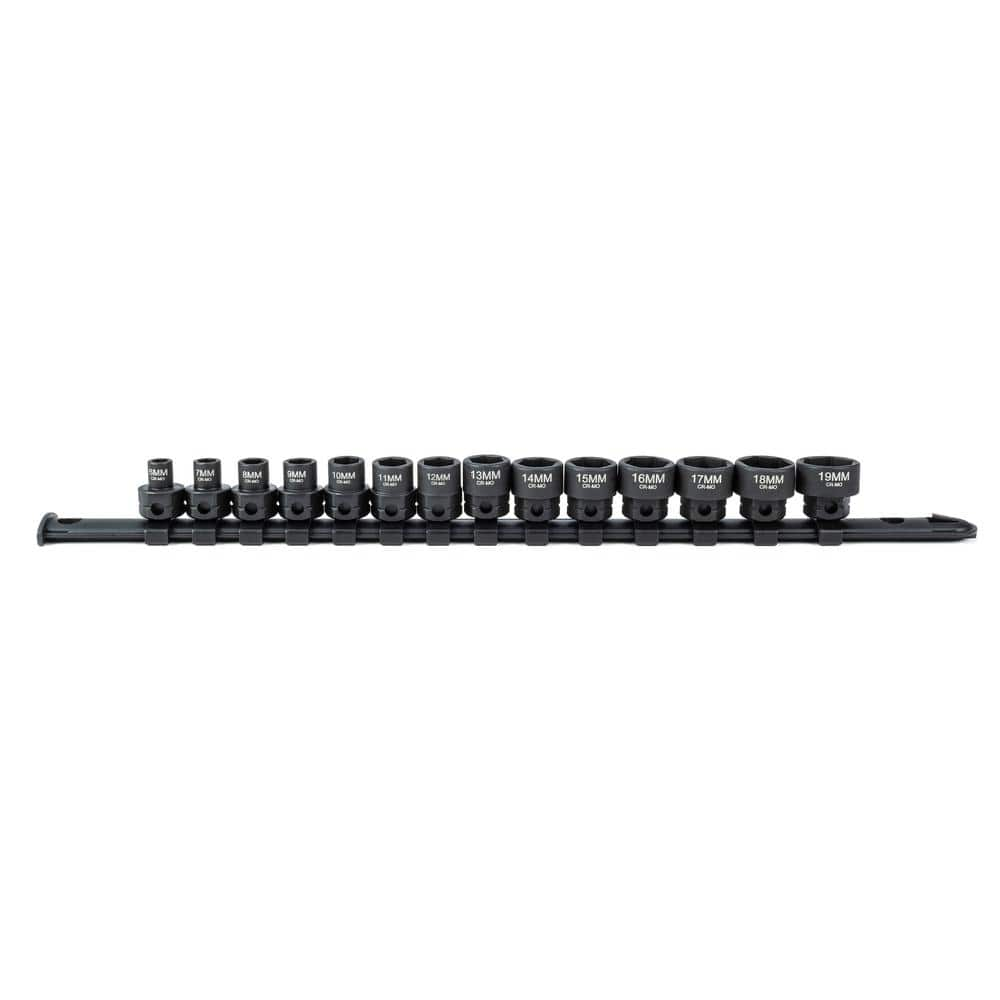
Does anyone know? Has anyone done a comparison test or explained any differences? What about the Sunex set? Are all three exactly the same with a different name laser etched on them? They did all enter the market around the same time, they look the same, and they are all made in Taiwan. Is one better quality than the other because of the name stamping? Is the excellent quality level of Astro's impact wrench transferring to their nano sockets by osmosis?
Along the same line of thought, if someone doesn't care about the blacklight paint, what makes the Astro Taiwan hi-vis sockets mentioned in this thread better than, different from, or superior to Pittsburgh Pro HF chrome Taiwan sockets that sell for around $10-14 a set (pre-20% off coupon)? Why are people defending Astro by default, and arguing that the Astro set is pro-grade because of the brand stamped on it while the HF sets are considered to be decent quality homeowner grade sockets by most? Astro and HF are both just putting their name on a product that was made by someone else in Taiwan so they can make a profit for themselves.
There are actually two visible design issues I see with the Astro hi-vis sockets that would turn me off to buying them for my own use if I needed them. Nobody has mentioned either one yet. Those issues are part of the reason I drop the sockets down into the homeowner category by default in my mind, because they are both obvious negatives for a more pro level user, even if someone down the road proves that the steel strength is equal to a Snap-on socket. Tool design matters a lot too.
Lastly, if someone you knew bought the Husky nano set or a Pittsburgh Pro chrome socket set and broke one, because of the brand stamping would you just assume the set wasn't great quality and maybe tell them to look for something better to replace it, or would you still blame the operator, doubt the validity of the story, and make excuses to explain the break and defend the brand?
If many of you like your Astro nano sockets, that's great, and I'm truly glad they help you make your work easier. I have the right to have a different opinion though, because my experience with them has been a bit unimpressive. I ended up going another way and sourcing sockets that I custom modifed to do the job of nano sockets in a way that is more flexible and works better for me, while also getting into tighter areas than the nano sockets can get into, so I avoided dealing with the weaknesses I saw in them and no longer have a need for them.
As a side note, what makes the Astro Taiwan nano sockets better than, different from, or superior to this Husky branded Taiwan nano socket set?
Husky 3/8 in. Drive Low Profile Metric 6-Point Impact Socket Set (14-Piece) H3DLPIMSM14PC - The Home Depot
Husky 3/8 in. drive impact sockets are forged from chrome molybdenum alloy steel (Cr-Mo) and designed to withstand rigors of heavy-duty auto and industrial use. Size markings have been hard stamped into
www.homedepot.com
Does anyone know? Has anyone done a comparison test or explained any differences? What about the Sunex set? Are all three exactly the same with a different name laser etched on them? They did all enter the market around the same time, they look the same, and they are all made in Taiwan. Is one better quality than the other because of the name stamping? Is the excellent quality level of Astro's impact wrench transferring to their nano sockets by osmosis?
Along the same line of thought, if someone doesn't care about the blacklight paint, what makes the Astro Taiwan hi-vis sockets mentioned in this thread better than, different from, or superior to Pittsburgh Pro HF chrome Taiwan sockets that sell for around $10-14 a set (pre-20% off coupon)? Why are people defending Astro by default, and arguing that the Astro set is pro-grade because of the brand stamped on it while the HF sets are considered to be decent quality homeowner grade sockets by most? Astro and HF are both just putting their name on a product that was made by someone else in Taiwan so they can make a profit for themselves.
There are actually two visible design issues I see with the Astro hi-vis sockets that would turn me off to buying them for my own use if I needed them. Nobody has mentioned either one yet. Those issues are part of the reason I drop the sockets down into the homeowner category by default in my mind, because they are both obvious negatives for a more pro level user, even if someone down the road proves that the steel strength is equal to a Snap-on socket. Tool design matters a lot too.
Lastly, if someone you knew bought the Husky nano set or a Pittsburgh Pro chrome socket set and broke one, because of the brand stamping would you just assume the set wasn't great quality and maybe tell them to look for something better to replace it, or would you still blame the operator, doubt the validity of the story, and make excuses to explain the break and defend the brand?
Last edited:
Wrench97
Well-known member
I'm still trying to figure out why I would need sockets that glow under a black light?.............................................
Odd-job
Well-known member
Curious too.I'm curious to know what those two design issues that bother you are .
If we are talking about missing features, the ultimate sockets in my mind would be semi deep, neck downed, duo/impact (think Grey Pneumatic), shallow broach, full length SK knurling, hex on the end, both laser etched and stamped in big font, and lastly have a Koken nut gripper built in.
Since you are the OP, the first issue I noticed is that all the images I have seen show the sockets being like most Taiwan made sockets (and many other mid-level brands and even some high quality brands as well) in that they have too much lead-in chamfer, especially in the smaller socket sizes. Lead-in chamfer helps you get a socket onto a fastener a little bit faster, but it also reduces overall socket engagement depth once the socket is on the fastener. When you get up into larger sizes that usually doesn't matter much, but for sizes smaller than 12mm or so the loss in socket engagement with the fastener can exceed 20-50% quite easily, and most people would never even notice the issue because you can't visually see the mechanical interaction between the socket and fastener once the socket is covering the fastener head. Most would need to look at a cross section of the mated together bolt and socket to recognize the issue. For instance, many Taiwan made sockets can't grab well onto a common 5/16" hex head sheet metal screw. Some screw heads are made thicker than others, but the head of the screw is often too short. The socket might work for a little while, but you will soon notice the edges of the socket getting chewed up and the socket will start to slip from very little of the socket actually engaging with the fastener head. Look at high quality sheet metal nut drivers and you will notice that most have zero or minimal lead-in chamfer for that very reason. Here is an example-I'm curious to know what those two design issues that bother you are .
Sheet metal screws aren't the only fasteners with shallow heads. The more companies try to cut costs, reduce resources, and shave weight from their products, the more I am seeing shallow bolt heads or bolt heads with partially hollowed out centers or heavily rounded off top edges. As a result, the newer items are, the more important having a minimal chamfer on your sockets is becoming. There are also quite a few areas where a person might encounter very shallow nuts once you start doing work outside the automotive realm. Everything from thin jam nuts, to bicycle fasteners, to brass plumbing reducer bushings, to those super thin hex mounting nuts often found on potentiometers and panel switches if you start getting into electronics work or diy vehicle wiring.
Snap-on is one of the best factory made sockets in regards to lead-in chamfer, Williams USA made sockets share the Snap-on design, my Taiwan Sunex impact swivel sockets are quite good, from what I have seen most brands of the nano style sockets are better than most in that regard, etc. Many impact socket sets are actually better than the same brand's chrome equivalent socket sets as well.
If you have a Harbor Freight nearby, go look at their regular depth Taiwan Pittsburgh Pro chrome sockets and then look at their Taiwan Icon sockets that are 3x the price. The most important functional difference between them is that the Icon sockets have a much shallower lead-in chamfer (about equal with Snap-on) so by default they will have better socket engagement and be less likely to round out a bolt head even if every other aspect of the two socket sets are identical.
The second thing I noticed right away is that the smaller sized Astro hi-vis deep sockets all stay full diameter for half or more of their length before necking down to a smaller diameter. That is a poor design move. It's a waste of steel and it creates hassles for the end user. It means the socket can't reach as far down into a recessed area, and in a cramped area the socket is going to be noticeably fatter and in the way more than it needs to be. Snap-on sockets neck down to a smaller diameter as soon as they leave the 3/8 square drive broach area, so do Tekton deep sockets. Thats how you make a professionally designed tool, you design it to work as well as possible in as many places as possible. That's also another difference between HF's Icon deep sockets vs their 3x cheaper Pittsburgh Pro deep sockets. The Icon sockets neck down as soon as possible just like Snap-on or Tekton. Their cheaper deep sockets don't.
Look at my attached images and you will clearly see both issues I have talked about. The first image shows a Pittsburgh Pro Taiwan $10 deep socket set. The second image shows a $35 Icon Taiwan socket set. Those two design differences between these socket sets will actually matter more to the average and professional user than the broaching tolerances or the ultimate strength of the socket itself. Notice how the Astro hi-vis sockets look more like the cheaper HF set?
Attachments


Since you are the OP, the first issue I noticed is that all the images I have seen show the sockets being like most Taiwan made sockets (and many other mid-level brands and even some high quality brands as well) in that they have too much lead-in chamfer, especially in the smaller socket sizes. Lead-in chamfer helps you get a socket onto a fastener a little bit faster, but it also reduces overall socket engagement depth once the socket is on the fastener. When you get up into larger sizes that usually doesn't matter much, but for sizes smaller than 12mm or so the loss in socket engagement with the fastener can exceed 20-50% quite easily, and most people would never even notice the issue because you can't visually see the mechanical interaction between the socket and fastener once the socket is covering the fastener head. Most would need to look at a cross section of the mated together bolt and socket to recognize the issue. For instance, many Taiwan made sockets can't grab well onto a common 5/16" hex head sheet metal screw. Some screw heads are made thicker than others, but the head of the screw is often too short. The socket might work for a little while, but you will soon notice the edges of the socket getting chewed up and the socket will start to slip from very little of the socket actually engaging with the fastener head. Look at high quality sheet metal nut drivers and you will notice that most have zero or minimal lead-in chamfer for that very reason. Here is an example-
Sheet metal screws aren't the only fasteners with shallow heads. The more companies try to cut costs, reduce resources, and shave weight from their products, the more I am seeing shallow bolt heads or bolt heads with partially hollowed out centers or heavily rounded off top edges. As a result, the newer items are, the more important having a minimal chamfer on your sockets is becoming. There are also quite a few areas where a person might encounter very shallow nuts once you start doing work outside the automotive realm. Everything from thin jam nuts, to bicycle fasteners, to brass plumbing reducer bushings, to those super thin hex mounting nuts often found on potentiometers and panel switches if you start getting into electronics work or diy vehicle wiring.
Snap-on is one of the best factory made sockets in regards to lead-in chamfer, Williams USA made sockets share the Snap-on design, my Taiwan Sunex impact swivel sockets are quite good, from what I have seen most brands of the nano style sockets are better than most in that regard, etc. Many impact socket sets are actually better than the same brand's chrome equivalent socket sets as well.
If you have a Harbor Freight nearby, go look at their regular depth Taiwan Pittsburgh Pro chrome sockets and then look at their Taiwan Icon sockets that are 3x the price. The most important functional difference between them is that the Icon sockets have a much shallower lead-in chamfer (about equal with Snap-on) so by default they will have better socket engagement and be less likely to round out a bolt head even if every other aspect of the two socket sets are identical.
The second thing I noticed right away is that the smaller sized Astro hi-vis deep sockets all stay full diameter for half or more of their length before necking down to a smaller diameter. That is a poor design move. It's a waste of steel and it creates hassles for the end user. It means the socket can't reach as far down into a recessed area, and in a cramped area the socket is going to be noticeably fatter and in the way more than it needs to be. Snap-on sockets neck down to a smaller diameter as soon as they leave the 3/8 square drive broach area, so do Tekton deep sockets. Thats how you make a professionally designed tool, you design it to work as well as possible in as many places as possible. That's also another difference between HF's Icon deep sockets vs their 3x cheaper Pittsburgh Pro deep sockets. The Icon sockets neck down as soon as possible just like Snap-on or Tekton. Their cheaper deep sockets don't.
Look at my attached images and you will clearly see both issues I have talked about. The first image shows a Pittsburgh Pro Taiwan $10 deep socket set. The second image shows a $35 Icon Taiwan socket set. Those two design differences between these socket sets will actually matter more to the average and professional user than the broaching tolerances or the ultimate strength of the socket itself. Notice how the Astro hi-vis sockets look more like the cheaper HF set?
i am fairly well versed and know much of these things but learned a thing or 2 from the way you described it.
many of the so called experts would do well to read and and study your post. your use of common senses, logic and experience are lost on many people.
High visibility sockets.
That's actually an interesting idea. I don't use any hand tool so super often that I'd wear off a well-applied finish I think, but those don't look all that 'hi-vis'
What I had in mind was something like those Williams red (or yellow) wrench sets, although I honestly don't know how long those hold up.
Could a person have the outside of a set of impact sockets powder coated? Would that last?
That's actually an interesting idea. I don't use any hand tool so super often that I'd wear off a well-applied finish I think, but those don't look all that 'hi-vis'
What I had in mind was something like those Williams red (or yellow) wrench sets, although I honestly don't know how long those hold up.
Could a person have the outside of a set of impact sockets powder coated? Would that last?
Odd-job
Well-known member
Many thanks for the detailed response. 100% agree on the neck down feature amongst the more premium Taiwanese offerings (we should make a list one of these days). Getting into tight places especially in 1/4 applications is always a priority.Since you are the OP, the first issue I noticed is that all the images I have seen show the sockets being like most Taiwan made sockets (and many other mid-level brands and even some high quality brands as well) in that they have too much lead-in chamfer, especially in the smaller socket sizes. Lead-in chamfer helps you get a socket onto a fastener a little bit faster, but it also reduces overall socket engagement depth once the socket is on the fastener. When you get up into larger sizes that usually doesn't matter much, but for sizes smaller than 12mm or so the loss in socket engagement with the fastener can exceed 20-50% quite easily, and most people would never even notice the issue because you can't visually see the mechanical interaction between the socket and fastener once the socket is covering the fastener head. Most would need to look at a cross section of the mated together bolt and socket to recognize the issue. For instance, many Taiwan made sockets can't grab well onto a common 5/16" hex head sheet metal screw. Some screw heads are made thicker than others, but the head of the screw is often too short. The socket might work for a little while, but you will soon notice the edges of the socket getting chewed up and the socket will start to slip from very little of the socket actually engaging with the fastener head. Look at high quality sheet metal nut drivers and you will notice that most have zero or minimal lead-in chamfer for that very reason. Here is an example-
Sheet metal screws aren't the only fasteners with shallow heads. The more companies try to cut costs, reduce resources, and shave weight from their products, the more I am seeing shallow bolt heads or bolt heads with partially hollowed out centers or heavily rounded off top edges. As a result, the newer items are, the more important having a minimal chamfer on your sockets is becoming. There are also quite a few areas where a person might encounter very shallow nuts once you start doing work outside the automotive realm. Everything from thin jam nuts, to bicycle fasteners, to brass plumbing reducer bushings, to those super thin hex mounting nuts often found on potentiometers and panel switches if you start getting into electronics work or diy vehicle wiring.
Snap-on is one of the best factory made sockets in regards to lead-in chamfer, Williams USA made sockets share the Snap-on design, my Taiwan Sunex impact swivel sockets are quite good, from what I have seen most brands of the nano style sockets are better than most in that regard, etc. Many impact socket sets are actually better than the same brand's chrome equivalent socket sets as well.
If you have a Harbor Freight nearby, go look at their regular depth Taiwan Pittsburgh Pro chrome sockets and then look at their Taiwan Icon sockets that are 3x the price. The most important functional difference between them is that the Icon sockets have a much shallower lead-in chamfer (about equal with Snap-on) so by default they will have better socket engagement and be less likely to round out a bolt head even if every other aspect of the two socket sets are identical.
The second thing I noticed right away is that the smaller sized Astro hi-vis deep sockets all stay full diameter for half or more of their length before necking down to a smaller diameter. That is a poor design move. It's a waste of steel and it creates hassles for the end user. It means the socket can't reach as far down into a recessed area, and in a cramped area the socket is going to be noticeably fatter and in the way more than it needs to be. Snap-on sockets neck down to a smaller diameter as soon as they leave the 3/8 square drive broach area, so do Tekton deep sockets. Thats how you make a professionally designed tool, you design it to work as well as possible in as many places as possible. That's also another difference between HF's Icon deep sockets vs their 3x cheaper Pittsburgh Pro deep sockets. The Icon sockets neck down as soon as possible just like Snap-on or Tekton. Their cheaper deep sockets don't.
Look at my attached images and you will clearly see both issues I have talked about. The first image shows a Pittsburgh Pro Taiwan $10 deep socket set. The second image shows a $35 Icon Taiwan socket set. Those two design differences between these socket sets will actually matter more to the average and professional user than the broaching tolerances or the ultimate strength of the socket itself. Notice how the Astro hi-vis sockets look more like the cheaper HF set?
The lead in chamfer, I can sort of see what you are getting at although would argue that this is part of the reason to have multiple different socket sets and types for different fasteners and applications. Could see the view that a high degree of lead in chamfer is a unnecessary compromise between dropping/funneling the socket on a bolt head vs having more surface area of engagement. Sort of like the fact that 12 pt sockets while slightly quicker to get on the fastener than 6 pt can be a sin to use.
Hey really great reply, it was thought provoking. I have a question for you regarding the necking down issue. I completely agree with you in preferring sockets that neck down earlier and you made a good point about not reducing the diameter being a waste of steel. This got me thinking. I always figured it was a cost cutting move to not neck down because you could reuse more “blank” sizes and I admittedly don’t know what process is used to get the more complex shape but I figured the extra step would cost more money. You posted those Pittsburgh sockets that do neck down but it starts higher which threw me for a loop. Is this just poor design, or is there some advantage cost savings or otherwise that lead to this.Since you are the OP, the first issue I noticed is that all the images I have seen show the sockets being like most Taiwan made sockets (and many other mid-level brands and even some high quality brands as well) in that they have too much lead-in chamfer, especially in the smaller socket sizes. Lead-in chamfer helps you get a socket onto a fastener a little bit faster, but it also reduces overall socket engagement depth once the socket is on the fastener. When you get up into larger sizes that usually doesn't matter much, but for sizes smaller than 12mm or so the loss in socket engagement with the fastener can exceed 20-50% quite easily, and most people would never even notice the issue because you can't visually see the mechanical interaction between the socket and fastener once the socket is covering the fastener head. Most would need to look at a cross section of the mated together bolt and socket to recognize the issue. For instance, many Taiwan made sockets can't grab well onto a common 5/16" hex head sheet metal screw. Some screw heads are made thicker than others, but the head of the screw is often too short. The socket might work for a little while, but you will soon notice the edges of the socket getting chewed up and the socket will start to slip from very little of the socket actually engaging with the fastener head. Look at high quality sheet metal nut drivers and you will notice that most have zero or minimal lead-in chamfer for that very reason. Here is an example-
Sheet metal screws aren't the only fasteners with shallow heads. The more companies try to cut costs, reduce resources, and shave weight from their products, the more I am seeing shallow bolt heads or bolt heads with partially hollowed out centers or heavily rounded off top edges. As a result, the newer items are, the more important having a minimal chamfer on your sockets is becoming. There are also quite a few areas where a person might encounter very shallow nuts once you start doing work outside the automotive realm. Everything from thin jam nuts, to bicycle fasteners, to brass plumbing reducer bushings, to those super thin hex mounting nuts often found on potentiometers and panel switches if you start getting into electronics work or diy vehicle wiring.
Snap-on is one of the best factory made sockets in regards to lead-in chamfer, Williams USA made sockets share the Snap-on design, my Taiwan Sunex impact swivel sockets are quite good, from what I have seen most brands of the nano style sockets are better than most in that regard, etc. Many impact socket sets are actually better than the same brand's chrome equivalent socket sets as well.
If you have a Harbor Freight nearby, go look at their regular depth Taiwan Pittsburgh Pro chrome sockets and then look at their Taiwan Icon sockets that are 3x the price. The most important functional difference between them is that the Icon sockets have a much shallower lead-in chamfer (about equal with Snap-on) so by default they will have better socket engagement and be less likely to round out a bolt head even if every other aspect of the two socket sets are identical.
The second thing I noticed right away is that the smaller sized Astro hi-vis deep sockets all stay full diameter for half or more of their length before necking down to a smaller diameter. That is a poor design move. It's a waste of steel and it creates hassles for the end user. It means the socket can't reach as far down into a recessed area, and in a cramped area the socket is going to be noticeably fatter and in the way more than it needs to be. Snap-on sockets neck down to a smaller diameter as soon as they leave the 3/8 square drive broach area, so do Tekton deep sockets. Thats how you make a professionally designed tool, you design it to work as well as possible in as many places as possible. That's also another difference between HF's Icon deep sockets vs their 3x cheaper Pittsburgh Pro deep sockets. The Icon sockets neck down as soon as possible just like Snap-on or Tekton. Their cheaper deep sockets don't.
Look at my attached images and you will clearly see both issues I have talked about. The first image shows a Pittsburgh Pro Taiwan $10 deep socket set. The second image shows a $35 Icon Taiwan socket set. Those two design differences between these socket sets will actually matter more to the average and professional user than the broaching tolerances or the ultimate strength of the socket itself. Notice how the Astro hi-vis sockets look more like the cheaper HF set?
Flared Base
Well-known member
It's likely because the necked down portion of the socket either needs to be forged that way or machined that way. Machining that way takes more time which is more cost. Forging that way is more difficult because the deeper the thin cross section you are trying to get material to flow into, the more difficult it is. Leads to higher loads on machines, more tool wear... Basically either way you approach getting the necked down section to be longer is more difficult.Hey really great reply, it was thought provoking. I have a question for you regarding the necking down issue. I completely agree with you in preferring sockets that neck down earlier and you made a good point about not reducing the diameter being a waste of steel. This got me thinking. I always figured it was a cost cutting move to not neck down because you could reuse more “blank” sizes and I admittedly don’t know what process is used to get the more complex shape but I figured the extra step would cost more money. You posted those Pittsburgh sockets that do neck down but it starts higher which threw me for a loop. Is this just poor design, or is there some advantage cost savings or otherwise that lead to this.
Thanks. I figured machining was cost prohibitive, but I don’t know enough about forging and was curious what would make the latter shape for difficult. Thanks for the info!It's likely because the necked down portion of the socket either needs to be forged that way or machined that way. Machining that way takes more time which is more cost. Forging that way is more difficult because the deeper the thin cross section you are trying to get material to flow into, the more difficult it is. Leads to higher loads on machines, more tool wear... Basically either way you approach getting the necked down section to be longer is more difficult.
Flared Base might be right, but I can't say. I can think of 5-6 reasons why they might do it from a manufacturing perspective, but I'm not exactly sure any of them are the primary reason why they often neck cheaper deep sockets down in diameter too late, because sockets are made in different ways by different factories, and manufacturers are truly all over the board in terms of how they shape their chrome and impact deep sockets. I can only assume they all still make a profit, so their decisions are working for them. When it comes to impact sockets though, you often have a double dynamic at play. Sockets that are thin and minimalistic fit into the most places, but sockets that are thick and heavy are more durable and they will do a better job of transferring hit energy from the impact gun to the fastener head.
In regards to sharing blanks, even high end companies like Snap-on are sharing blanks more and more these days. Look at their modern crowfoot socket sets. Each Snap-on crowfoot socket used to be a unique and slightly scaled up version of the one before it. Then they started to use the same blank for every two sizes, now they are using one blank for every three sizes in their metric sets. Once you start paying attention to that sort of thing, it's visually obvious. The open ends also used to have noticeably thicker jaws than the ones they're making now. I see that as a net negative, but I guess it could be helpful in certain situations too. Pretty much everyone across the board is cutting costs, sharing blanks, and cutting corners here and there, hoping people won't notice.
All that being said, the chrome deep socket dynamic might come down to a simple dynamic of marketing and human nature. In general, most people subconsciously believe at some level, that weight equals quality when buying things. For instance, think of an average person who's trying to decide between two similar socket sets at the same store. If they don't know enough about the sets to understand and notice details or design differences, they will often make their final decision using a more simple criteria, like which brand name they recognize, which set looks the nicest visually, or which set is the cheapest. If two similar sets are sitting next to each other, they are both about the same price, and the buyer doesn't have any brand loyalty towards either one, they will more often than not choose the set that is heavier, because the subconscious belief that heavier means it's stronger or better quality will kick in. That dynamic is the same reason why most manufacturers to this day, still screw a small thick steel plate somewhere inside the plastic case of your average usb computer mouse. That steel weight plate often isn't there if you use a battery powered wireless mouse, because the battery itself is accomplishing the goal of adding the desired dead weight instead. Almost everyone perceives a computer mouse as being more durable and better made if it has a little more weight to it than what's naturally provided by the plastic structure and the internal circuitry. If you want to test what I'm saying, take the battery out of your average wireless mouse and then pretend you are using it. Most will feel like you now have a cheap kid's toy in your hand.
Professional tool users often think in the exact opposite manner from the average person. Professionals care much less about the price or the package visuals, so they will likely skip right over the cheap tool options while shopping. They are looking for a tool that's as strong as it needs to be to reliably get the job done for a long time, and they want it to also have all the specific features they like (which help them do their job more easily). Unlike the average person, they also usually want their tools to be as light as possible (without sacrificing much strength), so the tool is more comfortable and enjoyable to use day in and day out or so the tool tote they carry around with them doesn't weigh as much.
Take pipe wrenches for example. The average person will almost never buy a professional quality pipe wrench, let alone an aluminum handled high quality pipe wrench. They will usually buy a generic branded steel/iron handled pipe wrench, because it's cheap, and they will assume it must be plenty strong because it's thick and heavy right? A professional won't even think twice. He will pay extra for a professional quality steel/iron pipe wrench, because he knows they usually work noticeably better, last longer, and they are safer to use. As soon as he can afford it, he will also gladly pay the even higher premium price for a professional quality aluminum pipe wrench. On the job he will use the aluminum one as often as possible, because it's noticeably lighter to carry around and less tiring to use. He will only grab his heavier iron/steel pipe wrench when he needs the extra strength.
In regards to sharing blanks, even high end companies like Snap-on are sharing blanks more and more these days. Look at their modern crowfoot socket sets. Each Snap-on crowfoot socket used to be a unique and slightly scaled up version of the one before it. Then they started to use the same blank for every two sizes, now they are using one blank for every three sizes in their metric sets. Once you start paying attention to that sort of thing, it's visually obvious. The open ends also used to have noticeably thicker jaws than the ones they're making now. I see that as a net negative, but I guess it could be helpful in certain situations too. Pretty much everyone across the board is cutting costs, sharing blanks, and cutting corners here and there, hoping people won't notice.
All that being said, the chrome deep socket dynamic might come down to a simple dynamic of marketing and human nature. In general, most people subconsciously believe at some level, that weight equals quality when buying things. For instance, think of an average person who's trying to decide between two similar socket sets at the same store. If they don't know enough about the sets to understand and notice details or design differences, they will often make their final decision using a more simple criteria, like which brand name they recognize, which set looks the nicest visually, or which set is the cheapest. If two similar sets are sitting next to each other, they are both about the same price, and the buyer doesn't have any brand loyalty towards either one, they will more often than not choose the set that is heavier, because the subconscious belief that heavier means it's stronger or better quality will kick in. That dynamic is the same reason why most manufacturers to this day, still screw a small thick steel plate somewhere inside the plastic case of your average usb computer mouse. That steel weight plate often isn't there if you use a battery powered wireless mouse, because the battery itself is accomplishing the goal of adding the desired dead weight instead. Almost everyone perceives a computer mouse as being more durable and better made if it has a little more weight to it than what's naturally provided by the plastic structure and the internal circuitry. If you want to test what I'm saying, take the battery out of your average wireless mouse and then pretend you are using it. Most will feel like you now have a cheap kid's toy in your hand.
Professional tool users often think in the exact opposite manner from the average person. Professionals care much less about the price or the package visuals, so they will likely skip right over the cheap tool options while shopping. They are looking for a tool that's as strong as it needs to be to reliably get the job done for a long time, and they want it to also have all the specific features they like (which help them do their job more easily). Unlike the average person, they also usually want their tools to be as light as possible (without sacrificing much strength), so the tool is more comfortable and enjoyable to use day in and day out or so the tool tote they carry around with them doesn't weigh as much.
Take pipe wrenches for example. The average person will almost never buy a professional quality pipe wrench, let alone an aluminum handled high quality pipe wrench. They will usually buy a generic branded steel/iron handled pipe wrench, because it's cheap, and they will assume it must be plenty strong because it's thick and heavy right? A professional won't even think twice. He will pay extra for a professional quality steel/iron pipe wrench, because he knows they usually work noticeably better, last longer, and they are safer to use. As soon as he can afford it, he will also gladly pay the even higher premium price for a professional quality aluminum pipe wrench. On the job he will use the aluminum one as often as possible, because it's noticeably lighter to carry around and less tiring to use. He will only grab his heavier iron/steel pipe wrench when he needs the extra strength.
Last edited:
It used to be a thing in the audio world also. At one time amplifiers probably could be evaluated for quality on weight alone but this changed as technology moved forward. This led to a bunch of companies weighting receivers to give the impression of quality. Thanks for taking the time to write such a detailed reply.Flared Base might be right, but I can't say. I can think of 5-6 reasons why they might do it from a manufacturing perspective, but I'm not exactly sure any of them are the primary reason why they often neck cheaper deep sockets down in diameter too late, because sockets are made in different ways by different factories, and manufacturers are truly all over the board in terms of how they shape their chrome and impact deep sockets. I can only assume they all still make a profit, so their decisions are working for them. When it comes to impact sockets though, you often have a double dynamic at play. Sockets that are thin and minimalistic fit into the most places, but sockets that are thick and heavy are more durable and they will do a better job of transferring hit energy from the impact gun to the fastener head.
In regards to sharing blanks, even high end companies like Snap-on are sharing blanks more and more these days. Look at their modern crowfoot socket sets. Each Snap-on crowfoot socket used to be a unique and slightly scaled up version of the one before it. Then they started to use the same blank for every two sizes, now they are using one blank for every three sizes in their metric sets. Once you start paying attention to that sort of thing, it's visually obvious. The open ends also used to have noticeably thicker jaws than the ones they're making now. I see that as a net negative, but I guess it could be helpful in certain situations too. Pretty much everyone across the board is cutting costs, sharing blanks, and cutting corners here and there, hoping people won't notice.
All that being said, the chrome deep socket dynamic might come down to a simple dynamic of marketing and human nature. In general, most people subconsciously believe at some level, that weight equals quality when buying things. For instance, think of an average person who's trying to decide between two similar socket sets at the same store. If they don't know enough about the sets to understand and notice details or design differences, they will often make their final decision using a more simple criteria, like which brand name they recognize, which set looks the nicest visually, or which set is the cheapest. If two similar sets are sitting next to each other, they are both about the same price, and the buyer doesn't have any brand loyalty towards either one, they will more often than not choose the set that is heavier, because the subconscious belief that heavier means it's stronger or better quality will kick in. That dynamic is the same reason why most manufacturers to this day, still screw a small thick steel plate somewhere inside the plastic case of your average usb computer mouse. That steel weight plate often isn't there if you use a battery powered wireless mouse, because the battery itself is accomplishing the goal of adding the desired dead weight instead. Almost everyone perceives a computer mouse as being more durable and better made if it has a little more weight to it than what's naturally provided by the plastic structure and the internal circuitry. If you want to test what I'm saying, take the battery out of your average wireless mouse and then pretend you are using it. Most will feel like you now have a cheap kid's toy in your hand.
Professional tool users often think in the exact opposite manner from the average person. Professionals care much less about the price or the package visuals, so they will likely skip right over the cheap tool options while shopping. They are looking for a tool that's as strong as it needs to be to reliably get the job done for a long time, and they want it to also have all the specific features they like (which help them do their job more easily). Unlike the average person, they also usually want their tools to be as light as possible (without sacrificing much strength), so the tool is more comfortable and enjoyable to use day in and day out or so the tool tote they carry around with them doesn't weigh as much.
Take pipe wrenches for example. The average person will almost never buy a professional quality pipe wrench, let alone an aluminum handled high quality pipe wrench. They will usually buy a generic branded steel/iron handled pipe wrench, because it's cheap, and they will assume it must be plenty strong because it's thick and heavy right? A professional won't even think twice. He will pay extra for a professional quality steel/iron pipe wrench, because he knows they usually work noticeably better, last longer, and they are safer to use. As soon as he can afford it, he will also gladly pay the even higher premium price for a professional quality aluminum pipe wrench. On the job he will use the aluminum one as often as possible, because it's noticeably lighter to carry around and less tiring to use. He will only grab his heavier iron/steel pipe wrench when he needs the extra strength.
RTM
Well-known member
Nice post @Tools4Me. I just ran into a myriad of those problems, disassembled a cheap set of rusty shelves. Had to use a deep socket on a long extension, as my standards got fat too fast, threw off the angle, or had too much lead in. Needed the extension to clear the ratchet or impact head and clear the lead in on shallow nuts.
good thing I had lots of choices.
good thing I had lots of choices.
The weight of a computer mouse affects the mobility and precision. Heavier weight allows for a more precise control (smoother hand movement). Optical mice are really light, and if they don't have that weight, they become uncomfortable to use (and really easy to send flying across the table by accident).Flared Base might be right, but I can't say. I can think of 5-6 reasons why they might do it from a manufacturing perspective, but I'm not exactly sure any of them are the primary reason why they often neck cheaper deep sockets down in diameter too late, because sockets are made in different ways by different factories, and manufacturers are truly all over the board in terms of how they shape their chrome and impact deep sockets. I can only assume they all still make a profit, so their decisions are working for them. When it comes to impact sockets though, you often have a double dynamic at play. Sockets that are thin and minimalistic fit into the most places, but sockets that are thick and heavy are more durable and they will do a better job of transferring hit energy from the impact gun to the fastener head.
In regards to sharing blanks, even high end companies like Snap-on are sharing blanks more and more these days. Look at their modern crowfoot socket sets. Each Snap-on crowfoot socket used to be a unique and slightly scaled up version of the one before it. Then they started to use the same blank for every two sizes, now they are using one blank for every three sizes in their metric sets. Once you start paying attention to that sort of thing, it's visually obvious. The open ends also used to have noticeably thicker jaws than the ones they're making now. I see that as a net negative, but I guess it could be helpful in certain situations too. Pretty much everyone across the board is cutting costs, sharing blanks, and cutting corners here and there, hoping people won't notice.
All that being said, the chrome deep socket dynamic might come down to a simple dynamic of marketing and human nature. In general, most people subconsciously believe at some level, that weight equals quality when buying things. For instance, think of an average person who's trying to decide between two similar socket sets at the same store. If they don't know enough about the sets to understand and notice details or design differences, they will often make their final decision using a more simple criteria, like which brand name they recognize, which set looks the nicest visually, or which set is the cheapest. If two similar sets are sitting next to each other, they are both about the same price, and the buyer doesn't have any brand loyalty towards either one, they will more often than not choose the set that is heavier, because the subconscious belief that heavier means it's stronger or better quality will kick in. That dynamic is the same reason why most manufacturers to this day, still screw a small thick steel plate somewhere inside the plastic case of your average usb computer mouse. That steel weight plate often isn't there if you use a battery powered wireless mouse, because the battery itself is accomplishing the goal of adding the desired dead weight instead. Almost everyone perceives a computer mouse as being more durable and better made if it has a little more weight to it than what's naturally provided by the plastic structure and the internal circuitry. If you want to test what I'm saying, take the battery out of your average wireless mouse and then pretend you are using it. Most will feel like you now have a cheap kid's toy in your hand.
Professional tool users often think in the exact opposite manner from the average person. Professionals care much less about the price or the package visuals, so they will likely skip right over the cheap tool options while shopping. They are looking for a tool that's as strong as it needs to be to reliably get the job done for a long time, and they want it to also have all the specific features they like (which help them do their job more easily). Unlike the average person, they also usually want their tools to be as light as possible (without sacrificing much strength), so the tool is more comfortable and enjoyable to use day in and day out or so the tool tote they carry around with them doesn't weigh as much.
Take pipe wrenches for example. The average person will almost never buy a professional quality pipe wrench, let alone an aluminum handled high quality pipe wrench. They will usually buy a generic branded steel/iron handled pipe wrench, because it's cheap, and they will assume it must be plenty strong because it's thick and heavy right? A professional won't even think twice. He will pay extra for a professional quality steel/iron pipe wrench, because he knows they usually work noticeably better, last longer, and they are safer to use. As soon as he can afford it, he will also gladly pay the even higher premium price for a professional quality aluminum pipe wrench. On the job he will use the aluminum one as often as possible, because it's noticeably lighter to carry around and less tiring to use. He will only grab his heavier iron/steel pipe wrench when he needs the extra strength.
On a rolling ball mouse (the old style), the ball is weighted to provide enough grip/friction to allow it to roll/operate smoothly.
An image was just posted in another thread on GJ, which perfectly shows what I was talking about in post #28 of this thread. Sockets often have too much lead-in chamfer. It also shows what I mentioned about many bolt heads now having hollowed out tops (which weakens the top area of the hex and makes any interaction problems with a socket worse).
I added the marks and text to the original image. As you can see from the attached image of a 12mm bolt head, the round-off markings from the original socket/wrench only go halfway down the side of the bolt head which means the user was only getting about 50% max socket engagement when the bolt head rounded off. It's actually worse than that, because that particular bolt head is also hollowed out at the top (to cut cost and weight), so the first 25% or so of the head deforms more easily than it does deeper down where the structure of the head is solid.
The original poster of this image probably would have achieved at least 60% more torque on that bolt before it rounded off if he had used a better designed socket that had very shallow chamfering. He likely wouldn't have needed the Bolt Biter socket at all. Bolt biter sockets have zero lead-in chamfer, which allows them to fully engage the fastener head. That's partly why they work noticeably better than a regular socket. You can see in the image that the bolt biter engagement marks go all the way down the side of the bolt head. Everybody should pay attention to how their bolts strip or round out, because many times the cause is actually poor design of the socket that was originally used on the bolt. Buy better designed sockets and you will have way less rounded out bolt heads to deal with.
I added the marks and text to the original image. As you can see from the attached image of a 12mm bolt head, the round-off markings from the original socket/wrench only go halfway down the side of the bolt head which means the user was only getting about 50% max socket engagement when the bolt head rounded off. It's actually worse than that, because that particular bolt head is also hollowed out at the top (to cut cost and weight), so the first 25% or so of the head deforms more easily than it does deeper down where the structure of the head is solid.
The original poster of this image probably would have achieved at least 60% more torque on that bolt before it rounded off if he had used a better designed socket that had very shallow chamfering. He likely wouldn't have needed the Bolt Biter socket at all. Bolt biter sockets have zero lead-in chamfer, which allows them to fully engage the fastener head. That's partly why they work noticeably better than a regular socket. You can see in the image that the bolt biter engagement marks go all the way down the side of the bolt head. Everybody should pay attention to how their bolts strip or round out, because many times the cause is actually poor design of the socket that was originally used on the bolt. Buy better designed sockets and you will have way less rounded out bolt heads to deal with.
Attachments
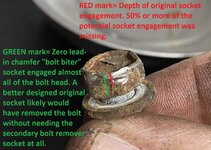
Last edited:
javyLSU
Well-known member
I was curious to see what the difference in lead-in chamfer was between my Gearwrench and Snap-on sockets, so I broke out the caliper. These are both 3/8” drive 24mm sockets. Gearwrench on the left, Snap-on on the right. First measurement was the Gearwrench, 2.24mm:

Then the Snap-on, 0.87mm:

I could feel a difference, but I didn’t expect it to be that much!
Then the Snap-on, 0.87mm:
I could feel a difference, but I didn’t expect it to be that much!
Last edited: