To avoid these ads, REGISTER NOW!

Baldor grinder

1930

Well-known member
Joined
May 18, 2011
Messages
2,808
Location
Florida
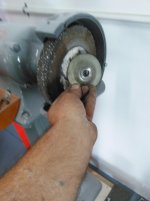
A few months back I restored this grinder/stand and like the ******* I am lost one of the disks that hold the wire wheel/grinding wheel onto the output shaft. Its 3 1/4 diam and shaft is 5/8.

Id like to find the missing part, I know that I could make something work but not interested in going that route.

Im hoping some of you hoarders ( I mean collectors of fine art ) can help me to get this machine back into use using the right part.

Let me know what I need to do to make this happen, thanks.
 

Attachments

  • Picture 033.jpg
    Picture 033.jpg
    145.4 KB · Views: 95
  • Picture 034.jpg
    Picture 034.jpg
    151.2 KB · Views: 101
Last edited:
To avoid these ads, REGISTER NOW!

rsanter

Well-known member
Joined
Dec 22, 2007
Messages
18,541
Location
visalia ca
I think you can get them off amazon as well
They are a generic part, you just need to get the one with the right diameter and hole size

Bob
 

torqueman2002

Well-known member
Joined
Jun 3, 2009
Messages
6,151
Location
SE Michigan
I think you can get them off amazon as well
They are a generic part, you just need to get the one with the right diameter and hole size

Bob
+1
My Baldor flanges are notched, to clear a roll-pin, that locates them on the arbor/shaft.

You can also find other pieces for your grinder, for safe operation>

  • spark arresters
  • tools rests
  • eye shields
  • wheel guard covers
  • replacement stones
The stone looks like it has been used for grinding non-ferrous metal (aluminum), which can cause the stone to explode.

See the 1st link in my signature line for more Safe Grinding guidelines.

:thumbup:
 
Last edited:
To avoid these ads, REGISTER NOW!
OP
1

1930

Well-known member
Joined
May 18, 2011
Messages
2,808
Location
Florida
+1
My Baldor flanges are notched, to clear a roll-pin, that locates them on the arbor/shaft.

You can also find other pieces for your grinder, for safe operation>

  • spark arresters
  • tools rests
  • eye shields
  • wheel guard covers
  • replacement stones
The stone looks like it has been used for grinding non-ferrous metal (aluminum), which can cause the stone to explode.

See the 1st link in my signature line for more Safe Grinding guidelines.

:thumbup:
Why would the stone explode?
 

torqueman2002

Well-known member
Joined
Jun 3, 2009
Messages
6,151
Location
SE Michigan
Why would the stone explode?
Basically, the pours of the grinding wheel become clogged with the softer non-ferrous metal, then over heat when pressure is increased to over come the loss of efficiency the bonding material fails and the wheel comes apart.

Even if pure, non-ferrous aluminum is used, sparks can occur during an aluminothermic reaction, also called a thermic reaction. Such a reaction occurs when an aluminum particle and a metal oxide, such as rust, are ignited by a heat source and chemically burn as a "Class D" fire (i.e., combustible metal). The reaction is similar to a fireworks explosion, can create 4,500ºF sparks, and can occur when a grinder is used on ferric material (e.g., steel) ...


We've all done it and gotten away with it, but since I've frequented the Block grinder thread I have stopped.

More reading:
https://www.osha.gov/pls/oshaweb/owadisp.show_document?p_table=INTERPRETATIONS&p_id=27413

http://www.garagejournal.com/forum/showpost.php?p=5175492&postcount=6976

http://www.practicalmachinist.com/vb/general-archive/bench-grinder-aluminum-73038/

Sign I use as a reminder, at the ferrous grinder station.
do-not-grind-danger-sign-s-9854.jpg
 
Last edited:
OP
1

1930

Well-known member
Joined
May 18, 2011
Messages
2,808
Location
Florida
Basically, the pours of the grinding wheel become clogged with the softer non-ferrous metal, then over heat when pressure is increased to over come the loss of efficiency the bonding material fails and the wheel comes apart.

Even if pure, non-ferrous aluminum is used, sparks can occur during an aluminothermic reaction, also called a thermic reaction. Such a reaction occurs when an aluminum particle and a metal oxide, such as rust, are ignited by a heat source and chemically burn as a "Class D" fire (i.e., combustible metal). The reaction is similar to a fireworks explosion, can create 4,500ºF sparks, and can occur when a grinder is used on ferric material (e.g., steel) ...


We've all done it and gotten away with it, but since I've frequented the Block grinder thread I have stopped.

More reading:
https://www.osha.gov/pls/oshaweb/owadisp.show_document?p_table=INTERPRETATIONS&p_id=27413

http://www.garagejournal.com/forum/showpost.php?p=5175492&postcount=6976

http://www.practicalmachinist.com/vb/general-archive/bench-grinder-aluminum-73038/

Sign I use as a reminder, at the ferrous grinder station.
do-not-grind-danger-sign-s-9854.jpg
I have seen that sign in various shops and now it makes sense, thanks
 

torqueman2002

Well-known member
Joined
Jun 3, 2009
Messages
6,151
Location
SE Michigan
To avoid these ads, REGISTER NOW!
Top Bottom