To avoid these ads, REGISTER NOW!

Basement advice

Shawnw

New member
Joined
Apr 2, 2011
Messages
3
I know, I know. It's not a garage. But I just found this site last week and its quickly becoming my favorite place to browse. With all the ingenuity I've seen on this site I figured that has to be some intelligent individuals with some good answers.

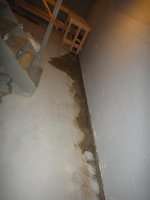
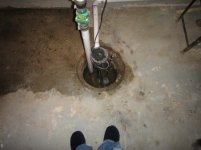
My basement is of the floating slab type, cinder block wall, and originally had the standard 1" gap between floor and wall. Once upon a time someone decided to fill this gap in, but did not bring it up above the floors surface all the way around. Normally this wouldn't be a big deal but I have A LOT of ground water considering I live across the street from a river. I have a sump pump in my basement that pumps out probably 150 feet in the opposite direction of the river into a dry well. The sump works great, as does the dry well. My problem is the water accumulating everywhere BUT the crock. I have water seeping through the floor in random spots, puddling up by the walls where the slab gap was filled in, and I even have water accumulating in the corner where the sump is no more than 2 feet away.

Normally I'd say this might be easy to correct by doing a french drain around the house, grading, etc... My problem is that this sump can run year round, the water exists year ground, and the ground water is always present. My yard isn't "soggy" but in the summer time the soil never dries. It's great for growing grass. Not so great for keeping the dogs paws clean :p

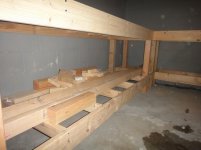
I snapped some photos and am hoping someone has some suggestions? I don't believe drylok will solve the issue. After all the people selling the house claimed the basement had NO water issues after drylokking the basement numerous times, and here we are now! The only solution I've come up with so far is cutting up sections of the floor wide enough to run corrugated plastic back to the crock. The house was built in the 50's and I suspect the existing drainage coming back into the crock could be plugged.

I'm a do-it-yourselfer so whatever the solution may be I'd prefer to do it rather than pay someone.

Thanks for reading guys,
Shawn
 

Attachments

  • DSC00892.jpg
    DSC00892.jpg
    96.6 KB · Views: 54
  • DSC00893.jpg
    DSC00893.jpg
    127.7 KB · Views: 55
  • DSC00894.jpg
    DSC00894.jpg
    71.6 KB · Views: 63
  • DSC00895.jpg
    DSC00895.jpg
    102.9 KB · Views: 63
  • DSC00896.jpg
    DSC00896.jpg
    75 KB · Views: 48
To avoid these ads, REGISTER NOW!

rasit

Well-known member
Joined
Sep 17, 2009
Messages
387
Location
SE Pennsylvania
The water table is almost at floor grade. I would replace that sump pit with a 30" - 36" deep, ADS plastic one first and see if that lowers the water table down enough to stop the weeping. If not, your thoughts about running pipe to the new, deeper sump should do the trick.
 

red

Well-known member
Joined
Feb 20, 2009
Messages
720
Location
Hudson Valley, NY
Brother had the same problem not high water table but same kind of seepage after a few days of rain. Fixed it by cut a 16" wide strip along the perimeter of the basement. Broke out the concrete and dug down 10-12'". Installed drainage pipe with holes (facing down) with a sock over the pipe to keep dirt out, filled with crushed rock. Put filter fabric over the trench an laid new concrete over. The pipes lead to a sump pump pit. House was built in the 50's and original slab was less than 3" thick. Worked great!

You also don't have to do the whole perimeter at one time. I would do the longest wall closest to the pit. It should be able to handle the water under your slab. If not do another additional wall. Plus I would not leave the trenches empty for long. You have to worry about your walls moving inward. Dig and fill a section at a time, sloping the pipe towards your pit.
 
Last edited:

unluckyty

Well-known member
Joined
Dec 16, 2009
Messages
50
Location
Ohio
If the only water is from the where the wall and the floor meet. Check into installing a base board type water channeling system, that will lead to your sump pit. Should be available in a do it yourself application. Easy to install, hardest dirtiest part is floor prep of grinding the concrete floor to get a good epoxy seal. Still possible easiest solution.

Sorry missed the part of it in the middle of floor area, disregard

Greg
 
Last edited:
To avoid these ads, REGISTER NOW!

burleymike

Well-known member
Joined
Feb 25, 2009
Messages
935
Location
SE Idaho
Ugh I have the exact same problem except for two things. I only have to deal with a high water table in the summer when everybody is irrigating. Second difference is the previous owners "fixed" the problem by pouring a second slab 3" thick over the existing floor. Now I have 840 sqft of slab to haul out of the basement along with what I have excavated.

I talked to an engineer before starting as I was concerned about our fine silty soil clogging the drain tile. He said to line the trench with geotextile fabric and backfill with sand which would filter most of the silt out of the water then placing the drain tile with the perforations in the 10 o'clock and 2 o'clock position would allow any silt left to settle out and not enter the pipe.

One thing I should have asked him was where to place the pipe. I dug my trench right next to the footing. I called him back after getting done and asked if I had to worry about compromising the footing.

He told me it should be fine since the water velocity in my area is very low and unlikely to move much material, he did say however that it is wise to place it at a 45° angle from the bottom of the footing. In other words if you are going to dig down 16" you should be a minimum of 16" away from the footing that way it will be out of the "zone of influence."

That was 4 years ago and no more water even when my neighbor forgets and floods his field that is 20' from my house 5" deep overnight. My foundation still has no cracks and I am not pumping any silt.

It might be wise to contact an engineer to help you determine how deep to place your drain tile and if you need to stay even further away from your footing than I do, different soils and the water velocity makes a big difference.
 

70redbee

Well-known member
Joined
Dec 31, 2008
Messages
494
Location
Knoxville,Md
Great idea to consult an engineer to get the correct info for your area. Different soils,wall construction,location and materials used can be suggested by them for your specific needs.Good Luck.
 

Kevin54

MEMBER EMERITUS
Joined
Jan 12, 2005
Messages
29,341
Location
Urbana, Ohio
There are companies out there that fixes these problems for a living. As far as cost, I don't know as I never asked, but know a few people that have had it done with great results. They cut the floor on the inside back about a foot, remove the concrete and dig down some. Then they knock a hole in the bottom core of the block to let the water drain out. The trench inside is filled with gravel and a tile and runs to a sump pump. Then it is covered over with a membrane and re-concreted. Guaranteed results.

On the other hand, you can always tear up your yard, dig down all around your foundation, and have it properly sealed. Holmes on Homes shows it quite a few times. After digging all the way down to the footer, they seal the wall with a special mastic, then cover it with panels that have bumps all over the surface, cover that with a membrane, gravel, tiled, etc so no water can get through the basement wall. A little more expensive than the other route I would think.

Then there is an option that there is a channel that fastens to the wall and to the floor. You drill holes in the bottom core of the block. The channel seals (caulked) to the wall and floor and the channel runs the water to a sump pump.

There are various ways to do it, but all is going to cost a little bit of coin unless you have some very good friends with some equipment.
 

kbs2244

Well-known member
Joined
Nov 11, 2006
Messages
14,065
rasit has a good idea with a deeper pit.
Realize the pump may run constantly until it gets the dirt under and around the house dryed out.

But the first thing I would do is re-route the pump output to the downhill side of the house.
If you are pumping it above the house, it is draining back to the house.
Just under the surface where you cannot see it.

Use 3 or 4 inch pipe along the outside of the foundation to the low corner of the house.
(You want it bigger than the pump pipe so get a siphion break. Otherwise all the water in the pipe will want to drain back to the pit. Even with a check valve.)
Do the same with all your downspouts.
 
To avoid these ads, REGISTER NOW!
Top Bottom