To avoid these ads, REGISTER NOW!

basement crack repair?

Citation

Well-known member
Joined
Jan 20, 2016
Messages
3,211
Location
Indy
I'm hoping the forum wisdom can help with a basement leak.

My house is pre-WW2 construction and has a block wall basement. Overall the place has been impressively dry. This is good since most of the basement has been finished. After 4 years of ownership I've found my first signs of any water intrusion that wasn't plumbing related. A small amount of water is making it between the slab and the block wall. This was after a recent heavy rain. The leak is under the front porch so this isn't a place where water is collecting right off the house. It is in the front where the yard is very flat so a good rain could saturate the ground.

I have some ideas to improve handling of the downspout water on that side of the house but I would also like to try to plug this up without resorting to a big contractor job.

The two options that seem most obvious to me are either a hydraulic cement fix
https://www.thisoldhouse.com/basements/21015952/hydraulic-cement-for-leaky-basements
or something like a DIY foundation crack kit. Something like this:
https://www.amazon.com/dp/B01F1I6OQO/?tag=atomicindus08-20

I don't know if there are any special considerations here since my house has block vs poured concrete walls. I do have some fear that this is a plug one spot just to find the next leak sort of issue but for around $100 or less and my time I'm willing to take that risk.

Any suggestions/tips?

Additional info:
I do intend to improve things in the front of the house. Our gutters fill up fast this time of year but no rain water drops into this exact area. It's under the front porch so it actually had to travel at least a few feet under ground to get to this part of my basement. Still, this is on the front of my house. My lot is rather flat in front so even if clear, the down spouts still put all the water about 6 feet from the house where it has to soak into the ground. I'm thinking about running a drain line from the front to the side of the house (perhaps 30-40' where it can tie into a drain from a different gutter. That would put the water in the back yard where it runs away from the house.
 
To avoid these ads, REGISTER NOW!

Kaizen

Well-known member
Joined
Jan 9, 2015
Messages
6,938
Location
New England
How big is the crack/space? Hydraulic cement needs some room. I agree plugging one will push it.
If this is not a repeating thing diverting with a French drain or dry well might work.


Sent from my iPhone using Tapatalk
 
OP
C

Citation

Well-known member
Joined
Jan 20, 2016
Messages
3,211
Location
Indy
Diverting is part of my plan. See my comments about getting the gutter drains from the front of the house to drain to the back.

Currently I don't think this is a crack so much as just water weeping between the block and the floor. I identified the area because it was the most wet vs because I could get a finger into the gap. Any gap I'm guessing is less than 1/16" at this point.
 

Lynden

Well-known member
Joined
May 23, 2015
Messages
672
Location
Southern California
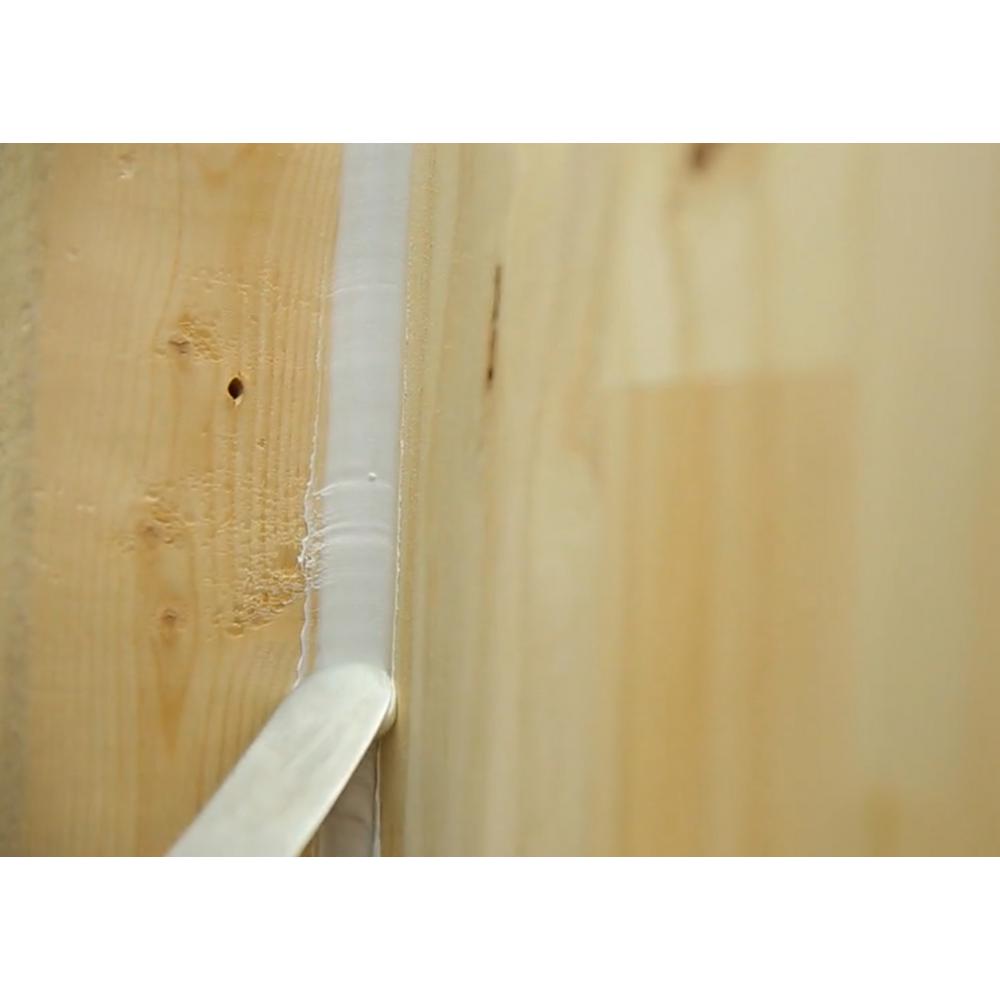
I'd try caulking the joint between the wall and the slab. I have a 4-foot high concrete block retaining wall along the total length of one side of my garage. I had water coming in through the mortar joints and along the joint at the bottom of the wall. I repointed all of the mortar joints with Thoro Waterplug and applied two coats of Thoroseal to the entire wall (on the inside). I've re-caulked the bottom joint two times. The caulk I used the first time failed after a couple of years. I cleaned out all of the old caulk and recaulked the joint with a polyurethane concrete sealant. If I ever have to do it again, I'll use Sikaflex Construction Sealant. So, clean out the joint, open it up a little with a cold chisel or angle grinder, force some Sikaflex into the joint and tool a fillet of Sikaflex along the joint as shown in the picture below.

https://usa.sika.com/en/constructio...nt/sealants/sikaflex-constructionsealant.html

white-sikaflex-concrete-sealant-7116045-c3_145.jpg
 

Kaizen

Well-known member
Joined
Jan 9, 2015
Messages
6,938
Location
New England
Diverting is part of my plan. See my comments about getting the gutter drains from the front of the house to drain to the back.

Currently I don't think this is a crack so much as just water weeping between the block and the floor. I identified the area because it was the most wet vs because I could get a finger into the gap. Any gap I'm guessing is less than 1/16" at this point.


I saw your gutter plan. I’m talking French drain. It will keep soil from being soaked. Gutters will help but hard to move a lot of water from front to far in the back. Will need larger gutters and such. Short term you can rig it up until next year when you can dig


Sent from my iPhone using Tapatalk
 

Firebrick43

Well-known member
Joined
May 12, 2015
Messages
13,992
Location
West central Indiana
If it’s coming up between the slab and wall that is water pressure! No crack fix product is going to fix that long term. It’s like sticking bubble gum on a hole in a gas tank. As kaizen mentioned French drains, or a footer tile drain are the only proper solution. This is based on flat ground(as most of the north half of Indiana is) and average souls in Indiana. Proper grading and downspout mangement “could” fix the issue but ????
 

Bolson32

Well-known member
Joined
Dec 6, 2016
Messages
541
Location
Lake Elmo, MN
Like 90% of all foundations that leak, leak at the cove joint. If you're having water problems the best place to start is absolutely OUTSIDE with the diversion you've already mentioned.

If that doesn't fix it, a retrofit drain tile install absolutely would. Up here in MN there's two types of house. Ones that have a drain tile and ones that will eventually need one.

Okay I'm being a little facetious, but I've owned 3 older houses now(pre-1990) and every single one had water issues at some point. My last house I paid $6000 to have them put a drain tile around 95% of the basement and had to redo all of the floors and some painting. It was worth it though as it was bone dry at that point. Fixing that house from the outside wasn't as feasible as there was no real room to regrade unfortunately.

Sent from my SM-N981U using The Garage Journal mobile app
 

theoldwizard1

Well-known member
Joined
Feb 22, 2011
Messages
43,095
Location
SE MI
A small amount of water is making it between the slab and the block wall. This was after a recent heavy rain.
This means the water is getting under the slab.

The foundation that the block wall is sitting on has failed or at least is no longer waterproof.

The drainage system, either interior or exterior has failed or was possibly never installed.

There are only two ways to PERMANENTLY solve this problem. The first is not expensive, but it is NOT guaranteed to work.

Changing the pitch of your yard so that water run away from the wall. Make sure there is reasonable pitch and the water has "some place to go" (street/ditch). If that fills up, your screwed. Not a guarantee, but sometime very effective.

Install interior or exterior "weeping tile" system connected to a sump and pump. Messy. Expensive. Guaranteed to work.


Anything else is a band-aid and guaranteed to fail.
 

theoldwizard1

Well-known member
Joined
Feb 22, 2011
Messages
43,095
Location
SE MI
My early 1950s house had a leak from a crack in the wall. I chiseled it out and applied hydraulic cement. That held for more than 10 years.

Eventually it did start to leak but only a tiny bit during certain time of the year. After 10 years, we had a very heavy rain. It saturated half of the carpeting in the basement, so something had to be done.

As long as the water is NOT coming up though the floor/wall joint, there is a fairly simple solution especially for small leaks. Give the water some place to go ... UNDER the floor !

Make a hole in the floor about 1' wide by about 1' out from the wall. As you break up the floor, you will find the foundation that wall is sitting on. You need to further inward by about another 6". Remove rubble. Dig down about 6" into soil under the floor. Install a piece of heavy plastic over crack the same width as your hole. Attach it to the wall with plastic anchors and caulk the underside near the edge. Place about 6" of clean gravel in the hole. The piece of plastic should run into hole and be level with the underside of the floor. Fill with concrete.

This repair have been working flawlessly for almost 2 months now !
 

58Yeoman

Well-known member
Joined
Oct 1, 2010
Messages
8,999
Location
Central IL
Bolson32, I don't either. I did use the expanding polyurethane on a ceiling to floor crack in my poured basement, and it's worked great for 3 or 4 years, I don't remember when I did it. There is a 12x22' deck on the other side of the wall, and NO WAY to slope the ground away from the house. I'm on the downhill side of a hill.
 
To avoid these ads, REGISTER NOW!
OP
C

Citation

Well-known member
Joined
Jan 20, 2016
Messages
3,211
Location
Indy
Like 90% of all foundations that leak, leak at the cove joint. If you're having water problems the best place to start is absolutely OUTSIDE with the diversion you've already mentioned.

If that doesn't fix it, a retrofit drain tile install absolutely would. Up here in MN there's two types of house. Ones that have a drain tile and ones that will eventually need one.

Okay I'm being a little facetious, but I've owned 3 older houses now(pre-1990) and every single one had water issues at some point. My last house I paid $6000 to have them put a drain tile around 95% of the basement and had to redo all of the floors and some painting. It was worth it though as it was bone dry at that point. Fixing that house from the outside wasn't as feasible as there was no real room to regrade unfortunately.

Sent from my SM-N981U using The Garage Journal mobile app

This is one of the issue I have. My wife insisted on living in town where lots are tight (and garages are way too small). Any sort of exterior digging is going to be very costly.

Overall I think the ground level water control is actually working quite well with this house. However, I think in this one spot the 85 year old wall is seeping out water.

If I can get a few years out of a DIY repair that is fine. Hopefully I will be able to convince my wife to move to a newer house. While there are many very pretty houses around here, as someone who does a lot of work on my own homes I hate older houses. I'm totally over plaster walls and creaking floors (I actually like carpeting vs hardwoods). More critically, I want space around my house (I grew up on a farm so space was a given).

Changing the landscaping would be a very big deal. Redirecting the front gutters to the back yard isn't too bad. Like I said before it's probably digging 30-40' of trenches so the drain lines can run under ground. Currently they go under ground from the front of the house to about 6-10' into the front yard. A sump might be an option since I could put it in the utility room near this leak. I'm pretty sure my floor drains just go right into the city storm sewer. Currently the house has no sump pump. However, the sump would almost certainly be right in front of the door to that room so not a great option.

Anyway, so far most of this is what I was kind of expecting. I was hoping for an easy out but it doesn't seem like one is really obvious.
 

Fatboy148

Well-known member
Joined
Feb 15, 2017
Messages
999
I was hoping for an easy out but it doesn't seem like one is really obvious.

Along with moving water away from downspouts, here's one that may be worthy of consideration.....

IF..... your gutters ever overflow, check the size of your downspouts. IF.... they are the standard 2" x 3" drop, they should be able to carry 600 square feet of roof area. Consider swapping the 2" x 3" drops to 3" x 4" drops as they are rated to carry 1200 square feet of roof area (thus a heavy rain better). If you are able, the swap is pretty easy, a new drop, elbows and downspout. Less than $50.00 a drop for a one story house.
 

Chuckster in NJ

Well-known member
Joined
Jan 26, 2010
Messages
2,278
Location
Hunterdon County NJ
Hydrostatic pressure is amazing how it impacts a foundation so it is imperative to have a pitch (grade) away from the foundation along with drain pipes to get the water away from the foundation.
Most (NOT all) "wet basement" problems can be resolved with a load of top soil for pitch, proper gutter systems and yard drains.
 

yeldogt

Well-known member
Joined
Jan 2, 2012
Messages
18,184
There is always the possibility that there is just some water along the foundation -- water does get to a foundation. And it will follow any crack. So -- obviously seal up any gaps. Hydraulic works by expansion -- so it really needs some type of key to grab for best results.

Those old blocks are very porous ..
 
OP
C

Citation

Well-known member
Joined
Jan 20, 2016
Messages
3,211
Location
Indy
A little more exploring and a little more learning...

I've found where the water is really coming from. Having torn away more of the drywall I can now say the water is not coming from the joint between the floor and block wall. It's actually coming from where my under the front porch cold room slab sits on the block wall.

My house what I guess people call a cold storage room under the front porch.
https://www.garagejournal.com/forum/showthread.php?t=431484

The slab that makes the floor of that room sits on the block wall perhaps two rows above the basement floor. As I started to tear away more drywall it was obvious water was running down the wall. From there is was obvious the water was coming out from the joint between that cold room slab and the foundation wall. It looks like I need to do something to reseal that whole joint. I might need to get some pictures to show this better.

Next I need to watch some videos talking about drywall repair...
 

theoldwizard1

Well-known member
Joined
Feb 22, 2011
Messages
43,095
Location
SE MI
Make a hole in the floor in the cold room and install a sump pit and pump.

Worst case, you may have to grind the floor so that is slopes into the pit. Build a wood floor out of PT lumber. Not sure what to do about mold, but you probably have it now.
 
OP
C

Citation

Well-known member
Joined
Jan 20, 2016
Messages
3,211
Location
Indy
Currently the cold room is encapsulated. I installed wall to wall to floor 6mil sheeting + 2" foam insulation + 1/2 floor foam + plywood flooring. It's actually a very usable storage space now. A sump in the center of the floor would be a last resort since the storage space is very valuable in this house.

I think I'm going to try the epoxy + polyurethane sealer option. If it works, great. If not we can try more drastic options. This + drywall repair should cost under $200.
 

Bolson32

Well-known member
Joined
Dec 6, 2016
Messages
541
Location
Lake Elmo, MN
I honestly don't think sealer is going to do much. You've gotta find a way to get the water away from there. Either by diverting outside, or with a pump/drain tile from the inside.

It might be worth a shot, but I wouldn't hold my breath on any type of sealer being a long term solution.

Sent from my SM-N981U using The Garage Journal mobile app
 
OP
C

Citation

Well-known member
Joined
Jan 20, 2016
Messages
3,211
Location
Indy
I honestly don't think sealer is going to do much. You've gotta find a way to get the water away from there. Either by diverting outside, or with a pump/drain tile from the inside.

It might be worth a shot, but I wouldn't hold my breath on any type of sealer being a long term solution.

Sent from my SM-N981U using The Garage Journal mobile app

I'm not holding my breath but I figure this is relatively low cost to try.

I've got a general policy that if I can try a cheap option that doesn't prevent a "proper" fix in the future I will give it a try. I've done this with cheap tools. My floor jack for example was a cheap, long throw model I got shortly after college. Decades later I still use it because it actually has never given me trouble and is sufficient for lifting my car. Anyway, if it fails I'm not out much and who knows if I will still be in this house in a few years. Conversely if it holds, great.
 

The Cobbler

Super Moderator
Staff member
Joined
Oct 24, 2013
Messages
25,823
Location
Niagara Region, Ontario, Canada
if I'm understanding this correctly, the top slab is leaking between the slab & wall... can you cut a groove on the underside of the slab around the perimeter away from the wall? that will act as a water block and lessen the water hitting the wall. when the water runs back on the slab towards the wall, it cannot go uphill and will drop off at the cut.
 

Bolson32

Well-known member
Joined
Dec 6, 2016
Messages
541
Location
Lake Elmo, MN
Good luck! Also I noticed you mentioned in a previous post that if you did go the drain tile route you weren't sure where you'd put the pump due to storage, space, discharge, etc.

I had "Standard Water" install mine and they actually installed the basket and pump under the stairs and ran the primary discharge out the complete opposite corner of the house through the actual drain tile. This was real slick. The battery backup pump excited a few feet away due to less power. But I was able to get 99% of the discharge to a place in the yard with advantageous grade and all of the pipes were hidden. So if you do end up going that route down the road, be sure to keep that in mind.

Sent from my SM-N981U using Tapatalk
 
To avoid these ads, REGISTER NOW!
Top Bottom