stickshift
Well-known member
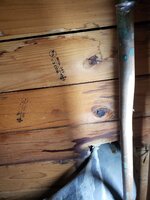
I had a toilet leak, and since I had to replace the wax ring, I used this as an opportunity to replace old toilet with a modern toilet. I had cut out the ceiling below when I was trying to identify the leak and the subfloor around the flange was wet. After replacing the toilet, the subfloor wasn't drying out, despite there being a hole in the ceiling below to provide good airflow. Using a pinless moisture meter (this one), the wettest spots of subfloor are immediately adjacent to the flange. On the "softwood" setting of the meter, the relative moisture level in the wettest spot is 53%. It drops as you move away from the flange, and by 3 boards away, relative moisture level is in the teens (perfectly normal).
I stopped use of this toilet 3 weeks ago (still hooked up to water supply that is turned on, but no flushes) to see if the subfloor would dry out, which would let me know the seal at the flange is leaky. Just measured today and the spots immediately adjacent to the flange are still at 53% relative moisture. How can this be?
The copper water pipes in the area are dry. And the highest moisture levels are right around the flange, so I don't think it's the supply pipes.
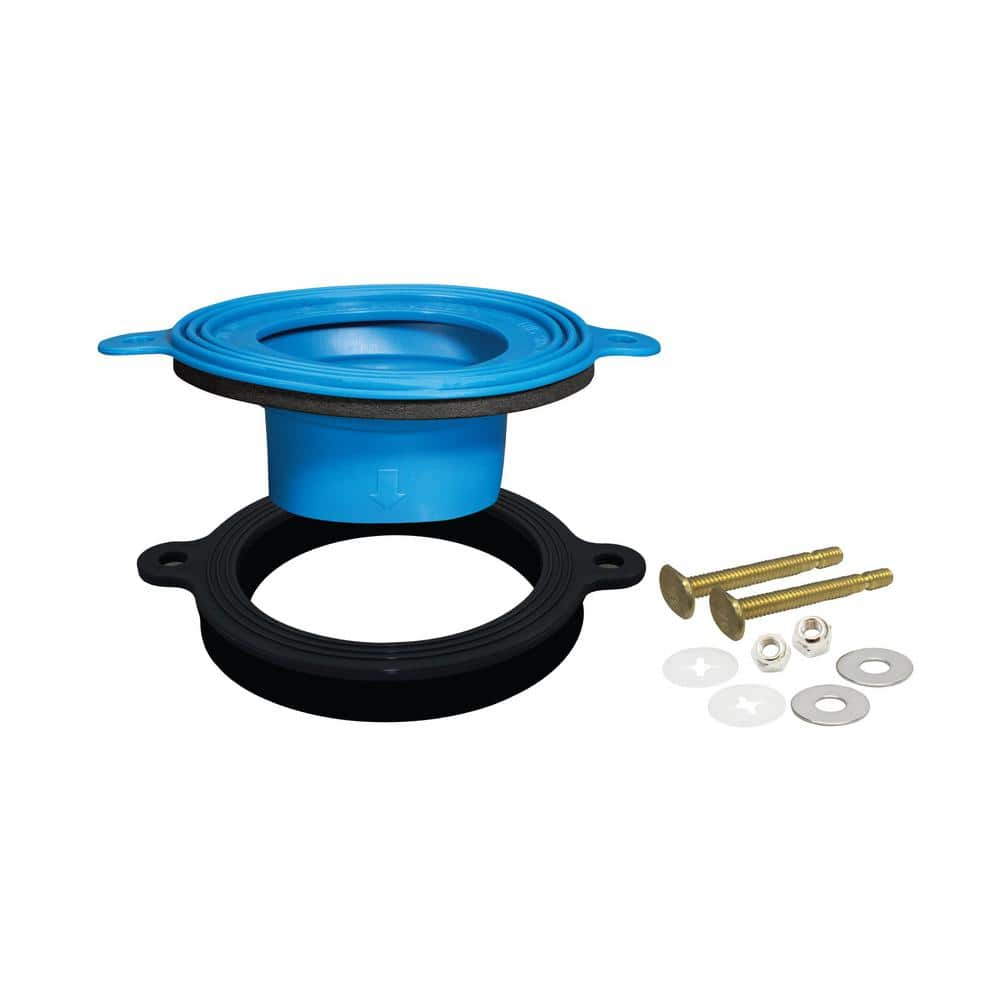
When replacing the toilet, I removed the old wax ring and installed the Better Than Wax wax-free seal. Perhaps that's not a perfect seal and water vapor from the bowl is permeating into the subfloor? I'm reaching here . . .
Any ideas or suggestions on steps to further diagnose? I can pull the toilet and see if subfloor dries out, but wondering if there are less invasive steps to diagnosing. Maybe use a heat gun to force dry the subfloor and see if moisture returns?

I stopped use of this toilet 3 weeks ago (still hooked up to water supply that is turned on, but no flushes) to see if the subfloor would dry out, which would let me know the seal at the flange is leaky. Just measured today and the spots immediately adjacent to the flange are still at 53% relative moisture. How can this be?
The copper water pipes in the area are dry. And the highest moisture levels are right around the flange, so I don't think it's the supply pipes.
When replacing the toilet, I removed the old wax ring and installed the Better Than Wax wax-free seal. Perhaps that's not a perfect seal and water vapor from the bowl is permeating into the subfloor? I'm reaching here . . .
Any ideas or suggestions on steps to further diagnose? I can pull the toilet and see if subfloor dries out, but wondering if there are less invasive steps to diagnosing. Maybe use a heat gun to force dry the subfloor and see if moisture returns?
Attachments

Last edited: