Once you get over about 12Awg in wire size, you can't get enough heat into the connection to properly flow solder without melting the wire insulation.
not true, but it is the common result. The proper iron or heat source and correct technique are all that's required.
Ever see a 1000Hp motor lead soldered? Or any MCC lead?
A properly crimped connection is just as good as any soldered connection. It is typically referred to as a 'gas tight' connection. In other words, the connection is so tight that air can't get in to corrode the wire and cause resistance.
Got news for you, no such thing as a 'gas tight' crimp connection, and they are only as good as soldering when properly and correctly crimped using quality connectors, and properly sealed afterwards. There are mil specs for crimp connectors, crimping tools, and procedures.
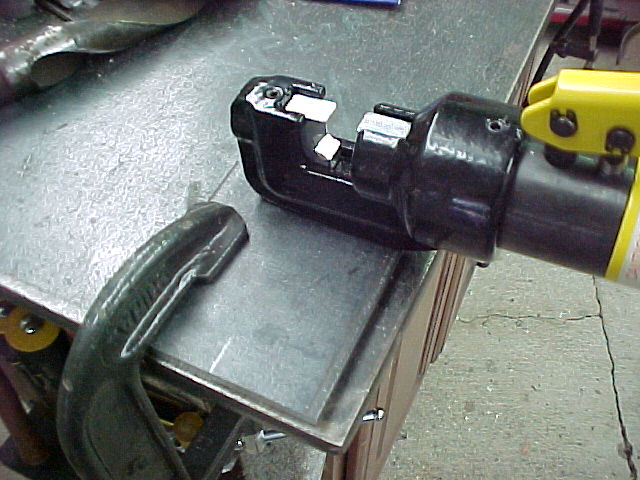
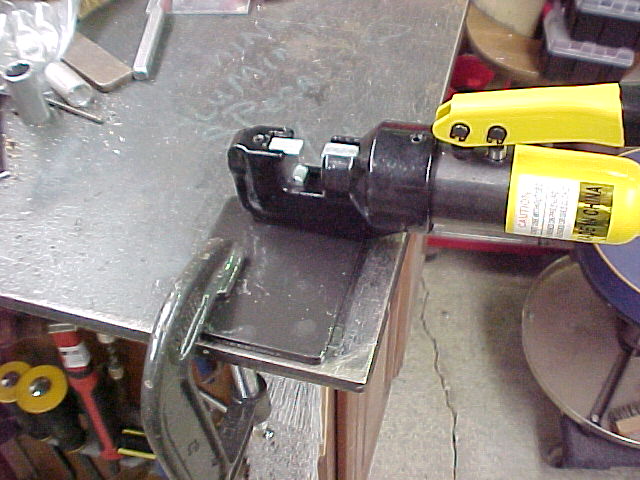
The reason most wires are terminated in a production environment by crimping and not soldering is simply speed. A ratcheting crimp tool does a lot to ensure the proper crimp compression, no heat up delay, no cooling delay, no cold solder joint.
Just don't... The solder wicks into the insulation damaging it. The soldered joint also creates a stiff spot in the wire. Non issue with small gauge wiring. Anything with weight to it (Let's say 00 cable) will break the wire strands off at the edge of the solder under the heat shrink. I have never ever seen an oem solder battery cables... Rarely even anything else. It's all crimp.
It even has problems when used on circuit boards. Cold joints, thermal cracks, ahem, Ford 6.0 FICM

Again, OEM in production environments are about cost effectiveness and production speed, not necessarily using the best practice. All OEM battery cables with lead terminals are effectively soldered - the lead end is cast onto the cable.
Among the many professions my father did, when I was growing up he had become an electronic engineer. From traveling the world installing and repairing medical lasers and equipment to eventually having his own R&D electronics company. I've worked on many things with him and have had experience with crimping and soldering in the medical and military aspects. We own crimping tools that at the time priced as if Snap-on sold them but were what was required to properly terminate a connector to mil-spec.
9 times out of 10 a cold solder joint is improper technique, and in a production soldering environment that's not too hard to find since manual soldering is done in 3rd world countries by unskilled labor, and these days 90% is machine done. Most electronics now are what is called surface mount versus the old style with larger components (through board). Parts are placed on the pads on the board and the whole board is then heated to melt the solder and complete the board. through board requires properly heating the connection before applying solder which is something all novices have trouble doing.