To avoid these ads, REGISTER NOW!

Battery terminals: Crimp vs Solder

Evan(CA)

Banned
Joined
Mar 3, 2013
Messages
996
I've been installing a lot of inverters and battery banks recently and I'm ready to upgrade my smash style crimper. I need to be able to crimp #8-4/0. I was initially thinking of the manual handle style but after researching there are a ton of options that may be better suited considering the cost of even a basic manual pair. I'd love a hydraulic one but cost is somewhat a factor. It will be on the companies dime so I want something nice but I can't go into the office requesting 3500 bucks for a crimper. They'll go to amazon and show me one for less than 100. I'm almost thinking at this point solder is the way to go.

What are you thoughts on solder vs the other style crimpers?

Also, any thoughts on just using the smash style crimper in a vise or press? We don't have a press at work but we do have a pretty big vice. It's definitely 6" plus jaws and looks slightly larger than my Rock Island 597

Your thoughts and advice is much appreciated!
 
Last edited:
To avoid these ads, REGISTER NOW!

Brownsfan

Well-known member
Joined
Apr 16, 2012
Messages
5,975
Location
Cleveland Ohio
I am one of the biggest advocates of soldering connections in vehicles versus crimping. But battery cables never. The terminals are not designed to be soldered. They are designed to be crimped. I have the HF hydraulic crimper. It works great.
 

devoncoolman

Well-known member
Joined
Mar 17, 2013
Messages
2,096
Location
quakertown pa
I usually crimp them with my greenlee hand crimpers. Look like a big pair of bolt cutters. And starter/alternator cables i use my smaller pair.
 

Rookie2

Well-known member
Joined
Feb 27, 2013
Messages
1,925
Location
Western Pa.
pick out a reasonable price hydraulic crimper or a manual bolt cutter style and figure out the time savings/labor savings of doing it in less than half the time, times how many you do in a month and show management .
 

n8n

Well-known member
Joined
Mar 11, 2014
Messages
3,607
Location
Curtis Bay, MD
Marine terminals *are* designed to be soldered FWIW...

I prefer using marine everything when I can, as I don't like doing jobs twice.
 

madoc1

Well-known member
Joined
Dec 11, 2012
Messages
1,242
Location
spicewood, tx
there is a good reason that gm and ford and all golf cart mfg's don't solder.. they make the edge -end of the solder joint brittle.. it break there.
 

justme-

Well-known member
Joined
May 24, 2014
Messages
787
Location
Boston suburbs
Have yet to have a break from a battery lug I soldered on. I have used welding lugs, and confess I crimp then solder, then seal the connection with heat shrink.

If you have to do a lot of large wire soldering get a solder pot instead of an iron. Still available fairly readily from reloading suppliers for bullets. I use an iron because I have several 225w ones.
 

ddawg16

Well-known member
Joined
Jul 11, 2008
Messages
21,005
Location
S. California
Once you get over about 12Awg in wire size, you can't get enough heat into the connection to properly flow solder without melting the wire insulation.

Ever see a 1000Hp motor lead soldered? Or any MCC lead?

A properly crimped connection is just as good as any soldered connection. It is typically referred to as a 'gas tight' connection. In other words, the connection is so tight that air can't get in to corrode the wire and cause resistance.
 

Ruger_556

Well-known member
Joined
Dec 8, 2013
Messages
4,005
Crimp then solder, small battery cables and important connectors. Why not both?

Just don't... The solder wicks into the insulation damaging it. The soldered joint also creates a stiff spot in the wire. Non issue with small gauge wiring. Anything with weight to it (Let's say 00 cable) will break the wire strands off at the edge of the solder under the heat shrink. I have never ever seen an oem solder battery cables... Rarely even anything else. It's all crimp.

It even has problems when used on circuit boards. Cold joints, thermal cracks, ahem, Ford 6.0 FICM :willy_nil
 

Fcvapor05

Well-known member
Joined
May 4, 2014
Messages
1,079
Just don't... The solder wicks into the insulation damaging it. The soldered joint also creates a stiff spot in the wire. Non issue with small gauge wiring. Anything with weight to it (Let's say 00 cable) will break the wire strands off at the edge of the solder under the heat shrink. I have never ever seen an oem solder battery cables... Rarely even anything else. It's all crimp.

It even has problems when used on circuit boards. Cold joints, thermal cracks, ahem, Ford 6.0 FICM :willy_nil

Yep. There's a reason why oems don't solder those connections.
 

gungatim

Well-known member
Joined
Jan 8, 2013
Messages
8,101
Location
west mich
I've tried to solder batt cables and ran into the problems listed above, wicking into insulation, burning the strands, etc. I tried a ratchet crimper, but finally broke down and bought the HF hydraulic crimper a couple weeks ago. on sale $54.99 - 20% off made it a bargain. I don't know how I existed without one for so long! it works awesome, and while re-doing all the cables on my Ironhead, It literally paid for itself because I bought one long cable from autozone and cut it into 4 shorter cables and crimped new ends signifficantly cheaper than just buying individual cables.

a good buy in my opinion and much easier than trying to feed a thick cable into a terminal filled with liquid solder that's not too hot and not too cold...
 

moonley

Well-known member
Joined
Jul 18, 2014
Messages
55
I always solder battery cables, I just pinch the end in the vise with the wire sticking out (run it over my shoulder or under my arm to hold it) and heat the end with a propane torch turned down low, I've found the wire doesn't tend to conduct much heat until the solder begins to flow but by then you are almost done anyway. I do this with the insulation stripped back an extra 1/2" or so and then finish it off with some quality heat shrink and its good. I've done this on several trucks and disassembled after 10 years with no sign of broken strands. Just don't use plumbers solder, use electrical solder!! Plumber's solder will work great at first but will heavily corrode in a few years.

There isn't one simple answer for the "right way", solder or crimping can be superior in different environments, but the important thing with crimping is to have the correct tool and high quality connectors. A lot of what the OEMs do is based on production time, cost and life-cycle, not necessarily because it may or may not be better or worse.
 
Last edited:

atwageman

Banned
Joined
Nov 13, 2012
Messages
1,140
Location
NC
Like others have said it comes down to having the right crimper. Problem is most don't take the time to source the right crimper. One of biggest things that irritate me is ****** crimps and ****** soldering jobs.
 

APEowner

Well-known member
Joined
Oct 2, 2009
Messages
4,164
Location
Sunny, New Mexico
Marine terminals *are* designed to be soldered FWIW...

While there are some marine battery terminals that are designed to be soldered only there are others that are designed to be crimped and others that can be both. Like all industries (with the possible exception of aviation) the marine industry continues to debate the merits of crimp vs. solder.

The American Boating and Yachting Council has this to say on the subject:

11.14.5.7 Solder shall not be the sole means of mechanical connection in any circuit. If soldered, the connection shall be so located or supported as to minimize flexing of the conductor where the solder changes the flexible conductor into a solid conductor.

EXCEPTION: Battery lugs with a solder contact length of not less than 1.5 times the diameter of the conductor.

Personally, I crimp anything I have the proper crimper for and call it a day. I have solder joints with over 20 years in marine applications and 300k miles in automotive applications so it can be done and done well but to me it's quicker and simpler to just crimp. As far as what crimper to use is concerned I use whatever the terminal manufacturer recommends.
 
To avoid these ads, REGISTER NOW!

skruft

Well-known member
Joined
May 9, 2011
Messages
759
This is argued about all the time. I don't think one is better than the other but I can see a crimped one corroding unless it is very well sealed, like with adhesive heat shrink. That is what I have done.

If you want to solder, watch the YouTube videos on how to properly solder battery cables on without damaging the insulation. Basically you heat the terminal with solder already in it, then withdraw the torch and put the stripped end of the cable in.
 

george4

Well-known member
Joined
Feb 18, 2006
Messages
773
Location
N California
While there are some marine battery terminals that are designed to be soldered only there are others that are designed to be crimped and others that can be both. Like all industries (with the possible exception of aviation) the marine industry continues to debate the merits of crimp vs. solder.

The American Boating and Yachting Council has this to say on the subject:

11.14.5.7 Solder shall not be the sole means of mechanical connection in any circuit. If soldered, the connection shall be so located or supported as to minimize flexing of the conductor where the solder changes the flexible conductor into a solid conductor.

EXCEPTION: Battery lugs with a solder contact length of not less than 1.5 times the diameter of the conductor.

Personally, I crimp anything I have the proper crimper for and call it a day. I have solder joints with over 20 years in marine applications and 300k miles in automotive applications so it can be done and done well but to me it's quicker and simpler to just crimp. As far as what crimper to use is concerned I use whatever the terminal manufacturer recommends.

Now that you have opened that flood gate: http://www.sailnet.com/forums/gear-maintenance/40595-crimping-versus-soldering.html
 

astroracer

Well-known member
Joined
Jun 22, 2005
Messages
3,001
Location
Mid_Michigan
I use the Harbor freight hydraulic crimper. Does a nice job. Heat shrink everything to finish up the connections.

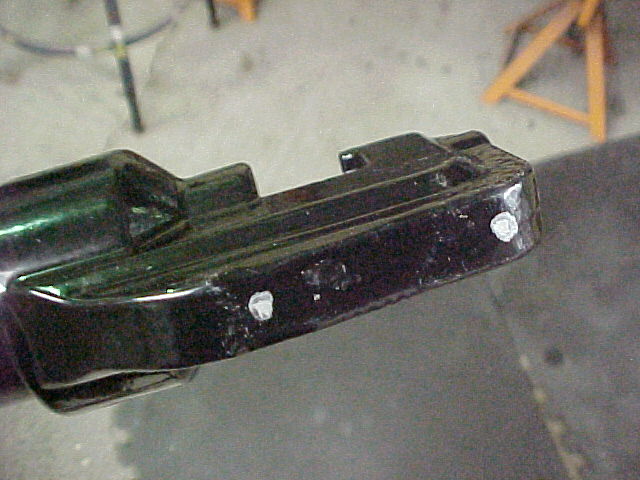
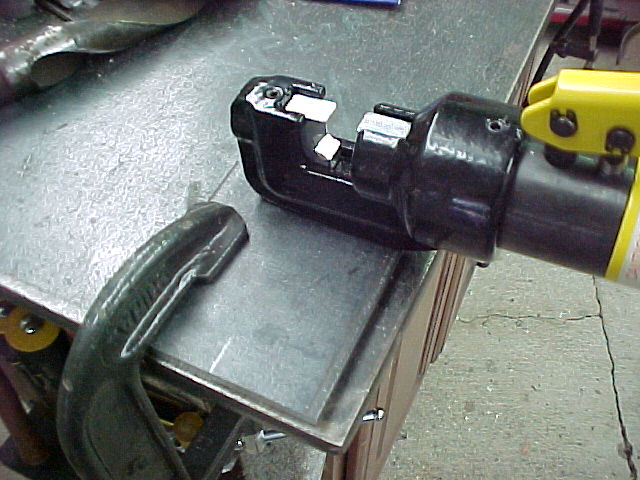
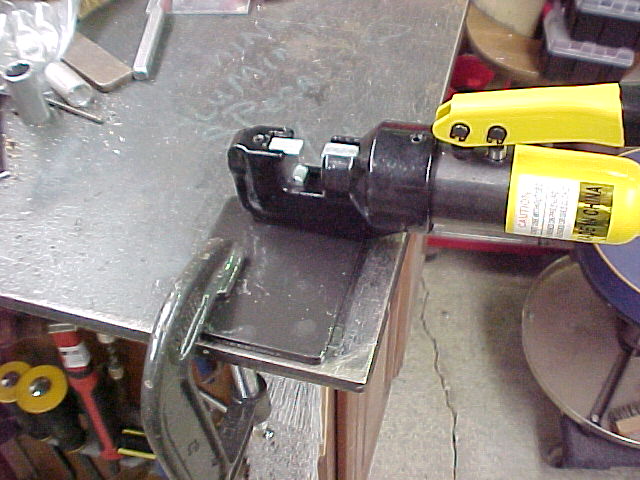
I modified my crimper so it will easily clamp to the welding bench. Frees up a hand for holding the wire in place.
I marked out a pattern for a couple of drilled and tapped holes in the head.
MVC048F-vi.jpg

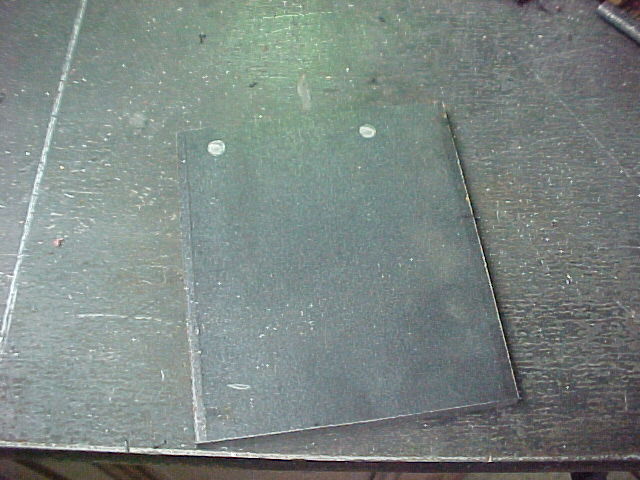
I will be screwing it to this piece of 1/4" plate with a couple of drilled and counter bored holes.
MVC049F-vi.jpg

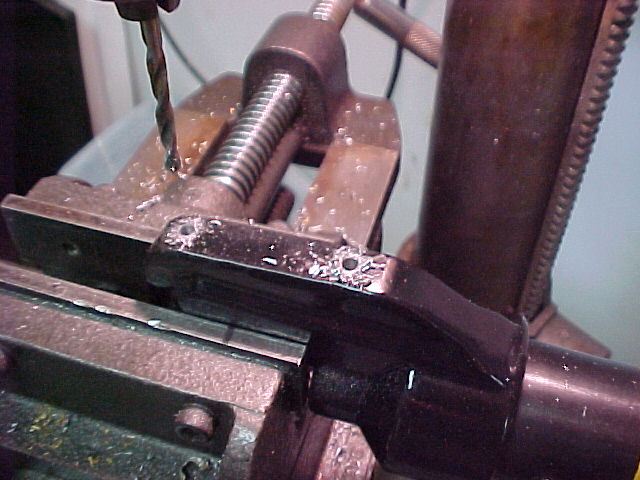
I clamped the tool in the drill press vise and drilled two holes out to .149 for tapping for a #10-32 screw.
MVC054F-vi.jpg

Here is the plate getting drilled and counter bored.
MVC058F-vi.jpg

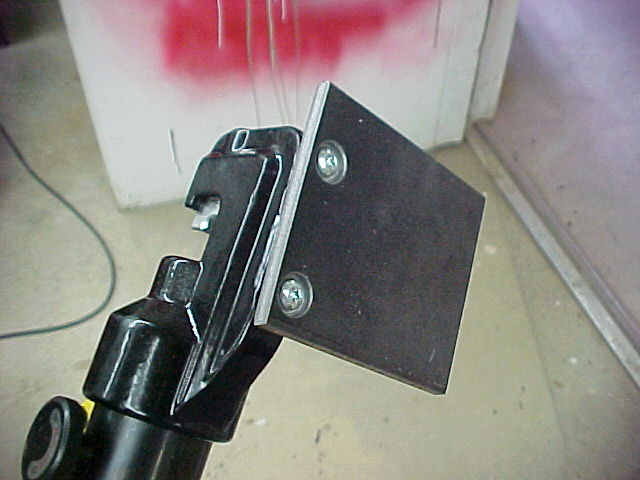
Test fit. Bolted up nice and was very sturdy.
MVC068F-vi.jpg

MVC070F-vi.jpg

Cleaned and painted the plate.
MVC075F-vi.jpg

I just rebuilt all of the big cables on my '56 wagon. 12V and Grounds.
Here a few pics of the work I did.
The new ground zero...
ry%3D400

New 2ga. cable to the front of the engine.
ry%3D400

New neg batt terminal and 1/0 grd cable.
ry%3D400
 
Last edited:

airbatica

Well-known member
Joined
Nov 14, 2010
Messages
128
What is the best budget hydraulic crimper out there currently?

I'd like to know as well. Was thinking about picking up one on eBay, but there seems to have been quite a few complaints of some of the crimping dies being undersized.
 

SantaAna12

Well-known member
Joined
Mar 1, 2012
Messages
1,091
Hydraulic crimps can be top-notch. No offense, but I do not associate HF with top- notch tools. I do not know what a top-notch hydraulic crimper is for this app.

When I looked into it, I ended up buying this:

http://www.amazon.com/dp/B000NI3EW0/?tag=atomicindus08-20

I have used it alot lately rewiring some 2/0 and smaller connections using Ancors corresponding connectors and heat shrink. Top notch system. And portable.
You might check it out.

Lots of opinions regarding solder vs. crimp. You could spend days researching it, and come up with an argument for both. Large cables soldered can be deceptive: that is it can look **** and turn out to be a resistive connection (incomplete solder at it's core).
Motion and solder: no bueno. Yes...your O.G. uncle who was a long time legit mech could make them work. Probably so....but the truth is he didn't have the new crimpers and the associated crimps.
 

shampoop

Well-known member
Joined
Jul 12, 2009
Messages
1,947
Location
SW Washington
What is the best budget hydraulic crimper out there currently?

I'd like to know as well. Was thinking about picking up one on eBay, but there seems to have been quite a few complaints of some of the crimping dies being undersized.

For basic automotive (battery cables, car audio) stuff I've been very pleased with a crimper I bought of ebay years ago that looks extremely similar to this.

http://www.ebay.com/itm/HEAVY-DUTY-...597?pt=LH_DefaultDomain_0&hash=item3a9325becd

Although not hydraulic, it's very cheap and works great with the standard thin wall copper or tinned copper lugs. Excellent results and you can't beat $30 plus the cheap cost of lugs + adhesive lined heat shrink.

This is what I use at work. It's a little more expensive. :3gears:
http://www.amazon.com/dp/B00CBLO2WI/?tag=atomicindus08-20
 

92integra

Well-known member
Joined
Jul 11, 2013
Messages
857
hey while were on the topic do you guy's think 4 awg wire is thick enough to use for a battery relocation to the trunk?
 

justme-

Well-known member
Joined
May 24, 2014
Messages
787
Location
Boston suburbs
Once you get over about 12Awg in wire size, you can't get enough heat into the connection to properly flow solder without melting the wire insulation.
not true, but it is the common result. The proper iron or heat source and correct technique are all that's required.

Ever see a 1000Hp motor lead soldered? Or any MCC lead?

A properly crimped connection is just as good as any soldered connection. It is typically referred to as a 'gas tight' connection. In other words, the connection is so tight that air can't get in to corrode the wire and cause resistance.
Got news for you, no such thing as a 'gas tight' crimp connection, and they are only as good as soldering when properly and correctly crimped using quality connectors, and properly sealed afterwards. There are mil specs for crimp connectors, crimping tools, and procedures.
The reason most wires are terminated in a production environment by crimping and not soldering is simply speed. A ratcheting crimp tool does a lot to ensure the proper crimp compression, no heat up delay, no cooling delay, no cold solder joint.

Just don't... The solder wicks into the insulation damaging it. The soldered joint also creates a stiff spot in the wire. Non issue with small gauge wiring. Anything with weight to it (Let's say 00 cable) will break the wire strands off at the edge of the solder under the heat shrink. I have never ever seen an oem solder battery cables... Rarely even anything else. It's all crimp.

It even has problems when used on circuit boards. Cold joints, thermal cracks, ahem, Ford 6.0 FICM :willy_nil
Again, OEM in production environments are about cost effectiveness and production speed, not necessarily using the best practice. All OEM battery cables with lead terminals are effectively soldered - the lead end is cast onto the cable.
Among the many professions my father did, when I was growing up he had become an electronic engineer. From traveling the world installing and repairing medical lasers and equipment to eventually having his own R&D electronics company. I've worked on many things with him and have had experience with crimping and soldering in the medical and military aspects. We own crimping tools that at the time priced as if Snap-on sold them but were what was required to properly terminate a connector to mil-spec.

9 times out of 10 a cold solder joint is improper technique, and in a production soldering environment that's not too hard to find since manual soldering is done in 3rd world countries by unskilled labor, and these days 90% is machine done. Most electronics now are what is called surface mount versus the old style with larger components (through board). Parts are placed on the pads on the board and the whole board is then heated to melt the solder and complete the board. through board requires properly heating the connection before applying solder which is something all novices have trouble doing.
 

ez-duzit

Well-known member
Joined
Jun 24, 2013
Messages
5,099
Location
Marina del Rey
...Among the many professions my father did, when I was growing up he had become an electronic engineer. From traveling the world installing and repairing medical lasers and equipment to eventually having his own R&D electronics company. I've worked on many things with him and have had experience with crimping and soldering in the medical and military aspects...

What you can get away with on stationary equipment is completely irrelevant on moving vehicles: boats, planes, spacecraft...
 
To avoid these ads, REGISTER NOW!
Top Bottom