To avoid these ads, REGISTER NOW!

Battery tools for DIYers

seber

Well-known member
Joined
May 31, 2016
Messages
4,225
Location
Deep East Tx.
All my newer hole saws have the hex shank for use on a driver, and I just bought an assortment of combination drill / taps from either Lowe’s or Menards that have hex shanks.
Quality hole saws have always had hex shanks. The extra torque required on a small shank will make a round shaft slip in the drill chuck. Drills are still the proper way to drill any hole. This is especially true when using diamond hole saws where the crystals will shatter with an impact.
 
To avoid these ads, REGISTER NOW!

nbpt100

Well-known member
Joined
Oct 19, 2016
Messages
2,304
Location
Massachusetts
Quality hole saws have always had hex shanks. The extra torque required on a small shank will make a round shaft slip in the drill chuck. Drills are still the proper way to drill any hole. This is especially true when using diamond hole saws where the crystals will shatter with an impact.
I generally agree. With a drill you get much better speed control. The speed variations with an impact can cause tearing and splintering at break through in wood and can make the hole less than precise in any material. If that does not matter use what ever is convenient.

As I said in an earlier post, DIY can mean many different things to different people and I think that is causing a lot of disagreements. I would also add a DIYer could be someone who is only using their tools a few times a year or every weekend. All of this plays in. In any event, I hope this long thread has helped the OP. I do not think he has chimed in for bit so I assume he got what he needed or was scared away. :unsure:
 

M635_Guy

Well-known member
Joined
Dec 5, 2019
Messages
4,352
Location
NC
So DIY does not = precision or bit versatility

got it
No, it just doesn't have much to do with COO. :dunno: Your approach to this conversation is a little bizarre
For most tools / users battery is a luxury. The exceptions in my mind are a drill / impact driver and yard tools which could include a recip saw. I'll also add a cordless caulking gun, bought as a joke I hope I never have to use a manual caulking gun again.

This not to say there are not cases where cordless are a game changer, but an extension cord is just not that big of a deal for most saws, larger drills, and sanders. Corded tools eliminate battery issues,, are generally much cheaper and almost always more powerful.. For this specific discussion I'm not including more advanced tools like nail guns, Impact wrenches and such. For these tools like a drill or impact driver being untethered can be very nice. Only not going into those because they are more specialized and not general DIY tools.
If you asked Lowes/HD, I think they'd tell you there aren't many corded tools being sold these days for hand-tools and it's eroding fast in a lot of segments. Small sanders/etc. are still often corded due to price. Bigger things like miter saws, etc. have limited value going to battery because they don't move much and it adds to cost. Corded circular saws are probably losing ground to batteries but still majority corded. I'd bet sawsall-type stuff is split and trending cordless. But drills? In the consumer/DIY segment I have to think it's vastly battery-powered. Impacts and nail guns? Essentially all battery or air (and air getting eaten by battery).

Corded tools are now the exception than the rule for all but the bigger/stationary tools.
 

Kscardsfan

Well-known member
Joined
Apr 28, 2020
Messages
1,669
Location
The Little Apple
For most tools / users battery is a luxury. The exceptions in my mind are a drill / impact driver and yard tools which could include a recip saw. I'll also add a cordless caulking gun, bought as a joke I hope I never have to use a manual caulking gun again.
Those cordless caulking guns are awesome once you get the learning curve down. I’m like you I hope and pray I never have to use a manual one again, but if I have another project like sealing my patio deck or something of that size again I’ll buy one just to save my hands.
 

IndyGarage

Well-known member
Joined
Apr 29, 2010
Messages
9,904
Location
Indy
My drill is one of my least used cordless tools. They really don't offer a lot of benefit

LED lights are first - I use them constantly - milwaukees are the best, but I use makitas all the time too. Impact driver second - I probably have 10 different impact drivers. Heavy duty impact wrench third. Cordless vacuum - I have several of them too. I use my cordless rotary tool (dremel) quite frequently.

Then yard tools - weedeater, blower.

Then secondary tools for me - circular saw, recip saw, multitool, grinder, bandsaw, caulk gun, chainsaw, and drill. I have an SDS cordless drill that I use very infrequently as I do my cordless hedge trimmer.

I must say cordless tools have gotten so much better in the past 15 years that they make working on things much easier.
 

Aaron_W

Well-known member
Joined
Feb 6, 2018
Messages
2,999
Location
Northern California
No, it just doesn't have much to do with COO. :dunno: Your approach to this conversation is a little bizarre

If you asked Lowes/HD, I think they'd tell you there aren't many corded tools being sold these days for hand-tools and it's eroding fast in a lot of segments. Small sanders/etc. are still often corded due to price. Bigger things like miter saws, etc. have limited value going to battery because they don't move much and it adds to cost. Corded circular saws are probably losing ground to batteries but still majority corded. I'd bet sawsall-type stuff is split and trending cordless. But drills? In the consumer/DIY segment I have to think it's vastly battery-powered. Impacts and nail guns? Essentially all battery or air (and air getting eaten by battery).

Corded tools are now the exception than the rule for all but the bigger/stationary tools.

Cordless work well for the lighter work typical of DIY as a whole (before somebody points out that they drill mine shafts for fun and profit, you are not the average DIYer :) ), and I think many have been convinced that cords are obsolete and the box stores are happy to sell them batteries, so not going to do anything to dissuade them of that belief. There are still a lot of corded tools on the market, you just have to go online or shop the stores that still put all the stock on the shelf instead of just what is most profitable. If I go to HD you would think there are few cordless options, if I go across town to an independent hardware store they have a much larger selection of corded tools.

I lump air tools in with cords, because you trade power / endurance for being tethered. Air has the added issue of most air tools needing a fairly serious compressor. You can run small nail guns off of a pancake, probably the same for a ratchet, but framing at a decent speed with a large framing gun is going to take a bigger compressor and an air impact, die grinder or cutoff tool a lot more. This definitely makes cordless an attractive option. Even buying a completely new battery platform for a single tool is cheap compared to buying and installing a 10-20cfm 80 gal compressor. Air tools are relatively inexpensive if you already have the infrastructure, but you are probably well into the advanced DIY category if you do.

Cordless tools have come a long way, and are probably capable of doing 80-90% of the work of corded tools, so a home user that has opted for a full cordless shop isn't seriously lacking. Corded tools still offer a lot of benefits. First for someone on a budget they are always a cheaper option, and where the advantage of a battery is minimal you generally get a lot more tool for the money in exchange for the disadvantage of using extension cords. If you are in a fairly static work location as in a shop, cords are minimally intrusive. If you work outside, or on a ladder then cordless really come into their own.

Note I said larger drills. For a lot of work a 9.6v to 20v 3/8" drill is more than adequate. If you want to punch some holes in even thin steel plate or drill into masonry / concrete, cordless still can't touch what a corded drill can do. The other day I had to drill 16 3/8" holes into 1/8" steel plate to mount some castors. My corded 3/8" Milwaukee drill knocked out all 16 in about the same time I could have done 2 with my 18v cordless Makita, it was that significant of a difference. Drilling holes in wood, I'll always reach for the cordless unless I'm using a large hole saw because I can be done in about the time it took to get the extension cord to plug in the corded drill.

Of all the tools out there the 1/4" and 3/8" drill has probably seen the most enhancement from the invention of cordless technology largely due to the fact drilling holes by hand often benefits from freedom of movement. I mean what are the odds you will ever be using a circular saw over your head or while standing on a chair. The impact driver is basically a development of the cordless drill, not sure we would even have it as a common tool without the invention of the cordless drill.


Those cordless caulking guns are awesome once you get the learning curve down. I’m like you I hope and pray I never have to use a manual one again, but if I have another project like sealing my patio deck or something of that size again I’ll buy one just to save my hands.

The Ryobi caulking gun is pretty cheap and it works well, I think it runs $40-50 tool only, I picked one up on sale for I think $29. What ever I paid it was cheap enough that I literally bought it as a joke when I was reroofing my carport with my dad. "Look at me, Mr Bigshot with a power caulking gun". :p That joke lasted until the first bead and turned into where have you been all of my life. :love:

Rigid also has one for just a bit more than the Ryobi. I'm not sure what could possibly make the Dewalt and Milwaukee caulking guns cost $150-200 other than the brand name.
 

Kscardsfan

Well-known member
Joined
Apr 28, 2020
Messages
1,669
Location
The Little Apple
The Ryobi caulking gun is pretty cheap and it works well, I think it runs $40-50 tool only, I picked one up on sale for I think $29. What ever I paid it was cheap enough that I literally bought it as a joke when I was reroofing my carport with my dad. "Look at me, Mr Bigshot with a power caulking gun". :p That joke lasted until the first bead and turned into where have you been all of my life. :love:

Rigid also has one for just a bit more than the Ryobi. I'm not sure what could possibly make the Dewalt and Milwaukee caulking guns cost $150-200 other than the brand name.
It’s exactly the brand name that raises the price lol. But my dad uses Ryobi, so I can cheat and borrow his batteries etc and just give him the caulk gun as a gift.
 

Kscardsfan

Well-known member
Joined
Apr 28, 2020
Messages
1,669
Location
The Little Apple
My drill is one of my least used cordless tools. They really don't offer a lot of benefit

LED lights are first - I use them constantly - milwaukees are the best, but I use makitas all the time too. Impact driver second - I probably have 10 different impact drivers. Heavy duty impact wrench third. Cordless vacuum - I have several of them too. I use my cordless rotary tool (dremel) quite frequently.

Then yard tools - weedeater, blower.

Then secondary tools for me - circular saw, recip saw, multitool, grinder, bandsaw, caulk gun, chainsaw, and drill. I have an SDS cordless drill that I use very infrequently as I do my cordless hedge trimmer.

I must say cordless tools have gotten so much better in the past 15 years that they make working on things much easier.
In the last 5-10 years everything going brushless has made an even bigger improvement. As my corded stuff wears out it generally gets replaced with an M18 version of it if it’ll see any decent amount of use.
 

M635_Guy

Well-known member
Joined
Dec 5, 2019
Messages
4,352
Location
NC
Cordless work well for the lighter work typical of DIY as a whole (before somebody points out that they drill mine shafts for fun and profit, you are not the average DIYer :) ), and I think many have been convinced that cords are obsolete and the box stores are happy to sell them batteries, so not going to do anything to dissuade them of that belief. There are still a lot of corded tools on the market, you just have to go online or shop the stores that still put all the stock on the shelf instead of just what is most profitable. If I go to HD you would think there are few cordless options, if I go across town to an independent hardware store they have a much larger selection of corded tools.

I lump air tools in with cords, because you trade power / endurance for being tethered. Air has the added issue of most air tools needing a fairly serious compressor. You can run small nail guns off of a pancake, probably the same for a ratchet, but framing at a decent speed with a large framing gun is going to take a bigger compressor and an air impact, die grinder or cutoff tool a lot more. This definitely makes cordless an attractive option. Even buying a completely new battery platform for a single tool is cheap compared to buying and installing a 10-20cfm 80 gal compressor. Air tools are relatively inexpensive if you already have the infrastructure, but you are probably well into the advanced DIY category if you do.

Cordless tools have come a long way, and are probably capable of doing 80-90% of the work of corded tools, so a home user that has opted for a full cordless shop isn't seriously lacking. Corded tools still offer a lot of benefits. First for someone on a budget they are always a cheaper option, and where the advantage of a battery is minimal you generally get a lot more tool for the money in exchange for the disadvantage of using extension cords. If you are in a fairly static work location as in a shop, cords are minimally intrusive. If you work outside, or on a ladder then cordless really come into their own.

Note I said larger drills. For a lot of work a 9.6v to 20v 3/8" drill is more than adequate. If you want to punch some holes in even thin steel plate or drill into masonry / concrete, cordless still can't touch what a corded drill can do. The other day I had to drill 16 3/8" holes into 1/8" steel plate to mount some castors. My corded 3/8" Milwaukee drill knocked out all 16 in about the same time I could have done 2 with my 18v cordless Makita, it was that significant of a difference. Drilling holes in wood, I'll always reach for the cordless unless I'm using a large hole saw because I can be done in about the time it took to get the extension cord to plug in the corded drill.

Of all the tools out there the 1/4" and 3/8" drill has probably seen the most enhancement from the invention of cordless technology largely due to the fact drilling holes by hand often benefits from freedom of movement. I mean what are the odds you will ever be using a circular saw over your head or while standing on a chair. The impact driver is basically a development of the cordless drill, not sure we would even have it as a common tool without the invention of the cordless drill.

I understand what you're saying, but I think we're talking different levels, or at least different-level DIYers. I also disagree with a lot of your assertions, but that's not the worst thing :)
 

zendriver

Well-known member
Joined
Dec 10, 2014
Messages
30,716
Location
Indiana
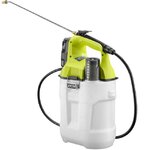
Ryobi 18v caulking gun is great and if you ever use a hand-pump garden sprayer, after using one of these babies, you might pitch the old one in the trash, where it rightly belongs. :lol:

s-l640.jpg

They now have a backpack model as well.
 

Badgerstate

Well-known member
Joined
Nov 15, 2020
Messages
484
Location
Columbus, OH
Clearly a drill is the first tool on the list. I guess if you are only going to have one (or live in an apartment) you should probably get a 1/2" with hammer function (eventually you will have to drill concrete or brick).

What would be your 2nd, 3rd and 4th tools?
#2: impact wrench (assuming you do your own vehicle maintenance and need to rotate your tires)
#3: angle grinder
#4: random orbit sander
Id say it really depends what your needs are. If you do your own lawn care, you might want an angle grinder. If you do more auto repair/vehicle maintenance, you may want a cordless ratchet. If you do more woodworking, you would maybe want a jig saw or router.
For me, an impact driver is a luxury item because there isnt anything that an impact driver does that a drill/driver doesnt. Sure, an impact driver is better at driving screws but you dont necessarily need an impact driver.
 

visionguru

Well-known member
Joined
Jan 2, 2017
Messages
1,233
Location
Chicago
...
For me, an impact driver is a luxury item because there isnt anything that an impact driver does that a drill/driver doesnt. Sure, an impact driver is better at driving screws but you dont necessarily need an impact driver.
I recently did some work to my deck. I thought my Milwaukee 2804 (M18 Fuel 1/2" Hammer drill, with 1200 in-lb of torque) should be enough for everything, including driving screws. It turned out that I couldn't counter sink screws into the wood at all. Then I used my Ingersoll Rand 1/4" impact driver, the screws can be easily driven below the surface.

For driving screws into wood, a drill is no match. For a home owner, impact driver probably is more essential than a drill, because impact driver covers everything a drill can do. Yeah, a drill is better at drilling thick metal, or drilling requires high precision, but an impact driver has no problem at all drilling wood/concrete, which is probably all a home owner needs.

As for OP's question, I think this set from Costco is well thought out for a home owner:
Impact driver
Drill
Circular saw
Oscillating Multi-tool
Reciprocating saw
Lighting

imageService
 
Last edited:
To avoid these ads, REGISTER NOW!

IndyGarage

Well-known member
Joined
Apr 29, 2010
Messages
9,904
Location
Indy
For me, an impact driver is a luxury item because there isnt anything that an impact driver does that a drill/driver doesnt. Sure, an impact driver is better at driving screws but you dont necessarily need an impact driver.
You may have old information. 20 years ago drills could still perform most of what an impact driver did, but that is no longer even close to correct. When Panasonic built the first impact driver it was pretty limited in function. When the other tool manufacturers jumped onboard they started advancing rapidly.
 

Sumboodie

Well-known member
Joined
Mar 20, 2021
Messages
11,073
Location
AK
1/2" wrench for the post clamp, whatever size for the hold down.
Terminal puller, terminal spreader,brush.
Battery tester.
 

Bessy

Well-known member
Joined
Dec 18, 2012
Messages
1,008
Location
Ontario, Canada
Speaking strictly cordless, my collection grew as follows:
DeWalt 20v Hammer Drill/ Impact Driver combo kit which fortunately came with a third battery at the time on special.
DeWalt 20v 1/2" Impact (the 880B)
Porter Cable 12v 1/4" impact/drill driver combo - meant to be a cheapy I could use at the dock and keep in the car, actually a pretty solid little set.
DeWalt 20v flashlight (again it was basically the same price on special as buying a battery at regular price)
Used (won't do that again) DeWalt 20v 6-1/2 circ saw. It works ok for squaring up 2x lumber, but the runout is garbage for rip cuts.
Ridgid 18v jigsaw - free 4ah and charger sold me on that deal for a tool I don't need often.
Ridgid 18v angle grinder 4-1/2" - again, didn't need it but the free battery and charger was a plus, and every so often I found myself dragging a long extension cord out for a 3 minute grinding job in the yard.
DeWalt 20v RO Sander
DeWalt 20v Oscillating tool (again, not that I used my corded that often, but when I did the cord was always in the way or too far from a working outlet).
On deck I've got my eye on the new 7-1/4 DeWalt circ saw, and the shortened (angled?) Recip saw.

I do have a fair number of corded tools that still see use in the right scenarios. Some I wish I had gone wireless, others I don't mind that they are corded.
 

nbpt100

Well-known member
Joined
Oct 19, 2016
Messages
2,304
Location
Massachusetts
If I need a precise hole I do not use my impact driver. I use my drill with a conventional chuck. How many people here have Number & Letter drill sets with a Hex shank? Just curious.

Many DIYers only own fractional drills. Which for carpentry covers you pretty well. My local Ace and the box stores do not even carry number or letter drill bit.

I also use my drill in combination with my impact when I need to drill pilot holes and then drive in a screw. This way I am not wasting time changing the tools around in the chuck. Saves a lot of time if you have a lot of screws to put in.
 

tarbellb

Well-known member
Joined
Apr 17, 2011
Messages
5,820
Location
Oregon
DIY is a very broad range.

There are members here who consider themselves DIY who will custom build a chassis. Then there are DIY homeowner types, lower skill levels, lower expectations, smaller scope of work. For those, admittedly the majority, a impact is likely a better option.

But to argue a impact can do everything a drill can is just wrong, sorry not sorry.
 

Kscardsfan

Well-known member
Joined
Apr 28, 2020
Messages
1,669
Location
The Little Apple
If I need a precise hole I do not use my impact driver. I use my drill with a conventional chuck. How many people here have Number & Letter drill sets with a Hex shank? Just curious.

Many DIYers only own fractional drills. Which for carpentry covers you pretty well. My local Ace and the box stores do not even carry number or letter drill bit.

I also use my drill in combination with my impact when I need to drill pilot holes and then drive in a screw. This way I am not wasting time changing the tools around in the chuck. Saves a lot of time if you have a lot of screws to put in.
Got you covered there my man:
 

Badgerstate

Well-known member
Joined
Nov 15, 2020
Messages
484
Location
Columbus, OH
You may have old information. 20 years ago drills could still perform most of what an impact driver did, but that is no longer even close to correct. When Panasonic built the first impact driver it was pretty limited in function. When the other tool manufacturers jumped onboard they started advancing rapidly.
Well, let me tell you this: I work in auto manufacturing and I use a Milwaukee M12 impact driver every day at my work, shooting screws and small bolts into cars.
I also do woodworking in my garage and until recently, never had an impact driver.
Yes, an impact driver does make driving screws easier but my no means is it a must. If I had a limited selection of tools, I would not have both a drill and an impact driver. Like I said, to me, an impact driver is a luxury purchase.
 

Badgerstate

Well-known member
Joined
Nov 15, 2020
Messages
484
Location
Columbus, OH
I recently did some work to my deck. I thought my Milwaukee 2804 (M18 Fuel 1/2" Hammer drill, with 1200 in-lb of torque) should be enough for everything, including driving screws. It turned out that I couldn't counter sink screws into the wood at all. Then I used my Ingersoll Rand 1/4" impact driver, the screws can be easily driven below the surface.

For driving screws into wood, a drill is no match. For a home owner, impact driver probably is more essential than a drill, because impact driver covers everything a drill can do. Yeah, a drill is better at drilling thick metal, or drilling requires high precision, but an impact driver has no problem at all drilling wood/concrete, which is probably all a home owner needs.

As for OP's question, I think this set from Costco is well thought out for a home owner:
Impact driver
Drill
Circular saw
Oscillating Multi-tool
Reciprocating saw
Lighting

imageService
The only problem with drilling with an impact driver is that it doesnt drill precise holes. Sure, it'll do it but that doesnt mean its the right tool for the job. Its just like when someone tries to use an impact driver as an impact wrench. Sure, it will maybe take the lug nuts off of your car but that doesnt mean its the right tool for the job.
Ive tried drilling large holes using a spade bit with a Ryobi impact driver and more recently with the Craftsman brushless impact that I have now. The Ryobi got so hot that you could barely touch it. The Craftsman gets warm too but not nearly as hot as the Ryobi did.
That should say all that needs to be said about using an impact driver for drilling.
 

Ton ton

Well-known member
Joined
Oct 16, 2019
Messages
4,592
Location
Page County,VA
I didn't read the all responses, but get the whole set even if you are a diy. That way if one tool fails you have an option to finish the job. Just my 2 cents.
 

Kscardsfan

Well-known member
Joined
Apr 28, 2020
Messages
1,669
Location
The Little Apple
How does this solve a wobbling hex chuck?
Don’t buy ****** tools? Nobody in trades, who actually makes their money using power tools, uses the drill outside of heavy duty, repetitive hole drilling. If you need that level of precision you need to be using a quality drill press or a mill. A hand drill isn’t capable of delivering what you claim to be needing. Otherwise, for 90+ percent of the tasks faced by someone using power tools around the house or on the job, an impact is the better choice.
 

Kscardsfan

Well-known member
Joined
Apr 28, 2020
Messages
1,669
Location
The Little Apple
I actually have a very similar kit to that quick change counter sink set. Came from Sears about 25 years ago. I hardly ever use it.
I used it all the time doing hardware installs on new cabinets in remodeling and new residential construction. Really helped speed up all that repetitive work, especially in apartment complexes or multifamily builds.
 
To avoid these ads, REGISTER NOW!
Top Bottom