Mr onetwo
Well-known member
This really looks like a clever solution for automotive and outdoor wiring especially. https://spliseal.com/


.ico?t=638260638955425901) www.awcwire.com
www.awcwire.com
Granted, I'm just a DIY guy, but any time I've done 3 or 4 wire connections with heat shrink tubing, I've just run the necessary wires in parallel to fit within the tube:
----------[- =]=====
I have found that liquid electrical tape in a can works very well, a brush is attached to the cap on the can.
These solutions absolutely work, but the result is an almost always unprofessional looking connection. For basic repairs this is largely a non issue, but for many something like this is just the ticket.
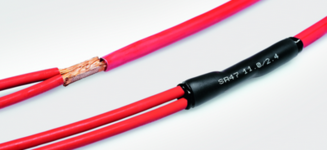
Like I said, I'm just DIY, but even if I was a pro of some kind, I would think most people wouldn't complain about something that looks like this:
It would look even better if it was encased in a **** connector prior to heat shrinking.
Funny I was just searching for something like this a few weeks ago, I'm not a pro either and people doing those pricey meticulous restomods would get more use from it. But I like it! Yes, expensive, but I'm with lilisdad, they are the neatest, cleanest wire joining connectors I have seen. Even if I'm the only one who notices, I'd use it, if for no other reason than "I" like the look. Adding it to my list...The Spliseal setup, however, produces a much cleaner, more OEM looking result. Ring terminals are where I think this product would really shine. The end result looks very similar to 60s and 70s Ford terminations.
I have ratcheting crimpers (manual). I wouldn't mind one of these (Greenlee):My first thought when I looked at the kits was that the crimpers are ****. I own some channellock 909s. they're fine. But they're not the right tool for professional level crimping of electrical connectors. You need a ratcheting one at least, and really, dies specialized for each connector size. if they don't get that right, they probably don't actually understand the problem space.

Disagree. If it looks unprofessional it's probably due to someone not taking the time to make it look nice. I frequently have to repair 7 way trailer wiring, if the client won't agree to upgrading to a junction box I can make the splice look very nice (if the customer cares) with just heat shrink. I understand you've mentioned you like the aesthetics of this product more than it's practicality but that is personal taste not objective, heat shrink ad liquid tape is objectively a more cost effective solution.These solutions absolutely work, but the result is an almost always unprofessional looking connection. For basic repairs this is largely a non issue, but for many something like this is just the ticket.
I agree wholeheartedly on all accounts.I understand you've mentioned you like the aesthetics of this product more than it's practicality but that is personal taste not objective, heat shrink ad liquid tape is objectively a more cost effective solution.
Soldering of wires is a big no-no for most vehicle applications, at least in the off road world. Vibration will crack the solder.
; they've been used when necessary on automotive wiring harnesses for many decades.
“When necessary…..”
It's not used in new designs, and lots of places where it was formerly called for specify using a crimped connector instead. Part of this is solder in general creating a stress point where the solder ends, part is lead free solder making it worse. But there's no actual debate that crimped connections are superior to solder.And yet it's used in aviation. Or at least has been for 50+ years, unless it was eliminated recently. This is up there with hydrogen embrittlement on the most overblown list of things to freak out about. Even moderately supported, a soldered joint isn't going to fail; they've been used when necessary on automotive wiring harnesses for many decades.
It's not used in new designs, and lots of places where it was formerly called for specify using a crimped connector instead. Part of this is solder in general creating a stress point where the solder ends, part is lead free solder making it worse. But there's no actual debate that crimped connections are superior to solder.
And that’s the issue. Little skill required in a ratcheting preset crimper and no companies are going to risk warranty work depending on the skill of assembly workers.it takes a little skill to solder something.
Pretty sure the automotive industry changed its mind a long, long time ago….and it sounds like the aviation industry has done the same.And yes, this has been debated a zillion times and no one changes their mind.
^^^This!Many moons ago, while reading Popular Mechanics or Popular Science as a boy in the 1970s, I remember reading about making waterproof wire connections using a plastic straw and some silicon caulk . Slip a piece of straw over the splice and pump the straw full of caulk. I've never used the method but it's stuck in my head. Hot glue would be an alternative to the caulk.
For a simple splice, sure, that’s a great solution. For multiple wire splices, ring, spade, or other termination, however, this represents a very elegant solution.BMW make some really nice open barrel crimp splices (with a secondary insulation crimp) if you use one and then add a quality adhesive heat shrink sleeve, it makes a great repair very close to original wire diameter.
These things look a bit chunky to me???
For a simple splice, sure, that’s a great solution. For multiple wire splices, ring, spade, or other termination, however, this represents a very elegant solution.
There are absolutely ways to do this just as effectively, for a lot less money. Many of these methods even look pretty slick. This one, however, is just the easy button. The expensive easy button.

I think you are 100% right. I can see this being a great product for those building and trimming engine and drivetrain harnesses, custom dashes, gauge clusters, etc.Maybe they will sell to DIY car restoration/restomod guys.