

You are using an out of date browser. It may not display this or other websites correctly.
You should upgrade or use an alternative browser.
You should upgrade or use an alternative browser.
Best way to do a 28' clear span?
- Thread starter justbarriault
- Start date

OP
justbarriault
Well-known member
I had the local steel shop do some bearing calculations and I've settled on a 12" steel I beam, which I will bolt a nailer to, and put in joists going to the rear wall. the Beam's about 1,200LBS. Thanks for all of your input!
OP
justbarriault
Well-known member


JohnK007
Well-known member
Nice job, looks great. Glad you posted a follow up and not leave the reader hanging! Are you going to fabricate a permanent stairway to the intermediate level or just use a ladder? Also, I'm not grasping what those white holes in the beam are, if they are indeed holes 
Last edited:
bczygan
Well-known member
Thanks Cyberbear. I started researching that but got busy so will dig deeper. I am fortunate that I have no building codes on non-living dwellings in my town, so no stamps required. I figure about any steel beam will at least hold everything up, and then if i start to notice a sag I could always weld some additional support to it of some sort. As I'm going through different thoughts or possible issues, I'm thinking that I should leave the beam at least 1/2" to 1" short to deal with expansion/contraction of the building due to the temp changes, that way it doesn't bulge my walls. Does this seem to make sense?
No.
Sag and bulge are not building terms.
You need to engineer the beam.
7' height in the mezzanine storage space is a habitable space by code, so you need at least a floor designed for a #40 dead load and a #10 live load. These are typical residential floor loads.
A 10' deep mezzanine would need a beam able to support #250/LF with an L/360 or better. A doubled 18" deep 1.9 LVL would do this.
Or take those loads to a steel supplier for a beam size. Maybe a W12x22.
How deep did the mezzanine end up being?
What live and dead loads did the steel shop use?
What size and weight beam was installed?
What size and spacing of joists did you use?
Bill
Last edited:
OP
justbarriault
Well-known member
Those are not holes, they are carriage bolts. I bolted a 2x12 to the inside of the beam, and ran 2x12's 16" OC to it. It eliminates the possibility of put a trolley there, which isn't that big of a deal to me, but it kept my height down versus putting the floor on TOP of the beam. I've had a few different ideas for stairs, with my biggest issue being the room they require on the floor. My original and still most liked idea is to have them hinged on the beam with a rope and pulley to lower them down when I need them. It isn't an issue right now or anytime soon as I bought a couple small man lifts to do the wiring and I just use one of those or a ladder
OP
justbarriault
Well-known member
The 2nd floor is done, as seen in the pictures I posted earlier today. Thanks though
I am fortunate that I have no building codes on non-living dwellings in my town, so no stamps required.
the bldg codes are not your enemy thay are base on simple engineering principal, so by not using the codes, is an accident waiting to happen. even if it doesnt get inspected the bldg codes will tell you everything you need to know on clear spans
bczygan
Well-known member
2x12's at 16"o.c. are kind of deep. What is their span?
Also very important is the ledger holding up the back side of the mezzanine. What is it and how is it supported and fastened?
How are the joists fastened?
Bill
Also very important is the ledger holding up the back side of the mezzanine. What is it and how is it supported and fastened?
How are the joists fastened?
Bill
Last edited:
bczygan
Well-known member
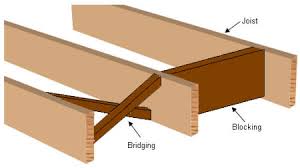
I would install one row of solid bridging at the midpoint of the joist spans.
bczygan
Well-known member
the bldg codes are not your enemy thay are base on simple engineering principal, so by not using the codes, is an accident waiting to happen. even if it doesnt get inspected the bldg codes will tell you everything you need to know on clear spans
As much as I hate imposed regulation, if no building codes were mandatory, I would still use them as beginning points for good basic design values.
Bill
readhead
Well-known member
Bill, it looks like he ended up with a W12x45 and packed the web and used joist hangers. For other people considering this it is easier and less expensive to bolt a plate to the top of the beam and use top flange hangers. There is wood all the way to the edge of the deck to nail the sheeting to also.
OP
justbarriault
Well-known member
Bill, it looks like he ended up with a W12x45 and packed the web and used joist hangers. For other people considering this it is easier and less expensive to bolt a plate to the top of the beam and use top flange hangers. There is wood all the way to the edge of the deck to nail the sheeting to also.
FYI I used a W16x122 (Way overkill, I know), and bolted the plate into the webbing to not loose height (I have 16' ceilings and wanted 8' clearance below the beam, so would have ended up with less than 6' about the beam). I don't see the cost difference in bolting the plate inside the beam versus on top of the beam. It took 1 hour with a torch, and the 3/4" plywood was about the same thickness as the beam so there isn't a tripping hazard. I filled between the studs that the beam rests on with 2x6's and a strip of plywood, all glued together, nailed together, and put truss locks in to support it. I had a company do a calculation for me and they said I needed a W14x57 to span it, I just happened to get this one for the right price, and since I own a 20 ton crane, install weight wasn't an issue
Attachments

OP
justbarriault
Well-known member
Nice job, looks great. Glad you posted a follow up and not leave the reader hanging! Are you going to fabricate a permanent stairway to the intermediate level or just use a ladder? Also, I'm not grasping what those white holes in the beam are, if they are indeed holes
Thanks for the reply, John. Looks like the can of worms has been opened LOL
readhead
Well-known member
Kudos for solving the problem but I'm a little puzzeled. W16x122 is a bad number. No such thing. In my business we are not allowed to burn bolt holes. They have to be drilled or punched. Out on the job all kind of things can happen however. By putting the plate on top you can use a 2x4 or 2x6 and then use top flange hangers. Much easier and less expensive. We usually send the beam out with holes drilled top and bottom for the framers to bolt on the plate with carriage bolts. The bottom plate is for the drywall guys.
OP
justbarriault
Well-known member
Kudos for solving the problem but I'm a little puzzeled. W16x122 is a bad number. No such thing. In my business we are not allowed to burn bolt holes. They have to be drilled or punched. Out on the job all kind of things can happen however. By putting the plate on top you can use a 2x4 or 2x6 and then use top flange hangers. Much easier and less expensive. We usually send the beam out with holes drilled top and bottom for the framers to bolt on the plate with carriage bolts. The bottom plate is for the drywall guys.
I think that's similar to what my friend did in his house. I know the beam is 16" tall, I was told the weight was 122lbs a foot, but I got the beam from a friend so don't know the official size x weight. I'm sure drilling is much better for strength, but I know it's way overkill so wasn't bothered by it. I'm not familiar with top flange hangers, but at this point I don't need to be haha
readhead
Well-known member
You came up with a great solution. Now you can fab some nice steel guardrails and weld them to the top of the beam.
readhead
Well-known member
I don't recall if you said you had inspections where you are. If you do keep in mind that the steel beam may need to be covered in drywall for fire resistance.
OP
justbarriault
Well-known member
You came up with a great solution. Now you can fab some nice steel guardrails and weld them to the top of the beam.
I'm thinking something removable, like either light chain, or some sort of stake pockets, as I'd like to have the capability of storing larger items up there. Any ideas?
OP
justbarriault
Well-known member
I don't recall if you said you had inspections where you are. If you do keep in mind that the steel beam may need to be covered in drywall for fire resistance.
We don't have buildings codes for auxiliary buildings in my town, but for insurance purposes I would like it to have at least some regulations followed (such as wiring, guard rails, etc). I do plan to cover it, and was also going to fill the void at the ends where it goes between the studs for that purpose, since I do like to work with metal. Although I've never worked with it, I was also considering using cement board around the walls in the back for fire purposes, but I was also thinking that as long as the interior plywood was sealed up I shouldn't have any issues. I've got a little ways to go before I do that so I'll get some input
OP
justbarriault
Well-known member
I would install one row of solid bridging at the midpoint of the joist spans.
In not fancy terms, what do you mean by this? Nailing a piece of 2x12 between each joist? I don't plan to do any sort of ceiling cover here so I probably should have SOMETHING there
readhead
Well-known member
The bridging ties the joists together and makes a more solid assembly. When they are connected the joists share the load of the ones next to them. The floor will be less bouncy.
i hear it alot, we dont have building codes, well every place in united states have building code, there are places where they are not enforced, but it still regulated by the code. Most fall under the ICC. then they electrical code, plumbing code. etc. But it still covered by a code if not enforce. If something happen, the lawyers will eat your lunch
bczygan
Well-known member
In not fancy terms, what do you mean by this? Nailing a piece of 2x12 between each joist? I don't plan to do any sort of ceiling cover here so I probably should have SOMETHING there
It should probably be called blocking.
It helps distribute loads across the floor deck by providing lateral support to the floor joists. It would also help to do this where the joists bear on the ledger at the back wall. A detail I would have used, is to have run a 2x12 ledger across the back wall and then hung the floor joists from it with joist hangers. The ledger would have been lag bolted to each stud. This way there would be no ledger hanging down, interrupting the wall finish.
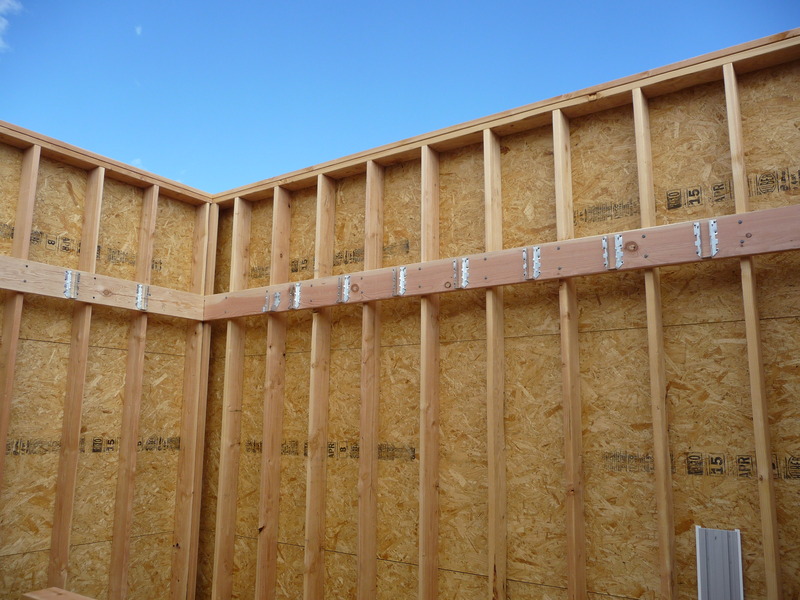
How is the ledger attached and how are the joists attached at the wall?
Bill
Last edited:
OP
justbarriault
Well-known member
Thanks for the info! I did something similar to the lower picture, except I nailed the joists to the studs, and then nailed a ledger below to help support them
It should probably be called blocking.
It helps distribute loads across the floor deck by providing lateral support to the floor joists. It would also help to do this where the joists bear on the ledger at the back wall. A detail I would have used, is to have run a 2x12 ledger across the back wall and then hung the floor joists from it with joist hangers. The ledger would have been lag bolted to each stud. This way there would be no ledger hanging down, interrupting the wall finish.
How is the ledger attached and how are the joists attached at the wall?
Bill