To avoid these ads, REGISTER NOW!

Brake bleeding kit???

littletoes

Well-known member
Joined
Nov 9, 2010
Messages
1,244
Location
NE Washington
Guys, I'm no professional auto tech, but sure am interested in a brake bleeding kit.

Anyone have one they would recommend, that won't break the bank? It just seems like I'm always needing to bleed some brakes, and a kit might just make it faster.....and I don't always have a helper to pump the pedals either.

Give me your ideas guys!!

Thanks in advance!

:thumbup:
 
To avoid these ads, REGISTER NOW!

shadowpuck

Member
Joined
Mar 6, 2012
Messages
20
Location
Mo!
i've been using bleeders from motive products for years - they've stood up to all kinds of abuse too at the track, on race cars, etc. they even sell spare parts for their gear, which is a rarity anymore it seems.
 

Xtrom

Well-known member
Joined
Nov 19, 2013
Messages
89
I like to use my syringe that I got at a vet supply store with a small length of vacuum hose and reverse bleed them. Just fill the syringe, put it on the bleeder with some pressure and crack the bleeder. Once the syringe is about empty close the bleeder. Cheap, easy and doesn't require another person. I got the idea from a kit that EBS? sold a few years back but couldn't find one. Their syringe had a big rubber tapered end on it that you put up to the bleeder instead. If you do a search there's a lot out there about the one man bleeder systems so be careful.
 

rice rocket

Well-known member
Joined
Mar 24, 2011
Messages
3,175
I like to use my syringe that I got at a vet supply store with a small length of vacuum hose and reverse bleed them. Just fill the syringe, put it on the bleeder with some pressure and crack the bleeder. Once the syringe is about empty close the bleeder. Cheap, easy and doesn't require another person. I got the idea from a kit that EBS? sold a few years back but couldn't find one. Their syringe had a big rubber tapered end on it that you put up to the bleeder instead. If you do a search there's a lot out there about the one man bleeder systems so be careful.

This sounds like a terrible idea. How do you not inject air into it when you first crack the bleeder?
 

p0lar

Well-known member
Joined
Jun 15, 2013
Messages
141
Everyone likes the Motive, including me.

Not everyone, including Carroll Smith of Centric...

Well yes, but beware of imitations – not all pressure bleeders are created equal. The professional units (the type you can consider using) separate the pressurized brake fluid from the pressure source (air) using a flexible rubber diaphragm. In this fashion, the pressurized air is kept from forcing its way into the fluid. As we all know, air and fluid should be kept as far apart as possible.

This brings us to the imitations. There seem to be a rash of products available lately that claim to be pressure brake bleeders at a fraction of the cost of the professional units. Like most things that sound too good to be true, well, it’s exactly that. Like the professional units, these imitations contain a pressure vessel into which new brake fluid is poured. However, in order to pressurize the fluid, an integral pump handle is cycled to build the pressure inside the vessel without any measures taken to separate the pressurized air from the fluid. For those of you who have ever bought a $19.95 do-it-yourself potted plant and bug sprayer from Home Depot you get the idea. Of course, having pressurized air in contact with the brake fluid will certainly force the fluid through the system just as effectively as the high-zoot professional unit, but as an added bonus we are stuffing air into the brake fluid at the same time. Talk about an unwanted surprise!
While it may not be visible to the naked eye (air can actually entrain itself in the fluid as to be visually undetectable) it’s there right along with all of the nasty moisture trapped inside of it. This of course begs the question: if you are stuffing air and water contaminated fluid into your brake system, why even bother bleeding it in the first place?

Naturally there will be those who argue that the amount of air in question is not important enough to worry about, but think about this for a moment: nearly every automotive manufacturer stores their bulk brake fluid in large containers which are subjected to a constant VACUUM. Talk about an expensive process! If just storing your fluid under regular atmospheric conditions isn’t good enough to keep air and water out, just imagine what
shoving 30psi worth of compressed air on top of it is doing.

The professional units can cost hundreds of dollars, and for good reason; unfortunately the cost keeps them beyond the reach of most of us normal folks. Your best bet is probably to get back in the driver’s seat and begin stroking the pedal with your foot again, but ultimately the choice is yours.

As long as you're careful not to overrun the tandem (now-a-days) pistons in the master cylinder, there's no substitute for pedal bleeding. Don't get me wrong, the Motives "work", and they're fairly brainless, but they have their faults (as described above).

I certainly wouldn't reverse-bleed the system either, as a) it can introduce air or debris in more ways than one and b) some ABS systems are valved in such a way that reverse bleeding is ineffective at flushing fluid from the ABS valve manifolds.

If I were to use any alternate bleeding methods, it would be to pull a low vacuum at the calipers while keeping the master cylinder reservoir full.

For the curious, I quasi-actively (as time/memory permit) maintain a list of brake fluid specifications here. :thumbup:
 
Last edited:

Vvmvbb

Well-known member
Joined
Aug 5, 2011
Messages
743
Location
CT
Not everyone, including Carroll Smith of Centric...


As long as you're careful not to overrun the tandem (now-a-days) pistons in the master cylinder, there's no substitute for pedal bleeding. Don't get me wrong, the Motives "work", and they're fairly brainless, but they have their faults (as described above).

I certainly wouldn't reverse-bleed the system either, as a) it can introduce air or debris in more ways than one and b) some ABS systems are valved in such a way that reverse bleeding is ineffective at flushing fluid from the ABS valve manifolds.

If I were to use any alternate bleeding methods, it would be to pull a low vacuum at the calipers while keeping the master cylinder reservoir full.

For the curious, I quasi-actively (as time/memory permit) maintain a list of brake fluid specifications here. :thumbup:


...snip
Naturally there will be those who argue that the amount of air in question is not important enough to worry about, but think about this for a moment: nearly every automotive manufacturer stores their bulk brake fluid in large containers which are subjected to a constant VACUUM. Talk about an expensive process! If just storing your fluid under regular atmospheric conditions isn’t good enough to keep air and water out, just imagine what
shoving 30psi worth of compressed air on top of it is doing.
...snip

I don't buy it. The concern is the amount of air and water vapor we diffuse into a liter of brake fluid at it's surface at 5 psi (not 30 psi) needed to run the motive effectively for the 30 minutes? And he's using long term storage in large surface-area containers requiring a vacuum as his condition to justify. 'Just imagine' what it's doing? I hate imagination-based engineering. Someone needs to run the numbers, but most users bleed and never have to bleed again, so it can't be that much volume
 

p0lar

Well-known member
Joined
Jun 15, 2013
Messages
141
I don't buy it. The concern is the amount of air and water vapor we diffuse into a liter of brake fluid at it's surface at 5 psi (not 30 psi) needed to run the motive effectively for the 30 minutes? And he's using long term storage in large surface-area containers requiring a vacuum as his condition to justify. 'Just imagine' what it's doing? I hate imagination-based engineering. Someone needs to run the numbers, but most users bleed and never have to bleed again, so it can't be that much volume

I'm sorry you took that personally.

It probably isn't "that much volume", but there's a significant difference in pedal feel between a motive pressure bleed and a proper pedal bleed, just as there's a significant difference between the diffusion of air at the surface layer of a fluid at STP and one at ∆1 bar.

Again, as Mr. Carroll states at the tail end of his explanation, "ultimately the choice is yours"; so, for anyone to blindly state that "everyone likes the Motive" pressure bleeder seems to paint it as perfect, when in reality, it is something significantly less than.
 

tdkkart

Well-known member
Joined
Jun 17, 2006
Messages
6,887
Location
Eastern Iowa
Gravity bleeds work well!


I'll agree, it's been a long time since I've run into a system that wouldn't gravity bleed. A couple race cars and my trike that have the master cylinders below the brake cylinders are the only ones I can think of right off the top of my head. I just replaced the entire brake system on my old F150, gravity bled just perfectly.
Sometimes it can take a few minutes to get started, but once it's flowing its fine.
 

Vvmvbb

Well-known member
Joined
Aug 5, 2011
Messages
743
Location
CT
I'm sorry you took that personally.

It probably isn't "that much volume", but there's a significant difference in pedal feel between a motive pressure bleed and a proper pedal bleed, just as there's a significant difference between the diffusion of air at the surface layer of a fluid at STP and one at ∆1 bar.

Again, as Mr. Carroll states at the tail end of his explanation, "ultimately the choice is yours"; so, for anyone to blindly state that "everyone likes the Motive" pressure bleeder seems to paint it as perfect, when in reality, it is something significantly less than.

Sheesh. I don't take Internet stuff personally. It does irritate me to see dubious engineering put up as fact, though. Significantly different pedal feel? Significantly more diffusion at 5bar over the course of 30 minutes? Really? Any back-up for that? You may be right but it's going to take more than someone said it on the net for me to ignore all the observations.

And 'blindly' saying everyone likes it is not exactly what I did. Do a search here or on Rennlist or Pelican. I suppose I should have said everyone but Mr. Carroll and polar likes it.
 
Last edited:
To avoid these ads, REGISTER NOW!

warweapon762

Well-known member
Joined
Dec 1, 2013
Messages
323
I currently use one of these:

56FDFD7086E68AC.jpg


I've modified the part that goes over the bleed screw as it has a bad tendency to **** in surrounding air (most people recommend putting grease on it to remedy this). I got some basic vacuum tubing and attached to mini-quick disconnects much like these:

CPCMetalCouplingSet.jpg


Now I can siphon all kinds of stuff based on what kinds of hoses I use (like transmission/differential fluid, etc) and it doesn't leak from the bleeder screws anymore.

Been a VERY useful tool, I highly recommend one if you have an air compressor.
 

zkling

Well-known member
Joined
Jan 23, 2007
Messages
16,939
Anyone use speed bleeders, your opinion?
I've used anything from gravity, pedal to homemade pressure pot system. Depending on the vehicle in question, location, time, and if a 2nd person is available.
 

quattroJoe

Well-known member
Joined
Jan 9, 2014
Messages
586
Location
FL
I like the Mityvac or the Harbor Freight equivalent. I've owned both and the HF actually seems more durable. Combined with Speed Bleeder fittings, doing my own brakes is a quick, cheap, one man job.

Never used a power bleeder so I can't comment there.
 

sparky7

Well-known member
Joined
Dec 13, 2010
Messages
364
Location
NewEngland
i do them the old fashioned way seems like even if you use a power bleeder you still have to do it the old fashioned way to get the air out of the piston completely.
 

theoldwizard1

Well-known member
Joined
Feb 22, 2011
Messages
43,106
Location
SE MI
Pedal bleeding has always given me the best results. I have tried those cheapo "one man" bleeders (hose with a check valve), they fall off. I have a Mity Vac and could never get all the air out of the system.
 

pfbz

Well-known member
Joined
Dec 17, 2008
Messages
954
Over the years, I have bled way to many brakes on cars and motorcycles, most often by far using the standard two-person method, but I've also tried just about every 'time saving' device out there...

My thoughts:

speedbleeders. Gave up on them. Good idea, but after a while they start to leak at the threads, so you are always seeing bubbles in your clear line even if your lines/cylinders are clear. You can add sealant to stop the leaking, but that ends up offsetting any time savings I get from the bleeders.

Mityvac. Again, because you are using vacuum instead of pressure, they can give a false-positive for air in your lines when it really is just pulling air from the threads in the *******. I gave up on this too...

Syringe back-bleeding. This works great for motorcycles with small capacity slave and master cylinders and tiny reservoirs that are hard to get a good bleed on using the brake lever alone, can't see it working very well on a car.

Motive power bleeder. These things are really popular, and if I had a shop that did several brake bleeds a week, I might like it more, but my issues with it is 1) It's this big old garden sprayer sized tool I need to store that has one purpose only, 2) you need to dump the brake fluid into the Motive, and then deal with the unused/leftover (and slightly contaminated) brake fluid in the Motive when you are done, 3) cleaning the thing every time I use it or putting it away dirty, I like neither of these options.

What I've used most recently and is hands-down my favorite for bleeding automotive brakes is the
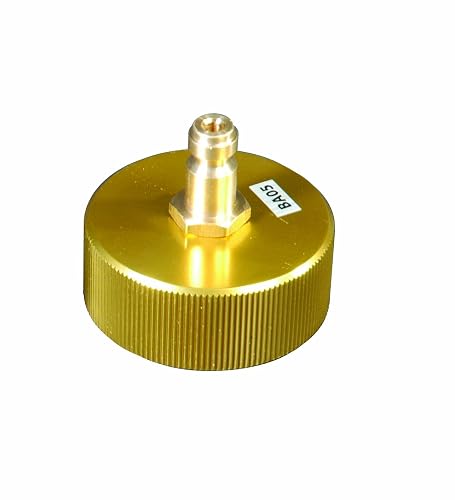
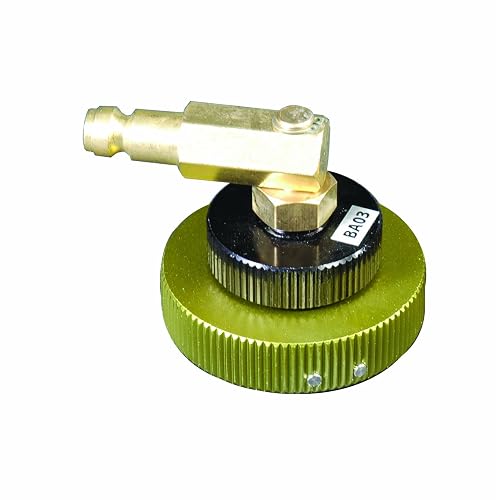
Power Probe Brake Bleeding Adapter. These are custom machined aluminum caps that go on your master cylinder and connect to your shop compressor at low pressure. It's kind of like having endless travel on your brake pedal and an assistant that always keeps the perfect pressure on the pedal. As it only uses the fluid in the master cylinder reservoir, you do have to top it off before beginning, and keep an eye on the level, and if you are doing a complete flush rather than a bleed, you'll need to pop the cap off and refill a few times. This extra hassle IMHO is more than offset by not having to clean up the leftover brake fluid from the Motive and store a garden sprayer sized device... Just throw the adapter in a small ziplock bag when you are done, no cleaning, super small to store, and it's ready for the next bleed.

They make a ton of different varieties for different cars, but the euro adapter (BA05) and the Ford adapter (BA03) fits every car I own and work on...

61NVQTnECQL._SL500_.jpg

71UnMrJCzOL._SL500_.jpg


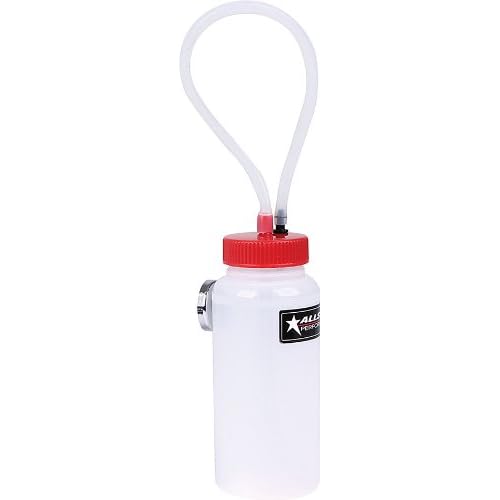
Whatever method you use, having a large magnetic bleed bottle makes the whole affair quicker and less messy...


21BE2PnupPL._AA500_.jpg
 
Last edited:

signcrafter

Well-known member
Joined
May 9, 2012
Messages
12,321
I currently use one of these:

56FDFD7086E68AC.jpg


I've modified the part that goes over the bleed screw as it has a bad tendency to **** in surrounding air (most people recommend putting grease on it to remedy this). I got some basic vacuum tubing and attached to mini-quick disconnects much like these:

CPCMetalCouplingSet.jpg


Now I can siphon all kinds of stuff based on what kinds of hoses I use (like transmission/differential fluid, etc) and it doesn't leak from the bleeder screws anymore.

Been a VERY useful tool, I highly recommend one if you have an air compressor.

Do you have a picture of your adapter for bleeding brakes? I use the mityvac setup that's just for brake bleeding, not the hand pump and also have air come in around the bleeder threads. But don't see how those quick connects solve that problem?
 

madcrisis

Well-known member
Joined
Dec 3, 2013
Messages
216
I use the harbor freight pneumatic vaccum kit as well. Ive only used it two or 3 times but works well with a little grease around the bleeder. Id reccomend it if you only occasionally bleed brakes and want one on a budget.
 

CoopVA

Well-known member
Joined
Jan 20, 2014
Messages
2,144
Location
Virginia
Over the years, I have bled way to many brakes on cars and motorcycles, most often by far using the standard two-person method, but I've also tried just about every 'time saving' device out there...

My thoughts:

speedbleeders. Gave up on them. Good idea, but after a while they start to leak at the threads, so you are always seeing bubbles in your clear line even if your lines/cylinders are clear. You can add sealant to stop the leaking, but that ends up offsetting any time savings I get from the bleeders.

Mityvac. Again, because you are using vacuum instead of pressure, they can give a false-positive for air in your lines when it really is just pulling air from the threads in the *******. I gave up on this too...

Syringe back-bleeding. This works great for motorcycles with small capacity slave and master cylinders and tiny reservoirs that are hard to get a good bleed on using the brake lever alone, can't see it working very well on a car.

Motive power bleeder. These things are really popular, and if I had a shop that did several brake bleeds a week, I might like it more, but my issues with it is 1) It's this big old garden sprayer sized tool I need to store that has one purpose only, 2) you need to dump the brake fluid into the Motive, and then deal with the unused/leftover (and slightly contaminated) brake fluid in the Motive when you are done, 3) cleaning the thing every time I use it or putting it away dirty, I like neither of these options.

What I've used most recently and is hands-down my favorite for bleeding automotive brakes is the
Power Probe Brake Bleeding Adapter. These are custom machined aluminum caps that go on your master cylinder and connect to your shop compressor at low pressure. It's kind of like having endless travel on your brake pedal and an assistant that always keeps the perfect pressure on the pedal. As it only uses the fluid in the master cylinder reservoir, you do have to top it off before beginning, and keep an eye on the level, and if you are doing a complete flush rather than a bleed, you'll need to pop the cap off and refill a few times. This extra hassle IMHO is more than offset by not having to clean up the leftover brake fluid from the Motive and store a garden sprayer sized device... Just throw the adapter in a small ziplock bag when you are done, no cleaning, super small to store, and it's ready for the next bleed.

They make a ton of different varieties for different cars, but the euro adapter (BA05) and the Ford adapter (BA03) fits every car I own and work on...

61NVQTnECQL._SL500_.jpg

71UnMrJCzOL._SL500_.jpg


Whatever method you use, having a large magnetic bleed bottle makes the whole affair quicker and less messy...

21BE2PnupPL._AA500_.jpg

I may have to try that.
 

aussieracer

Active member
Joined
Dec 24, 2013
Messages
38
I'm an vacuum bleeder fan. Tried pressure type methods, and they always didn't give the right pedal feel. Ok in road car, but never in race car. Vacuum method gives ok in both. However vacuum combined with someone helping to pump pedal at the same time, gives the best feel.

In the race car, I'll live with just vacuum for sub-30min races. I insist on proper bleed for longer races to ensure I have a pedal at the end.
 

warweapon762

Well-known member
Joined
Dec 1, 2013
Messages
323
Do you have a picture of your adapter for bleeding brakes? I use the mityvac setup that's just for brake bleeding, not the hand pump and also have air come in around the bleeder threads. But don't see how those quick connects solve that problem?

The quick connects are to adapt the tool to different applications (IE different lengths of tubing/diameters of hoses), they aren't used to solve the problem of air coming in around the bleeder threads. In order to solve the air problem I just put an O-ring on the the threads, roll it down flush against where it threads in. Takes a bit of practice to get it just right.

When I am done bleeding, I just tighten down the ****** and the o-ring just rolls up the threads.

The problem I have with the pneumatic bleeder applications is the stock attachment leaks air up over the ****** itself, which I just tend to get rid of and use clear tubing that I can just cut the ends off when it gets ragged. I would post pictures, but I don't have a camera right now to do so.
 
To avoid these ads, REGISTER NOW!
Top Bottom