To avoid these ads, REGISTER NOW!

Bridgeport tooling for the beginner, recommendations please.

JoeFin

Well-known member
Joined
Sep 13, 2013
Messages
717
Location
NorCal - where the Rednecks Race
What exactly does an indicol do? Is it just a holder or is it a very special holder?


Don't waste your time with an Indicol

You'll find the Starrett Button-Back Indicator Set about 100 times more useful in your setting up


$T2eC16d,!)sFIZGGm+2RBSUb-))jlQ~~60_3.JPG
 
To avoid these ads, REGISTER NOW!

Air21

Well-known member
Joined
Nov 3, 2013
Messages
372
What's the difference between the square and round criterion heads? Other than the obvious :p
 

remileblanc

Well-known member
Joined
Oct 4, 2008
Messages
110
Location
NB, Canada
As far as tooling up a mill with the basics to start making chips some stuff import stuff is fine. Get the Kurt vise. it will last you forever and will be used nearly every time you use the machine. An import set of parallels is fine. they go for about 30-40$. Don't bother with a coax indicator or a back plunger indicator for now. Most indicating on a mill can be done with a Test indicator. A .0005" Fowler is all you need. Don't buy a Jacobs chuck unless its an old model on ebay. The new ones are chineese and are horrible. Rohm makes a real good chuck. I find 1-2-3 blocks very useful. They can be had for about 15$.

For the most part setup tooling is fine imported. Spend your money on quality measuring tools and cutting tools.
 

ez-duzit

Well-known member
Joined
Jun 24, 2013
Messages
5,101
Location
Marina del Rey
Adam--good post.

Being on a tight budget, don't blow your whole wad on a new Kurt vise. You don't need to spend on a vise nearly half what your mill cost.

You're going to need a bigger budget, though. Watch eBay for used and new tooling at a fraction of retail.
 

JoeFin

Well-known member
Joined
Sep 13, 2013
Messages
717
Location
NorCal - where the Rednecks Race
I know the vise will be pricey, I have found a great deal on a new kurt vise on ebay. It is a D688 that is $455 and it is local so I can save the $95 for shipping. I don't want to spend almost $500 on a vise, but I feel it is the heart of the mill.

Why would anyone drop $500 on a new Kurt ? Every machine shop auction I've been to has a pile of them usually going for some where between $50 and $100
 

ez-duzit

Well-known member
Joined
Jun 24, 2013
Messages
5,101
Location
Marina del Rey
budgets

Regarding budgets.

From the point of view of someone who has just mostly gone through the (ongoing) process of equipping a 1-man machine shop, you will eventually likely spend on tooling an amount which will far exceed the $1200 your mill cost. Likewise with layout and setup gear. Of course you will approach this accumulation as funds allow and as opportunities arise. But in order to rough out a realistic budget with which to begin, you should try to envision what will comprise your fully equipped shop.

Just to give you some idea, my support gear:

Inside, outside, and depth micrometers 0-12" with standards, anvil mic, tube mic, blade mics, small hole gauges, dial calipers 0-12", vernier caliper 0-24", 0-36" scales, 0-24" adjustable squares, machinist's squares, protractors and compasses 0-24", scribe, T-bevel, radius gauges, surface plate, height gauge, sine bars, precision level, angle blocks, gauge blocks, V-blocks with clamps, adjustable V-block, angle plates, fixed and adjustable parallels, screw-less vises, machinist's vises and clamps, jack-screws, 1-2-3 plates, dial indicators with bases and accessories, center and edge finders, hold-downs ... plus.

Besides fly-cutters, slotting saws and boring bars, end mills include flat, radius'd and ball, round-over, roughing and tapered in various degrees, carbide and cobalt/HSS, 2 or more flutes, in sizes 1/16"-2"... plus.
 

Provincial

Well-known member
Joined
Sep 21, 2011
Messages
6,871
Location
Near Salem, OR
+3 on the Starrett button-back indicator set!

As to COO: I have had very good luck with Czech tooling. Even Communism couldn't break their tradition of quality metal working.
 

rodm1

Well-known member
Joined
Feb 17, 2008
Messages
2,270
I suggest you read this page for your test indicators. I'm a huge Interapid fan and will never own anything else if they make the style I need. A .0001 indicator are nice for small parts that you have to indicate on a machine.

Some of the tooling is a no brainier and some stuff like indicators or a matter of opinion. The problem with the plunger type indicators are they aren't vary us full with surface plate work on small parts.

http://www.longislandindicator.com/p37.html
 
Last edited:
OP
S

Strouty

Well-known member
Joined
Mar 21, 2010
Messages
38,216
Location
Southern Maine
I appreciate all the opinions, for right now I do not need to make money with this and my tolerances would be eyeballed if I did not have some cheap indicators and tools. I think my long term goal would be to get the best bang for the buck at auctions, on craigslist, and ebay. For now I will be slumming it with some cheap tools as I learn the ins and outs of them, I may figure out sooner rather than later that sometimes you just need a good, expensive tool, and there may be no substitute. For now I am the guy that doesn't know any better, but will learn from his mistakes. Tomorrow I will post pictures from my field trip. I did get a decent Kurt vise as well as a few other things.
 

Kevin54

MEMBER EMERITUS
Joined
Jan 12, 2005
Messages
29,341
Location
Urbana, Ohio
Re: budgets

Regarding budgets.

From the point of view of someone who has just mostly gone through the (ongoing) process of equipping a 1-man machine shop, you will eventually likely spend on tooling an amount which will far exceed the $1200 your mill cost. Likewise with layout and setup gear. Of course you will approach this accumulation as funds allow and as opportunities arise. But in order to rough out a realistic budget with which to begin, you should try to envision what will comprise your fully equipped shop.

Just to give you some idea, my support gear:

Inside, outside, and depth micrometers 0-12" with standards, anvil mic, tube mic, blade mics, small hole gauges, dial calipers 0-12", vernier caliper 0-24", 0-36" scales, 0-24" adjustable squares, machinist's squares, protractors and compasses 0-24", scribe, T-bevel, radius gauges, surface plate, height gauge, sine bars, precision level, angle blocks, gauge blocks, V-blocks with clamps, adjustable V-block, angle plates, fixed and adjustable parallels, screw-less vises, machinist's vises and clamps, jack-screws, 1-2-3 plates, dial indicators with bases and accessories, center and edge finders, hold-downs ... plus.

Besides fly-cutters, slotting saws and boring bars, end mills include flat, radius'd and ball, round-over, roughing and tapered in various degrees, carbide and cobalt/HSS, 2 or more flutes, in sizes 1/16"-2"... plus.

A lot of a machine shop expenditures goes for tools, BUT, you can start out with very minimal equipment and cost, although necessary tooling. One absolute necessary piece of equipment is a Dial Test indicator. Mine is a .0005 and has a 0-+/-.030 travel. The indicator is required for two reasons. To square the vise to the table, and to tram the head to the table.

Almost all of my hard tooling, angle plates, sine plates, sine bars, 1-2-3 blocks, grinding vises of various sizes, fly cutters, slitting saw arbors,and on and on, were all made by me, and all are dead on. Luckily we have a place close that we can take things to for heat treating. My problem now though is that I don't have a surface grinder. I do think a friend of mine does have one though that I can use anytime.

But once you start making tools, then those tools are used to make other tools. So a large part of the expense is just the material. I still have quite a few thousand in tools that I made, and like I said before, I probably made and gave away 2-3 times of what I have now just to get others started in the trade. I came out of a Tool Designer job and went right into being a ModelMaker making prototypes and Tool & Die Maker. I had an 0-1 mic, a 6" dial caliper, some screwdrivers, a few wrenches, and a couple of ball pien hammers. Luckily my Mentor let me use some of his equipment to make my equipment. My very first project when I started was an angle plate. Hardened outside, ground by me, and dead nuts on. That angle plate is now 33 years old and still dead nuts on.

So a person doesn't have to have thousands and thousands in tools to be able to make some very decent items. It just take a little ingenuity. Over the years you may end up with thousands WORTH of tooling, but may only have half of that invested. All sorts of used equipment are for sale everyday and for decent prices. I paid $60 for a set of mics 1"-6" with standards. Later on I bought some equipment and ended up with another set of 1"-6" mics along with a 12" height gage, ball mics, and some other stuff and only had $100 in it all. It's just knowing what you need and where to find it. When it comes to Machinist tools, USA made stuff is NOT always better. Mitutoyo is among the best in mics and such, yet cheaper than B&S or Starrett. A 1/2" Starrett edge finder may cost close to $40. A General edge finder, 1/2" may cost you $10 and works just as well.

And I posted earlier about RR8 Collets. You can get a quality import set for $67 dollars, or buy a set of Lyndex for $199. I've used both high dollar sets and import sets, and to be truthful, I've busted the high dollar collets before. It's rare that it happens but it did. On a few occasions, the threaded insert in the end broke loose. On other occasions, the collet itself broke all the way up where the cuts are. It's easy to spend thousands, and it's smarter to spend hundreds.
 
OP
S

Strouty

Well-known member
Joined
Mar 21, 2010
Messages
38,216
Location
Southern Maine
Re: budgets

Thread Snip

It's easy to spend thousands, and it's smarter to spend hundreds.

I like that, I have been doing the auction thing for a few years and I have found some awesome items for low dollar. The biggest problem I have is insurance, my agent says if I want to be covered for everything it has to be insured for about 80% the replacement cost. I could not afford it, so we put together a list that covered the most important items and the rest is just self insured. Someday I plan on getting coverage on everything, but the replacement value kills me. As an example, I bought some milwaukee concrete coring drills and bases for $45, replacement cost is about $6,000. I look forward to making some tools to make some stuff with. This has all been an education, I have learned about three phase power, now I am learning about tooling. I got to help build my rotary phase converter, and I am hoping to learn about frequency drives soon.
 

Adam.C

Banned
Joined
Jan 29, 2013
Messages
1,490
I may figure out sooner rather than later that sometimes you just need a good, expensive tool, and there may be no substitute. For now I am the guy that doesn't know any better, but will learn from his mistake.

I hope others can find the benefit of learning from others' mistakes. If not, and one can only learn by making ones own mistakes, a difficult road lies ahead.

I personally don't care if you take my advice or ignore it. These threads help more than the OP. I can say however, that I believe there is FAR too much to learn about machining than one man can learn on his own in a lifetime. And this is by far the most expensive go forward plan. I also think manual machining is quickly becoming a lost art. In my opinion, if you don't know a 50-60 yr old machinist, Internet forums are the next best option. I place great value in what I've learned on various web forums and though I don't say it often enough, I am extremely grateful for the information, support, patience, and inspiration I've received.

Please don't take my comments as a rebuke or criticism. I just want to make the point about the value of the comments you have received. I'll be more than happy to help further if you need it.
 

JoeFin

Well-known member
Joined
Sep 13, 2013
Messages
717
Location
NorCal - where the Rednecks Race
I'll buy every Kurt you can get for $50 and I'll pay you $75.
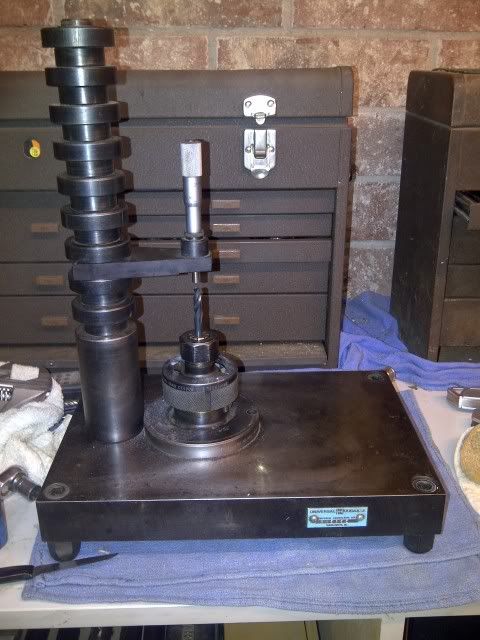
You really need to get out more often

Wanna see my $200 LN-25

Or maybe you rather see a $500 Automatic Surface Grinder. Gawd I would hate to think of standing there for hours on end running .0002 passes by hand

E ***** is probably 1 of the worst places to shop for major tooling. Not only will shipping 100 lb pieces kill you in freight cost but the sellers usually don't give a **** about it (since they just sold it to some sucker) and don't pack it worth a Ca%p and you get stuck with damaged goods. Nonreplicable Damaged goods at that.

But yes I will confess - I have bought some mics, calipers and what not off Eboner. Also I was buying Used Endmills in need of sharpening off there until a bunch of hacks with Cheapo Chinese made $2 bit endmill sharpening set ups got on there and figured they were going to corner the market in poorly sharpened endmills

Oh BTW - Kevin, you want to see my Cincinnati #2 Tool and Cutter Grinder I got for FREE and the "Truck Load" of Tool and Cutter Grinder Tooling I got for $200

Here we go Kev - check out the Kwik Switch 200 Tool Setter I got for $20

IMG-20121118-00042.jpg


I bet you can just run out and pick one of those up at the local hardware store any time you feel like it eh !!
 
Last edited:

justanengineer

Well-known member
Joined
Apr 5, 2011
Messages
7,722
Location
Motor City
Also the hold downs I have seem too loose on the T-slots what size are they suppose to be?

This is one of the areas where you have to be really careful with import tooling as it can ruin a good machine if the operator isnt careful. One known issue with the import tooling is the T-slot nuts, which need to fit pretty close to the slot, otherwise theyre going to pull "open" the slot and/or ding up the underside of the slot. If the slots on your machine are a bit buggered on the underside as many are, a stone or bent file and some patience is necessary. If the nuts dont fit, my suggestion would be to mill your own.

Similarly, before you stick imported or otherwise "cheap" tooling directly into the spindle, get some bluing or a marker and check to see how it actually fits. Blue the tool's taper, insert the tool by hand, spin it lightly, and check the pattern. Every once in awhile you will find its off and wasnt worth even the cheap price, and you really dont want to take a chance of wrecking a spindle taper.
 
To avoid these ads, REGISTER NOW!

KMScott

Well-known member
Joined
Feb 14, 2012
Messages
4,642
Location
Daufuskie Island, South Carolina
I totally agree justanengineer, yes the import collets look great but you will find that the the tolerance of the taper and ID that is ground is not very precision and this will ruin plenty of work due to the cutter pulling out and the steel being low quality loosing it's shape. I have seen this more and more lately because of all the import tooling.

I have filed burrs from the Tee Slots on Bridgeport's because of the sloppiness of the fits. If the Tee-Slot nut is not 5/8 then do not use it.
 

0.511MeV

Well-known member
Joined
May 25, 2011
Messages
421
I work with a variety of materials for making prototypes of electro-mechanical tools, as well as repair and modification to those tools. I rarely use steel, unless I am making a fixture or holder of some sort. I also rarely machine pieces large enough to worry about using a flycutter or boring bar. I can accomplish about 80% of what I need to do with a manual mill with the following:

Vise
Parallel set
DTI
3/8" R8 collet
1/2" R8 collet
3/8" shank double end edgefinder
1/2" shank double end edgefinder
Set of t-nuts/holddowns
1/2" shank tap-guide
Drill chuck on either R8 or straight shank that fits one of the above collets

Sets of end mills for various materials:
Set of HSS end mills only for plastics. I have trouble maintaining surface finish on plastic if I let an end mill cut metal at all, so I keep a set solely for plastic. The good news is that these don't seem to wear out unless you cut metal or damage it by dropping or something.
Set of HSS end mills for aluminum and copper.
Set of end mills for steel (I rarely machine steel, when I do it is for making a fixture usually so these are cheaper HSS and/or maybe worn out carbides from machining stainless, etc)
Carbide for Stainless or superalloys.

HSS drills. Various taps.

A big box of 12" or so length scraps to use for making fixtures.

None of that includes layout tools or inspection tools. The other 20% of what I need to do takes a whole huge amount of tooling; sine bars, angle plates, rotary tables, etc etc etc.
 

Adam.C

Banned
Joined
Jan 29, 2013
Messages
1,490
I totally agree justanengineer, yes the import collets look great but you will find that the the tolerance of the taper and ID that is ground is not very precision and this will ruin plenty of work due to the cutter pulling out.

My concern is the effect on the tool's runout. Ditto for cheap drill chucks. Good luck cutting 3/4" slot with a 3/4" end mill. Ditto for drill a 1/2" hole. Now obviously machinists have ways of doing both, and the spindle on a bridge isn't perfect. But why add to the problem?
 

Kevin54

MEMBER EMERITUS
Joined
Jan 12, 2005
Messages
29,341
Location
Urbana, Ohio
I totally agree justanengineer, yes the import collets look great but you will find that the the tolerance of the taper and ID that is ground is not very precision and this will ruin plenty of work due to the cutter pulling out and the steel being low quality loosing it's shape. I have seen this more and more lately because of all the import tooling.

I have filed burrs from the Tee Slots on Bridgeport's because of the sloppiness of the fits. If the Tee-Slot nut is not 5/8 then do not use it.

I'm going to have to disagree with that. If your cutter is pulling out, you are taking too heavy of a cut. It doesn't matter whether it's an import collet of not. If it's pulling out, you're doing something wrong.

And if the collet is losing it's shape, you are not putting the right size tool into the appropriate collet. Show me with a pic of an out of shape collet, or a collet that doesn't fit the quill. I've ran mills for close to 40 years and whether import or US made, never ran into the problems like you are describing as a common occurrence. And I've yet to see an import collet have runout. Chances are, you have a chip or something that is throwing your cut off.

I've stated above that I have ran imports and US both, and I've had more problems with the US collets than I have over imports.

I'd like to see some pics of the faulty stuff.
 

Kevin54

MEMBER EMERITUS
Joined
Jan 12, 2005
Messages
29,341
Location
Urbana, Ohio
My concern is the effect on the tool's runout. Ditto for cheap drill chucks. Good luck cutting 3/4" slot with a 3/4" end mill. Ditto for drill a 1/2" hole. Now obviously machinists have ways of doing both, and the spindle on a bridge isn't perfect. But why add to the problem?

A good machinist knows that you can't cut a 3/4" slot with a 3/4" endmill. All for the fact that one side is climb cutting and the other side is conventional cutting. With that, you get chip buildup while the cutter is cutting and you will get chip crowding and galling. You always want to use an end mill one size or so smaller to make a cut to the size you want and take a finish cut climb cutting only.
 
OP
S

Strouty

Well-known member
Joined
Mar 21, 2010
Messages
38,216
Location
Southern Maine
A good machinist knows that you can't cut a 3/4" slot with a 3/4" endmill. All for the fact that one side is climb cutting and the other side is conventional cutting. With that, you get chip buildup while the cutter is cutting and you will get chip crowding and galling. You always want to use an end mill one size or so smaller to make a cut to the size you want and take a finish cut climb cutting only.


I was discussing this with A_Pmech earlier today! Kevin, any set of imports you would recommend or just get whatever is cheapest? I have found some on Amazon as well as Ebay. Nothing really local, but I am keeping my eyes peeled.
 

A_Pmech

Well-known member
Joined
May 8, 2007
Messages
8,002
Location
IL
OK guys, I put this thread in the time machine and turned the date back to 6:26 PM yesterday evening rather than lock the thread.

Let's try not to have another dust-up about collets. This ain't PM. ;)

I HATE giving infractions and banning people, it just *****. Don't make me pick a side.
 
OP
S

Strouty

Well-known member
Joined
Mar 21, 2010
Messages
38,216
Location
Southern Maine
So I went on ebay and bought some end mills:


Then I got my Kurt Vise with a swivel base (one is for my Dad):


I went to a pawn shop and bought some more Chucks, Jacobs 18N and two 20N's:


I ordered some collets and hold down kits from Enco, they should be here Monday. I went through my drill bits and found that I have most sizes up to 1". I am hoping to buy an indicator and magnetic base this week so I can set everything up. I still need to find a home for my mill, it is being used to hold my extension cord right now.


I am going to get some more tooling, but after I sell my generator. If that sells on monday, I will be buying a few more goodies.
 

justanengineer

Well-known member
Joined
Apr 5, 2011
Messages
7,722
Location
Motor City
Looks like youve got the basics pretty well covered. JMHO, others will disagree, but I like to stick mills in corners diagonally. Most of my work is fairly small, so long as I have full table travel Im happy. If I need to have something hanging off the end of the table, moving it out a few feet isnt a big deal, 5 mins work tops. I keep a few pinch bars and some old 1" iron pipe handy in the corner behind the mill for just such an occasion.
 

Steinmetz

Well-known member
Joined
Oct 11, 2012
Messages
2,274
Location
Washington State
So I went on ebay and bought some end mills:


Then I got my Kurt Vise with a swivel base (one is for my Dad):


I went to a pawn shop and bought some more Chucks, Jacobs 18N and two 20N's:


I ordered some collets and hold down kits from Enco, they should be here Monday. I went through my drill bits and found that I have most sizes up to 1". I am hoping to buy an indicator and magnetic base this week so I can set everything up. I still need to find a home for my mill, it is being used to hold my extension cord right now.


I am going to get some more tooling, but after I sell my generator. If that sells on monday, I will be buying a few more goodies.

As an aside, I like the tools from Fisher Products. I have several of them.
 
OP
S

Strouty

Well-known member
Joined
Mar 21, 2010
Messages
38,216
Location
Southern Maine
As an aside, I like the tools from Fisher Products. I have several of them.

A_Pmech recommended them to me. My first collet set arrived today as well as two Niagara roughing end mills. Monday some more stuff should be in. I still need to hook up the rotary phase converter a little more permanently.
 
OP
S

Strouty

Well-known member
Joined
Mar 21, 2010
Messages
38,216
Location
Southern Maine
Similarly, before you stick imported or otherwise "cheap" tooling directly into the spindle, get some bluing or a marker and check to see how it actually fits. Blue the tool's taper, insert the tool by hand, spin it lightly, and check the pattern. Every once in awhile you will find its off and wasnt worth even the cheap price, and you really dont want to take a chance of wrecking a spindle taper.

What do you use for bluing? Is it just the layout fluid like dykem? or is it something else? Anyone have a good source for it? I am going to try it out on some of my import tooling to see how it fits.
 

Cryptic1911

Well-known member
Joined
May 24, 2008
Messages
2,884
Location
Willimantic, CT
Is there any reason you're going to use a rotary phase converter rather than a vfd?

I went through the same thing you're going through right now.. had to start from scratch. Luckily we know someone who had tons and tons of tooling, so we scored a zillion bucks worth of tooling for free. I had to buy everything else though

I just recently grabbed a bunch of stuff.. table covers, way covers, new felt way wipers, and a push-n-lube zerk oiler from icai-online, as well as a kurt d688 vise, a dro that hasn't arrived yet, and a pro tram from edge technologies. The vise is omfg nice, and that pro tram is really handy.. It makes it super easy to tram the head in no time
 
OP
S

Strouty

Well-known member
Joined
Mar 21, 2010
Messages
38,216
Location
Southern Maine
I have the rotary phase converter, I would like to eventually do a VFD, but I want to spend that money on tools for now.
 
OP
S

Strouty

Well-known member
Joined
Mar 21, 2010
Messages
38,216
Location
Southern Maine
What are people using for cutting fluid? Also I am interested in getting a Noga base, which one would be a good all around one?
 

A_Pmech

Well-known member
Joined
May 8, 2007
Messages
8,002
Location
IL
What do you use for bluing? Is it just the layout fluid like dykem? or is it something else? Anyone have a good source for it? I am going to try it out on some of my import tooling to see how it fits.

"Prussian Blue" or "Cobalt Blue" is available from most auto parts stores, Enco, MSC, etc. Most people slather the stuff on and wonder why they can't see the high spots. An even, light coat which provides some color but remains semi-transparent is what you're looking for. Slide the two surfaces together slightly to create a "print" of the high and low spots of contact on each surface.

Regarding cutting fluid, I've been sold on Trim E-206 for a while now.
 
To avoid these ads, REGISTER NOW!
Top Bottom