To avoid these ads, REGISTER NOW!

Britool (Made in England) thread

humber2

Well-known member
Joined
Feb 13, 2011
Messages
1,755
Location
Downunder
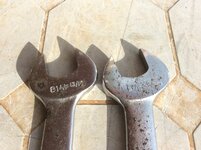
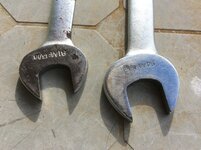
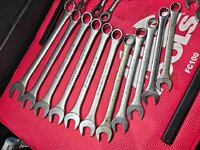
Two SAE wrenches with the same part # 2J8193

The decimal jaw sizes are given in the #, 0.81” and 0.93”

Turning them over and I see that one has the decimal stamped on one ahead of the 15/16 A/F size but hello, it’s 94.

Was there this style marking on the complete 2J range or any other ranges for that matter?5D0DB191-DB0C-4112-AE91-7E95E03CEC73.jpeg
 

Attachments

  • 41194587-A4A8-4526-AA0D-909AE8EB9A0C.jpeg
    41194587-A4A8-4526-AA0D-909AE8EB9A0C.jpeg
    799.1 KB · Views: 37
  • 7FE72F48-E9E9-4911-AF47-150D7ECA882C.jpeg
    7FE72F48-E9E9-4911-AF47-150D7ECA882C.jpeg
    675.7 KB · Views: 21
  • 14CE562D-171A-48B9-9DC6-E4132D641CDD.jpeg
    14CE562D-171A-48B9-9DC6-E4132D641CDD.jpeg
    751.6 KB · Views: 27
To avoid these ads, REGISTER NOW!

Farmer J.

Well-known member
Joined
Sep 18, 2016
Messages
1,995
Location
UK, Cornwall/Hertfordshire.
Two SAE wrenches with the same part # 2J8193

The decimal jaw sizes are given in the #, 0.81” and 0.93”

Turning them over and I see that one has the decimal stamped on one ahead of the 15/16 A/F size but hello, it’s 94.
Such anomalies as this are so typical of British engineering of that period. Inconsistent, frustrating and illogical with a lack of understanding of decimals..!

The decimal inch measurement corresponding to 15/16" is 0.9375 when expressed to four decimal places. (the 5th place would be 0)

Here is my theory on this, evolved over decades of observation:
The story goes..

One day different chaps were deciding what markings should be stamped on each side of the spanner and one of them thought it should be 0.93" and the other thought it should be 0.94". They were both so stubborn and awkward and their minds so closed to the ideas of others that they refused to compromise, and each had his own way. Anyone with a more flexible mindset has got sick of them and emigrated.

-One chap just used the first 2 places of decimal, ignored the rest so came up with 0.93" He was probably from Britool management and he decided the part numbers, and because he was 'management' nobody was able to tell him he was wrong. He never really understood the decimal system, he thought it was 'foreign' and would never 'catch on'.

-The other chap knew a bit more and correctly rounded the 4th and 3rd place decimals upwards, so he used 0.94" He was a precision engineer, and refused to compromise his personal high standards. He had been told to stamp the decimal size next to the fractional size, so that's exactly what he did.
 
Last edited:

humber2

Well-known member
Joined
Feb 13, 2011
Messages
1,755
Location
Downunder
I recall working with a slide rule alongside others armed with an early electronic calculator which could round up or down at the push of a button with supposedly more accuracy. Why upset the apple cart with a newfound “discovery”.

The tool’s dimension is of the hex head the wrench jaw has to be bigger to fit allowing for tolerances, plating etc.

Anyway my small collection has an example of the next size up afflicted with the same designations.

Was there a set marked with decimals on the full range at some time?
 

Attachments

  • 6CACB5EE-0631-47A9-B79A-3CFE44B27C74.jpeg
    6CACB5EE-0631-47A9-B79A-3CFE44B27C74.jpeg
    712.2 KB · Views: 16
  • E3E6DD49-47CA-45DD-88C0-BF0319E71CC9.jpeg
    E3E6DD49-47CA-45DD-88C0-BF0319E71CC9.jpeg
    835 KB · Views: 17
  • 26F42896-E776-434F-9BAE-5E95BCC0C7ED.jpeg
    26F42896-E776-434F-9BAE-5E95BCC0C7ED.jpeg
    858.5 KB · Views: 21

MatraMan

Member
Joined
Jun 27, 2024
Messages
7
The only thing I can think of is perhaps it fits in the hole on the extensions so you can use it as a tommy bar for undoing things?
The "A" bar was included in the "E" 1/2" set because it fitted the spark plug socket included in the "E" set. I know this because the 1/2" set was the first Britool socket set I got when I started as a motor mechanic in 1964. I have still got this original set and still use it. I have just bought a Britool 145 socket set this week and hope to receive it in the next few days.
 

MatraMan

Member
Joined
Jun 27, 2024
Messages
7
More old posters, as some members requested. More to follow.
I have just bought another Britool socket set yesterday, advertised as a 140B part set. I probably paid too much but I wanted the Britool box and nearly full set of Bisquare sockets that were included. Nearly all the original Britool accessories and sockets were missing. However, the missing Britool items had been replaced with none Britool stuff so it was a full set of sorts. This was made clear in the advert and clearly shown in the accompanying photographs so I knew what I was buying. Should receive it in the next few days. The missing Britool items are not too much of a problem, I have many Britool items that should help me make up a fully Britool stocked set. What I would really like is a copy of an original photograph from a Britool catalogue clearly showing a 140B set in its box. I don't have a picture of a 140B set in any of the very few Britool catalogues I have. If anyone out there can post a definitive original view of a 140B set I would be very grateful.
 

MatraMan

Member
Joined
Jun 27, 2024
Messages
7
It’s your lucky day, from Cat107 c1968

28131807-96E7-4D73-8EFC-F1132AD70216.jpeg
Thank you very much for a fast reply. Well it has confirmed one thing, the set I bought yesterday advertised as a 140B isn't a 140B. I suspect it is one of the 145 sets but not sure which one. I don't think it is a 145A, I have (what I am sure is original Britool) a picture and description of a 145A set and the box is not the same. I have attached photographs of the set (box) I am trying to identify that shows the details (please ignore the contents of the box, these could have come from anywhere). The 140B set shown in your attachment is very, very similar to the first socket set I got new in 1964, a 140A. As you can see the box needs a bit of work! Think it could be a 145B box, 1966 -1970?
 

Attachments

  • 4.jpg
    4.jpg
    141 KB · Views: 18
  • 3.jpg
    3.jpg
    140.1 KB · Views: 20
  • 2.jpg
    2.jpg
    81.3 KB · Views: 19
  • 1.jpg
    1.jpg
    27 KB · Views: 20
Last edited:

MatraMan

Member
Joined
Jun 27, 2024
Messages
7
Here’s the bottom of the same page and it confirms your thinking.

6642B3D2-4620-4502-9231-B939F7FB005F.jpeg
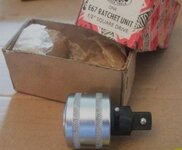
Again, humber2, thank you for your reply and post showing a 145B set. This looks like the Britool steel case I have just bought. Interestingly the Ratchet Unit shown in the Britool picture of the 145B and described in the included accessories list as an E67 Ratchet Unit doesn't look like an E67 Ratchet Unit. I have attached a couple of photographs I found of an E67. I know its possible Britool could have slightly changed the design of the ratchet unit and kept the E67 designation. However, I seem to recall seeing other Britool 1/2" ratchet units with different designation numbers. The one shown looks to be an E66 not an E67. I have now found a picture of ratchet unit E66 and have added it to post. The E66 looks to be a later version than the E67 to me but I would have thought the E66 came before the E67 for obvious reasons.
 

Attachments

  • 5.jpg
    5.jpg
    23.1 KB · Views: 20
  • 6.jpg
    6.jpg
    48.2 KB · Views: 24
  • E66.jpg
    E66.jpg
    103.9 KB · Views: 45
Last edited:

humber2

Well-known member
Joined
Feb 13, 2011
Messages
1,755
Location
Downunder
I have yet to bring home a ratchet unit, the Cat107 shows E67 only.

Both your E66 and E67 images show Made in England which to me confirms 1960’s era identification following the dropping of British Made used from day one to the late 1950’s.

Perhaps the E67 lever could be fouled in operation?

Do you have any earlier Catalogues?
 

MatraMan

Member
Joined
Jun 27, 2024
Messages
7
I have yet to bring home a ratchet unit, the Cat107 shows E67 only.

Both your E66 and E67 images show Made in England which to me confirms 1960’s era identification following the dropping of British Made used from day one to the late 1950’s.

Perhaps the E67 lever could be fouled in operation?

Do you have any earlier Catalogues?
I have yet to bring home a ratchet unit, the Cat107 shows E67 only.

Both your E66 and E67 images show Made in England which to me confirms 1960’s era identification following the dropping of British Made used from day one to the late 1950’s.

Perhaps the E67 lever could be fouled in operation?

Do you have any earlier Catalogues?
The earliest catalogue I have is a 1971, No.109, bound copy for use with Catalogues No. 105 and 106. I don't have catalogue 105 and 106, original or copy. However, I have a Price List dated 25th September, 1964, again a bound copy. On page 11 of this price list there is an E66 Ratchet Unit listed, priced at £3 10s 0p referring to pages 28 and 29 of the Britool catalogue. Unfortunately there aren't any pictures in the Price List catalogue. In the 1971, No.109, catalogue an E67 Ratchet Unit is shown on page 17, evidently Britool must have moved from the E66 to the E67 somewhere between 1964 and 1971. This could be narrowed down further with access to any Britool catalogues between these two dates. As I previously mentioned the E66 looks more recent/modern than the E67 because of the ratchet reversing method/switch. Obviously its not though (well fairly obviously anyway)! It would be interesting to know which Ratchet Units followed the E67 for 1/2" drive in chronological order of production.
 

Nightfox

New member
Joined
Sep 21, 2024
Messages
1
Location
Newcastle upon Tyne
Hey guys, my first post :)
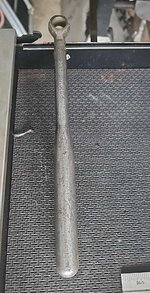
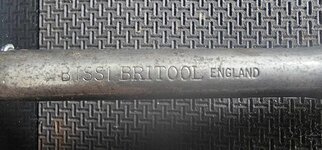
I have a Britool tool I'm not sure what is is.
I've looked through all the thread and cant find any info on it, also Googled it.
And few spanners I use regularly
 

Attachments

  • 455150908_8392203024147256_1990944745279251718_n.jpg
    455150908_8392203024147256_1990944745279251718_n.jpg
    207.9 KB · Views: 49
  • 02b5ef37-4097-4712-a793-0c22e44c80b2.jpg
    02b5ef37-4097-4712-a793-0c22e44c80b2.jpg
    482.6 KB · Views: 42
  • 8fc4845d-b064-44c4-a79c-15c00979e8bb.jpg
    8fc4845d-b064-44c4-a79c-15c00979e8bb.jpg
    475 KB · Views: 42

Farmer J.

Well-known member
Joined
Sep 18, 2016
Messages
1,995
Location
UK, Cornwall/Hertfordshire.
Welcome, Nightfox.
I don't recognise that tool, hopefully someone will be along who does.
The part number beginning 'BT' makes me think maybe a special made for 'British Telecom', if that is the case it would have to be made after 1969 as before that the telephone wires were operated by the General Post Office (GPO).
I feel it's unlikely this tool was made for the 'Birmingham Trainee Solicitors Society'... :D
 

MatraMan

Member
Joined
Jun 27, 2024
Messages
7
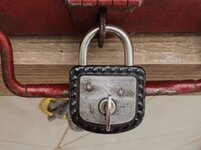
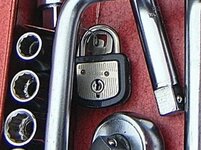
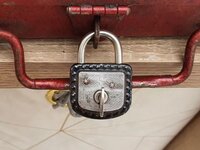
Has any one got a photo of the lock that Britool fitted to the socket boxes?
It would be nice to finish the set with the correct padlock? I have been unable to find the correct padlock supplied by Britool with their socket box so I have bought a new old stock 30mm SQUIRE padlock of a similar size to the original one. It was only £4.99 off eBay and will do until I can find the correct one.
 

Attachments

  • s-l960 (2)e.jpg
    s-l960 (2)e.jpg
    51.2 KB · Views: 34
  • s-l960 (37)wave.jpg
    s-l960 (37)wave.jpg
    45.1 KB · Views: 26
  • 13.jpg
    13.jpg
    526.5 KB · Views: 24
Last edited:

Bob H

Well-known member
Joined
Apr 10, 2021
Messages
83
Location
Side of the house
I think you are correct.

Although, the “hole through” extensions were discontinued before the blue handles.

In the mid 80’s I was buying blue handle ratchet’s with the simpler (no hole) extensions. The quality of the extensions was still very high though. Better than the ratchets in fact.

When they switched to the black handle ratchets, the quality of the finish on both ratchets and extensions dropped.

I would say that was an early 80’s (maybe late 70’s) set with a later ratchet.
There are 2 differing eras of blue plastic handles. The first were introduced just after James Neal took over, and were broadly tubular in shape. These were sold alongside the hole through extensions. Sold from the mid 1970’s.
The much later blue plastic handles are sort of triangular, and are probably made in India. They are so far outside my area of interest, that I don’t know or care when they were made, but they probably were sold with the no hole through extensions, and some may even have expert on them.
 

Bob H

Well-known member
Joined
Apr 10, 2021
Messages
83
Location
Side of the house
Thank you very much for a fast reply. Well it has confirmed one thing, the set I bought yesterday advertised as a 140B isn't a 140B. I suspect it is one of the 145 sets but not sure which one. I don't think it is a 145A, I have (what I am sure is original Britool) a picture and description of a 145A set and the box is not the same. I have attached photographs of the set (box) I am trying to identify that shows the details (please ignore the contents of the box, these could have come from anywhere). The 140B set shown in your attachment is very, very similar to the first socket set I got new in 1964, a 140A. As you can see the box needs a bit of work! Think it could be a 145B box, 1966 -1970?
This may be of use ?
 

Attachments

  • IMG_1667.jpeg
    IMG_1667.jpeg
    454.4 KB · Views: 20

Dave455

Well-known member
Joined
Mar 19, 2013
Messages
5,797
Location
Sussex, England
There are 2 differing eras of blue plastic handles. The first were introduced just after James Neal took over, and were broadly tubular in shape. These were sold alongside the hole through extensions. Sold from the mid 1970’s.
The much later blue plastic handles are sort of triangular, and are probably made in India. They are so far outside my area of interest, that I don’t know or care when they were made, but they probably were sold with the no hole through extensions, and some may even have expert on them.
It was the “James Neil” plastic handles to which I was referring.

Yes, introduced in the mid 70’s just after the takeover.

Initially, they were sold alongside the ”hole through” extensions, but by the early 80’s they were being sold together with the later plain extensions.

I have one of the later plain extensions that I bought in the early 80’s, and although I prefer the earlier style, the overall quality and finish are as good as any of the earlier tools.

I think the next major change was the introduction of the squarish black handles, together with a lower quality of finish. I pretty much lost interest from then on.

Like yourself, I have little interest in the later tools.
 
Last edited:
To avoid these ads, REGISTER NOW!

esben57

Well-known member
Joined
Feb 3, 2012
Messages
826
Location
Sheffield. England
Thank you very much for a fast reply. Well it has confirmed one thing, the set I bought yesterday advertised as a 140B isn't a 140B. I suspect it is one of the 145 sets but not sure which one. I don't think it is a 145A, I have (what I am sure is original Britool) a picture and description of a 145A set and the box is not the same. I have attached photographs of the set (box) I am trying to identify that shows the details (please ignore the contents of the box, these could have come from anywhere). The 140B set shown in your attachment is very, very similar to the first socket set I got new in 1964, a 140A. As you can see the box needs a bit of work! Think it could be a 145B box, 1966 -1970?
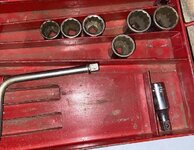
Box looks like later NA760C set with incorrect paint. Earlier paint was black/red outside, red inside. Later boxes had a matt pinkish red hammer finish. Metal Britool tag rivetted, sticker later. Might be totally wrong though.
These I'm sure had E engineers 1/2" drive tools. Ratchet, breaker, E67 ratchet unit, speeder, UJ, stud extractor socket and various extensions with sometimes a Tommy bar. EB/EBM sockets Whit AF and Metric.
The double square EQ sockets were part of an earlier master set.
 

Dave455

Well-known member
Joined
Mar 19, 2013
Messages
5,797
Location
Sussex, England
Box looks like later NA760C set with incorrect paint. Earlier paint was black/red outside, red inside. Later boxes had a matt pinkish red hammer finish. Metal Britool tag rivetted, sticker later. Might be totally wrong though.
These I'm sure had E engineers 1/2" drive tools. Ratchet, breaker, E67 ratchet unit, speeder, UJ, stud extractor socket and various extensions with sometimes a Tommy bar. EB/EBM sockets Whit AF and Metric.
The double square EQ sockets were part of an earlier master set.
I think you are dead right in respect of the finish!

Earlier boxes (60’s to maybe early 70’s) had the black and red crackle outside, just the red inside. Slightly later boxes (early /mid 70’s) the hammer finish, then later boxes still (mid / late 70’s) had a textured red paint. I can remember seeing these new, just in to the 1980’s.

Only the much later boxes had the dark red paint.

The earlier boxes also had a slot for a plastic card with the contents. Quite neat. Here’s my set if it helps. Dad bought this used in about 1969 or 70, so it predates then.

You can’t be too rigid regarding dates of various parts with Britool. Quite often they would continue to supply sets with parts that had otherwise been superseded.

I can remember seeing sets with the “hole through” extensions years after they were unavailable individually. I was also surprised how late they continued to supply the U.S. made Langenau tool chests. They must have had quite a stash of these…

IMG_0905.jpeg
 
Last edited:

Bob H

Well-known member
Joined
Apr 10, 2021
Messages
83
Location
Side of the house
I think you are dead right in respect of the finish!

Earlier boxes (60’s to maybe early 70’s) had the black and red crackle outside, just the red inside. Slightly later boxes (early /mid 70’s) the hammer finish, then later boxes still (mid / late 70’s) had a textured red paint. I can remember seeing these new, just in to the 1980’s.

Only the much later boxes had the dark red paint.

The earlier boxes also had a slot for a plastic card with the contents. Quite neat. Here’s my set if it helps. Dad bought this used in about 1969 or 70, so it predates then.

You can’t be too rigid regarding dates of various parts with Britool. Quite often they would continue to supply sets with parts that had otherwise been superseded.

I can remember seeing sets with the “hole through” extensions years after they were unavailable individually. I was also surprised how late they continued to supply the U.S. made Langenau tool chests. They must have had quite a stash of these…

IMG_0905.jpeg
On the point of authenticity, crackle paint boxes had riveted badges - however, this one looks original. I guess it was supplied when they still painted the boxes crackle finish, but had run out of the metal badges. Almost certainly an early 1970’s set.
 

Attachments

  • IMG_1680.jpeg
    IMG_1680.jpeg
    725.9 KB · Views: 17

Dave455

Well-known member
Joined
Mar 19, 2013
Messages
5,797
Location
Sussex, England
On the point of authenticity, crackle paint boxes had riveted badges - however, this one looks original. I guess it was supplied when they still painted the boxes crackle finish, but had run out of the metal badges. Almost certainly an early 1970’s set.
I think it depended on the size of the box.

I have a small 3/8 drive set of my Dad’s that I know he bought new in the early 60’s.

It’s got the crackle finish, but no badge, just a foil sticker.
 

Bob H

Well-known member
Joined
Apr 10, 2021
Messages
83
Location
Side of the house
A bit of History …..

John Shaw of Wolverhampton, factor and merchant, was born in Penn in 1782. The first reference to the date of the establishment of the business appears in a publication called "The Hardwareman" of 1895 (ref. 417), which states that "the earliest surviving records of the business are of the year 1795, though, to be exact, its origin may have been a little earlier". This would make John Shaw 13 years old when he started to trade. Later, in the same article, reference is made to "a very old order book", implied to belong to John Shaw, (and uniquely identifiable by having a riddle penned on its inside cover) (ref. 151), which covers the period 1790 to 1820. In actual fact, it is an order book belonging to the Wilkinson family of Colne, Lancashire. (John Shaw married Elizabeth Wilkinson in 1813.) The first authenticable documentary evidence of the establishment of the business does not appear until 1805 (Stock book, ref. 401). John Shaw was the sole proprietor of his wholesale hardware, or factoring business, which was chiefly confined to the home trade, until 1815, when he went into partnership with Henry Crane. During the period of the partnership, the Calcutta House of T E Thomson & Co was established (1834) in India, and John Shaw brought his sons into the business. The partnership continued for 33 years, but eventually ended in 1848. Mr Crane continued in business in Darlington Street, Wolverhampton, on his own account after the dissolution of Shaw & Crane.

The business now became known as John Shaw & Sons, and around 1852, moved from George Street to 64 Church Lane. With the death of John Shaw in 1858 (aged 76), two of his sons, Thomas Wilkinson Shaw and Edward Dethick Shaw became proprietors (John Shaw junior having died in India in 1839). The home and export trades were extended, and branches or connections were established in Canada, Australia, the East and West Indies, amongst others. Edward Shaw died in 1886 (aged 65) and Thomas Shaw in 1887 (aged 69), creating a problem for the future of the Company. Taking advantage of the Limited Liability Acts, two companies were registered in 1887, one to take over the East Indian establishment (T E Thomson & Co Ltd), and one to acquire the Wolverhampton business (John Shaw & Sons, Wolverhampton, Ltd). All shares were strictly private, and were taken by the families of the late partners and brothers.

In 1896, John Shaw & Sons Ltd took over J & W Hawkes of Birmingham (est. 1831), and incorporated William & Henry Bate (est. 1849) and Owen & Fendelow (est. 1770) into the group in 1899. The incorporation of Owen & Fendelow included Windle & Blyth, Walsall (inc. 1853), Henry Stuart & Company (inc. 1877) and Plimley & Company (inc. 1888). 1899 saw John Shaw & Sons Ltd move to Fryer Street, because the company could not expand any further at their Church Lane premises. In 1906, the group incorporated Onions & Company of Birmingham.

John Shaw & Sons Ltd became a public company in 1919. By 1937, John Shaw & Sons Ltd had outgrown their Fryer Street premises, and moved to what was known as the Bushbury Works (formerly occupied by Clyno Engineering) on Fourth Avenue, Bushbury, taking with them Jenks Brothers Ltd, and the British Tool & Engineering Company Ltd, who had been incorporated that year.

Moore & Wright, and the Avia Steel & Tool Company Ltd were both incorporated in 1945.

In 1970, the John Shaw group of companies were incorporated by James Neill Holdings PLC, and in 1986 were moved away from the Britool Works in Bushbury; Britool being transferred to Abbey Dropforge in Cannock.

B. T E THOMSON & CO LTD

The first representative of the Wolverhampton firm of Shaw & Crane (later John Shaw & Sons) in India was Thomas E Thomson (an early traveller for the firm). He established T E Thomson & Company in 1834 at 2 Old Court House Street, Calcutta. The nature of the business was an "indent business" - it took orders from native firms, then transmitted them home for execution. However, extensive stocks were kept from the outset. The first shipment of goods charged against the Calcutta branch on 7 November 1834 was for £2,383, and up to mid-1848, goods to the value of £127,000 were shipped to India. The earlier stocks were primarily railway supplies, but the business later developed into a large wholesale and retail concern, carrying heavy stocks of hardware, tools, machine tools, pumps and agricultural implements.

John Shaw junior travelled out to India, but died in 1839 of a recurring illness during a journey to Meerut. T E Thomson died in 1846, and was succeeded by Mr Turner, who continued to conduct the business under the name of T E Thomson and Company. In 1853, Mr Turner died, and Edward Dethick Shaw travelled to Calcutta to see to the affairs of the business. He left early in 1854 and appointed a Mr Webb as manager. It was about this time that the company moved from 2 Old Court House Street to 14 (later renumbered 9) Esplanade East, Calcutta. Mr Webb was manager only briefly, and was replaced by a Mr Gentle, whose health failed, and who in turn was replaced by a Mr O'Brien, who died shortly afterwards.

In 1860, two brothers, Thomas & Boughton Newman because managers, until they both died in 1876 (one in April, the other in June). They were succeeded by George Irving and W W Burgess. Following the deaths of E D Shaw and T W Shaw in England in 1886 and 1887 respectively, T E Thomson & Co was registered as a limited liability company, at the same time as its parent company, John Shaw and Sons. In 1890, Sir Charles E Shaw visited the Calcutta House, during the course of a journey around the world. In 1947, "TET and Co", as it had become familiarly known, was sold to the Maharaja of Nepal.

C. JENKS BROTHERS LTD and BRITISH TOOL & ENGINEERING CO LTD (BRITOOL LTD)

Jenks Brothers Ltd was incorporated in 1912 by Reginald Percy Jenks and George Clement Jenks, with registered offices at 47 Melbourne Street, Wolverhampton. The British Tool & Engineering Company Ltd was incorporated in 1915 by Charles Bardell Wadsworth, Reginald P Jenks, Clement Jenks and H S Gibbons, with registered offices at Owen Road, Wolverhampton. Both companies were mainly concerned with the production of handtools.

Following the First World War, the British Tool & Engineering Co Ltd suffered a trade slump (as did other engineering companies as a result of post-war conditions), which was compounded by a client company breaking a contract. This was alleviated by British Tool diversifying into other areas, such as the production (under license) of a jacking system for motor cars. Part of British Tool's Owen Road works were sub-let to Jenks Brothers Ltd in 1925, and this was to the mutual advantage of both companies, as it increased the variety of stock available on the premises, whilst reducing duplication of stock, and had both of the Jenks Brothers in more immediate contact with each other. A large transfer of shares occurred in 1928 between Jenks Brothers Ltd and the British Tool & Engineering Co Ltd, so that one body of shareholders could own and control the two companies and their businesses. Jenks Brothers Ltd became the parent company of the British Tool & Engineering Co Ltd. In 1934, Clement Jenks was elected a Director of John Shaw & Sons Ltd (and T E Thomson & Co Ltd), and in 1937, John Shaw & Sons Ltd purchased virtually all of the shares in Jenks Brothers Ltd and the British Tool & Engineering Co Ltd, and moved both companies to the Britool Works in Bushbury. John Shaw & Sons Ltd also moved to the Britool works at the same time. Jenks Brothers Ltd rented one bay, and the British Tool & Engineering Co Ltd rented nine and a half bays, and by 1940 the staff of both companies had been merged with John Shaw & Sons Ltd staff. At this time, Clement Jenks became Director of Hand Tools on the Board of the Ministry of Supply, and retired from the chair of Jenks Brothers, John Shaw & Sons, and British Tool. He rejoined the Board of the Companies in 1943, and was Chairman again by 1945. George Clement Jenks died in 1946. Reginald P Jenks became Chairman in his brother's place, and he died in 1958.
 

Farmer J.

Well-known member
Joined
Sep 18, 2016
Messages
1,995
Location
UK, Cornwall/Hertfordshire.
A few more .448 hex drive pieces, universal joint sockets which are all 12 point 'bi-hex' and British Made.
1/2" AF
5/16 Whitworth (same as the drive size)
3/8 Whitworth.
DSC06743.JPG
 
Last edited:

Bob H

Well-known member
Joined
Apr 10, 2021
Messages
83
Location
Side of the house
A bit more info from a member of the Facebook Britool group, provided as an answer to a question I posed.
 

Attachments

  • IMG_1708.png
    IMG_1708.png
    4.4 MB · Views: 21

Bob H

Well-known member
Joined
Apr 10, 2021
Messages
83
Location
Side of the house
A few more .448 hex drive pieces, universal joint sockets which are all 8 point 'bi-hex' and British Made.
1/2" AF
5/16 Whitworth (same as the drive size)
3/8 Whitworth.
DSC06743.JPG
Sorry, “eight point bi hex”.
what ? Hex is 6 sided, and in socketry bi hex is 12 point.
8 point is bi square.
Please clarify - Bob.
 

Shergar

Well-known member
Joined
Sep 27, 2022
Messages
81
Elliot lucas were not something you’d spot in a run of the mill hardwear/DIY chain, but sister brand Eclipse above seemed to be everywhere, and still is fairly prominent, if not to the sane quality of old - the other Neill brands tended to be specialist retailers or in the tool boxes of nationalised industry employees. Hope you got them for a fair price!

IMG_6030.jpeg
IMG_6031.jpeg

Post update: Picked up a pair of baby Elliot Lucas side cutters today to match the pair I got issued as 16 year old apprentice - I’m 50 now 🤣

Found them unloved at a UK bootsale (translated “Trunk Sale @ flea market) they cost just £2 @. $2.60. They cut as well as they day they were made too - Im well chuffed with that 👍
 

Tostal

Well-known member
Joined
Feb 1, 2020
Messages
893
Location
The Emerald Isle
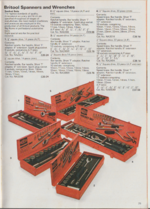
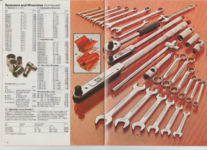
Here are some pages from a James Neill Tools from 12/1977 showing the range of Britool tools available, I'm not sure if all of the screwdrivers shown are Britool but at least some are (I have some original amber/yellow handle one's with the same numbering) :-

Scan_20250323 (7).pngScan_20250323 (8).pngScan_20250323 (9).png
 
Last edited:

esben57

Well-known member
Joined
Feb 3, 2012
Messages
826
Location
Sheffield. England
Here are some pages from a James Neill Tools from 12/1977 showing the range of Britool tools available, I'm not sure if all of the screwdrivers shown are Britool but at least some are (I have some original ones with the same numbering) :-

Scan_20250323 (7).pngScan_20250323 (8).pngScan_20250323 (9).png
Looks as though many are likely Stanley items, yankee and ratchet I'd swear by. Grip colour on the blue flat tip is Stanley.
 

d42jeep

Well-known member
Joined
Oct 22, 2014
Messages
16,496
Location
Northern California
I joined the ranks of Britool owners with this socket that came in a Thorsen socket set. I’ll probably end up donating it to a buddy that works on old British bikes. IMG_8066.jpegIMG_8067.jpegIMG_8068.jpeg🚲 IMG_8069.jpegIMG_7571.png
-Don
 

Bob H

Well-known member
Joined
Apr 10, 2021
Messages
83
Location
Side of the house
Here are some pages from a James Neill Tools from 12/1977 showing the range of Britool tools available, I'm not sure if all of the screwdrivers shown are Britool but at least some are (I have some original ones with the same numbering) :-

Scan_20250323 (7).pngScan_20250323 (8).pngScan_20250323 (9).png
I sold one of those for a charity some time since. Nice to be able to put a date on it.
 

Attachments

  • IMG_1155.jpeg
    IMG_1155.jpeg
    926.6 KB · Views: 10

Zebedeewesty

Well-known member
Joined
May 31, 2013
Messages
4,076
Location
Wales, UK
l picked up an old tool roll of my dads from my mums at Christmas. Just opened it and unfortunately it had got wet at some point and the years sat unused on the garage floor has taken a toll on them. :( Theres another 20 or so i didn't bother photographing.
2025-03-25 16.26.05.JPG
 

humber2

Well-known member
Joined
Feb 13, 2011
Messages
1,755
Location
Downunder
Before using evaporust on these candidates I’d give them an overnight soak in caustic soda and use a stainless steel brush to remove what has been loosened.

Wash them in hot soapy water before transferring to evaporust and again on removal.

Allow to dry before applying lanolin or a thin oil coating.

Please come back with the end result images.

The RJM set is worth every attempt to try to save.

YMMV
 

Dave455

Well-known member
Joined
Mar 19, 2013
Messages
5,797
Location
Sussex, England
Looks as though many are likely Stanley items, yankee and ratchet I'd swear by. Grip colour on the blue flat tip is Stanley.
Surprisingly, no!

All the drivers that look like Stanley (2,3,4,6,7,8) are Moore and Wright. They made those patterns, in several different blade lengths, for many years.

And of course Moore and Wright were part of James Neill, along with Britool.

The only one of these drivers I’ve ever seen Britool branded was No.6.

I’ve never seen the ones with the blue plastic handles at all. I suspect these were a short lived design. The blue looks like “Eclipse” blue, so were probably intended to be marketed under that name too.
 
Last edited:
To avoid these ads, REGISTER NOW!
Top Bottom