To avoid these ads, REGISTER NOW!

Building control panel (for air compressors)

md21722

Well-known member
Joined
Nov 30, 2015
Messages
1,840
Location
Mt Juliet, TN
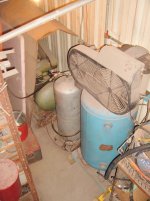
I would like to build a control panel for my air compressors. I am going to wire in an alternating relay and would like to have a "remote" switch by the shop door so I can power off the controls. I thought some indicator lights to show power on, switched on, etc. would be nice but that's going past simplistic/getting the job done and more to satisfy my curiosity and learning. It got me thinking about what goes into building a control panel. Does anyone have a good starting point links or references or other forums dedicated to this? It has me wondering about microprocessor controls, DIN rails, and stuff like that. Far beyond what would be practical and pragmatic in what I'm trying to do at hand, I am just curious to learn more about it.
 
To avoid these ads, REGISTER NOW!

mburrus

Well-known member
Joined
Nov 15, 2014
Messages
235
Location
Miami, Fl
what are you looking to do exactly? they make alternating relays.. if thats all you need to do you dont need to worry about any kind of PLC. do you need valve control or anything? i look around on ebay at all the industrial control and process stuff... its very interesting, and its own little world...
 

Norcal

Well-known member
Joined
Mar 16, 2008
Messages
13,754
Have you priced a alternating relay? They are expensive.
 

nadogail

Well-known member
Joined
Jan 23, 2009
Messages
31,942
Location
Coronado, CA
IMHO, you are trying to do the equivalent of reinventing the wheel.

A good quality ball valve will isolate your compressser with a lot less probability of problems.

Automation Direct will be able to supply the electrical components to assemble the system of your dreams.
 
OP
M

md21722

Well-known member
Joined
Nov 30, 2015
Messages
1,840
Location
Mt Juliet, TN
I already bought an alternating relay for about $26 including the base.

The ball valve doesn't work in this case. I have 2 compressors each on 60 gallon tanks and a third 60 gallon tank. 180 gallons total. What I wanted to do is have the compressors automatically alternate back and forth all day long. Right now I do it manually with the circuit breaker or ON/OFF switch. Every day I just use the other one, and when I need maximum air I turn both on. The relay will take care of all of this.

The one thing I need to work on is protection if I isolate one of the tanks, I don't have the other tank's pressure switch trying to fill it and blowing the safety valve. For the lead lag to work, I think I'll need a different set of pressure switches

But the thought of putting it all together got me more interested in what goes into control panels.
 
Last edited:
OP
M

md21722

Well-known member
Joined
Nov 30, 2015
Messages
1,840
Location
Mt Juliet, TN
Thanks for the link to Automation Direct.

Again my question wasn't really for the most practical setup it was more for pointers on where to look for more sophisticated controls. As an example, there are some companies that sell these alternators that take into account compressor run time. I think something like that would be overkill for my needs but I thought it would be interesting to learn how it all works.

I go into power plants sometimes for work and see rows and rows of computerized control equipment and rooms of electrical switchgear. For me that's more interesting than the 11 story boiler that's suspended from the top with a giant fireball inside. The gas turbine was more interesting to see. ;-)
 
Last edited:

BreeStephany

ALLIANCE MEMBER
Joined
May 19, 2012
Messages
851
Location
Oregon
As an example, there are some companies that sell these alternators that take into account compressor run time. I think something like that would be overkill for my needs but I thought it would be interesting to learn how it all works.

I go into power plants sometimes for work and see rows and rows of computerized control equipment and rooms of electrical switchgear. For me that's more interesting than the 11 story boiler that's suspended from the top with a giant fireball inside. The gas turbine was more interesting to see. ;-)

Totally understand your interest / fascination? with industrial controls... I used to wire, troubleshoot and repair on industrial controls and automation, as well as got into designing smaller industrial controls toward the end of my career as an electrician.

One of the best things I was taught in school and in the field was to follow the K.I.S.S. method when designing controls, which is "keep it simple stupid".

Just my two cents, but being proficient at industrial automation is having a current knowledge of the controls and equipment available to you, having a strong mechanical background, knowing how to get the absolute most out of control equipment so you can use the absolute least, knowing when redundancy is necessary and how to make redundant systems as simplistic as possible, etc.

When it came to controls, we generally only built with Allen Bradley as they were incredibly reliable, though definitely higher on the price point. When we didn't use Allen Bradley, we used mostly Schneider Electric / Square D for light commercial and residential automation.

When it came to getting in the door, especially with larger companies (mostly lumber and MDF mills, petroleum reclamation / refinement and sand / gravel processing around Montana), getting the most simplistic design with the lowest price point on materials while sticking with their brand choices (Allen Bradley, Square D, etc.) is what it took for you to get contracts, but once you were in the door and had essentially "proven" yourself, you were set until you either A.) retired, B.) killed or injured yourself or someone else or C.) did not meet deadline requirements.

Just my two cents on controls.
 

sberry

Banned
Joined
Jun 18, 2005
Messages
35,747
Location
Brethren, Michigan
I am fussy anymore about the thing any time I change a design from a listed machine assembly. It is super easy to end up with a booby trap. I used to fiddle with them and make it better, not so much anymore,,,, but I have 2 units with 3 tanks and the extra lets my smaller primary pump keep up to the point I am normally finished well before supply is a problem. My backup is a pos but the breaker is off and I do not alternate but run my best unit unless there was a special demand. Simply 1 good comp and one ok for backup but use 200 gallons of tanks.
 

Attachments

  • air comps air.jpg
    air comps air.jpg
    145.3 KB · Views: 43
  • air comps rev.jpg
    air comps rev.jpg
    142.3 KB · Views: 38
Last edited:

LXCam

ALLIANCE MEMBER
Joined
Apr 23, 2013
Messages
19,109
Location
AZ
You only need one relay with two sets each of NO and NC contacts. Power to actuate the relay comes from let's say system ones pressure switch then wires thru a set of contacts to system two mag coil. Then system two pressure switch wires thru the other set of contacts to system ones mag coil. That way neither can run together if that's what your trying to do. The other sets of contacts would also energize solenoid to isolate each tank independent of each other. You could also forgo the additional sets of contacts and run the solenoids from aux contacts on the starter.

Otherwise it does no good to alternate as both systems would deplete to the point of a restart and then only one would start at a time, fill them allow the other to do the same.
 
Last edited:
OP
M

md21722

Well-known member
Joined
Nov 30, 2015
Messages
1,840
Location
Mt Juliet, TN
Somewhere along the way the idea of a ball valve was mentioned and its skewed the discussion.

I do NOT want a ball valve to isolate one compressor except for servicing.

As with sberry, most of my loads can readily be handled by one compressor. He has 200 gallons of storage and I have 180. When you have light or moderate loads and large storage, the compressor doesn't run often, but when it does, it runs longer. Fewer starts longer cycles. However, I do have loads that require both to be running.

This is where a DPDT cross-wired alternating relay works its magic:

1. Lead pressure switch calls for air. Alternating relay powers a compressor (lets call it "A"). When lead pressure switch stops calling for air, alternating relay powers off that compressor and sets itself for "B" the next time air is called for. Next time lead pressure switch calls for air, alternating relay powers compressor "B". And so on, they will run alternately.

2. If more air than one compressor is required, the lag pressure switch calls will call for air and alternating relay will power both compressors. The compressor that came on with the lag pressure switch will be the first to start next time air is called for.

The alternating relay system is not perfect which is why some companies market "smarter controllers" that seek to balance run time by spinning up the second compressor after the first one has run a while and then shutting down the first one. A case were there would occur is a continuous load for hours at a time. In this case the "smarter controller" would be beneficial. However, its not applicable to my shop.

Alternating systems are used in various environments. Consider the case of fluid transfer pumps with low and high water mark switches.

I do know what sberry is saying about making things more complicated. In my case I could have bought a duplex compressor that would have come with the alternating relay built in, but for size and weight considerations I went with two separate compressors and figured on adding the logic myself.
 
Last edited:

sberry

Banned
Joined
Jun 18, 2005
Messages
35,747
Location
Brethren, Michigan
In my case the main I use is a bit smaller (3 hp) for a little softer starts and is very dependable and higher quality than the secondary,,, which will last a long time if I rarely use it. I actually have 2 valves, one at the receiver and one on the comp, I can remove a unit without interrupting the pressure.
The cut in on my 2nd is set a pinch lower than the primary. If I was really working a lot would have a big gage on the wall I could see it to resume work just prior to shut off to keep pump running constant. This was a benefit of alternating units, one could rest for duty cycle reasons but with synthetic juice in these old comps they seem to run forever.
The oil is so much better than when they designed this comp 50 yrs or more ago. All you had was straight 30 nd, old **** compared to Amsoil comp oil of today.
 

mburrus

Well-known member
Joined
Nov 15, 2014
Messages
235
Location
Miami, Fl
ok i understand the problem a bit better. i like idec smart relays... they can be had fairly cheaply on ebay... the software and cable are a little pricey, but once you have it, you can program any number of smart relays you want.

they are programmed either in logical symbols, or ladder logic, your choice. they have a lot of timers and special functions available... and a display, if you want it.

for you, i envision 3 tanks with 3 compressors. i am assuming you have the outputs of the tanks manifolded (through ball valves) with the loads connected to the manifold. with the idec, you can create logic that will allow you to: lock out any compressor, and put as many in service as you want. the system can be as complicated as you desire...
 
OP
M

md21722

Well-known member
Joined
Nov 30, 2015
Messages
1,840
Location
Mt Juliet, TN
In my case the main I use is a bit smaller (3 hp) for a little softer starts and is very dependable and higher quality than the secondary,,, which will last a long time if I rarely use it. I actually have 2 valves, one at the receiver and one on the comp, I can remove a unit without interrupting the pressure.
The cut in on my 2nd is set a pinch lower than the primary. If I was really working a lot would have a big gage on the wall I could see it to resume work just prior to shut off to keep pump running constant. This was a benefit of alternating units, one could rest for duty cycle reasons but with synthetic juice in these old comps they seem to run forever.
The oil is so much better than when they designed this comp 50 yrs or more ago. All you had was straight 30 nd, old **** compared to Amsoil comp oil of today.
i know what you're saying it just seems for the little it costs, to have them alternate back and forth. I suppose one could argue hundreds of hours on one vs few on the other, what's the difference when they'll both run tens of thousands of hours. Just seems better to me, and the simplest way to do this costs around $100 including relay, relay base, box, pressure switches, wire and conduit. It would have been cheaper to get a single 10 HP compressor, but I was concerned about starting a 10 HP motor where I live.

ok i understand the problem a bit better. i like idec smart relays... they can be had fairly cheaply on ebay... the software and cable are a little pricey, but once you have it, you can program any number of smart relays you want.

they are programmed either in logical symbols, or ladder logic, your choice. they have a lot of timers and special functions available... and a display, if you want it.

for you, i envision 3 tanks with 3 compressors. i am assuming you have the outputs of the tanks manifolded (through ball valves) with the loads connected to the manifold. with the idec, you can create logic that will allow you to: lock out any compressor, and put as many in service as you want. the system can be as complicated as you desire...

Thanks for the idea about idec smart relays! At the current time I am only running 2 compressor pumps. The third has been relegated to tank. Yes, they all go into a manifold. The ball valves are left open so it acts like one big 180 gallon tank.
 
Last edited:

mburrus

Well-known member
Joined
Nov 15, 2014
Messages
235
Location
Miami, Fl
ok cool. pm me if you have any questions... the model numbers start with fl1x, where x is a letter indicating the revision, the higher the letter the better, if youre buying used, i wouldnt go lower than a c or d revision. theyre available in 12/24, and 120/240 ac and dc, so your logical voltages are very flexible. you just can not mix voltage classes between add on modules and main unit, the whole system must be one voltage.

i would download a model break down, spec sheet or manual and read through before you commit. theyre cool little products, very versitile
 
To avoid these ads, REGISTER NOW!

Norcal

Well-known member
Joined
Mar 16, 2008
Messages
13,754
Only have installed a alternator once, learned real quick that the pressure switches better not be set the same. :D Somewhere still have the paperwork from A-B on it, do remember it was around $800.00 in a NEMA 1 can, used on 2-25HP compressors.
 
OP
M

md21722

Well-known member
Joined
Nov 30, 2015
Messages
1,840
Location
Mt Juliet, TN
Only have installed a alternator once, learned real quick that the pressure switches better not be set the same. :D Somewhere still have the paperwork from A-B on it, do remember it was around $800.00 in a NEMA 1 can, used on 2-25HP compressors.

I am going to use this one https://www.grainger.com/product/MACROMATIC-Alternating-Relay-6MPP0 and throw it in a 6x6 box that cost $10. I went with the 240VAC unit so I don't have to deal with a 24VAC transformer. All its doing is acting like the pressure switch to power one leg of the 240VAC coil in the motor starter. In the Square D starters that I'm using one leg has the thermal protection heater, and the other leg is for whatever switches you want, low oil pressure, pressure switch, ON/OFF switch, etc. Typical dual stage air compressor setup will have the lead at 145-175 and the lag at 140-175 or something similar, about 5-10 psi off. Still not sure why Hubbell/Siemens alternating relays cost $400-500. I'm not sure they are 10X better. :D To a plant where downtime costs more than the components failing, I suppose it could be more cost effective.
 
Last edited:

Norcal

Well-known member
Joined
Mar 16, 2008
Messages
13,754
I am going to use this one https://www.grainger.com/product/MACROMATIC-Alternating-Relay-6MPP0 and throw it in a 6x6 box that cost $10. I went with the 240VAC unit so I don't have to deal with a 24VAC transformer. All its doing is acting like the pressure switch to power one leg of the 240VAC coil in the motor starter. In the Square D starters that I'm using one leg has the thermal protection heater, and the other leg is for whatever switches you want, low oil pressure, pressure switch, ON/OFF switch, etc. Typical dual stage air compressor setup will have the lead at 145-175 and the lag at 140-175 or something similar, about 5-10 psi off. Still not sure why Hubbell/Siemens alternating relays cost $400-500. I'm not sure they are 10X better. :D To a plant where downtime costs more than the components failing, I suppose it could be more cost effective.

I stripped a Furnas alternating relay from a decommissioned Klockner- Moeller control panel, when I looked at the price was shocked when it was over $200, Furnas was bought by Siemens, & they sold off some of the items Furnas manufactured like the alternating relay & reversing drum switches to Hubbell.
 

DSMR

Active member
Joined
May 24, 2015
Messages
42
I would use a plc for adjustability. Automation Direct has some great deals. Will probably end up with a productivity 2000 to play with in my garage.
 

Chez0011

Member
Joined
Jan 26, 2024
Messages
17
Totally understand your interest / fascination? with industrial controls... I used to wire, troubleshoot and repair on industrial controls and automation, as well as got into designing smaller industrial controls toward the end of my career as an electrician.

One of the best things I was taught in school and in the field was to follow the K.I.S.S. method when designing controls, which is "keep it simple stupid".

Just my two cents, but being proficient at industrial automation is having a current knowledge of the controls and equipment available to you, having a strong mechanical background, knowing how to get the absolute most out of control equipment so you can use the absolute least, knowing when redundancy is necessary and how to make redundant systems as simplistic as possible, etc.

When it came to controls, we generally only built with Allen Bradley as they were incredibly reliable, though definitely higher on the price point. When we didn't use Allen Bradley, we used mostly Schneider Electric / Square D for light commercial and residential automation.

When it came to getting in the door, especially with larger companies (mostly lumber and MDF mills, petroleum reclamation / refinement and sand / gravel processing around Montana), getting the most simplistic design with the lowest price point on materials while sticking with their brand choices (Allen Bradley, Square D, etc.) is what it took for you to get contracts, but once you were in the door and had essentially "proven" yourself, you were set until you either A.) retired, B.) killed or injured yourself or someone else or C.) did not meet deadline requirements.

Just my two cents on controls.
My friend teaches automation/instrumentation at a local community College. He says you can find better gear than Allen Bradley but you can't find more expensive! lol!
 

micromind

Well-known member
Joined
Sep 24, 2023
Messages
3,033
Location
Fernley, Nevada, about 30 miles east of Reno.
My friend teaches automation/instrumentation at a local community College. He says you can find better gear than Allen Bradley but you can't find more expensive! lol!

Ok, have him name a starter that's better than the Allen Bradley 509........

Same with their 700 pushbuttons and selector switches.

On the other hand, their electronic stuff and IEC stuff is about the same as the other top brands.

Back to the original post, even though it's pretty old.

Every time someone, usually some sort of a brilliant engineer, specs an alternating relay, I always say the same thing. Look ahead and when one unit fails, the only other one has a ton of hours on it. Bad place to be.......

But nearly every educated idiot engineer has way to large of an ego to listen to some dumb ol' electrician.........
 

fitter30

Well-known member
Joined
Jun 23, 2019
Messages
2,969
Location
Peace Valley,mo
Couple of amp switches or aux contact one for each compressor and a added low pressure switch. Someone to write a program to alternate and if low pressure make the other compressor runs and couple of relays.
 

dscheidt

Well-known member
Joined
Apr 26, 2017
Messages
2,888
Every time someone, usually some sort of a brilliant engineer, specs an alternating relay, I always say the same thing. Look ahead and when one unit fails, the only other one has a ton of hours on it. Bad place to be.......

The engineer probably expects equipment to taken care of, and replaced before it's actually broken. Equalizing the wear makes planning a lot easier.
 

micromind

Well-known member
Joined
Sep 24, 2023
Messages
3,033
Location
Fernley, Nevada, about 30 miles east of Reno.
The engineer probably expects equipment to taken care of, and replaced before it's actually broken. Equalizing the wear makes planning a lot easier.

Which further confirms that the engineer is an idiot because stuff simply doesn't work like that.

The vast majority of the time, it's operate until failure.
 
Last edited:

dscheidt

Well-known member
Joined
Apr 26, 2017
Messages
2,888
Which further confirms that the engineer is an idiot because stuff simply doesn't work like that.

The vast majority of the time, it's operate until failure.

Sure, but often the whole set gets replaced together, so lead/lag will likely have extended the time until that happens. how much depends on how often the control logic flips them, and how well it levels usage, but you're a lot less likely to be sending a basically unused unit to surplus.
 
To avoid these ads, REGISTER NOW!
Top Bottom