Hello. I am in the planning stages of building a garage on the property behind my house. The area has a slope to it. I’m not sure the degree. What I am needing to build is a two bay shop with enough height for a lift. A “barn type” look I guess is what I’m wanting. On a concrete slab. What are the different techniques for building on a slope? What are the advantages and disadvantages to each? From what research I’ve done, it seems like the options are to “fill in (build up)” to make a level surface. Or do the opposite and “cut in” to the hill. I’ve never done anything like this but I have pictured in my mind, poured walls on the sides and then on the downhill end and then you would fill in with dirt to make that level. And then the “cut in” method would be the opposite of that and your building would be partially underground. Is that correct? Any help appreciated.


You are using an out of date browser. It may not display this or other websites correctly.
You should upgrade or use an alternative browser.
You should upgrade or use an alternative browser.
Building on a Slope
- Thread starter Diehard
- Start date

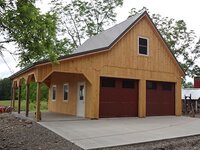
Here's a few starter points:
Build up (Slab on grade or pole building)-
Pro, you likely won't have to worry about drainage issues as much
Con, Need to bring in material, compact it
Con, Grading around the building could be severe depending how low the one side is.
Con, If a pole building, you'll need longer posts
Cut in-
Pro, you won't need to bring in fill material as you'll likely have plenty
Con, Your slab/base will be below grade and you'll need to do some drainage/waterproofing and maybe a sump pump setup.
Cut In/Build Up-
Mix of both of the above, cut in a little and use that material on the low side. Still needs compacted.
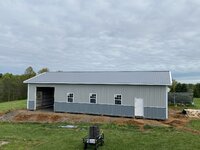
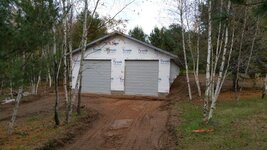
Building in my pictures was about 4ft lower on the lower side. Length was 60ft. About $12.5k in compactor, fill and dirt work for the pad. Another about $4k for finish grading.
Build up (Slab on grade or pole building)-
Pro, you likely won't have to worry about drainage issues as much
Con, Need to bring in material, compact it
Con, Grading around the building could be severe depending how low the one side is.
Con, If a pole building, you'll need longer posts
Cut in-
Pro, you won't need to bring in fill material as you'll likely have plenty
Con, Your slab/base will be below grade and you'll need to do some drainage/waterproofing and maybe a sump pump setup.
Cut In/Build Up-
Mix of both of the above, cut in a little and use that material on the low side. Still needs compacted.
Building in my pictures was about 4ft lower on the lower side. Length was 60ft. About $12.5k in compactor, fill and dirt work for the pad. Another about $4k for finish grading.
Attachments






Last edited:
billconner
Well-known member
My garage project - taking a break from laying block - is similar if smaller. 28'x32' - about 31" grade slope from right rear to left front. I cut in and am building a stepped stem wall, with light wood frame ("stick built") atop stem wall. I had to cut in to avoid steep slope to drive into it. Plans and pictures here: https://www.garagejournal.com/forum/threads/2-car-detached-build.484830/ fwiw I should be well under $20/sf, not including a slab floor which can be added. May start with just the compacted gravel or add pavers or hire a slab done. Doing basically all the work myself. Very barn like appearing.
Some of your decision includes foundation and frost depth. Mine is 48" so favored cutting in. Happended to be able to sell the fill to another customer of excavation contractor.
ps: looked at post frame to with idea of leveling 4 to 5' all around and a retaining wall, but cost was much higher.
Some of your decision includes foundation and frost depth. Mine is 48" so favored cutting in. Happended to be able to sell the fill to another customer of excavation contractor.
ps: looked at post frame to with idea of leveling 4 to 5' all around and a retaining wall, but cost was much higher.
luvtheheat
Well-known member
I'm also in early planning stages, and where I will put the garage is on a slope that goes from zero to +- 30" at the max. Both architect and GC insisted on filling the area and insisted on no cutting into the "zero" portion of the area. Then add a "rip-rap" to bolster the built up areas.
Zeke
Well-known member
Never built on a slope so looking into this as a novice one would have to ask why not use half of the grade that is high to fill that which is low? Now I know that top soil and organics need to be removed and that some soils need to be amended with fill so that they will compact properly. Is there a happy medium to all of one vs. all of the other?
Also, it would seem that where the entrance is desired answers the question.
Also, it would seem that where the entrance is desired answers the question.
mcbane
Well-known member
It is hard to answer without seeing the site but here are a few considerations to discuss with the contractor you get on site:Hello. I am in the planning stages of building a garage on the property behind my house. The area has a slope to it. I’m not sure the degree. What I am needing to build is a two bay shop with enough height for a lift. A “barn type” look I guess is what I’m wanting. On a concrete slab. What are the different techniques for building on a slope? What are the advantages and disadvantages to each? From what research I’ve done, it seems like the options are to “fill in (build up)” to make a level surface. Or do the opposite and “cut in” to the hill. I’ve never done anything like this but I have pictured in my mind, poured walls on the sides and then on the downhill end and then you would fill in with dirt to make that level. And then the “cut in” method would be the opposite of that and your building would be partially underground. Is that correct? Any help appreciated.
You dont want to build on top of organic material so you need to remove that. Could be anywhere from zero to 6" or more of organic material depending on vegetation at the site so you might want to figure out how deep the organic material is before designing.
Typically you will want several inches of compacted base rock under your slab, though there are some parts of the world were slabs do well on native soil - local contractors would know that.
Unless you have a good place to dispose of lots of dirt onsite, it is economical to balance cuts and fills and then bring in and compact base rock.
If part of your slab winds up below the elevation of the existing slope, you will need to put some thought into design of surface and potentially subsurface drainage.
However you approach this, you want a slab elevation that works with your driveway. Ideally the driveway slopes down away from the slab at maybe 2%. Driveways that slope down towards the garage require a drainage detail to avoid bringing water inside. And in either case you dont want a steeply sloped driveway if you can avoid it.
Nutria
Well-known member
Another factor, depending on your local conditions, is how much rock you'll hit with any excavation. That can complicate things, particularly if you are dealing with bedrock.
luvtheheat
Well-known member
I'm told you want fill only, no cuts, for drainage reasons. We got probably an inch of rain in 30 minutes here yesterday, and based on the layout of my lot/pad area, if my garage were already built, with a 15" cut to deal with an overall 30" slope, it would likely have been flooded.Never built on a slope so looking into this as a novice one would have to ask why not use half of the grade that is high to fill that which is low? Now I know that top soil and organics need to be removed and that some soils need to be amended with fill so that they will compact properly. Is there a happy medium to all of one vs. all of the other?
Also, it would seem that where the entrance is desired answers the question.
Dreamer1975
Well-known member
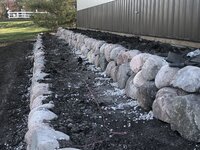
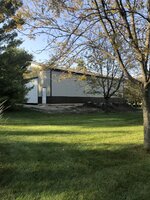
I built on a slope because I had no choice. It was a lot more fill than I expected and pushed my budget about 13K in the end. But it’s was worth it to have my shop. The fill pushed me about 5k more than we thought but then I had a retaining wall built the next year. The first pic is the grade before we got started. The second pick was after the fill was put in. The third is after the building was put up. And the forth is the wall I put it up to make sure it stays there for years to come. The wall may have been overkill but after it’s was all complete i would have rather done the wall the bring in more dirt. Anything is possible and I’m glad I did it but I would have rather spent the money on other things inside the shop if I could have.
Attachments
-
 8420070E-B016-4666-A1C7-383104C8455A.jpeg545.3 KB · Views: 134
 -
 B26487EA-82EE-49A3-8CD8-A90EBB373548.jpeg548.7 KB · Views: 126
 -
 8212DC5E-D0F8-4FF3-BCF4-E019B5A15703.jpeg692.6 KB · Views: 123
 -
 17763078-116D-4AE7-8764-2DAA39C72F21.jpeg670 KB · Views: 121
 -
 5A20F4CD-0EF3-40E0-A381-5D6D91F4E17D.jpeg594.5 KB · Views: 123
 -
 BD8BB22D-6277-418F-8F59-BB8DDEDF461A.jpeg793.6 KB · Views: 141
firebirdparts
Well-known member
I built a two story shop. Twice the shop for only 4 times the money. The bottom half of the shop is expensive.
Just wanted to add some additional data if you need it from my building:
30ft x 60ft
30x 22 ton dump truck loads
4ft drop over the 60ft (It was pretty gradual, probably between 5-7%)
I would call the fill a "pad mix" (said that on the paper), which seemed to be asphalt millings some fill dirt and crusher run. Hopefully that's helpful.
30ft x 60ft
30x 22 ton dump truck loads
4ft drop over the 60ft (It was pretty gradual, probably between 5-7%)
I would call the fill a "pad mix" (said that on the paper), which seemed to be asphalt millings some fill dirt and crusher run. Hopefully that's helpful.
SlotlessMan
Well-known member
My detached 30' x 50' garage was built into a hill. The backside is the 50' and is 9' deep below surface with 12' walls. No retaining walls. Used ICF on the 3 sides with the overhead door side being the only one at grade. Well insulated, 2x6 sticks on anything exposed. Temp/ humidity is amazingly resilient in the building. Floor never leaks and does not sweat. Only hassle was the electrical as ICF can be more of a hassle to run that.
Farmer that lives on the top of the hill happily took the dirt from the hole. Built 8 years ago, I'd do it again.
Farmer that lives on the top of the hill happily took the dirt from the hole. Built 8 years ago, I'd do it again.
CraigStu
Well-known member
Filling in and then building on it makes me nervous. From the above responses it seems this is a common solution though. On the other hand, our house has the basement essentially built into a hill. The poured concrete foundation tops out just barely above grade on one end and 39 feet away the other end has the floor just barely above grade. So I don't see the big deal about building a garage into a hill other than poured concrete is more expensive than stick framing?
dcg9381
Well-known member
I have about that same slope on my shop. The fill added some expense (not quite 5k). The "high" side (about the same as Dreamers photo) - I've had no problems with, but we're basically on a limestone slab and I've got a 60' shed roof over that side in addition to gutters. It hasn't washed out at all.I built on a slope because I had no choice. It was a lot more fill than I expected and pushed my budget about 13K in the end. But it’s was worth it to have my shop. The fill pushed me about 5k more than we thought but then I had a retaining wall built the next year.
Our house was built into a hill. That was expensive (+$80k). We basically had to excavate the hill, form the concrete, then put the hill back around it. This is "unusual" construction for my area, but I essentially wanted the natural insulation features of having a basement.
Attachments

More than likely you'll be bringing in a bunch of fill that will need compacted in several lifts.
If your contractor decides to lay block and build up several course in back section, make sure there's plenty of rebar and core filling done. We've had more than one member here have issues (over the years) when a wall cracks or starts to fail.
If your contractor decides to lay block and build up several course in back section, make sure there's plenty of rebar and core filling done. We've had more than one member here have issues (over the years) when a wall cracks or starts to fail.
scofo
Well-known member
Hey Slotless, do you have shop construction pics you'd care to show or a build thread? Foundation details? This sounds alot like I would like to do.My detached 30' x 50' garage was built into a hill. The backside is the 50' and is 9' deep below surface with 12' walls. No retaining walls. Used ICF on the 3 sides with the overhead door side being the only one at grade. Well insulated, 2x6 sticks on anything exposed. Temp/ humidity is amazingly resilient in the building. Floor never leaks and does not sweat. Only hassle was the electrical as ICF can be more of a hassle to run that.
Farmer that lives on the top of the hill happily took the dirt from the hole. Built 8 years ago, I'd do it again.
Don't see track loaders on jobs much. I have a 977 and 941. That 953 is roughly between the 2 in size.I built on a slope because I had no choice. It was a lot more fill than I expected and pushed my budget about 13K in the end. But it’s was worth it to have my shop. The fill pushed me about 5k more than we thought but then I had a retaining wall built the next year. The first pic is the grade before we got started. The second pick was after the fill was put in. The third is after the building was put up. And the forth is the wall I put it up to make sure it stays there for years to come. The wall may have been overkill but after it’s was all complete i would have rather done the wall the bring in more dirt. Anything is possible and I’m glad I did it but I would have rather spent the money on other things inside the shop if I could have.
SlotlessMan
Well-known member
Certainly.Hey Slotless, do you have shop construction pics you'd care to show or a build thread? Foundation details? This sounds alot like I would like to do.
Packed sand (natural here) 4" concrete. IMO, the grade is misleading in the pics
Attachments


scofo
Well-known member
Thanks Slotless, that perimeter foundation for the ICF's isn't nearly as deep or wide as I thought it would be, especially in your northern local. Lots of steel in it before the pour and more vertically & horizontally in the walls going up I'm sure. Was it significantly cheaper to not go all the way up to the trusses with ICF? I wish that type of construction was more prevalent here in CenTex but I cant remember seeing ICF around my area. What did you use for exterior wall covering? Insulation type for the pony walls and roof?
Looks great, enjoy.
Looks great, enjoy.
I think you were talking about my pics. He brought the 953 because it was Feb/March timeframe and the ground was still frozen solid. Top layer came up in big 5-7ft slabs, he wouldn't have been able to do it with a skid steer.Don't see track loaders on jobs much. I have a 977 and 941. That 953 is roughly between the 2 in size.
SlotlessMan
Well-known member
Glad to help, thanks!Thanks Slotless, that perimeter foundation for the ICF's isn't nearly as deep or wide as I thought it would be, especially in your northern local. Lots of steel in it before the pour and more vertically & horizontally in the walls going up I'm sure. Was it significantly cheaper to not go all the way up to the trusses with ICF? I wish that type of construction was more prevalent here in CenTex but I cant remember seeing ICF around my area. What did you use for exterior wall covering? Insulation type for the pony walls and roof?
Looks great, enjoy.
Yes, the forms are more expensive and are 13" wide. Was cost prohibitive to do the whole thing. Ended up with about a 6" ledge where the lumber begins. R19 walls/ R30 roof. They make siding that looks like brick that looks really good but right now all I have is a skim coat of concrete. My siding is tri color gray, so the concrete skim looks good to me.
I will try and find a pic of the form used and post tonight so you can see how it's constructed.
I didn't have the option to build up as the driveway slope to the doors would have been ridiculously steep, never mind the amount of dirt that would have had to be hauled in! Digging into the hill worked very well for me.
I also used ICF for my basement walls and am pleased how that worked out as well.
67CarGuy
Well-known member
Do you happen to have any info on the ICF manufacturer? I'm headed towards a similar build and am looking for as much info as possible. Thanks!
SlotlessMan
Well-known member
I think I have that info. I will post what I can find tonight.Do you happen to have any info on the ICF manufacturer? I'm headed towards a similar build and am looking for as much info as possible. Thanks!
The entrance elevation usually drives the whole thing. If it's only a small change at the building site a little build up in the front is often manageable (upward slope). It gets difficult when you want a flat drive.
If the slope is away you must be very mindful of the stresses on the foundation and wall when building .. the resulting building can look odd with the large foundation wall out of the ground.
Cutting in requires very careful water management. I always build a swale to capture the water and direct it away to a natural spot or install a drain and pipe it away. Proper foundation drains are a must .. one must also know the ground water levels
If the slope is away you must be very mindful of the stresses on the foundation and wall when building .. the resulting building can look odd with the large foundation wall out of the ground.
Cutting in requires very careful water management. I always build a swale to capture the water and direct it away to a natural spot or install a drain and pipe it away. Proper foundation drains are a must .. one must also know the ground water levels
billconner
Well-known member
Diehard - do you plan to insulate and condition your garage? And how much are you going to diy? Would make a big difference in what I would do for lower wall cut into slope. Plain block is a lot less expensive than ICF and IMHO easier to diy.
billconner
Well-known member

duneslider
Well-known member
I've seen this dry stack method used before but honestly don't understand how it works? Do you still fill the cores and add rebar and such? If you are filling the cores, do you plan to do it all by hand, or have a pump truck come and do it that way?BTW, just finished surface bond cement coat on dry stacked blocks. Pretty inexpensive way to build into a slope.
The issue I have always had with ICF is how to cover and protect the foam that sticks up above the ground.
SlotlessMan
Well-known member
Do you happen to have any info on the ICF manufacturer? I'm headed towards a similar build and am looking for as much info as possible. Thanks!
A-One is the manufacturer. http://www.aoneform.com/
It was built in 2015, not 2014. Cost for labor and material was $17.5K for excavation, prep, forms, all concrete and in floor tubing for heat.
There is not much to the forms but they work pretty slick. Here is one of them...

billconner
Well-known member
You
I don't believe the rebar, grout, and bond beamis necessary, but it may require an engineer to say that to get a permit. I am doing it same as mortared blocks to avoid the question.
I need around 1 1/4 CY of grout, so plan on mixing on site. I got sand and gravel delivered and bought Portland cement from the block people and bought a used Harbor Freight mixer (why do the call them cement mixers? Seems they are concrete mixers.), all for less than I could order grout. Albeit, lots more of my own labor, much of which If have even with redimix. Big project - sure look at redimix and pumper - but a yard or two - mix on site and buckets. I did get a ******** but think I'll probably just consolidate with a piece of rebar.
I believe there is a system of just dry stack and core fill. Have not found much on that.
I agree with you about protecting foam on exterior near grade. Never seems durable.
You hit some issues I have tried to research and have thought about. Also I'm retired so have lots time and getting maximum return on investment is part of the fun. Basically, you cover both sides with a surface bonding cement, a cementious material with fibreglass fibers. This creates a "skin" that gives these wall high flexural strength. Testing has shown that it is as strong or stronger than conventional mortared blocks except compression. Since you could build a many storey building with blocks, for one or two storey the compression is a non issue.I've seen this dry stack method used before but honestly don't understand how it works? Do you still fill the cores and add rebar and such? If you are filling the cores, do you plan to do it all by hand, or have a pump truck come and do it that way?
The issue I have always had with ICF is how to cover and protect the foam that sticks up above the ground.
I don't believe the rebar, grout, and bond beamis necessary, but it may require an engineer to say that to get a permit. I am doing it same as mortared blocks to avoid the question.
I need around 1 1/4 CY of grout, so plan on mixing on site. I got sand and gravel delivered and bought Portland cement from the block people and bought a used Harbor Freight mixer (why do the call them cement mixers? Seems they are concrete mixers.), all for less than I could order grout. Albeit, lots more of my own labor, much of which If have even with redimix. Big project - sure look at redimix and pumper - but a yard or two - mix on site and buckets. I did get a ******** but think I'll probably just consolidate with a piece of rebar.
I believe there is a system of just dry stack and core fill. Have not found much on that.
I agree with you about protecting foam on exterior near grade. Never seems durable.
67CarGuy
Well-known member
Thanks! It's nice to hear for a real-world example, not just marketing stories.A-One is the manufacturer. http://www.aoneform.com/
It was built in 2015, not 2014. Cost for labor and material was $17.5K for excavation, prep, forms, all concrete and in floor tubing for heat.
There is not much to the forms but they work pretty slick. Here is one of them...
I can't believe this was never brought up in 'hot water heater' discussion!I got sand and gravel delivered and bought Portland cement from the block people and bought a used Harbor Freight mixer (why do the call them cement mixers? Seems they are concrete mixers....
BombShelter
Well-known member
The big issue we have up here with rain and snow is water pushing through the walls where they are below grade. Normally garages don't have a drain-tile system and if they do, they freeze up in the winter time (usually when you need it most during the thawing).
I'd put a bentonite exterior membrane on the below grade sections, I like CETCO's Swelltite a lot, it will bridge small cracks and holes if they develop, and should last the life of the structure unlike asphalt or rubber coatings which dry and crack after a few years.
If your concerned about under floor moisture you can also put CETCO's Volclay Bentonite Membrane under the floor (before you pour). It has fibers sticking up which bond to the wet concrete.
A good contractor will water down fill over a week or so, this will help it "sink." I've seen fill sink 6"-12" during this time, it's no fun when your garage door is below the rest of the yard.
As far as ICF's, protecting the foam is very important, if water is allowed to get through the outer skin, serious basement water issues can happen. I'd also be concerned with drying concrete shrinkage in the forms, leaving potentional water pathways. Fixing ICF water issues can be extremely difficult because it can be very hard to determine where the water is entering.
I'd put a bentonite exterior membrane on the below grade sections, I like CETCO's Swelltite a lot, it will bridge small cracks and holes if they develop, and should last the life of the structure unlike asphalt or rubber coatings which dry and crack after a few years.
SWELLTITE | Minerals Technologies Inc.
SWELLTITE waterproofing system combines both passive and active barriers to substantially reduce the possibility for leaks below-grade.
www.mineralstech.com
If your concerned about under floor moisture you can also put CETCO's Volclay Bentonite Membrane under the floor (before you pour). It has fibers sticking up which bond to the wet concrete.
A good contractor will water down fill over a week or so, this will help it "sink." I've seen fill sink 6"-12" during this time, it's no fun when your garage door is below the rest of the yard.
As far as ICF's, protecting the foam is very important, if water is allowed to get through the outer skin, serious basement water issues can happen. I'd also be concerned with drying concrete shrinkage in the forms, leaving potentional water pathways. Fixing ICF water issues can be extremely difficult because it can be very hard to determine where the water is entering.
I only saw it done once -- they did have rebar and filled it. frankly -- did not see how it saves any money or makes things easier.I've seen this dry stack method used before but honestly don't understand how it works? Do you still fill the cores and add rebar and such? If you are filling the cores, do you plan to do it all by hand, or have a pump truck come and do it that way?
The issue I have always had with ICF is how to cover and protect the foam that sticks up above the ground.
I have no problem with block walls ..... the guys can put them up so quickly and you are moving along. Fill them up .... I'm normally using spray foam -- so they hit the inside. normal coating outside
billconner
Well-known member
I have reservations about dry stack and surface bonding if insulated. Can be done but not as simple. But if uninsulated, much faster and easier for the diyer than mortar. And doesnt require rebar and core fill, and still stronger than mortared block except in compression. Another benefit, the surface bonding cement is quite waterproof. The system was originally developed for water tanks.