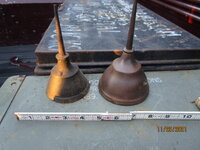
It doesn't matter how many foundries there are out there or if the iron is already melted and sitting in a crucible, the production of a sand mold, the trimming of the casting, and the finishing of the casting are all very labor intensive compared with production of a stretch formed part. The threads in the casting for the spout have to be machined, and I'd imagine machining is also required at the bottom, where the stamped pump section is attached.
That's why Henry Ford replaced castings and forgings with stamped parts in many of his early automobiles. He couldn't meet demand with the additional labor that the castings and forgings required.
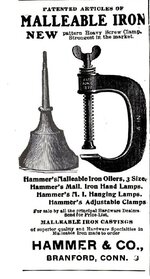
You're probably right in that they're just old and pre-date common stamping processes. Here's an advertisement from 1888 for Malleable iron oilers produced in Connecticut. That would predate common stamping processes by a few years.

.