To avoid these ads, REGISTER NOW!

Cleaning Rusty Tools Using Electrolysis (Pic/Video).

kc-steve

Well-known member
Joined
Jun 22, 2010
Messages
4,240
Location
Kansas City
Again, I wouldn't recommend anyone try and find out at what level of Oxygen concentration your garage burns down.

Steve
 
To avoid these ads, REGISTER NOW!

diesel research

Well-known member
Joined
Sep 12, 2010
Messages
5,440
Location
gulf coast, TEXAS
Maybe YOU shouldn't jump to conclusions about what I am talking about.

Check it out here,
http://en.wikipedia.org/wiki/List_of_spaceflight-related_accidents_and_incidents

It is never a good idea to make recommendations on something that is potentially hazardous. I'm sorry if I was blunt or gruff about it, but I feel it is more important that everyone understand the potentiall dangers involved in the electrolysis process. White vinegar works great, it's cheaper than Evapo-rust, and much safer.

Steve

Perhaps not, although neither of us should jump to conclusions period. :)

Since the CM was designed to endure outward pressure in the vacuum of space, the plugs-out test had been run with the cabin pressure at over 16 psi, almost 2 psi above the ambient sea level pressure at Launch Complex 34 and near the upper limits of measuring devices in the spacecraft. This represented over 5 times the oxygen density carried within the Mercury and Gemini spacecraft while in spaceflight (which was only 3 psi but equal to the partial pressure of oxygen at sea level and thus very breathable)....

The review board noted a silver-plated copper wire running through an environmental control unit near the center couch had become stripped of its Teflon insulation and abraded by repeated opening and closing of a small access door. This weak point in the wiring also ran near a junction in an ethylene glycol/water cooling line which was known to be prone to leaks. The electrolysis of ethylene glycol solution with the silver anode was a notable hazard which could cause a violent exothermic reaction, igniting the ethylene glycol mixture in the CM's corrosive test atmosphere of pure, high-pressure oxygen

You suggest not recommending dangerous practices.

Interesting to note that I specifically recommended NOT using ethylene glycol.

For all of our budding chemists out there, I advise not experimenting with chemical additives to the electrolysis tank. (electrolytes are good to improve conductivity)

The process takes any material made up of multiple elements and splits them up. (some are attracted to anodes, some to cathodes)

For example: rust and iron, or nickle and chromium.

Another example: salt water. Sodium chloride. You effectively split table salt into sodium and chlorine gas. The water itself is also splitting and hydrogen may feel free to associate with any number of other elements to form varying strength acids.

With antifreeze consisting of god only knows what, you can have a real brew of various gases clouding the shop while various new chemicals are formed in the tank to eat away your wrench.

Also interesting to note we are not speaking of a high pressure pure oxygen state. We are speaking of real world involving a battery charger in a open shop and a non-covered vessel. I should further elaborate, not best idea to exceed 10-20 amps since the process becomes quite accelerated above that. Actual current draw being dependent on purity/conductivity of water/solution and distance between anode/cathode.

I further spoke on the slight dangers of hydrogen involved, and tried to quantify them into realistic easier to understand terms. An enclosed container can eventually produce enough to "pop", but not sustain flame/explosion when dealing with the specifics we are.

I am no chemistry master but did work in a diesel emissions lab. That exposed me to various chemicals used to create "synthetic exhaust" and calibration gases. Cyanide, hydrogen fuel, liquid nitrogen, propane, benzene, butane, tolulene, carbon monoxide, nitrogen oxides, carbon dioxide, sulfur dioxide, natural gas, and about 50 other blend gases which we would further blend and inject into a hot exhaust pipe, or even into a flame to burn and analyze.

We also tested a emission reduction device which consisted of an on board hydrogen generator, producing hydrogen and carbon monoxide for SCHOOL BUSES, using diesel.

Another was to burn algae in a reaction chamber to produce varying grades of hydrocarbons, natural gas, and hydrogen.

It is safe to say, using some common precautions mentioned above, the amount we are dealing with is in fact safe.

If anyone still feels in danger, they may choose to construct a evacuation system consisting of a brushless fan and totally sealed switch.

To the rest, happy de-rusting.

I am no electrolysis expert so I cannot comment much on which electrolytes work and how much. They will increase current draw, so maybe that can be used as an indicator. Keep an eye on temperature as well, since the rise is related. I myself am a little concerned about baking soda since it does infact have sodium. My metallic tools are on a low sodium diet. :)

_________________
As previously mentioned, I have intentionally tried to ignite the gases produced from this process. Holding an open flame directly above a bubbling mixture repeatedly resulted in nothing.
 
Last edited:

kc-steve

Well-known member
Joined
Jun 22, 2010
Messages
4,240
Location
Kansas City
I think most people that read this are going to see that some of us are just nit-picking over words, and also realize that maybe the potential risk is too great compared to other safer methods. :)

I have tried it outside in open air, but NEVER inside a garage. White vinegar is simply less risky.

Steve
 

diesel research

Well-known member
Joined
Sep 12, 2010
Messages
5,440
Location
gulf coast, TEXAS
Vinegar is an option, along with phosphoric acid (ospho, naval jelly, or jasco) or doing it outside.

To stay on topic though, maybe the compromise is suggesting outside. I've never done it outside, only in labs, my kitchen table, and personal garage, but I think that's a reasonable suggestion. Although this current weather is a major deterrent to that method.
 

Firefighter315

Well-known member
Joined
Apr 28, 2010
Messages
81
Location
Born & Raised in the Bluegrass
Thanks to the OP for the information. I've wondered before if such a simple process for electrolysis would be effective at all in cleaning rust. I left my garage one winter and forgot to close the tailgate on my covered truck bed. Needless to say, I ended up with some salty road spray misting my tool box and the rest is history. On a side note, the discussion of oxygen being an explosive gas isn't entirely accurate. Oxygen itself isn't explosive, but has a direct effect on the explosive potential of other gasses. Atmospheric air is roughly 78% nitrogen, 21% oxygen, and 1% trace gasses, or greenhouse gasses. The way oxygen affects other gasses is that it effects the LEL and UEL (lower/upper explosive levels) of flammable or explosive gasses. If any environment contains oxygen rich air (> 21%) the LEL of explosive gasses is lowered and the UEL is raised - in other words increasing the range in which those gasses are able to ignite or explode.

For example, the LEL of Hydrogen is around 4% by volume. At 4%, you will likely only see a fizzle, at 7 - 8%, a pop, and 10% or better, the bad booms start to happen. The gas meters we use in the fire service measure the percentage of certain gasses in relation to their LELs. If a certain gas has a LEL of 10%, then our meters will tell us what percentage of the LEL we are experiencing. If 10% causes a "boom" then a meter reading of 50% lets us know the atmospheric condition is at 5%, or 50% of the LEL. I would think it would take either a small well sealed container or a very large electrolysis bath in a very well sealed garage for the Hydrogen separation and Oxygen enrichment to become a "boom" factor in this case. Most batteries are vented via simple convection currents from what I understand. Diesel research does have a very good point that one may not know what other compounds are being created.

Sorry for the ramble, just had to put some of my years of fire training to use.... :beer:
 
Last edited:

kc-steve

Well-known member
Joined
Jun 22, 2010
Messages
4,240
Location
Kansas City
I might also add that whenever I did perform electrolysis, I let it go on for days because of how bad the tool was that I was trying to de-rust. Third day was a charm. And I also changed the bath at least once. So in a case such as that, there is a lot of time for the previously mentioned gasses to build up over time in an enclosed area. :)

Steve
 

kc-steve

Well-known member
Joined
Jun 22, 2010
Messages
4,240
Location
Kansas City
This seems like the perfect time to ask if anyone has used vinegar longer than a couple of hours. I have only used it on minor surface rust. The electrolysis process does have the advantage there when it comes to heavy rust. But it seems I have read here somewhere (GJ) that vinegar has bad affects on some chrome plating if submerged more than 2 hours, where electrolysis does not seem to.

The quality of the chrome plating might make a difference in either process though. Just asking.

Steve
 
Last edited:

spongerich

Well-known member
Joined
Apr 17, 2010
Messages
2,339
Location
Monroe, NY
How much baking soda per parts of water. I've seen this done before but not in this detail, neat stuff!

Washing soda is what you want, not baking soda. (Baking soda will work if it's all you can get). I use about a 1/2 cup of washing soda per gallon of water.

As for the dangers of the released hydrogen, unless your garage is very very small and very very well sealed, you're not going to produce enough to worry about. If you could produce reasonable amounts of hydrogen with a couple of amps of 12v power, we'd all be driving hydrogen powered cars.
 

kc-steve

Well-known member
Joined
Jun 22, 2010
Messages
4,240
Location
Kansas City
Washing soda is what you want, not baking soda. (Baking soda will work if it's all you can get). I use about a 1/2 cup of washing soda per gallon of water.

As for the dangers of the released hydrogen, unless your garage is very very small and very very well sealed, you're not going to produce enough to worry about. If you could produce reasonable amounts of hydrogen with a couple of amps of 12v power, we'd all be driving hydrogen powered cars.

Yeah I agree, washing soda works best and hydrogen isn't a big problem. But Oxygen IS a problem.

Let me convey one more example about the explosive characteristics of Oxygen. When I was just a young kid taking shop class in high school, on the first day of class the teacher filled a small balloon about 2-inches round from an oxygen tank for welding. There was no compression from the balloon. He then took a lit match and held it under the balloon and instantly the balloon exploded with the sound of an M-80. In other words, it shook the building. We all became believers in the dangers of Oxygen over acetylene.

And of course, we all thought what a kewl class THIS is going to be. :)

Steve
 
Last edited:

diesel research

Well-known member
Joined
Sep 12, 2010
Messages
5,440
Location
gulf coast, TEXAS
I agree, the presence of more oxygen can accelerate a open flame. It does take a good bit extra as noticed by your experiment. It does have to be concentrated into an enclosed container.

Let's just keep this simple and to the point. If you pressurize a space shuttle with oxygen while burning antifreeze, you may have a problem.

If you heat a sealed container of pure oxygen with an open flame, you may have a problem.

If you charge a battery/ perform electrolysis on a wrench with a typical charger at the typical charging rates inside of the typical drafty garage, you have other more serious threats like paper cuts or slip and falls. Open the door if you are worried.

The rate of oxygen production can and has been measured, so the rest of you can sleep relatively sound. There are still other issues like cheap chargers burning up, preventing direct shorts via isolation, and byproducts produced if trying to use stainless or various other non iron metals or alloys.
 

kc-steve

Well-known member
Joined
Jun 22, 2010
Messages
4,240
Location
Kansas City
Hmmm, . . . I see "Diesel_Research" has graciously invited all personal injury attorneys to legally look up his IP# and proceed with any future claims. :D

Good luck,
Steve
 

spongerich

Well-known member
Joined
Apr 17, 2010
Messages
2,339
Location
Monroe, NY
Yeah I agree, washing soda works best and hydrogen isn't a big problem. But Oxygen IS a problem

Nope. The atmosphere in your garage is already 21% oxygen. If you've got a 20x20x10 shop, that's 4000 cubic feet of air. Even with a vigorous electrolysis bath going, you're not likely to liberate more than a few cubic feet of oxygen in the course of a day.

Apollo 1 was filled with pressurized pure oxygen. (As was the balloon in your example).

Your greenhouse probably has a higher concentration of O2 than a garage with a bunch of tools being de-rusted. So does an ambulance transporting a patient who's being given oxygen.

I'm a lot more concerned about the 20 gallons of gasoline in my gas tank.
 
To avoid these ads, REGISTER NOW!

DavidB

Well-known member
Joined
Feb 6, 2010
Messages
734
Location
Navarre, FL
I've done a fair amount of electrolysis in my garage and have yet to blow myself up. I prefer electrolysis because it only effects the rust and not the base metal. Acids, such as vinegar, will attack the rust and base metal. This is why vinegar can resharpen files. On a similar note I run my carbon dioxide generator when ever I'm in the garage and have yet to asphyxiate myself.
 

Stuart in MN

Well-known member
Joined
Sep 8, 2005
Messages
23,033
Location
Minneapolis
P1010020.jpg

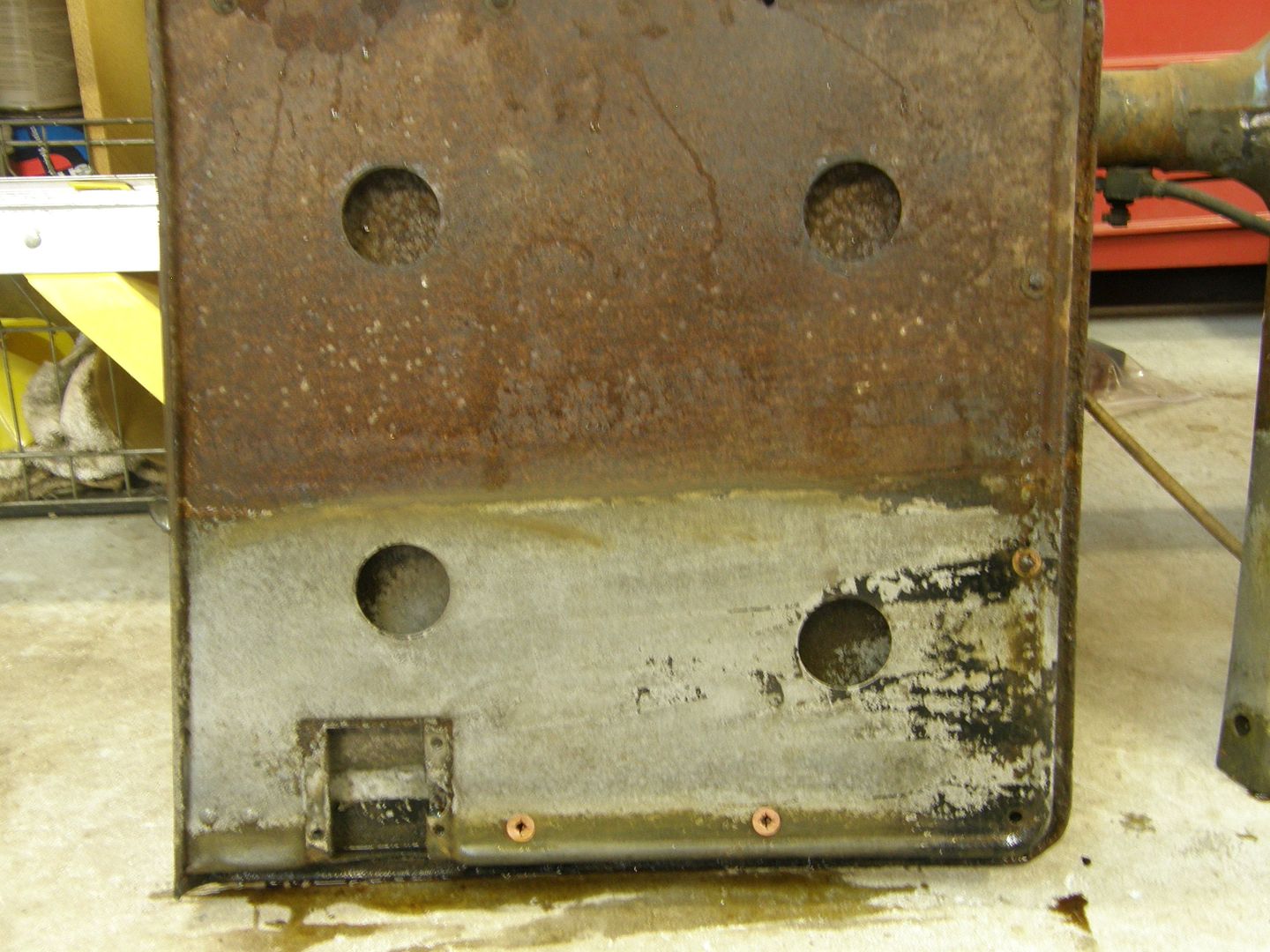
To get this back on track...any photos yet of the T body? The door came out great!
 

acamato

Well-known member
Joined
Jan 20, 2011
Messages
67
Location
Long Island, NY
You garage is not a perfectly sealed container. Air is constantly getting refreshed at a slow rate due to leaks in the building.

Hydrogen is the smallest molecule, and can diffuse through many common construction materials. Hydrogen has a much lower density than air, and rises to the ceiling where it gradually diffuses in a radial pattern. You would need a significant source of hydrogen to have a combustible mixture in the garage.

The oxygen generation will simply increase the oxygen concentration in the garage, again you would need a significant source of oxygen to have any effect on the concentration in the garage.
 

kc-steve

Well-known member
Joined
Jun 22, 2010
Messages
4,240
Location
Kansas City
. . . The oxygen poses no risk. . .

You guys can ALL do what you wish, ya know? (whew)

The ONLY reason I came into this discussion was because diesel research made the statement that "oxygen poses no risk" and that is blatantly wrong as I proved with examples, and others have backed it up. The explosion examples are only to show what it can do in concentrated form. But who knows what level of concentration oxygen becomes safe in an enclosed area? There are too many variables for anyone to blatantly say electrolysis is safe to use under any circumstance.

While trying to debate that point, suddenly I am a bad guy for trying warn people of the POSSIBLE hazards. I certainly think it is also wrong to tell others it is completely safe. Just the possibility of an injury/fire/property damage lawsuit , real or imagined, is enough for any rational thinking person not to go so far as to say electrolysis is completely safe. Think about it. If it is safe then why hasn't a company packaged an "electrolysis kit" for sale? Obviously, they don't want the liability.

Like I said, I have done it myself outside so go ahead and do what you wish, but don't tell other people it is completely safe. That's just not true.

Steve
 
Last edited:

diesel research

Well-known member
Joined
Sep 12, 2010
Messages
5,440
Location
gulf coast, TEXAS
You guys can ALL do what you wish, ya know? (whew)

The ONLY reason I came into this discussion was because diesel research made the statement that "oxygen poses no risk" and that is blatantly wrong as I proved with examples, and others have backed it up. The explosion examples are only to show what it can do in concentrated form. But who knows what level of concentration oxygen becomes safe in an enclosed area? There are too many variables for anyone to blatantly say electrolysis is safe to use under any circumstance.

While trying to debate that point, suddenly I am a bad guy for trying warn people of the POSSIBLE hazards. I certainly think it is also wrong to tell others it is completely safe. Just the possibility of an injury/fire/property damage lawsuit , real or imagined, is enough for any rational thinking person not to go so far as to say electrolysis is completely safe. Think about it. If it is safe then why hasn't a company packaged an "electrolysis kit" for sale? Obviously, they don't want the liability.

Like I said, I have done it myself outside so go ahead and do what you wish, but don't tell other people it is completely safe. That's just not true.

Steve

In order to get enough for an explosion (our goal) we needed to completely surround the anode or cathode (can't remember which side it gathered on) with a glass beaker to capture the bubbles. After 5 or 10 minutes there was barely enough to make a quick "whoosh" and "pop!" when intentionally lighting the contents of the beaker.

In an open environment it would take much more amperage to pose a risk.

The risk of producing noxious gases or corrosive chemicals is much more real.

blah blah blah

Also interesting to note we are not speaking of a high pressure pure oxygen state. We are speaking of real world involving a battery charger in a open shop and a non-covered vessel. I should further elaborate, not best idea to exceed 10-20 amps since the process becomes quite accelerated above that. Actual current draw being dependent on purity/conductivity of water/solution and distance between anode/cathode.

To stay on topic though, maybe the compromise is suggesting outside. I've never done it outside, only in labs, my kitchen table, and personal garage, but I think that's a reasonable suggestion. Although this current weather is a major deterrent to that method.

I agree, the presence of more oxygen can accelerate a open flame. It does take a good bit extra as noticed by your experiment. It does have to be concentrated into an enclosed container.

Let's just keep this simple and to the point. If you pressurize a space shuttle with oxygen while burning antifreeze, you may have a problem.

If you heat a sealed container of pure oxygen with an open flame, you may have a problem.

If you charge a battery/ perform electrolysis on a wrench with a typical charger at the typical charging rates inside of the typical drafty garage, you have other more serious threats like paper cuts or slip and falls. Open the door if you are worried.

The rate of oxygen production can and has been measured, so the rest of you can sleep relatively sound. There are still other issues like cheap chargers burning up, preventing direct shorts via isolation, and byproducts produced if trying to use stainless or various other non iron metals or alloys.


There are MANY kits for sale, just FYI. Some are even for cars. Whether they work is up for debate, but that is not the point. Plating kits work in this same manner as well. Of course, the battery in your car works in a similar manner when being charged.

Your warning is similar to someone who claims vinegar is dangerous because they could drown.

While hypothetically possible, it is still far fetched in real world conditions, even more so when specified amounts and procedures are followed.

We have a LOT of real dangers in the garage. All of this discussion has resulted in one positive outcome. We now have real reasons why not to add antifreeze to the mix.


Refrigerated (liquid) oxygen bottles, constantly bleed off into the surrounding. Depending on temperature, this may be every 15 minutes or so. As part of Praxair gas training, it was asked if this posed a risk inside of our welding shop. It was explained by the professionals/manufacturers, the same thing everyone has reiterated here. The concentration was very minimal compared to a typical shop. If anyone has saw a refrigerated bottle bleed off, they know that in 5 seconds it will bleed off more oxygen than you could electrolyze in a month. As a matter of fact, within a few weeks it could bleed itself empty w/o any being used. It was specifically recommended to be stored in doors.
 
Last edited:

MalibuLX3

Well-known member
Joined
Jun 2, 2009
Messages
319
Location
Rochester, MI
Does anyone have any good suggestions for easily removing the black residue that is left when I remove my item from an electrolysis bath?

I'm been using a grey finishing pad, but it's hard to get into all the little nooks and crannies at times.
 

jon619

Well-known member
Joined
May 6, 2010
Messages
120
Location
Mountain Home, ID
Does anyone have any good suggestions for easily removing the black residue that is left when I remove my item from an electrolysis bath?

I want to hear the answer to this too. I read from another post someone used lemon juice on a wrench. I've never tried it.
 

diggerrick

Well-known member
Joined
Dec 1, 2010
Messages
996
I wish I would have found this site & thread last year. Last summer I junked a large 50V battery charger that was mounted on the wall of the shop when we bought the house. I put a meter on it and it put out right about 50VDC - the original manual was even laying on top. I think that much juice would have worked great for electrolysis, but I couldn't rationalize the wasted wall space at the time.
 

spongerich

Well-known member
Joined
Apr 17, 2010
Messages
2,339
Location
Monroe, NY
I wish I would have found this site & thread last year. Last summer I junked a large 50V battery charger that was mounted on the wall of the shop when we bought the house. I put a meter on it and it put out right about 50VDC - the original manual was even laying on top. I think that much juice would have worked great for electrolysis, but I couldn't rationalize the wasted wall space at the time.

If it makes you feel any better, that's probably a little more voltage than you'd really want to use. You can boil the electrolyte with too much. I'd also be concerned about safety. Electricity and water and all that... it's not a problem with 12-24v, but 50 seems a little high for comfort. (Yes, I know, it's the amperage that kills)
 

Lt CHEG

Well-known member
Joined
Feb 20, 2011
Messages
511
Location
Upstate NY
In reference to the discussion about gas buildup, I don't think it's wise to throw terms like "Never" around too much so it's wise to use a certain amount of caution. Having said that, if you use a little common sense this can be a very safe and effective process. I remember back in one of my freshman chemistry labs converting water into its component Hydrogen and Oxygen atoms using electrolysis. We verified the success of the procedure by placing a glowing match stick in each of the test tubes that was trapping the gas. Even when deliberately making Hydrogen and Oxygen and trapping the same the amount of gas in the tubes wasn't enough to do more than make a pop in the case of the Hydrogen and reignite the glowing match stick with the Oxygen. So just as it is usually not best to say that something is "Never" dangerous, it is also wise to not say that something is "Always" dangerous.

As diesel research also pointed out, it is probably best not go get too creative with your electrolyte solutions as there are some additional safety complications by doing so. And also diesel research is correct in stating that all acids are associated with Hydrogen. In fact the term pH actually means "power of Hydrogen" and that is why the "H" is always capitalized and the "p" is not because capital "H" is the symbol for hydrogen. The pH strength of an acid refers to its ability to generate "H+" ions in aqueous solution.

Lastly lemon juice isn't a bad acid to use for cleaning up the black oxides. It's actually not a bad acid and easy to work with. You could also probably use diluted muriatic acid or even diluted toilet bowl cleaner as it usually contains diluted Hydrochloric Acid. Also is you're worried about the acid affecting the metal of the tool, you can use a solution of baking soda and water to rinse the tool after its acid bath. The sodium bicarbonate in the baking soda forms a slightly alkaline solution in water and should do a nice job of neutralizing any acid left on the tool after the final cleansing bath.
 
To avoid these ads, REGISTER NOW!
Top Bottom
