Some other tools and processes you may be interested in are:
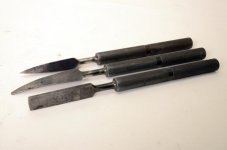
Bearing Scrapers
These are often made from old files. Their primary use was to shape babbitt bearings but they were also used for shaving cast steel surface plates and other precision things.
Lapping Plates
The process of rubbing 2 flat surfaces together with an abrasive between to obtain a flat surface.
Emery Cloth
Emery cloth is better suited to metal work than sandpaper because the cloth backing is much more robust and will bend over contours and edges without breaking. It's like a file for uneven surfaces. Emery cloth and it's cousin crocus cloth provide the final mirror finish of metal grinding operations like crankshaft journals and camshaft lobes.
I just made a sharpening jig for my grinder on the weekend using a type of lapping tecknique and some filing followed by an emery finish.
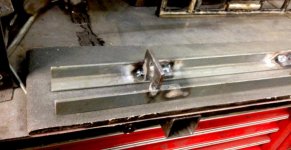
I made a track from some 1" angle iron. The welding of the mounts distorted the flatness of the angle iron strips so I straightened them as best I could in a hydraulic press. I made a lapping surface on the bench using a long 6" wide sanding belt with a length of steel plate under the top layer for flatness. My 22" track was then rubbed back and forth over this surface repeatedly to take down all the high spots.
You can see the sanding belt with the steel plate under it better here -
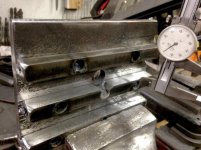
You can see the high area in the center here that is slowly coming down. There was about 1/64 deviation from flat after straightening on the press.
The sled that runs along the track was made from some 3/8 plate with 1/2" square bar strips welded to the bottom. Although the angle iron was welded with square bars placed between for proper spacing when I plug welded the bar to the plate there was still some distortion of the bars. I filed them flat where they would contact the angle iron.
Not as accurate as could be done on a milling machine so I made the sled longer to eliminate as much slop as I could. There is hardly any. Emery was used to final polish the contact areas of the square bar.
The track tilts up and down to change angles and the sled is tapped for hold down clamping.
This job would have been faster and more accurate on a milling machine but when I calculated working long enough to cover my cost of living and operational expenses while I saved enough to buy one doing it this way was still the best method at the time

(do I want a milling machine? HELL YES!)