To avoid these ads, REGISTER NOW!

Compressor noise/vibration abatement

Mesozoic

Well-known member
Joined
Oct 8, 2012
Messages
213
Location
Tucson, AZ
Since my garage is attached to the residence, I'm trying to find ways to reduce NVH in my build. One option I've got is to locate the compressor inside a sound isolated storage room, but not sure that takes care of the vibration aspect. If anyone has any recommendations on what other considerations I might make to reduce noise/vibes, please let me know. Thanks!
 
To avoid these ads, REGISTER NOW!

Okiecat

Member
Joined
Nov 6, 2011
Messages
5
Mines been outside for 25yrs, 80gal quincy. Put it on concrete pillars 8" off ground so I could get a big gate valve on drain. Set some conveyer belting on top of pillars and set it down. Hasn't moved a bit. Some day Im going to build a cover over it too. Maybe when I retire?!!ha
 
OP
M

Mesozoic

Well-known member
Joined
Oct 8, 2012
Messages
213
Location
Tucson, AZ
Got a Quincy QT-54 on its way... I'm leaning towards placing it in the sound isolated storage room. Conveyer belting for isolation is an interesting idea... I'll have to see where I can find some.
 

Slednut

Well-known member
Joined
Dec 20, 2012
Messages
2,550
Location
Washington state
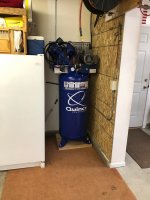
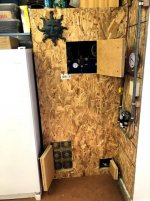
I have the same compressor, I built an enclosure around it and bolted it to a piece of 3/4 inch ply wood that's setting on a couple thicknesses of carpet. It is not fastened to the floor or anything else.

The enclosure has double sheets of sound board inside of it.

When I know it's going to run for an extended amount of time I added a fan so it won't over heat. There is also a door with a quick connect hose so I can drain it.
 

Attachments

  • Compressor0.jpg
    Compressor0.jpg
    105.5 KB · Views: 50
  • Compressor1.jpg
    Compressor1.jpg
    74.3 KB · Views: 43
  • Compressor2.jpg
    Compressor2.jpg
    70.5 KB · Views: 44
To avoid these ads, REGISTER NOW!

stonesfan68

Well-known member
Joined
Apr 19, 2012
Messages
2,758
Location
Houston, TX
One of the biggest sound generators on reciprocating compressors is the inlet valve. A Solberg (or similar) filter/silencer can reduce the decibel level considerably.

I have rubber pads installed under each of the feet of the tank. I also have a stainless steel flex line that connects the compressor to the filters and regulator.
 

dffay

Well-known member
Joined
Jul 9, 2015
Messages
433
Sandwich mounts can help on the feet. (McMaster-Carr source, for one)
When you go to fasten foam or similar on your walls, try to use construction adhesive. The shanks of nails and screws transmit noise/vibration down the length of them into the wall studs.
 

driftpin

Well-known member
Joined
Dec 22, 2016
Messages
11,234
Location
Miami-Dade/Broward Co. Florida
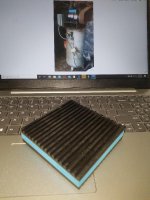
What my friend sells for feet insulation: sandwich pads 4" X 4" X 3/4". He sells & services air compressors, mostly industrial installations. He also sells refurbished units of many types.

What-else can-be done:
A remote air intake/filter, separated from the compressor by a rubber hose. That's probably mentioned in the GJ thread posted.
 

Attachments

  • Air compressor sandwich pad for feet.jpg
    Air compressor sandwich pad for feet.jpg
    82.2 KB · Views: 29

Citation

Well-known member
Joined
Jan 20, 2016
Messages
3,214
Location
Indy
Mount the compressor on vibration pads. A really big one is dealing with intake noise. For my 20 gallon belt drive I dropped 8db by changing from basically an open air filter to an "automotive style" filter plus about 14" of rubber hose.
Take a look at this video.
Forget about his PVC stuff. The filter housing is the same type I switched to. I also used a rubber hose like he did. I didn't put anything after the hose.

Believe it or not, that rubber hose alone makes a big difference. I learned about this with a California Air Tools compressor. It came with a 5" dinky vinyl tube you were supposed to add to the intake housing. I thought it was a total joke... until I tried it. It really helps for almost no money.

Still, others like adding a muffler after the rubber hose.

Basically, you can go for some type of isolation room but I would start by working on the intake. Just something to cut down on that intake chuffing helps a lot.
 
To avoid these ads, REGISTER NOW!
Top Bottom