To avoid these ads, REGISTER NOW!

Concrete pour checklist

saltygills

Active member
Joined
Jun 15, 2014
Messages
28
Hey guys I've got a 30 x 60 pole barn going up right now. All that is left is the concrete pour and installing the roll up door. I'm not the most educated person when it comes to erecting a building or pouring concrete so I was looking for advice.

They are planning on coming out tomorrow pending my sand arrival. The company asked for 2 14yd loads of fill sand to be supplied so they can grade out the pre existing dirt pad (this is standard on their builds). I guess they will come out the next day or two afterwards to pour the concrete.

Is there anything to pay attention to when they pour the concrete? I most likely will not be available to supervise the pour, but I'm planning on making it out there around the time they are finishing up. I know I'm supposed to specify the finish I'd like (smooth as possible) but besides that I don't even know what to look for to make sure things are done correctly. They are pouring a 4inch slab.

If you guys could shine some light it would be greatly appreciated. I'm looking forward to starting a build thread once I get this thing going.
 
To avoid these ads, REGISTER NOW!

sixty4

Well-known member
Joined
Dec 1, 2007
Messages
1,424
Location
CT
Maybe a bit late but did you run conduit from one side to the other? Last minute my builder did this. Thank God he did. Good luck with the pour! :beer:
 

Lx460

Well-known member
Joined
Oct 9, 2014
Messages
1,306
Location
Central Florida, USA
Don't let them pour it too wet. It makes it easier for the finishers to place but in the end you're the one who has to live with crazing, cracks, scaling and weaker floor. A 5" slump is the maximum I would allow on anything I would pour for myself. 4" is even better. I understand you probably don't know what I'm referring to but the finishers and truck driver will. It will be written on the delivery ticket as well.
The next day after the pour, I would keep it wet by spraying with a hose and covering with plastic if possible. The longer concrete is in the presence of moisture the harder it will get. The longer it takes to cure the better.
Don't know where you're at but don't let it freeze either...if it's that cold don't do it.
 

RivennHewn

Well-known member
Joined
Jun 4, 2011
Messages
10,371
Location
PNW
Stress out,
check the weather,
call early and double check they're confirmed,
Check the weather again,
Stress out again,
Take pictures.

that's about all there is to it. :lol:
 
OP
S

saltygills

Active member
Joined
Jun 15, 2014
Messages
28
Just went over my paperwork, They are pouring 4" thick 3000lb ( guess 3000 psi correct?) fibermesh with 1/8" aircraft cable reinforcement. My biggest worries are that they can get the truck backed up to the building, or at least use troughs (I don't want to spend the 500+ on a pump truck), and that they meet the 4" thick specs. I'll be taking measurements and marking along the skirtboards so I have a reference mark after the pour.
 
OP
S

saltygills

Active member
Joined
Jun 15, 2014
Messages
28
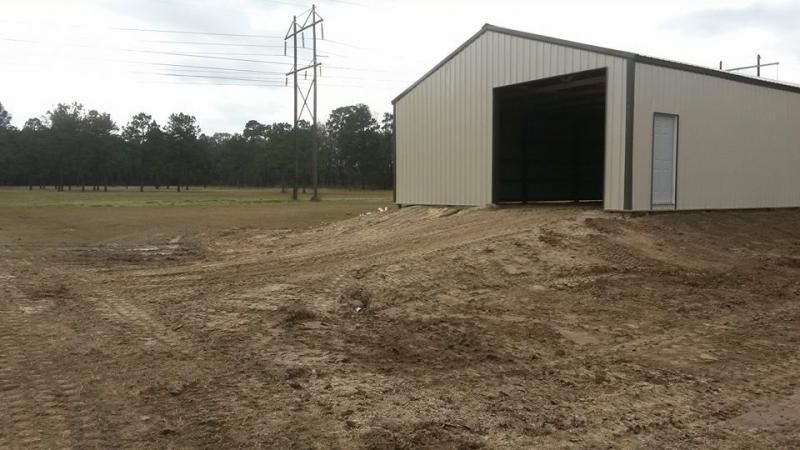
Before the Ramp

988460_642492299211510_4955626478399879155_n_zpsa67968eb.jpg


After the ramp

10947336_642492265878180_8971434178788648760_n_zpsbe2a1d55.jpg
 

alberto

Well-known member
Joined
May 28, 2007
Messages
756
Have them do a slump test when they get to the site. Should be within the specification given to them.
 

Lx460

Well-known member
Joined
Oct 9, 2014
Messages
1,306
Location
Central Florida, USA
You will need a pump or a "Georgia buggy".

With 3 chute extensions in place the truck can get about 15' or so. Unless they wet it up like soup (not a good thing) which will get them another 10'-15'. There no way in hell they are dragging that much concrete 30 feet. No way possible.

If there is any way possible to be there, I would.

BTW, they won't have any means to do a slump test unless there is a test guy there with the equipment. I would bet with 99.99999% that there won't be. That leaves it to eyeball. Hard to do if you have no idea or experience. You have to just talk with confidence, approach and tell the driver of the truck "no more than a five inch slump". Do not leave it to the finishers to tell him, it won't happen.
 

alwaysFlOoReD

Well-known member
Joined
Sep 24, 2013
Messages
2,398
Location
Airdrie, Alberta, Canada
^^^ agreed. I tested concrete for a few summers for a geotechnical firm and as soon as I was finished my test it seems they would water down the concrete. I would be there or hire someone to be there. The concrete companies make mistakes too and you won't find it unless you test for slump and air. Air tests are important if your concrete will ever get frozen.
There is a type of concrete that is "self leveling", one brand is Agilia. It's more expensive but much easier to finish and flows almost like water.
 
Last edited:

dwysywd

Well-known member
Joined
Sep 21, 2014
Messages
892
Location
SE Michigan - Romeo area
Something I forgot to do when I poured mine, run some 2" pipe under the rat wall to run utilities through. Maybe run 2 pipes incase you want to run gas too. Easy to cap and leave if you don't use


Sent from my bag phone...
 
OP
S

saltygills

Active member
Joined
Jun 15, 2014
Messages
28
I live in southwest Louisiana, we don't freeze much here but it does happen from time to time. I've got a couple friends I may be able to get out there to supervise or at least keep an eye on them. I wouldn't know where to start when hiring someone else
 

volleyball

Well-known member
Joined
Aug 29, 2011
Messages
4,127
Location
NY, not NYC
Are you planning some pitch? Even a little helps when things gets wet. I agree you want a pump truck. money well spent. Are they going to power trowel it? Any chance you will need thicker concrete in some spots for lifts or other equipment?
 

ilovevocs

Well-known member
Joined
Jun 26, 2009
Messages
1,966
Location
Toledo, Ohio
If you do run conduit under slab I would recommend placing a control joint above it.

Also if it were mine I would seal all the control joints with a self leveling sealant while everything is clean and the space is empty. I hate the dirt in the control joints. I know it's not critical like exterior joints, but something I would do if I built a new shop.
 
Last edited:
OP
S

saltygills

Active member
Joined
Jun 15, 2014
Messages
28
I'm not running any conduit under the slab. I'm not 100% sure on what our electrical code is here (bodyman by trade) but we'll be owner contracting the wiring of the shop (already have power going to panel) and I'll be helping an electrician friend of mine do the wiring inside.

As for getting wet, I don't think the shop will ever get water in it unless its blowing through an open door or through the roof somewhere....my shop pad is over 3ft above surrounding grade.

They'll be starting this afternoon on the grade, I was able to get 3 14yd loads out this morning. I guess a build thread will be coming shortly.

IMG_20150116_164348_zpsdffebbe0.jpg
 

markpmanley

Member
Joined
Jan 24, 2015
Messages
9
Location
Rhode Island
Looks like you are getting lots of good advice. Not sure where you are located but if you are in a colder region you should also make sure the mix design is for exterior slabs. This includes extra air entrainment which alleviates cracking from freezing and thawing cycles. Also, make sure the wire mesh is pulled up or supported so it stays at mid depth of slab. Lots of guys just lay it down and it ends up at the bottom 1/4 inch of slab. Good luck.
 
To avoid these ads, REGISTER NOW!

alberto

Well-known member
Joined
May 28, 2007
Messages
756
BTW, they won't have any means to do a slump test unless there is a test guy there with the equipment. I would bet with 99.99999% that there won't be. .

There's not much equipment needed. Kinda geeky video, but this is all that's involved.
 

joes169

Well-known member
Joined
Sep 19, 2011
Messages
663
Location
WI
Being in Louisiana, you won't need any air entrainment added to the concrete. Naturally, ready mixed concrete will contain 2-3% already, which is enough for what you need.

As for pumping, I wouldn't fret too much about it, it's somewhat regional. We never pump, as it's typically at least $500 min. to get a pump in. We either buggy or wheelbarrow.

One thing I would add w/o question is, at very minimum, a 6 mil vapor barrier under the slab. It will help imensly with floor sweating, which I'm sure could be a huge problem in the warmer months in LA, and it's extremely cheap......
 

Jlbc212

Well-known member
Joined
Dec 7, 2013
Messages
1,530
Location
Northeast MA
Increasing the strength of the concrete from 3000 psi to 4000 or 5000 psi is usually not much of a price difference.
 
OP
S

saltygills

Active member
Joined
Jun 15, 2014
Messages
28
Ok here is the progress. Sand graded out, vapor barrier laid out, aircraft cable retention installed. I'm guessing they laid out the re-mesh today. I didn't make it out there today but I got in touch with them, they said they will be doing the pour in the next week or two. We've been getting loads of rain and as soon as it dries out it rains again, forecast calling for rain this weekend and the yard is just a big mud whole right now. I have a friend down the road getting a 30 x 50 and he is also waiting on concrete.
 
OP
S

saltygills

Active member
Joined
Jun 15, 2014
Messages
28
To my surprise it only took 1 1/2 loads of sand to grade it out

IMG_20150127_161034_zps2c8c4c39.jpg


They had it raked around the edges, looks like my 4" slab will come up to the top of the grade board

IMG_20150127_161442_zps88b14df6.jpg


Vapor barrier and cable retention

IMG_20150128_165819_zpsba8c5fec.jpg


I guess I get to do something fun with this sand now (I have plenty of areas that need filling)

IMG_20150128_165859_zps0fff499f.jpg


I was surprised to see the vapor barrier and re-mesh because none of it was ever mentioned in the contract, Maybe it comes standard with the building but I was happy to see it.

IMG_20150128_170118_zps4fd65a9d.jpg


I guess I'll start a build thread soon, this has been such a process. We have done a ton of work getting the land prepared for the new mobile home and shop, its all finally coming together. The house is done just waiting on inspections.
 

olds70supreme

Well-known member
Joined
Mar 7, 2008
Messages
694
Nice build so far, if you don't mind I am curious...
Are the cables for the concrete (serving a capacity similar to rebar) or for the building structure?
Does the mesh get laid over the top of the cables (using them for support)?
Is the sand or the fill below it compacted?
 

Hornman

Well-known member
Joined
May 9, 2013
Messages
517
Location
Southwest DFW
Yep, floating slab on top of a sand pad. That's the way they pour them in that part of the country. It looks like you have a better than average concrete contractor from what you have shown us so far. I agree with the previous poster in making sure they don't water the mix down to make it easier on the finishers, but with the capabilities of today's Superplastisizers there is no need to add water. The Superplastisizers will reduce the viscosity of the mix to a workable consistency. (Slump is not the benchmake it used to be. Today's Superplastisizers can make concrete flow like water without losing strength.) Verify this with your concrete contractor. You are also going to have to backfill around the building to make a 2-3 foot flat zone to prevent sand washout from under the slab. Also, since it rains frequently and heavily in your area, you will have regularly add fill to that pad. If it was my building I would build a retention wall around the building with the top of the wall 4" below the top of the slab. That would give drainage without the grade differences that would undercut the slab. See how we forum guys like to spend your money?
 
OP
S

saltygills

Active member
Joined
Jun 15, 2014
Messages
28
Hornman I have about 2 ft of flat zone on the backside of the building (not gable end) but not so much on the front side (not gable ends). I still have plenty of 60/40 left and backfilling is definitely on the to do list. Can you please describe the retention wall or give me some pics of what you are talking about? (530 on a friday I cant comprehend much more than rest and a cold drink right now haha)
 

Beef1911

Member
Joined
Jan 7, 2015
Messages
6
Location
Iowa
I test my fair share of concrete for city, state, and federal jobs. I haven't used a slump cone for a while, only if I don't like the contractor.

The truck ticket should say the slump the contractor ordered. Probably 2-4 inches. The contractor will look at the concrete and tell the driver to add water or not. The can usually safely add 10-20 gallons and still have a good water/cement ratio any more would probably be bad. The truck should spin fast before it unloads, it shouldn't sound really clanky or sloshy. Once you've seen a few trucks you can guess the slump pretty close just by eyeballing it.

Make sure they use a ********.

It should be off the truck no later than 90-120 min from the batch time on the ticket.

The finishers shouldn't get too carried away with putting water on when smoothing it out. This could mess with the hydration process and cause spalling.

You can expect 2 things from concrete. It will get hard, and it will crack.

These are some things I've learned for inspecting pavement and structural concrete. It may not all apply to your job or region.
 
Last edited:

Hornman

Well-known member
Joined
May 9, 2013
Messages
517
Location
Southwest DFW
Hornman I have about 2 ft of flat zone on the backside of the building (not gable end) but not so much on the front side (not gable ends). I still have plenty of 60/40 left and backfilling is definitely on the to do list. Can you please describe the retention wall or give me some pics of what you are talking about? (530 on a friday I cant comprehend much more than rest and a cold drink right now haha)

Sorry I am late replying, been busy. For retaining walls in your area I would recommend either a formed up poured concrete wall or modular landscape blocks like Pavestone (available at HD). The concrete wall will be the strongest and will probably be the fastest since you will probably hire it out. The landscape blocks are true DIY, I have placed thousands. If you go with the blocks get the longest level you can handle to level the base of the wall. Make sure you lay a sheet of landscape fabric under and behind the wall to keep dirt from migrating through the wall. Glue the layers of blocks together with the proper masonry glue (in a caulking tube in the masonry isle).

Having lived in the area I am familiar with how the rain will flatten even the gentleist slopes. If you make them flat to start with, the rain can't move it.
 
To avoid these ads, REGISTER NOW!
Top Bottom