To avoid these ads, REGISTER NOW!

Condensation, Garage, and Tools

CHI_Tool&Die

Well-known member
Joined
Jul 20, 2021
Messages
1,387
Location
Chicago, IL
So I bought a new tool cart for Black Friday and loaded it up with a bunch of my nice tools. The point being that I can easily access everything in my garage instead of having to load the tools I may or may not need up in a go bag and walk it from the basement to the garage. Everything seemed ok, we’ve had an unusually dry winter, but now it’s been raining like normal and the temps have been fluctuating dramatically and now I’ve noticed that all my tools are covered in condensation droplets. And it’s bad, like you can actually wipe all the water off and have your hand soaked. It’s all satin and chrome tools but I’m wondering if they will be ok or if I should bring my good tools in and buy some cheap beater sets to leave in the garage. I’d hate to have Hazet ratchets or SK sockets rust like crazy because they are sitting in a detached garage. But maybe they’ll be fine since they are chrome coated? I’m not sure what to really do as this is the first time I’ve had hand tools stored in the garage that aren’t gardening or landscaping related.
 
To avoid these ads, REGISTER NOW!

Dave455

Well-known member
Joined
Mar 19, 2013
Messages
5,821
Location
Sussex, England
Been there and had the same problems!

1) Line your boxes. Doesn’t have to be exotic, I use cheap foam sheet from a craft shop. It doesn't eliminate condensation, but it reduces it.

2) Plug up all the gaps. Garages suffer from gaps round the doors, and plugging them makes a difference. This assumes you’re not opening the door twice a day, or parking a wet vehicle in there.

3) Dehumidifier. I resisted this for years, but having one transformed the place. I only use it for maybe 3 months in the winter, but I have had zero condensation issues since. Even recently, when we’ve had alternating very cold, then warm / wet conditions, and a neighbours shop has had condensation dripping from his tool boxes, I’ve had no problems.

Not only that, but the dry conditions are much nicer to work in, and my machine tools don’t need constant protection on the bare metal either.

4) I must admit I store my very best tools in the house and take them out as needed. I’ve always done this, and it’s the best solution for decent tools, but I don’t need to do it now I have the dehumidifier!
 

Busted_Knuckles

Well-known member
Joined
Oct 9, 2009
Messages
2,613
Location
Northwest Illinois
I have ALLOT of Black Oxide specialty tools, kept in an un-conditioned storage area, just west of you ( same weather, and yes they are sweating right now ). I spray and wipe everything with WD40 ( problem solved ). I dont worry much about plated tools, but the black oxide tools, take it really hard.
 

LWB

Well-known member
Joined
Oct 6, 2019
Messages
1,231
Location
ON, Canada
^I do this tool. I will open the drawer and just spray everything. I have files that haven't shown and signs of rust.

I've been told many times that WD40 doesn't work...
 

Tools4Me

Well-known member
Joined
Jun 22, 2021
Messages
546
I side more with Dave455. I've also had bad luck with WD-40. I find it leaves rust spots if left very long between tool uses. I usually use paste wax on any tools used for woodworking or a quick spray with aerosol lithium grease followed by a wipe to remove the excess for any of my metal working or mechanic tools. They then get another quick wipe down from a lightly oiled rag after each handling/use. I have quite a few custom made bare steel hand tools that have zero rust years later from using this technique.

Condensation is solely a result of the air in the room reaching the dew point. The dew point being reached also applies to surfaces. A "local dew point" can occur on your tools more easily than it is reached elsewhere if your tools are physically colder than the room's air temp. The more mass one of your tools has, the slower it will warm up or cool down with room temperature changes, so larger/heavier/thicker tools are more susceptible to condensation than smaller/thinner/lighter tools.

If the humidity in your shop is kept low enough, and you also do a few things to help slow down temperature swings so the temperature of your tools can better change up and down along with the room air, you will never have condensation on your tools even with wild overall temperature swings, because those swings will never place your tool temps below the dew point. Even something as simple as leaving your tool drawers partially open might help warm air get inside faster and warm up the tools more quickly so they don't get condensation on them as temps go up each day.

Plug air leaks and dehumidify, that's usually the key. Most other techniques only cover the problem up instead of fixing it. You would be better off spending money on a dehumidifier instead of a second beater set of tools for garage use.

It is recommended in general to try and always keep humidity levels at 50% or below for living areas. This prevents mold growth over time. A dehumidifier set at 40-50% max humidity should be able to prevent almost all condensation for even the most extreme temperature changes day to night.

Look at the attached dew point chart to find what shop humidity level would allow for you to never reach the dew point on your tools. Set your dehumidifier's max humidity level just below that number.

If you don't know how to read the chart, here is an example for you-

If the room air is 80 degrees and the humidity level is 40%, a tool won't get any condensation on it unless the temperature of the tool itself is lower than 52 degrees.

Another example-

If your room and tools start off in the morning at 40 degrees with 35% air humidity and then the room air heats quickly to 80 degrees and 35% humidity by mid-day, you tools will have to warm up to at least 48 degrees in that same period of time to prevent them from having condensation on them.

If you can't do anything to slow air temp changes, increase the speed of tool temp changes, or reduce humidity, you pretty much have to coat your tools in light grease, rust preventative, etc. More of a hassle, but in life one can't always solve problems the easy way because there are sometimes other factors at play that can't be changed.
 

Attachments

  • dp 1.jpg
    dp 1.jpg
    165.8 KB · Views: 29

redwrench60

Well-known member
Joined
Sep 10, 2011
Messages
6,069
Location
East Tennessee
A De-humidifier in the wet cold season is key. Set one up to run 23/7 and plumb the drain with a small soft copper line through the wall outside.

In the summer a box fan set up in a corner running 24/7 gently circulates air and really helps prevent rust formation on exposed surfaces.

Desiccant packs in drawers and spray lube of some kind on black oxide or bare steel tools. I prefer Rem-Oil but it doesn’t matter, just pick something. Remember, the wrong oil is better than no oil.
 

Bubba Fett

Well-known member
Joined
Jun 11, 2018
Messages
1,516
Location
Eastern NC
All good advice. Whenever equipment arrives, I always save the desiccant packs, and throw them in my tool bags/boxes. Even the little cylinder-type ones you find in medicine bottles can be useful.
 
OP
C

CHI_Tool&Die

Well-known member
Joined
Jul 20, 2021
Messages
1,387
Location
Chicago, IL
Thank you to everyone! I was really freaking out because I for sure thought that it was going to kill my tools. I have a typical Chicagoland garage -- detached, piss-poor insulation, and minimal airflow due to the density of the properties around me. The goal is to eventually rehab it but the money has been going toward the older house so everything about the garage has taken a back seat. I'll look into a dehumidifier, but I don't have an outlet to plug anything into so I'd have to figure that out too. :ROFLMAO: I'll bring out some of the hand tools I'm not as worried about and wipe them down as instructed and see how they handle the conditions. I can determine from that if I want to risk the better quality stuff. For now, I have my cart holding my car detailing stuff and gardening tools.

PS. Being a newer homeowner is rough. I've been trying to not only fix the mistakes of the previous owner but also of the guys that built the damned thing back in the postwar boom. At least it isn't a pre-1900s house like my parents had and my dad rehabbed. :oops:
 

joe_pinehill1

Well-known member
Joined
Feb 23, 2013
Messages
537
Location
Northern Virginia
I find it hard to avoid condensation in our area on those one or two days a year when you have a very rapid rise in temp. Tools are cold and any moisture from the warm air condensates on them.
 

RTM

Well-known member
Joined
May 13, 2019
Messages
13,183
Location
SF Bay Area
No outlets? That *****. I low wattage light bulb in the box can help.

Bullfrog VCIs May be the answer you need

Lots of different flavors here


I was gonna suggest moving, but I know how dedicated you Chicagoans are, I married one.
 
OP
C

CHI_Tool&Die

Well-known member
Joined
Jul 20, 2021
Messages
1,387
Location
Chicago, IL
No..no….let’s not be hasty RTM, I think moving is perhaps the best overall strategy. Just not to Tennessee, we’re all full!
Oddly enough, all of our friends have moved to Tennessee, specifically around Nashville. They keep telling us to head over since so many Chicagoans and Great Lakers are there now. 😂
 

bigredcornhead

Well-known member
Joined
Aug 9, 2011
Messages
438
I throw those silica packs you get with clothes and furniture in my toolbox drawers, seem to help here no issues yet..
 

Moldyjim

Well-known member
Joined
Aug 1, 2021
Messages
188
Home Despot and I think Harbor fright have toolbox liner material on a roll. Its supposed to have rust inhibitors in the foam.

My precision tools are now in wooden boxes with the liner material and wiped down with anti rust oil on a piece of chamois. Mics are cleaned, wiped down with break-free and lanolin chamois.

I don't like using wd40 as a rust preventer on precision tools cause it dries and leaves a sticky film that can jam micrometers and other such tightly fitted parts. The break-free and lanolin leaves such a thin film that it isn't a problem.

A lanolin chamois works well for rust protection of gage blocks. Its important that the film is thin enough or easily removed that it doesn't throw off the size of blocks when they are wrung together.
 

Tools4Me

Well-known member
Joined
Jun 22, 2021
Messages
546
Home Despot and I think Harbor fright have toolbox liner material on a roll. Its supposed to have rust inhibitors in the foam.

My precision tools are now in wooden boxes with the liner material and wiped down with anti rust oil on a piece of chamois. Mics are cleaned, wiped down with break-free and lanolin chamois.

I don't like using wd40 as a rust preventer on precision tools cause it dries and leaves a sticky film that can jam micrometers and other such tightly fitted parts. The break-free and lanolin leaves such a thin film that it isn't a problem.

A lanolin chamois works well for rust protection of gage blocks. Its important that the film is thin enough or easily removed that it doesn't throw off the size of blocks when they are wrung together.
My current inner dialogue-

Is moisture related advice from a poster named "Moldyjim" good advice or bad advice?:unsure:
 

matthew

Well-known member
Joined
Dec 4, 2009
Messages
1,347
temperature changes are the heart of the problem. It the temperature stayed absolutely consistent you wouldn’t get condensation.

The times you’ll have the biggest issue is when the outdoor air starts to warm up after being cold. The air outside will have more humidity, and the garage contents will still be cold and can be below the dew point.

When it’s cold and things warm up I try not to open the garage doors until I’ve run the heater for a while to warm the contents up above the dew point.
 

VolvoRyan

Well-known member
Joined
Dec 29, 2019
Messages
1,339
Location
Kentuckiana, USA
I've found that the dehumidifiers really help.

PS. Being a newer homeowner is rough. I've been trying to not only fix the mistakes of the previous owner but also of the guys that built the damned thing back in the postwar boom. At least it isn't a pre-1900s house like my parents had and my dad rehabbed. :oops:

New homeowner here... in another postwar house. It's... um..."fun". Why is there a random neutral wire just going kinda....off..... somewhere?

-Ryan
 

MarvinBerry

Well-known member
Joined
Oct 21, 2018
Messages
817
Location
Enchantment under the sea - NJ
No power is a drag that'd be goal #1 for me. Hopefully a permanent run but can you hit the garage with an extension cord in the meantime?

Space heater for winter & couple fans for warm weather will go a long way towards helping overall conditons. And that's easy & cheap if there was juice...

Instead of regular silica packets get some rechargeable ones. Look for food grade & color change... when they've absorbed max moisture you typically microwave or bake em dry.

Something like this - https://www.bhphotovideo.com/c/prod...b2W3OKGBq1E-PvTwXCg1FhD8AtC_m50waAnP_EALw_wcB

The ones we get shipped with whatever, those little pouches are use once disposables & might even be shot by the time you get em. I always toss em.
 
To avoid these ads, REGISTER NOW!

Jeepster04

Well-known member
Joined
Jun 25, 2013
Messages
3,098
I find it hard to avoid condensation in our area on those one or two days a year when you have a very rapid rise in temp. Tools are cold and any moisture from the warm air condensates on them.

Same here, it'll be even worse if you have A/C in the garage. Nothing you can do to avoid that other than keeping all doors closed.
 

Dave455

Well-known member
Joined
Mar 19, 2013
Messages
5,821
Location
Sussex, England
I've found that the dehumidifiers really help.


New homeowner here... in another postwar house. It's... um..."fun". Why is there a random neutral wire just going kinda....off..... somewhere?

-Ryan

I feel your pain!

My place was re wired in the 70’s by the previous occupant. He was (allegedly) an electrician, but he was also colour blind!

Everything was (sort of) connected correctly, but it was a lottery which colour wire was used for what!

I remember going to the electrical wholesalers with my Dad after we moved in. They obviously knew the guy, because as soon as we gave the address they said “we’ll open you a trade account…” There was a heavy implication we were going to need it!
 

yhprum

Well-known member
Joined
Jul 27, 2006
Messages
1,392
Location
Brisbane Australia
Throwing a old sheet over it will help quite a bit. It can still breathe but will help minimise condensation forming. You could also leave an incandescent bulb burning inside the box to keep it and the contents warm too.
 
OP
C

CHI_Tool&Die

Well-known member
Joined
Jul 20, 2021
Messages
1,387
Location
Chicago, IL
Throwing an old sheet over it will help quite a bit. It can still breathe but will help minimise condensation forming. You could also leave an incandescent bulb burning inside the box to keep it and the contents warm too.
Thank you for that suggestion! I can actually try that this weekend and see what happens.
No power is a drag that'd be goal #1 for me. Hopefully a permanent run but can you hit the garage with an extension cord in the meantime?

Space heater for winter & couple fans for warm weather will go a long way towards helping overall conditons. And that's easy & cheap if there was juice...

Instead of regular silica packets get some rechargeable ones. Look for food grade & color change... when they've absorbed max moisture you typically microwave or bake em dry.

Something like this - https://www.bhphotovideo.com/c/product/242571-REG/Pelican_1500_500_000_Silica_Gel.html/qa?ap=y&ap=y&smp=y&smp=y&lsft=BI:514&gclid=Cj0KCQiAtbqdBhDvARIsAGYnXBNY6ZkBq7TNgIU7N-sJ7vOb2W3OKGBq1E-PvTwXCg1FhD8AtC_m50waAnP_EALw_wcB

The ones we get shipped with whatever, those little pouches are use once disposables & might even be shot by the time you get em. I always toss em.
Thank you! I ordered some off Amazon. Between that and above mentioned blanket covering I should be good to go for the time being. 🤞
If you are cold, they are cold too, bring them inside!
I have most of my tools in the basement boxes. But I really wanted some in the garage. I kept some chrome SK and Proto sockets and some SK ratchets in my cart. I figured those are my most solidly chromed tools and should be able to hack the cold. I may pick up some boxed or foamed sets just for garage use. Something that’s covered within the box. I dunno though.
 

bigfunwmu

Well-known member
Joined
Oct 26, 2013
Messages
409
Location
S. MN
A big part of the trouble is changing temperatures in the garage. Going from cold to warm means your tools are colder than the air and water will condense on them. As mentioned above fans to circulate the air help a LOT, both because the moving air helps the items in the garage heat or cool faster to match ambient temperature and to dry the water from your stuff as it come up to temp and no longer attracts water. A couple fans in my garage made a huge difference for me.
 

joe_pinehill1

Well-known member
Joined
Feb 23, 2013
Messages
537
Location
Northern Virginia
I remember one year we had a snow storm in February. It was in the 20s for a few days, snow on the ground. Then went into the upper 40s in a couple hour period, a dense fog formed. Everything made of metal in the garage was dripping water. If you can afford to heat your garage, it would keep tool temperatures above the dew point on days temperatures swing. You don't have to heat to short sleeve shirt temps.
 

Radio Flyer

Well-known member
Joined
Mar 28, 2010
Messages
1,689
Location
Suburban Chicago
Same location, same problem.

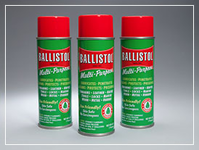
My most recent attempt this weekend included spraying a few shop rags with Balistol and laying them over the tools in each drawer. I hate the smell of it, but I will use it until it's gone.

Fair warning, heavy rain Monday night and 60 degrees Tuesday.

1672590289651.png
 
OP
C

CHI_Tool&Die

Well-known member
Joined
Jul 20, 2021
Messages
1,387
Location
Chicago, IL
Just an update. With the crazy weather we are having this winter (it’s fairly warm and rainy instead of cold and snowing which I’m not complaining about!) and my garage being not the best I moved all my tools back into the basement boxes. I turned the cart in the garage into a gardening, detailing, whatever holder. Even with the various tricks from oiling to the desiccant packets to covering the tools, I just couldn’t stop the heavy condensation and even had some surface rust starting to appear. It’s alright. I invested in Ernst rails and the like so my tools are portable. I’ll live with bringing them up to the garage until I can rehab the space. Thank you all for the suggestions!
 

M6erfan

Well-known member
Joined
Dec 6, 2014
Messages
10,170
Location
'Merica!
Sorry to break it to you guys, but unless one's toolbox is sealed from the surrounding air, desiccant packs don't work. At least not for very long, and this recycled packs from shipping containers are probably mostly used up by the time you get them. Sorry.
 

pago cruiser

Well-known member
Joined
Dec 6, 2009
Messages
65
Location
Tucson
Great topic; one thing I did not see discussed...
As I discovered, when we are down in the teens to 30's at night, I cannot turn on the infrared heater in the (un-insulated) shed in the am to warm the place up so I can work in there without my parka.
Well, I actually can... and it will be 50-60F after an hour or so, a very comfortable temp to work if out of the wind.
But every piece of metal in the shed will be sweating...shed roll-up door (single wall), drill press, metal tables, tables, tool boxes, tools inside tool boxes, and power tools inside tool cabinets...
My pending garage will be vapor barriered, R-19 insulated walls, R-30 insulated ceiling, and have a small electric heater keeping the tool storage area (maybe 100 SF in the corner) at about 50F.
All that said... it would be a lot cheaper to work in the parka...:lol: or wait until it warms up mid-day before I go working in the shed.
 

LWB

Well-known member
Joined
Oct 6, 2019
Messages
1,231
Location
ON, Canada
I've turned on a fan after reading this thread. It's sitting there so can't hurt. I'm reluctant to turn on the radiant heat for the exact reason you posted above. Slow moving temps up and down aren't so bad. We've had horrible, damp, cold and rainy weather here lately and so far so good.
 

mikedodge

Well-known member
Joined
Jun 27, 2017
Messages
2,795
Are you heating your garage at all when you're in there? If so the temperature change can cause it. If you park in there that will cause it too. If it's a cold garage and the temperature changes depending in what it's like outside just leave your tools inside and bring them out when you need them.
Mormal dehumidifiers only work down to a certain temperature. I think a Desiccant dehumidifier is supposed to work down to feezing Temps.
 

ecotec

Well-known member
Joined
Oct 5, 2010
Messages
5,451
If I had a fraction of the individual tools that I have, I would put a thin coat of Fluid Film or T-9 Boeshield or something like it on all my tools…

The idea of doing this after 15 years of garage/estate sales… it just seems like too much work.

If you have a small amount of tools, this seems like it would be easy to do.
 

pago cruiser

Well-known member
Joined
Dec 6, 2009
Messages
65
Location
Tucson
+1 on the coating.
We lived/cruised about 10 years on a sailboat, with a 3 drawer Craftsman Box under a setee as my hand tool holder. After seeing the destruction due to surface rust after a couple months, I started spraying down the tools - in their drawers, about once a month. WD40 was about all you can find in Mexico/Central America. Worked great. When we sold the boat (while overseas), I kept about half the tools, and the other half went with the new owners to NZ. They were all in really good condition. The box, not so much; and I had to change the cork drawer lining every year or so, or it started smelling like an auto shop... But this was salt-laden air, not thermal driven humidity.

I like the concept of that Lizard Heater per ZRX61. Amazingly low power draw as well, at 24 watts; less than $0.01/hour at $0.20/KWH. That said, I might be inclined to put a fuse in the supply line, sized slightly over normal power draw - about 0.2A. This way if the thing shorts out and starts drawing 10A (like your Toaster), the fuse will kill the power and hopefully avoid a fire.
 
To avoid these ads, REGISTER NOW!
Top Bottom