To avoid these ads, REGISTER NOW!

condensation, insulation, vapor barriers,pole barn

jethrob

Well-known member
Joined
Nov 30, 2012
Messages
208
I've been lurking and reading about pro's and cons and trying to visualize something.

I'm getting ready to have a 30x40x12 barn built. I plan on insulating it but not right at the moment.

I first liked produx but after reading up on it deceied it's not quite the cat's meow the mfg claims it to be.

I plan on finishing the inside with metal and blowing in fiberglass.

Is a vapor barrier or double bubble neccassry? I'm worried if a guy puts a vapor barrier up next against the metal it would be a place for moisture to get trapped between it and the metal. I'll be using a forced air heater for a while before I insulate and will have lots of moisture from a concrete pour to deal with.
 
To avoid these ads, REGISTER NOW!
OP
J

jethrob

Well-known member
Joined
Nov 30, 2012
Messages
208
Probably incidental (via forced air). .

Also I'll be opening and closing the doors throughout a normal working day so it's going to have in rushes of cool air.

The builder is putting up a sliding door which I plan on sealing and insulating.

If/when i get the project finished(as time and money permits) then the heat might get left on(think ventless wall heater) so long as it's not to much $$$ to do so.
 

Krodad

Well-known member
Joined
Mar 25, 2006
Messages
304
Location
Iowa
This answer is valid whether it's incidental or continuous heat, but I was wanting to know regardless..

First of all, steel siding is a vapor barrier. Not even a vapor retarder. It happens to be perfectly effective at eliminating vapor drive by itself. You can put up poly behind it if you like, but it's going to get all kinds of holes in it, and unless you are crazy meticulous about sealing every single seam in the poly, there will be non-effective areas there.

So, the most effective thing for you to do is simply install the steel, and run a bead of caulk where the steel overlaps. Keep it on the outside edge of the previously installed sheet, and you won't even get any "squeeze out" when the next sheet is installed.
The other incredibly important thing is to eliminate all leaks through the steel...infiltration is your biggest killer. If you let warm air exifiltrate into the wall, this is where condensate could form when that warm air hits the cold surface of the exterior sheathing material. So all openings you make in the steel should be sealed with extreme care...including around windows, etc.

For incidental heat, I'd consider about an inch of rigid insulation over the studs/purlins...whatever methodology you are building with, then install the steel right over the top. Seal the insulation edges with vapor barrier tape. You don't need any more than this at all, and you leave the cavity behind open for wiring or future pulls if you need it...plus, you can always remove a sheet of steel and insulation if you ever need to get into the wall for future electrical expansion.
This method also gives you the benefit of having that space between the insulation and exterior surface for ventilation if you ever have moisture in liquid form migrate past the exterior siding. Always leave a way for the materials to dry out if they have a possibility of getting wet. Using this method, you have eliminated the thermal bridge and wicking ability of the wood posts/purlins/studs....I know wood is pretty minor in terms of thermal bridging, but if it's like my pole building, every 8' I have FIVE 2x6's crippled together and that is a pretty big uninsulated hole in the wall if I were to only do cavity insulation.

I can do a hygrothermic model of this or any configuration if you like...just give me the specifics and the location. Keep in mind you are also not living in the barn, so there are a lot of humidity producing things normally found in a house that you will not have going on in the barn.
 
OP
J

jethrob

Well-known member
Joined
Nov 30, 2012
Messages
208
First of all, steel siding is a vapor barrier. Not even a vapor retarder. It happens to be perfectly effective at eliminating vapor drive by itself. You can put up poly behind it if you like, but it's going to get all kinds of holes in it, and unless you are crazy meticulous about sealing every single seam in the poly, there will be non-effective areas there.

I don't think caulk is a solution. I'm having the barn built by a company and I don't think it's something the crew will want to do.

Would house wrap on the walls help or am I still peeing in the wind?

I'm in southeastern IL.

Also I'll be creating some moisture. It's a boat repair shop and I'll have a built in testing tank and will be running engines.
 
OP
J

jethrob

Well-known member
Joined
Nov 30, 2012
Messages
208
I'm sorry- i just reread your first post.

You are saying to lay 1 inch rigid foam over the 2x4's after the building is up- and it's going to leave a 1 inch space between the metal and insulation.
 

Krodad

Well-known member
Joined
Mar 25, 2006
Messages
304
Location
Iowa
I'm sorry- i just reread your first post.

You are saying to lay 1 inch rigid foam over the 2x4's after the building is up- and it's going to leave a 1 inch space between the metal and insulation.

That's exactly what I'd suggest...you can go a little thicker if you want, but 1" of monolithic insulation, sealed at the joints with tape, will be more effective than filling up the cavity and installing steel directly to the wood framing. Keep in mind that you will be heating this shop, and bringing in cold air regularly by opening the doors, and also by having a somewhat leaky sliding door. Not knocking the sliding door either...it's what I have and I like them, but they are notoriously hard to seal up tight. You aren't heating all the time either...so trying to max out the theoretical R value in the walls is pointless.
Also, if your exterior steel siding is configured like mine, you have hundreds and hundreds of infiltration points in the wall at the J-channels where the ribs are. Let them work for you and create a ventilated wall cavity, much like the way a ventilated attic works. You will be completely sealing out the air movement with the 1" insulation "gasket". You'll also keep all the interior steel at the same temp, and it will come up to temp very quickly as you heat the building. If you don't have that insulation between the steel and the framing, the steel will be at a different temperature where it would otherwise touch the wood framing, and condensate could actually occur on the interior surface of the steel. Especially important if you are obviously introducing humidity over the ambient condition, and the warmer air will accept more relative humidity than the cold outside air.
It's the simplest and, in my opinion, the most effective way to go. Pick whatever rigid insulation you like...xps, eps, or a urethane...it's more about the tightness and the continuous nature of the thermal break than anything else.
 

Krodad

Well-known member
Joined
Mar 25, 2006
Messages
304
Location
Iowa
Since you are using forced air heat, I'd also have some method of circulating the air in the shop to keep it from stalling all the heat above your head. Ceiling fans, box fans up on shelves, whatever. Get that warm air moving around.
 
OP
J

jethrob

Well-known member
Joined
Nov 30, 2012
Messages
208
That's exactly what I'd suggest...you can go a little thicker if you want, but 1" of monolithic insulation, sealed at the joints with tape, will be more effective than filling up the cavity and installing steel directly to the wood framing. Keep in mind that you will be heating this shop, and bringing in cold air regularly by opening the doors, and also by having a somewhat leaky sliding door. Not knocking the sliding door either...it's what I have and I like them, but they are notoriously hard to seal up tight. You aren't heating all the time either...so trying to max out the theoretical R value in the walls is pointless.
Also, if your exterior steel siding is configured like mine, you have hundreds and hundreds of infiltration points in the wall at the J-channels where the ribs are. Let them work for you and create a ventilated wall cavity, much like the way a ventilated attic works. You will be completely sealing out the air movement with the 1" insulation "gasket". You'll also keep all the interior steel at the same temp, and it will come up to temp very quickly as you heat the building. If you don't have that insulation between the steel and the framing, the steel will be at a different temperature where it would otherwise touch the wood framing, and condensate could actually occur on the interior surface of the steel. Especially important if you are obviously introducing humidity over the ambient condition, and the warmer air will accept more relative humidity than the cold outside air.
It's the simplest and, in my opinion, the most effective way to go. Pick whatever rigid insulation you like...xps, eps, or a urethane...it's more about the tightness and the continuous nature of the thermal break than anything else.

Thank you so much. I can buy this method better than the others I have been reading about and you've solved my moisture against the metal worries. I may spring for a blown in product to go between the interior wall and rigid insulation when the time comes.

The barn is coming from the builder with a sliding door. I plan on insulating it and trying to slow down the air flow from it at first. Some day may add an overhead insulated door on the inside and leave up the already insulated slider.
 

Krodad

Well-known member
Joined
Mar 25, 2006
Messages
304
Location
Iowa
I'm doing the same thing with the doors...going to add an overhead on the other end in about 3-4 years. Hint...tell them you want to do that and have them design the wall for a future door. If it's on the gable end, shouldn't even cost you anything, or at least very minimal. If it's not on an end, they will need to add in the appropriate header for the future opening.

You should ask them if they would add a caulk bead when installing the interior steel....should not be more than a couple minutes per sheet and you could supply the caulk. They might just do for you.

Good luck with the build and post pics!
 
OP
J

jethrob

Well-known member
Joined
Nov 30, 2012
Messages
208
I'm doing the same thing with the doors...going to add an overhead on the other end in about 3-4 years. Hint...tell them you want to do that and have them design the wall for a future door. If it's on the gable end, shouldn't even cost you anything, or at least very minimal. If it's not on an end, they will need to add in the appropriate header for the future opening.

You should ask them if they would add a caulk bead when installing the interior steel....should not be more than a couple minutes per sheet and you could supply the caulk. They might just do for you.

Good luck with the build and post pics!

Thanks for the tip on the door. I didn't think of saying something. I'm not sure if I should say something to the crew or to the sales rep. Yes, it's on the gabel end. I didn't realize or think of extra framing being needed. Money is tight so I've been passing on a lot of upsells and upgrades at the moment. Wait, are you being serious on this or are you having a little fun with me? Shouldn't it already be boxed?


Ok now I'm a little lost in a paradox of endless thought again. I'm confused about caulking between the sheets. If you do this would you then use blown in insulation? Also you are going to be killing the natural vent between the metal and insulation. Caulking would just have to be done on the side walls then I guess?
 

Krodad

Well-known member
Joined
Mar 25, 2006
Messages
304
Location
Iowa
As for the caulking I meant where the steel overlaps itself...just to seal up that joint in the steel

Future doors:

On the gable end, you will likely need to have the poles adjusted to allow for a rough opening for a future door. For example, if they normally have the poles spaced at 8', you probably won't have room for the size overhead door you want in the future, so they will need to adjust the placement of the poles for this, then they fill in with purlins in between. Then you can box in a rough opening in the future, cut out the steel, and you're good to go. I even had the concrete guys allow for a future door and had them slope the outside 8" of concrete in that area, just as they would do for a normal overhead door approach. The bottom 2x8 plate pretty much covers it up, but it's there and I won't have to grind the concrete down when I do put the door in.
On the gable end you won't even need a real header installed since I assume you're using engineered truss rafters.

Are you insulating the floor?
 
OP
J

jethrob

Well-known member
Joined
Nov 30, 2012
Messages
208
still confused

If you use caulking would you still worry about air transfer and still do the solid core foam?

They are putting up a 15' sliding door on the gable end. You are saying I still need to have them do additional framing?

Trusses are engineered, ordered them with a ceiling download, 8' on centers.

Ya sure ya want to open the conrete can of worms with me? Ha. I read up on insulating it, and cae to the conclusion(don't know if it's right) that the ground is 55 degrees and if the rest of the structure is insulated it can be counter prodcutive to insulate it. I planned on putting a moisture barrier down before the rebar.
 
To avoid these ads, REGISTER NOW!

Krodad

Well-known member
Joined
Mar 25, 2006
Messages
304
Location
Iowa
Ha! I'll leave the concrete floor can of worms alone.

All I'm suggesting, and it's not a huge deal, is that you lay a bead of caulk along the rib of steel before you lay the next piece of steel over that one rib.

You screw on the very first piece of interior steel, and the next piece is going to overlap one rib, correct? This is where I would lay a bead just to keep that vapor tight...it's the same concept as taping the insulation joints. With forced air heat you'll have a (minor) overpressure inside depending on how much your door leaks, and this would eliminate possible vapor drive through that overlapped joint.
 

Krodad

Well-known member
Joined
Mar 25, 2006
Messages
304
Location
Iowa
As for the door, you mentioned that you may add an overhead in the future...just let them know where that MAY be so they can allow for enough room for this. On a gable end it might mean changing the pole spacing, on the other two sides it would mean installing a header and also changing the pole spacing in that area.

Sorry my descriptions are confusing...if it was easy to draw things up and post them I'd do that.
 
OP
J

jethrob

Well-known member
Joined
Nov 30, 2012
Messages
208
Also, if your exterior steel siding is configured like mine, you have hundreds and hundreds of infiltration points in the wall at the J-channels where the ribs are. Let them work for you and create a ventilated wall cavity, much like the way a ventilated attic works. You will be completely sealing out the air movement with the 1" insulation "gasket". You'll also keep all the interior steel at the same temp, and it will come up to temp very quickly as you heat the building. .

You said earlier that the j channels were a good thing-and recommended the foam board insulation to protect against air movement.

Now you are saying to caulk between the panels.

I'm confused. If I caulk between the pannels then air movement shouldn't be an issue and wouldn't it then make more sense to use a fiberglass insulation?
 
OP
J

jethrob

Well-known member
Joined
Nov 30, 2012
Messages
208
The overhead door would be put in the exact same place as the current slider.

i.e. you would have to open two doors to get outside threw the one opening
 

Krodad

Well-known member
Joined
Mar 25, 2006
Messages
304
Location
Iowa
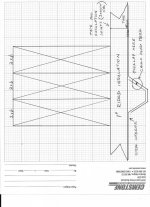
Give me a few minutes and I'll draw something up by hand and scan it, then we can be on the same page.

Will this be laminated 2x6's for your support posts?
 

Krodad

Well-known member
Joined
Mar 25, 2006
Messages
304
Location
Iowa
here's a quick sketch

top view of course
 

Attachments

  • Scan0001.jpg
    Scan0001.jpg
    145.6 KB · Views: 117
Last edited:

Krodad

Well-known member
Joined
Mar 25, 2006
Messages
304
Location
Iowa
It's a belt and suspenders approach to controlling vapor drive. For 20 bucks worth of caulk it's a no brainer to me
 
OP
J

jethrob

Well-known member
Joined
Nov 30, 2012
Messages
208
oh

Well that is something the builder would have to do.

It's being built with 6x6 posts. I thought you were saying to put the foam in between the posts after the structure was up.
 
OP
J

jethrob

Well-known member
Joined
Nov 30, 2012
Messages
208
I'm back to the drawing board. I called the builder and they only offer double bubble. It's close to 3K to have them put it up.

I'm thinking of putting OSB or metal on the inside wall horozontally and just filling the cavity with blown in cellulose.

Menards said I could put their liner panel on my 8 foot centers without additional support and blow insulation on top of it without problems. They also said that cellulose was not recommended for pole barns because it gets wet and the chemicals inside of it corrode metal.
 

bullnerd

Well-known member
Joined
Sep 17, 2012
Messages
5,690
Location
Jersey
I'm doing it the way Morton does it. Check out the Morton website (Kind of crappy) somewhere on there is a vid of how they do the insulation and some testimonials. My niebor has had a very large Morton for the 20yrs I've living next to him and it is cozy and cool in there all year round.

Heres mine FWIW,
http://www.garagejournal.com/forum/showthread.php?t=169738

PS, I'm no heating guy but personally I wouldn't blow in the walls ,It will sag and compress and hold moisture and......
 
OP
J

jethrob

Well-known member
Joined
Nov 30, 2012
Messages
208
contacted green fiber and they have an all borite product(cellulose) that isn't corrosive to metal.

It's cheap, $10 a bag. They said I could blow it in the walls without any type of barrier and it will do well. It's supposed to stop air intruision.

Any objections?
 

SALIV8

Well-known member
Joined
Dec 11, 2008
Messages
2,114
Location
chicago and s/w michigan
Ha! I'll leave the concrete floor can of worms alone.

All I'm suggesting, and it's not a huge deal, is that you lay a bead of caulk along the rib of steel before you lay the next piece of steel over that one rib.

You screw on the very first piece of interior steel, and the next piece is going to overlap one rib, correct? This is where I would lay a bead just to keep that vapor tight...it's the same concept as taping the insulation joints. With forced air heat you'll have a (minor) overpressure inside depending on how much your door leaks, and this would eliminate possible vapor drive through that overlapped joint.

Thanks for the help with all the info.. I was wondering this same question..
 
To avoid these ads, REGISTER NOW!
Top Bottom