To avoid these ads, REGISTER NOW!

control joints

hoffman912

Well-known member
Joined
Dec 21, 2011
Messages
418
Location
Columbus, Ohio
so i had a new pad poured this fall, and i am starting to do research on what to do in spring when i paint it in rust bullet.

My pad did not have saw cut joints but the kind where they make a V shape trowl edge across the floor, dividing it in 4ths. I am assuming that is a control joint (correct me if there is another term for it). pad is 17x25.

OK, enough rambling and on to the question: Should i fill those in, or is it bad to fill it in? I like the idea of a floor i can roll across with out falling in a joint, but i dont want to hurt the pad if that needs to remain for expansion/contraction.

If it is OK to fill in, what should i use?

attachment.php


attachment.php
 
To avoid these ads, REGISTER NOW!

Ch3No2

Well-known member
Joined
Nov 27, 2009
Messages
356
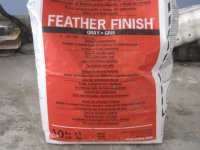
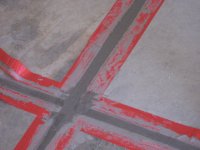
I waited a year and filled them and sanded smooth with Ardex Feather Finish
 

Attachments

  • 004.JPG
    004.JPG
    121.6 KB · Views: 56
  • 001.JPG
    001.JPG
    112.6 KB · Views: 57
  • 003.JPG
    003.JPG
    109.2 KB · Views: 60
  • 005.JPG
    005.JPG
    71.1 KB · Views: 59
  • 006.JPG
    006.JPG
    84 KB · Views: 55
OP
H

hoffman912

Well-known member
Joined
Dec 21, 2011
Messages
418
Location
Columbus, Ohio
Thanks guys. Does this defeat the purpose of having a control joint? Is patching it 4-6 mos after the pad is poured too soon? Is one product preferred over others?
 

Shea

Well-known member
Joined
Sep 19, 2012
Messages
2,867
Location
California
Those are contraction joints. Here's an article that explains the difference between contraction and expansion joints as well as what type of filler is best to use for each one and why.

If you are going to apply the Rust Bullet over the joint, you don't want to use material that can crack if the joint moves. If you do, then the crack will carry on right through the coating.
 
To avoid these ads, REGISTER NOW!

boobag

Well-known member
Joined
Aug 15, 2010
Messages
397
i wouldnt fill and grind the cracks, because the slab will move some over time. then the crack will reappear and show through the epoxy and look worse in my opinion.
 

SunsetsAndFriends

Well-known member
Joined
Sep 10, 2012
Messages
753
So would you not recommend filling it then?

One option is to prepare the concrete surface for coating but not filling/grinding the joints. After the epoxy is applied and cured, then fill in the joints with a good quality flexible caulking material, such as from Sika. The caulking could be selected to color match the epoxy.

This would give you the filled joints but with a flexible product in the case there is movement.
 

Ch3No2

Well-known member
Joined
Nov 27, 2009
Messages
356
i wouldnt fill and grind the cracks, because the slab will move some over time. then the crack will reappear and show through the epoxy and look worse in my opinion.

My initial post said wait a year before filling and grinding...at the bottom of the joint a crack did appear during that year. I then filled it and ground it smooth, epoxy and no cracks in 4 years.
This is my 3rd Garage floor with Ardex Feather Finish and not one failure.
 

Attachments

  • Garage floor 3.JPG
    Garage floor 3.JPG
    116.8 KB · Views: 56
  • Garage floor 4.JPG
    Garage floor 4.JPG
    109.7 KB · Views: 56

machsnell

Well-known member
Joined
Jun 12, 2010
Messages
942
Location
Northern Virginia
Ardex makes excellent products for sure. We use it to treat chips and scrapes in concrete flatwork all the time.

I wouldn't have imagined it working well on control joints over time but good to know. I don't think it has any flexibility but is strictly a mortar like. Nice work on taping it off.

I will use one of the flexible filler from legacy just to be safe when the time comes just to allow for slight movement.

Sent from my SM-G900V using Tapatalk
 

DC_Gearhead

Well-known member
Joined
Dec 20, 2015
Messages
139
Location
Washington DC
One option is to prepare the concrete surface for coating but not filling/grinding the joints. After the epoxy is applied and cured, then fill in the joints with a good quality flexible caulking material, such as from Sika. The caulking could be selected to color match the epoxy.

This would give you the filled joints but with a flexible product in the case there is movement.


I agree.
 
To avoid these ads, REGISTER NOW!
Top Bottom