To avoid these ads, REGISTER NOW!

Converted cargo trailer wiring

bigdave_185

Well-known member
Joined
Feb 14, 2021
Messages
434
Location
Utah
71ce3ec609a5a83d1af82ed280103f73.jpg


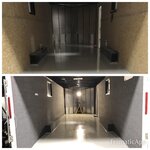
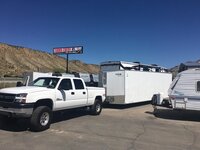
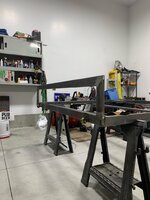
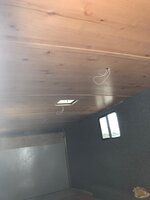
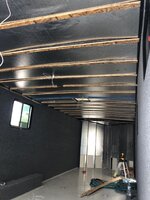
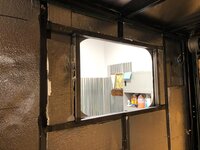
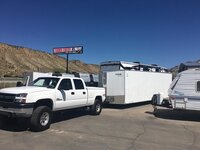
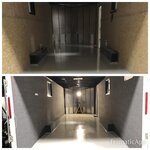
I am in the process of converting my cargo trailer to a camp trailer/toy hauler.

Intentions for power:

LED over head lights
USB outlets
120v plugs for tv, microwave
Exhaust fan ( fan-tastic fan )

I’ll have a propane stove, a propane/electric based fridge, and a instant water heater off propane also

I have purchased four of these batteries to store mobile power

a4d6648201a2449ec21f242386e48692.jpg
And I would like to charge the batteries using a wall plug from the house, an inverter of some type.

Now to the question

Anyone want to shed some light on the how to hook all this stuff up?

I can weld most things, I can frame anything, I can plumb what ever and drive anything that has a motor. I can’t wire **** lol


Sent from my iPhone using Tapatalk
 

Attachments

  • 71ce3ec609a5a83d1af82ed280103f73.jpg
    71ce3ec609a5a83d1af82ed280103f73.jpg
    65.8 KB · Views: 2
  • a4d6648201a2449ec21f242386e48692.jpg
    a4d6648201a2449ec21f242386e48692.jpg
    124.2 KB · Views: 0
To avoid these ads, REGISTER NOW!
OP
B

bigdave_185

Well-known member
Joined
Feb 14, 2021
Messages
434
Location
Utah
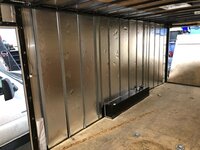
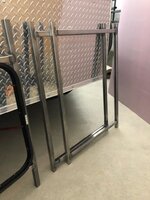
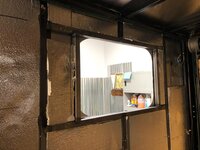
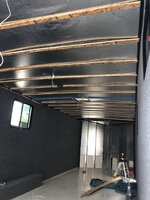
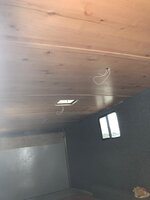
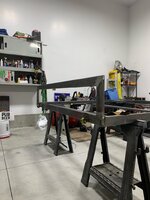
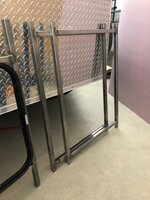
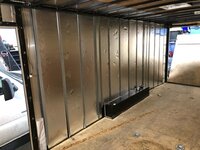
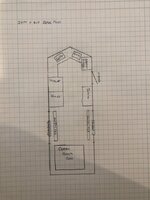
I plan on building a trap door in the floor over the axles to hold the batteries, the front layout will be cabinets, the back houses the bed, the middle driver side will be shower and toilet

f3b44ef456521e8bd53dd04863656e46.jpg
e42087797eade1b63d2886c6ff3f1fb5.jpg
583c906bc1018a1ffcdcc9101104b0fd.jpg
861a1ff6a91df82eb53ce0678923a3ce.jpg
7462400ed6214361e15c6edb1a65b427.jpg
b2dd5aab524d51932d4e2d6bfed2c17c.jpg
203ef68b49123f401b30c428d38ab769.jpg
40fc4216a2ea9a6073e5bccffad15413.jpg
dff89a7cd18a0ec7e252a4491bc2af84.jpg


Sent from my iPhone using Tapatalk
 

Attachments

  • dff89a7cd18a0ec7e252a4491bc2af84.jpg
    dff89a7cd18a0ec7e252a4491bc2af84.jpg
    99 KB · Views: 0
  • 40fc4216a2ea9a6073e5bccffad15413.jpg
    40fc4216a2ea9a6073e5bccffad15413.jpg
    50 KB · Views: 0
  • 203ef68b49123f401b30c428d38ab769.jpg
    203ef68b49123f401b30c428d38ab769.jpg
    126 KB · Views: 0
  • b2dd5aab524d51932d4e2d6bfed2c17c.jpg
    b2dd5aab524d51932d4e2d6bfed2c17c.jpg
    70.3 KB · Views: 0
  • 7462400ed6214361e15c6edb1a65b427.jpg
    7462400ed6214361e15c6edb1a65b427.jpg
    121.9 KB · Views: 0
  • 861a1ff6a91df82eb53ce0678923a3ce.jpg
    861a1ff6a91df82eb53ce0678923a3ce.jpg
    96 KB · Views: 0
  • 583c906bc1018a1ffcdcc9101104b0fd.jpg
    583c906bc1018a1ffcdcc9101104b0fd.jpg
    100.2 KB · Views: 0
  • e42087797eade1b63d2886c6ff3f1fb5.jpg
    e42087797eade1b63d2886c6ff3f1fb5.jpg
    116.6 KB · Views: 0
  • f3b44ef456521e8bd53dd04863656e46.jpg
    f3b44ef456521e8bd53dd04863656e46.jpg
    90.4 KB · Views: 1
OP
B

bigdave_185

Well-known member
Joined
Feb 14, 2021
Messages
434
Location
Utah
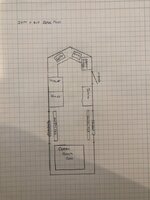
Here is the general layout of the trailer except I did the king size bed lol [emoji23] I already had a mattress


f96e10b9049513f2aafd2477771e8600.jpg


Sent from my iPhone using Tapatalk
 

Attachments

  • f96e10b9049513f2aafd2477771e8600.jpg
    f96e10b9049513f2aafd2477771e8600.jpg
    87.9 KB · Views: 0

toyotadriver

Well-known member
Joined
Dec 30, 2010
Messages
1,586
I built a camper from a cargo trailer. We like it and it's more durable than a typical camper. It has AC and electric run throughout. We have a 12 volt deep cycle battery that powers the lights and a 12 volt pump for a water system.

I use one of these to charge the battery and provide primary power source when plugged in to power or plugged into a generator.

https://www.amazon.com/dp/B00F8MC440/?tag=atomicindus08-20
 
OP
B

bigdave_185

Well-known member
Joined
Feb 14, 2021
Messages
434
Location
Utah
I built a camper from a cargo trailer. We like it and it's more durable than a typical camper. It has AC and electric run throughout. We have a 12 volt deep cycle battery that powers the lights and a 12 volt pump for a water system.

I use one of these to charge the battery and provide primary power source when plugged in to power or plugged into a generator.

https://www.amazon.com/dp/B00F8MC440/?tag=atomicindus08-20


Trying to figure out which is the ideal set up for charging and multi use for the trailer set up. So many varying options


Sent from my iPhone using Tapatalk
 

toyotadriver

Well-known member
Joined
Dec 30, 2010
Messages
1,586
The linked charger/12v power source is ideal. You can get various sizes but if I remember correctly, this is the one I have. The "shore" power comes in via a plug and then runs to a central power outlet. The charger plugs into the outlet. When the trailer isn't plugged in, everything runs on the batteries (until the battery dies or is plugged in). When the trailer is plugged in, the charger supplies 12v and simultaneously charges the batteries.

Have you looked at the TNTTT site? They have a section for cargo trailer conversions.
 
OP
B

bigdave_185

Well-known member
Joined
Feb 14, 2021
Messages
434
Location
Utah
The linked charger/12v power source is ideal. You can get various sizes but if I remember correctly, this is the one I have. The "shore" power comes in via a plug and then runs to a central power outlet. The charger plugs into the outlet. When the trailer isn't plugged in, everything runs on the batteries (until the battery dies or is plugged in). When the trailer is plugged in, the charger supplies 12v and simultaneously charges the batteries.

Have you looked at the TNTTT site? They have a section for cargo trailer conversions.


I have been a memeber of that site for a few years. Lots of varying ideas of the process. I just want someone to say buy this lol [emoji23]

Thought there might be some other ideas of info here on this massive site


Sent from my iPhone using Tapatalk
 

firebirdparts

Well-known member
Joined
Jun 8, 2016
Messages
10,609
Location
Kingsport, TN
It seems to me that running the microwave is the capacity issue. You need an inverter big enough to run the microwave in question. Look at some inverter prices and, you know, think it over. You have to decide how big the microwave will be. The TV doesn't draw as much.

Traditionally, campers have had 12 volt lighting, because you can, basically. Incandescent lights could be made to run on low voltage. LED's run on only about 2 volts dc, so they are ideal and readily available specifically for campers and for 12 volt wiring. FWIW.

So you would at least want those two things.
 

AldeanFan

Well-known member
Joined
Sep 9, 2014
Messages
2,584
Location
Niagara on the Lake
I guess you need to decide how much power you need to run what appliances.

We had a Trillium trailer with no 12v power inside. No battery to deal with but we only had power when plugged in to shore power.
It worked well for our purposes. One lamp and a small space heater kept us warm. It had a propane fridge and a sink but no rubbing water or tanks.

Our airstream has a combination of shore power and 12v. Interior lights, waterpump and fan are 12v. Shore power runs electric heat and air conditioning. The fridge is 2way either propane or shore power. The airstream has a charger/converter similar to what was previously posted and a small panel with breakers.

Right now I’m setting up my enclosed car trailer to be a combination racecar hauler and sleeping area. It won’t have running water, tanks or toilet, no fridge or air conditioning.
All lights will be 12v. It’s got a plug in for my 2000w generator which will power the coffee maker or a small space heater, and a small battery charger.


Sent from my iPhone using Tapatalk
 
To avoid these ads, REGISTER NOW!

Fasthotrod

Well-known member
Joined
Dec 14, 2015
Messages
218
Location
Oklahoma
Lots of ways to go about this... it just depends on what you want/need.

If your plan is to be able to have the trailer be self sufficient, then you're looking at a battery bank to start. It looks like you are already going that way with the purchase of the four Eaton batteries. I looked at the manufacturer's website and pulled the spec sheets, and they have a constant power discharge chart so that you can see how long they will last for a given load.

If I were you, I'd sit down with a pad of paper and a pencil and list out the 'need to have' powered items, then the 'nice to have' powered items:

Lights - Need
TV - Nice
Microwave - Nice
Fan - Need

etc...

Then ask yourself, how do you want to power it? Lighting is easy in that regard... you can get 12 VDC lights, or you can get 120 VAC lights and run them off of your inverter. 12 VDC lighting is easy, and pretty foolproof... as long as you have battery power, you have lights. Things like the TV and microwave will absolutely need the inverter, and we'll want to document how much power they use so we can figure out what size inverter you need.

For example, if you found some really cool 120 VAC LED lights and installed them, they would not typically be hard on the inverter to power. If the TV is a modern LCD flat screen, it too will be easy to power. That microwave however... that baby will **** some serious juice on startup. That in-rush current, or surge power, is what we're looking for to determine what size inverter you want/need to get. (Or you can just over-size it from the start... but that comes with it's own issues such as bigger wiring, larger physical size, etc...)

If you can provide some idea of what you plan on powering, I'm sure we can help guide you in the right direction. Once we know that, we can recommend a battery charger (or chargers) that can support your inverter(s) and charge your batteries.

Mark
 
OP
B

bigdave_185

Well-known member
Joined
Feb 14, 2021
Messages
434
Location
Utah
Lots of ways to go about this... it just depends on what you want/need.

If your plan is to be able to have the trailer be self sufficient, then you're looking at a battery bank to start. It looks like you are already going that way with the purchase of the four Eaton batteries. I looked at the manufacturer's website and pulled the spec sheets, and they have a constant power discharge chart so that you can see how long they will last for a given load.

If I were you, I'd sit down with a pad of paper and a pencil and list out the 'need to have' powered items, then the 'nice to have' powered items:

Lights - Need
TV - Nice
Microwave - Nice
Fan - Need

etc...

Then ask yourself, how do you want to power it? Lighting is easy in that regard... you can get 12 VDC lights, or you can get 120 VAC lights and run them off of your inverter. 12 VDC lighting is easy, and pretty foolproof... as long as you have battery power, you have lights. Things like the TV and microwave will absolutely need the inverter, and we'll want to document how much power they use so we can figure out what size inverter you need.

For example, if you found some really cool 120 VAC LED lights and installed them, they would not typically be hard on the inverter to power. If the TV is a modern LCD flat screen, it too will be easy to power. That microwave however... that baby will **** some serious juice on startup. That in-rush current, or surge power, is what we're looking for to determine what size inverter you want/need to get. (Or you can just over-size it from the start... but that comes with it's own issues such as bigger wiring, larger physical size, etc...)

If you can provide some idea of what you plan on powering, I'm sure we can help guide you in the right direction. Once we know that, we can recommend a battery charger (or chargers) that can support your inverter(s) and charge your batteries.

Mark


I’ll sit down tonight and get a list going.

Thank you for the responses folks.


Sent from my iPhone using Tapatalk
 
OP
B

bigdave_185

Well-known member
Joined
Feb 14, 2021
Messages
434
Location
Utah
Fasthotrod

So I’d like to be able to power the trailer from shore power, battery power when not available for two days.

I purchased at Etrailer 6 of these

https://www.etrailer.com/RV-Lighting/Optronics/RVILL34.html

I would also need to power a fan-tastic exhaust fan.

Fan-Tastic Vent 801250 1250 Series Vent - White https://www.amazon.com/dp/B00IKMWQMK/?tag=atomicindus08-20

I need to decide on a water pump ( open to suggestions )

Otherwise a few outlets to charge devices like phones or power tools.

A dual power fridge but ran mostly on propane when not plugged into shore power.

Instant water heater ran off propane

Camplux Pro 1.58 GPM Tankless Propane Water Heater, Outdoor Propane Gas Water Heater with Portable Handle, Portable Gas Water Heater for Camping,Cabins,White https://www.amazon.com/dp/B07TP8W2B7/?tag=atomicindus08-20

I decided no microwave

I other wise don’t see any power needs except some strip lights outside for nights under the stars.


Sent from my iPhone using Tapatalk
 

Fasthotrod

Well-known member
Joined
Dec 14, 2015
Messages
218
Location
Oklahoma
Fasthotrod

So I’d like to be able to power the trailer from shore power, battery power when not available for two days.

Okay, great... think of your batteries like your bank account. If you are frugal, your funds can go a long way... but if you spend like a drunken sailor, you better have more in reserve. (More batteries can be added if needed.) My assumption is that your truck has a 7-prong plug with a power port that can help power the trailer when it's plugged in? That will help keep it topped off as you are getting to where you are going.


Good deal... each of those lights are 12 VDC and pull 0.6A each. So if all six are on, you're pulling 3.6 amperes... not a whole lot, really. Total power to run the lights would be = 12 VDC * 3.6 Amps = 43.2 watts. Run them for an hour: 3.6 Ah, or 43.2 watt/hr. Odds are, you won't be keeping them on 24/7 so the draw won't be constant.

I would also need to power a fan-tastic exhaust fan.

Fan-Tastic Vent 801250 1250 Series Vent - White https://www.amazon.com/dp/B00IKMWQMK/?tag=atomicindus08-20

Looking at the installation manual, it looks like it has a 4A slo-blow fuse. Let's assume that it won't pull more than 4A, but use 4A as the 'worst case' for power draw. 12 VDC * 4 A = 48 watts. 4A/h or 48 watts/hr. It looks to be a variable speed fan with three speeds... and depending on the climate where you are going to be, you may chose to run that fan to keep your trailer cool most of the time?

I need to decide on a water pump ( open to suggestions )

I'd have to look to see what's available... but I'd think that any RV type store will have options for a 12 VDC pump. :dunno:

Otherwise a few outlets to charge devices like phones or power tools.

Charging phones and power tools... so we're thinking USB ports/chargers and a few 120 VAC outlets to charge a DeWalt or Milwaukee style battery pack? Or did you mean that you wanted to run a 120 VAC tool like a circular saw, drill motor, etc...?

A dual power fridge but ran mostly on propane when not plugged into shore power.

Gotcha... does it use a typical 120 VAC plug? If so, you could probably plug it into an inverter and have the ability to power it either way.

Instant water heater ran off propane

Camplux Pro 1.58 GPM Tankless Propane Water Heater, Outdoor Propane Gas Water Heater with Portable Handle, Portable Gas Water Heater for Camping,Cabins,White https://www.amazon.com/dp/B07TP8W2B7/?tag=atomicindus08-20

That's a slick little heater!

I decided no microwave

Fair enough... but you can do it if you plan for it. I was looking at some small RV style microwaves and they were like 900 Watts on the output side. I'd venture to guess that they need about 1,400 watts to run them, and that is certainly possible to get from an inverter. (I put a 2,000 Watt inverter into my father in law's van to power his home oxygen unit. He has COPD and needs constant flow of air, so running a full size home unit in the vehicle was a game changer for his mobility needs. It only pulls about 350 - 400 watts, but I used the 2,000 watt inverter so that it could easily handle the in-rush current from the motor starting on the machine. It works like a champ!)

The fact that you are already going with a lot of 12 VDC or propane equipment tells me that your 120 VAC needs will be pretty minimal.

I other wise don’t see any power needs except some strip lights outside for nights under the stars.

What about a TV? I thought you mentioned it before... I was looking at a LG 43" 4k for less than $300 at Best Buy. Manufacturer's data says that it typically pulls 49.6W but can pull upwards of 95 watts. Just something to think about.

So if it were me, I think I'd buy a robust battery charger that you can plug in as 'shore power' to charge your batteries. If you get one that has a bit more 'oomph' you can also run some lights and stuff while charging the batteries. There is a link to one above, but if you are charging multiple batteries I'd think you'd want something a bit bigger. Perhaps something like this:

https://www.amazon.com/dp/B00F8MC45E/?tag=atomicindus08-20

Looking at the battery specifications, they appear to be designed for a UPS application. Typically, UPS's are designed to provide backup power for a short period of time. (Typically 15 minutes, give or take.) If you look at the battery specs, they say that the battery can produce 398 watts in 15 minutes of run time, discharging the battery down to 1.67 VDC per cell. (10.02 VDC for the battery.) If we average the discharge voltage to a nominal 12 VDC (rather than the range of 13.5 VDC down to 10 VDC then we're looking at about 32 amperes during discharge. (Multiplied by four if you are using all four batteries in parallel.)

The reason I'm bringing this up is that battery specs are given based on the application. Some are shown for use in a quick discharge over a short period of time, whereas others are shown for a slower discharge over a longer period of time. (The quick discharge is hard on the battery life, as well as available capacity. Google "Peukert effect" for more info.) I don't claim to be a battery expert by any means... but I really don't have a way to know the 'life' of those batteries for your application.

My recommendation, because you already have them, is to simply try them out and see what your results are. An inexpensive battery monitor will help you with how much power you're using, and keep you from running them down too far. Something like this:

https://www.amazon.com/dp/B01JOUZELG/?tag=atomicindus08-20

...or this:

https://www.amazon.com/dp/B013PKYILS/?tag=atomicindus08-20

One of those might come in handy for you. You might even consider getting two... one between the charger and the batteries, and one between the batteries and the loads. That way you can monitor what comes in, and what's going out.

As for an inverter, I'd likely start with something like this one:

https://www.amazon.com/dp/B00VPYUSU2/?tag=atomicindus08-20

It's capable of 1,000 Watt output with a 2,000 Watt surge capacity. More than enough to power up some small loads you might have. This is a Modified Sine Wave (MSW) inverter (square wave) so some electronics won't like it... the instructions say: "DO NOT plug in battery chargers for cordless power tools if the charger carries a warning that dangerous voltages are present at the battery terminals." So you'll want to check what devices you are plugging in to make sure that's not the case. More info here:

https://www.manualshelf.com/manual/powerdrive/pd1000/energy-guide-english/page-3.html

If you wanted to go with the 'microwave' option, then the 2,000 Watt inverter isn't that much more from a cost perspective, and gives you more surge current available for the startup of bigger loads:

https://www.amazon.com/dp/B00VPYUY6A/?tag=atomicindus08-20

This is the one that I installed in my father in law's van... I tested it with a big shop fan and it handled that with ease.

The cool thing about those inverters is that they have USB charging ports right on the front... makes it easy to charge up your phones and not have to carry around additional chargers that might get lost. They also have an automatic low-voltage shutdown so if you forget to turn it off, it doesn't completely destroy your battery bank.

If it were me, I'd be looking at installing the charger, batteries, and inverter close to one another. That way you can cut down on the cost of the big wiring between the three. Car audio type wiring and connectors will come in handy for this project... there is a lot out there, some that is way over-priced, some more reasonable. I've got a few ideas on how to wire this stuff up if that's the way you want to go. Just let me know.

Hope this helps,

Mark
 
OP
B

bigdave_185

Well-known member
Joined
Feb 14, 2021
Messages
434
Location
Utah
Okay, great... think of your batteries like your bank account. If you are frugal, your funds can go a long way... but if you spend like a drunken sailor, you better have more in reserve. (More batteries can be added if needed.) My assumption is that your truck has a 7-prong plug with a power port that can help power the trailer when it's plugged in? That will help keep it topped off as you are getting to where you are going.


Good deal... each of those lights are 12 VDC and pull 0.6A each. So if all six are on, you're pulling 3.6 amperes... not a whole lot, really. Total power to run the lights would be = 12 VDC * 3.6 Amps = 43.2 watts. Run them for an hour: 3.6 Ah, or 43.2 watt/hr. Odds are, you won't be keeping them on 24/7 so the draw won't be constant.


Looking at the installation manual, it looks like it has a 4A slo-blow fuse. Let's assume that it won't pull more than 4A, but use 4A as the 'worst case' for power draw. 12 VDC * 4 A = 48 watts. 4A/h or 48 watts/hr. It looks to be a variable speed fan with three speeds... and depending on the climate where you are going to be, you may chose to run that fan to keep your trailer cool most of the time?


I'd have to look to see what's available... but I'd think that any RV type store will have options for a 12 VDC pump. :dunno:


Charging phones and power tools... so we're thinking USB ports/chargers and a few 120 VAC outlets to charge a DeWalt or Milwaukee style battery pack? Or did you mean that you wanted to run a 120 VAC tool like a circular saw, drill motor, etc...?


Gotcha... does it use a typical 120 VAC plug? If so, you could probably plug it into an inverter and have the ability to power it either way.


That's a slick little heater!


Fair enough... but you can do it if you plan for it. I was looking at some small RV style microwaves and they were like 900 Watts on the output side. I'd venture to guess that they need about 1,400 watts to run them, and that is certainly possible to get from an inverter. (I put a 2,000 Watt inverter into my father in law's van to power his home oxygen unit. He has COPD and needs constant flow of air, so running a full size home unit in the vehicle was a game changer for his mobility needs. It only pulls about 350 - 400 watts, but I used the 2,000 watt inverter so that it could easily handle the in-rush current from the motor starting on the machine. It works like a champ!)

The fact that you are already going with a lot of 12 VDC or propane equipment tells me that your 120 VAC needs will be pretty minimal.


What about a TV? I thought you mentioned it before... I was looking at a LG 43" 4k for less than $300 at Best Buy. Manufacturer's data says that it typically pulls 49.6W but can pull upwards of 95 watts. Just something to think about.

So if it were me, I think I'd buy a robust battery charger that you can plug in as 'shore power' to charge your batteries. If you get one that has a bit more 'oomph' you can also run some lights and stuff while charging the batteries. There is a link to one above, but if you are charging multiple batteries I'd think you'd want something a bit bigger. Perhaps something like this:

https://www.amazon.com/dp/B00F8MC45E/?tag=atomicindus08-20

Looking at the battery specifications, they appear to be designed for a UPS application. Typically, UPS's are designed to provide backup power for a short period of time. (Typically 15 minutes, give or take.) If you look at the battery specs, they say that the battery can produce 398 watts in 15 minutes of run time, discharging the battery down to 1.67 VDC per cell. (10.02 VDC for the battery.) If we average the discharge voltage to a nominal 12 VDC (rather than the range of 13.5 VDC down to 10 VDC then we're looking at about 32 amperes during discharge. (Multiplied by four if you are using all four batteries in parallel.)

The reason I'm bringing this up is that battery specs are given based on the application. Some are shown for use in a quick discharge over a short period of time, whereas others are shown for a slower discharge over a longer period of time. (The quick discharge is hard on the battery life, as well as available capacity. Google "Peukert effect" for more info.) I don't claim to be a battery expert by any means... but I really don't have a way to know the 'life' of those batteries for your application.

My recommendation, because you already have them, is to simply try them out and see what your results are. An inexpensive battery monitor will help you with how much power you're using, and keep you from running them down too far. Something like this:

https://www.amazon.com/dp/B01JOUZELG/?tag=atomicindus08-20

...or this:

https://www.amazon.com/dp/B013PKYILS/?tag=atomicindus08-20

One of those might come in handy for you. You might even consider getting two... one between the charger and the batteries, and one between the batteries and the loads. That way you can monitor what comes in, and what's going out.

As for an inverter, I'd likely start with something like this one:

https://www.amazon.com/dp/B00VPYUSU2/?tag=atomicindus08-20

It's capable of 1,000 Watt output with a 2,000 Watt surge capacity. More than enough to power up some small loads you might have. This is a Modified Sine Wave (MSW) inverter (square wave) so some electronics won't like it... the instructions say: "DO NOT plug in battery chargers for cordless power tools if the charger carries a warning that dangerous voltages are present at the battery terminals." So you'll want to check what devices you are plugging in to make sure that's not the case. More info here:

https://www.manualshelf.com/manual/powerdrive/pd1000/energy-guide-english/page-3.html

If you wanted to go with the 'microwave' option, then the 2,000 Watt inverter isn't that much more from a cost perspective, and gives you more surge current available for the startup of bigger loads:

https://www.amazon.com/dp/B00VPYUY6A/?tag=atomicindus08-20

This is the one that I installed in my father in law's van... I tested it with a big shop fan and it handled that with ease.

The cool thing about those inverters is that they have USB charging ports right on the front... makes it easy to charge up your phones and not have to carry around additional chargers that might get lost. They also have an automatic low-voltage shutdown so if you forget to turn it off, it doesn't completely destroy your battery bank.

If it were me, I'd be looking at installing the charger, batteries, and inverter close to one another. That way you can cut down on the cost of the big wiring between the three. Car audio type wiring and connectors will come in handy for this project... there is a lot out there, some that is way over-priced, some more reasonable. I've got a few ideas on how to wire this stuff up if that's the way you want to go. Just let me know.

Hope this helps,

Mark

Man!!! That’s some good intel. I’ll read up on the links and folks up. I think about instead of the four batteries growing it to 5 or 6 but that increases my battery box size abs so forth.

Thank you mark


Sent from my iPhone using Tapatalk
 
OP
B

bigdave_185

Well-known member
Joined
Feb 14, 2021
Messages
434
Location
Utah
Finish wiring all the batteries together, my four and friends two to only require one charger while they sit in the garage for later use

8b25e328b89e3591ba87b3e7a47728d5.jpg
Hey they look nice doh


Sent from my iPhone using Tapatalk
 

Attachments

  • 8b25e328b89e3591ba87b3e7a47728d5.jpg
    8b25e328b89e3591ba87b3e7a47728d5.jpg
    227 KB · Views: 1

Fasthotrod

Well-known member
Joined
Dec 14, 2015
Messages
218
Location
Oklahoma
While I like the looks of that, I do have a concern that if one battery fails, it can take out the whole battery string. Have you considered using some fused distribution blocks to be able to isolate them in a pinch?

Perhaps something like this:

https://www.amazon.com/dp/B07TBHJ8Q6/?tag=atomicindus08-20

Buy 2 of those... run power from the charger to the input of the 1st distribution block, then tie the 1st block into the 2nd block. Run 6 fused lines on those outputs, one to each battery. Then run another line from the 2nd block to the inverter, and/or a secondary power distribution block that feeds all of the other 12 VDC loads in your trailer. Perhaps something like this:

https://www.amazon.com/dp/B07GBST5NX/?tag=atomicindus08-20

That way you have protected circuits all throughout the trailer. If you add any additional 12 VDC loads like lighting, or a car stereo, you can simply tap off of the secondary distribution fuse block.

If you wanted, you could split the power coming from the battery distribution blocks into two feeds, one to feed the smaller fused distribution, and the other to feed the inverter you decide to use. Maybe something like this:

https://www.amazon.com/dp/B06VWZXZZC/?tag=atomicindus08-20

Thoughts?

Mark
 

Attachments

  • Distribution.jpg
    Distribution.jpg
    18 KB · Views: 14
Last edited:
OP
B

bigdave_185

Well-known member
Joined
Feb 14, 2021
Messages
434
Location
Utah
While I like the looks of that, I do have a concern that if one battery fails, it can take out the whole battery string. Have you considered using some fused distribution blocks to be able to isolate them in a pinch?

Perhaps something like this:

https://www.amazon.com/dp/B07TBHJ8Q6/?tag=atomicindus08-20

Buy 2 of those... run power from the charger to the input of the 1st distribution block, then tie the 1st block into the 2nd block. Run 6 fused lines on those outputs, one to each battery. Then run another line from the 2nd block to the inverter, and/or a secondary power distribution block that feeds all of the other 12 VDC loads in your trailer. Perhaps something like this:

https://www.amazon.com/dp/B07GBST5NX/?tag=atomicindus08-20

That way you have protected circuits all throughout the trailer. If you add any additional 12 VDC loads like lighting, or a car stereo, you can simply tap off of the secondary distribution fuse block.

If you wanted, you could split the power coming from the battery distribution blocks into two feeds, one to feed the smaller fused distribution, and the other to feed the inverter you decide to use. Maybe something like this:

https://www.amazon.com/dp/B06VWZXZZC/?tag=atomicindus08-20

Thoughts?

Mark


Being this is temporary for in the garage just to make it simple to keep them at the top of storage capacity.


But the drawing makes good sense. I’ll need to definitely put some quick disconnects in, some fuse blocks and so forth.

The wife wants me to get plumbing done next so... I guess my batteries are gonna sit a min in the garage


Sent from my iPhone using Tapatalk
 
To avoid these ads, REGISTER NOW!
Top Bottom