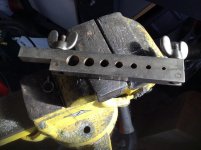
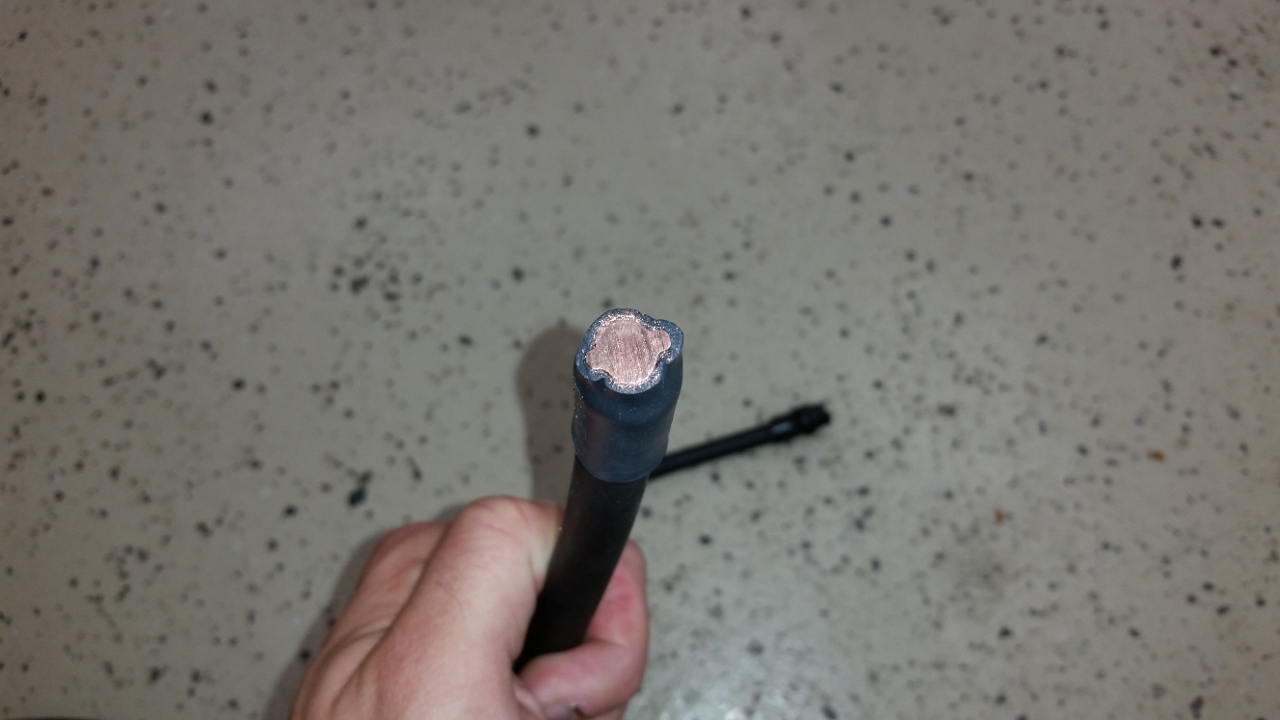
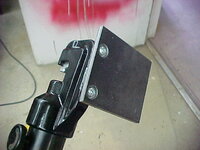
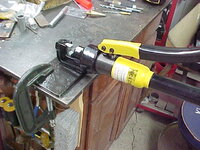
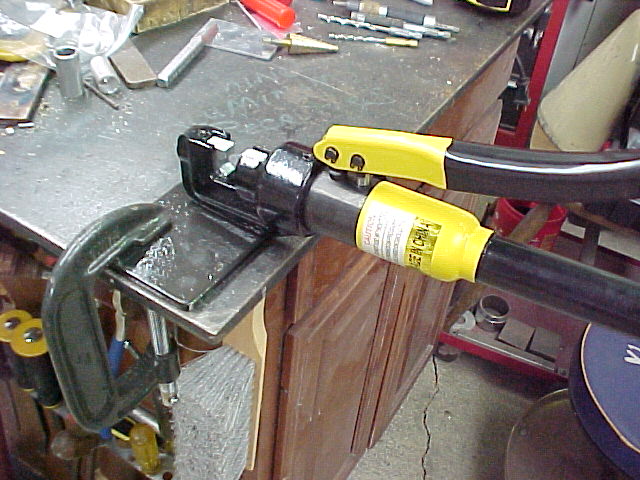
It has not been fixed, and it is not a metric vs. AWG issue. They are clearly marked for AWG, but are still too small, which causes this:

That said, the crimps I've made with that tool are currently in service on two vehicles. They aren't ideal, but they do work.
Your problem is twofold.
First, you didn't rotate your crimp. ANY two-piece hex crimp die will cause that sort of squeeze out. It's the nature of how ALL two-piece dies squeeze metal, and has nothing to do with sizing. With this sort of crimper, the only option is to start squeezing until you're about 3/4 there, then stop, retract the dies, rotate the piece 60 degrees, and resume crimping.
The alternative is to buy a crimper that uses 4 or 6 dies.
Second, yes, the real problem is entirely a metric vs AWG size issue. Too many people here don't seem to understand what a crimp is and how it works.
An un-crimped wire is like a log rack stacked with rounds. There is an awful amount of air space between every round log, and no matter how you stack the logs, that space will remain. If you add up all of the cross sectional areas of just those rounds (without counting the space wasted by air), you will get an area that is the maximum cross sectional area of the ideal crimp. The actual shape of the crimp is largely immaterial. What matters is that all of the air is squeezed out, and nothing but copper remains.
So, what's that area? The cross sectional area of the copper wire, of course. Here, I'll point out that the strand count doesn't matter. Wire gauges already only tell you about how much copper is in there. A 12 AWG wire will have the same cross sectional area of COPPER, no matter how many or few strands it contains. The actual diameter WILL vary, since stranded wire has those pesky air spaces that solid is already missing.
So how does this matter to you?
Well, the dies on these Chinese hydraulic crimpers are sized so that the closed hexagon they form has the cross sectional area of a metric sized wire plus the cross sectional area of the matching lug. When crimped onto an AWG sized wire, a die too large may leave you with an incomplete crimp that still has air gaps (TOTALLY unacceptable), and a die too small may squeeze the copper hard enough to reduce it's final cross sectional area under the crimp to be significantly smaller than the ideal amount. That can (if WAY overdone) lead to localized heating. But in reality, it's not a big deal.