To avoid these ads, REGISTER NOW!

culverts

KEH

Well-known member
Joined
Jan 31, 2010
Messages
5,142
Local developers near me are using those black plastic ribbed pipe for culverts at driveway connections. I'm not impressed with the job they are doing, or maybe the pipe is just not suitable for the job. In many of the connections one end of the pipe is sticking up so that it wont drain well. probably a poor job by the contractors.

An individual a few miles away over a 2-3 year period bought a new house and the lot next to it. He put a nice shop building on the lot and has a utility trailer and other equipment there, with a connection through a gate to the house yard. Recently he put in a drive way to his lot from the highway. I dont know if he did it or a contractor did it, but it was a poor job as one end of the pipe stuck up in the air about as high as the top of the good end. Lots of rain came and the ditch, which intersects with a cross road along the lot line, filled with water. Somebody pulled up and dug up the plastic pipe and someone has put in a concrete pipe. Still not a good job since there is still a little water in the ditch on one side. I wonder if any one has had experience with the plastic pipe? BTW, I have 4 driveway connections, 3 ancient, all of which drain fine so I feel qualified to pass judgement on these other jobs.

KEH
 
To avoid these ads, REGISTER NOW!

Innovate1

Well-known member
Joined
Jul 28, 2014
Messages
4,263
Location
Illinois near St. Louis, Missouri
I have done a culvert with the plastic ribbed pipe for a residential drive and it has been fine. There is a BIG difference between the cheap single wall ribbed pipe and the double wall pipe that is smooth on the inside and ribbed on the outside. I would never use the flexible single wall pipe under vehicle traffic. The pipe needs to be bedded in gravel without fines so it flows around the pipe and provides support without voids. It needs cover so it doesn't get smashed by heavy traffic but it is surprisingly good for loads if installed correctly. Others here probably have much more experience and can provide additional input.
 

housewolf

Well-known member
Joined
Feb 3, 2021
Messages
1,144
Location
East Texas
Local developers near me are using those black plastic ribbed pipe for culverts at driveway connections. I'm not impressed with the job they are doing, or maybe the pipe is just not suitable for the job. In many of the connections one end of the pipe is sticking up so that it wont drain well. probably a poor job by the contractors.

An individual a few miles away over a 2-3 year period bought a new house and the lot next to it. He put a nice shop building on the lot and has a utility trailer and other equipment there, with a connection through a gate to the house yard. Recently he put in a drive way to his lot from the highway. I dont know if he did it or a contractor did it, but it was a poor job as one end of the pipe stuck up in the air about as high as the top of the good end. Lots of rain came and the ditch, which intersects with a cross road along the lot line, filled with water. Somebody pulled up and dug up the plastic pipe and someone has put in a concrete pipe. Still not a good job since there is still a little water in the ditch on one side. I wonder if any one has had experience with the plastic pipe? BTW, I have 4 driveway connections, 3 ancient, all of which drain fine so I feel qualified to pass judgement on these other jobs.

KEH
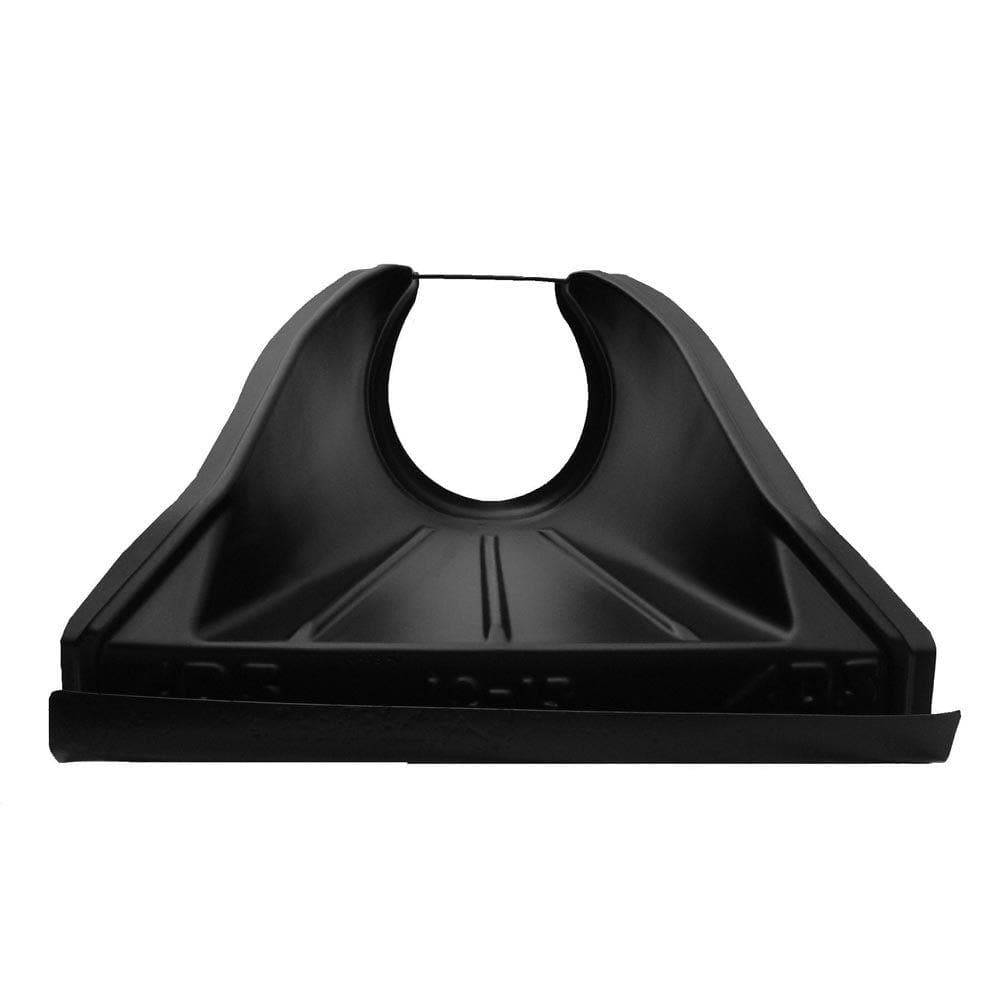
Nothing wrong with the HDPE pipe. What’s important is the grade it’s set at. The outlet end of one property needs to be higher than the inlet side of the next property downstream and continue that grade down the ”block”. Usually (around here anyway) the county owns an easement and they dictate the elevations these need to be set at and they maintain the ditches. In my particular “neighborhood“ that’s not the case. We own the streets too and there‘s little oversight on civil drainage. Often someone buys a lot(s) and will haphazardly throw a culvert in so they can cross a ditch to access their lot. If it’s too high or low, it screws up the drainage for the whole block. Then they are asked to pull it out and reset it to the proper elevation. Hopefully before they’ve laid a concrete or asphalt driveway over it.

Im on the top of a hill so really don’t even need a culvert under mine. One side flows one way, the other in the opposite direction. I learned from my last house.
 

Homebody

Well-known member
Joined
Dec 14, 2007
Messages
1,347
Location
Northern Illinois
Good timing. I need to put about 40' of it between my house and the neighbors. The ditch is on my property and I'd rather have a flat front lawn. Just going from the roadside ditch back to the front of the house. Gotta be careful how it's graded after that so it doesn't affect his property. I was going to use the steel pipe but the plastic has got me curious. Only traffic on it will be my riding mower.
 

coldh2o

Well-known member
Joined
May 21, 2013
Messages
1,413
Location
Ontario, Canada
@housewolf nailed it. Ribbed HDPE has been used around here for years, no problem. Get the pipe spec'd right and heavy traffic is not an issue. Drainage performance (proper slope) is 100% related to installation - a big factor being proper backfill and compaction, you can't just dig a trench, throw the pipe in and backfill with uncompacted native material.
 
OP
K

KEH

Well-known member
Joined
Jan 31, 2010
Messages
5,142
I didn't know about the double walled pipe and have not looked at any of these to see if they are the better pipe, but I'll bet it's the cheaper pipe. Many years ago when we built our house the state did the driveway connection. I think they wanted to see that it was installed correctly. This is a state highway, not a county road. In fact it is the route built in the early 1800s supervised by a state official, Joel R Poinsett, for whom the Poinsettia flower is named. Poinsett brought it back from Mexico when he was Ambassador to Mexico. The road was straightened somewhat in the 1930s and part of the old road bed is in front of the house. Modern roads are a big improvement. I have a culvert in my driveway, concrete pipe, over the old road. It drains fine also. The old road crossed the Enoree river about 10 miles East of me, then for a long way on the way to NC it was routed to avoid crossing water. As the route got closer to the mountains it had to cross water and some stone arch bridges were built. One is still standing in, I think, upper Greenville county and it is wide enough for a wagon to cross but not for 2 to meet. It's not in use now.

It will be interesting to see how these plastic culverts work out.

KEH
 
OP
K

KEH

Well-known member
Joined
Jan 31, 2010
Messages
5,142
Homebody,

Getting rid of water from the highway ditches can be a problem. I'm guessing you are in relatively flat land so there shouldn't
be a big problem. I'm in fairly hilly land and I have 3 culverts under the highway that move water. 2 of them dump the water from both ditches on me, one dumps it across the road. No problems from them.

KEH
 

Firebrick43

Well-known member
Joined
May 12, 2015
Messages
13,971
Location
West central Indiana
The main issue I have seen with plastic culverts is lazy installers either not trimming the pipe or not burying it to the end.

Now there is a 4’ section that starts to float which then blocks water from getting into the opening and then the flow pushes it up more.

One idiot around the corner when it’s wet and really flowing will have the pipe bent nearly vertical and water going over his drive.

This is the single wall pipe that’s not as stiff as the double wall pipe
 

nadogail

Well-known member
Joined
Jan 23, 2009
Messages
31,894
Location
Coronado, CA
When I was a kid growing up in Alaska, many homesteaders used steel 55 gallon drums for culverts. They can be welded together with 6013 electrode.
 

billconner

Well-known member
Joined
Jul 20, 2021
Messages
6,928
Location
Thousand Islands NYS
I put a driveway in on a piece of vacant land and the town does not allow plastic culverts. Was planning steel but ultimately, since I was at top of a rise, didn't need one.
 

Copymutt

Well-known member
Joined
Sep 3, 2016
Messages
3,381
Location
Colorado
Done a few. My only comment is the ribbed ones when located on Forest Service roads in the hills are great gold sluices. There my secret to enormous wealth is out!😱
 

dfiler2

Well-known member
Joined
Dec 15, 2014
Messages
2,858
Location
NW Minnesota
The first plastic culvert I put in was almost 40 years ago and it is still working fine, I would use a flared cap at each end, it helps to keep everything in place and cuts down on errosion.


andyvh1959

Well-known member
Joined
Feb 15, 2020
Messages
2,589
Location
Green Bay WI
Prep under the culvert makes a big difference. The only culvert I ever installed was a 30' long tar coated steel culvert for a driveway to access a 1.5acre wooded property I had bought. The original ditch grade was full of silt runoff from the farm land just south, and in the middle of summer here in east central WI I would sink in to my knees when I walked the bottom of the ditch line. When I went for the culvert permit with the township inspector I described the soil issue, told him I wanted to dig out the unstable silt/loam/soft soil, go down 4' x 6' wide and 34' long, fill that in with gravel to the ORIGINAL grade and then set the culvert. Nope said the inspector, culvert has to go in at current grade level. I said yes it will, but I want to replace the unstable soil with gravel down to solid soil, then place the culvert at the grade it was originally. NOPE again, culvert has to go in at current grade. FINE! Give me the permit and I'll do it your way. Got the permit and got ready to install the culvert.

Rented a backhoe, dug the unstable soil out, filled in the trench to original grade with gravel and set the culvert, then used the dug out soil to cover the culvert except for the 16' width of the driveway apron. The driveway apron section got covered with crusher run and then gravel. That was back in 1992. To date that culvert has never moved or humped up/busted the driveway apron, like all the culverts in that neighborhood had done. Same for heavy trucks, refuse trucks, propane trucks going over that culvert for decades. All in the prep .
 

stevied916

Well-known member
Joined
Oct 10, 2018
Messages
84
Location
Northern CA
That’s corrugated hdpe and is used on mini projects around here so it’s very reasonable to use as a culvert. The concrete pipe is rcp and notably stronger. The hdpe should be fine if it’s installed properly which includes proper compaction of sub grade and backfill. The ends should have a flared end section installed but it will still work without them.
 

Hephaestus29

Well-known member
Joined
Mar 13, 2011
Messages
2,969
Location
Indianapolis
The Double Wall Culvert can actually float out of the ground in heavy rains.
If you drill holes in the lands, not grooves, this will allow water to go in and push the air out helping to prevent it from floating out. And plenty of dirt and or rock wouldn’t hurt either.
 

reader2580

Well-known member
Joined
Dec 31, 2014
Messages
14,514
Location
Minneapolis, MN
Doesn't anyone use steel culverts anymore, or is rust an issue? My house had no culvert under the driveway when I bought the house. I had the driveway paved and had a culvert installed. They used a metal culvert. It seems to work just fine to my eyes.
 

Hephaestus29

Well-known member
Joined
Mar 13, 2011
Messages
2,969
Location
Indianapolis
Doesn't anyone use steel culverts anymore, or is rust an issue? My house had no culvert under the driveway when I bought the house. I had the driveway paved and had a culvert installed. They used a metal culvert. It seems to work just fine to my eyes.
In my county, Steel Culverts are required if your road meets a county road but, if you are back in divided property and your driveway just meets up to the roads within the subdivision you can use plastic
 

reader2580

Well-known member
Joined
Dec 31, 2014
Messages
14,514
Location
Minneapolis, MN
In my county, Steel Culverts are required if your road meets a county road but, if you are back in divided property and your driveway just meets up to the roads within the subdivision you can use plastic
It is a city street. I don't think the city has a requirement for metal culverts. In fact, I don't think I would have been required to install one. I just thought it would be better to have one with a ditch on either side so I had the driveway contractor install one when the driveway was paved. The contractor chose the type of culvert.
 
To avoid these ads, REGISTER NOW!

cherokee

Well-known member
Joined
Mar 2, 2010
Messages
980
Location
Kansas City MO
Mine was put in 20 years or so ago and it is metal, everything new is plastic. I have seen no issues around here.

I can also say they are great for above ground gardens.
 
OP
K

KEH

Well-known member
Joined
Jan 31, 2010
Messages
5,142
Poor installation is what caught my attention before the plastic. Expensive houses, cheap driveway connections, not just plastic pipe.

KEH
 

Dr. Brown

Member
Joined
Feb 7, 2009
Messages
22
If you want one on the cheap. Cut the bottoms out of five gallon plastic pails and join them together. Granted, you will need quite a few. But, it works and it’s cheap if you have the pails lying around.
 

TomC750

Well-known member
Joined
Nov 12, 2017
Messages
151
Location
Upstate NY and TN
As an excavation contractor, I have installed a lot of double walled plastic pipe. never had a problem. Can't imagine using anything else. The townships and counties have used nothing but plastic for many years now.
 

mmb617

Well-known member
Joined
Dec 5, 2010
Messages
4,424
Location
PA
Doesn't anyone use steel culverts anymore, or is rust an issue? My house had no culvert under the driveway when I bought the house. I had the driveway paved and had a culvert installed. They used a metal culvert. It seems to work just fine to my eyes.

About 40 years ago the city replaced the concrete culvert that was under my driveway with a steel one. Four years ago I started having a problem with deep holes developing along the culvert because the bottom of the pipe had rusted away and water was washing out the gravel around it.

I had to fight a bit as the city said it was my problem but eventually got them to replace that rusted out metal with plastic. This is what they took out:


08.jpg

And this is what they put in:


14.jpg


At the end they poured a concrete headwall, and before anyone asks, they did come back and remove the rubble that's holding the form after the concrete set.


21.jpg

When we moved in there was just a ditch across the entire front of my property other than the culvert at the driveway. Back 30 years or so ago I had put about 50 ft of that same type of plastic pipe into the ditch upstream from the driveway, thus essentially widening the driveway by 50 ft. I have never had any problems with that plastic pipe.

Most people don't stay in one house forever so if a steel pipe lasts 30+ years it probably isn't going to be a problem for them.
 

gfd_703

Well-known member
Joined
Apr 22, 2010
Messages
281
Location
west tennessee
Biggest problem I have seen with plastic culverts is they will burn when in the path of a grass fire. Yes they will burn completely fron one end to the other if not extinguished. Happens mostly in rural areas where there is a large amount of vegetation in the right of way.
 

Jazz1

Well-known member
Joined
Jan 3, 2016
Messages
4,184
Location
Thunder Bay On.
About 40 years ago the city replaced the concrete culvert that was under my driveway with a steel one. Four years ago I started having a problem with deep holes developing along the culvert because the bottom of the pipe had rusted away and water was washing out the gravel around it.

I had to fight a bit as the city said it was my problem but eventually got them to replace that rusted out metal with plastic. This is what they took out:


08.jpg

And this is what they put in:


14.jpg


At the end they poured a concrete headwall, and before anyone asks, they did come back and remove the rubble that's holding the form after the concrete set.


21.jpg

When we moved in there was just a ditch across the entire front of my property other than the culvert at the driveway. Back 30 years or so ago I had put about 50 ft of that same type of plastic pipe into the ditch upstream from the driveway, thus essentially widening the driveway by 50 ft. I have never had any problems with that plastic pipe.

Most people don't stay in one house forever so if a steel pipe lasts 30+ years it probably isn't going to be a problem for them.
The helical pipe in pic likely of lighter gauge steel. I was making culverts in the 70’s and gauges were available from as light as 16 ga to i think as heavy as 10 gauge. Diameter also dictated gauge to some point as some culverts were 8’ diameter.I preferred the lighter as it fed through the roller faster..and then riveted. Helical culvert was considered inferior to riveted culvert,,or that was just the sales pitch
 

Uncle murph

Well-known member
Joined
Jan 28, 2021
Messages
1,457
Location
Harford county
Local developers near me are using those black plastic ribbed pipe for culverts at driveway connections. I'm not impressed with the job they are doing, or maybe the pipe is just not suitable for the job. In many of the connections one end of the pipe is sticking up so that it wont drain well. probably a poor job by the contractors.

An individual a few miles away over a 2-3 year period bought a new house and the lot next to it. He put a nice shop building on the lot and has a utility trailer and other equipment there, with a connection through a gate to the house yard. Recently he put in a drive way to his lot from the highway. I dont know if he did it or a contractor did it, but it was a poor job as one end of the pipe stuck up in the air about as high as the top of the good end. Lots of rain came and the ditch, which intersects with a cross road along the lot line, filled with water. Somebody pulled up and dug up the plastic pipe and someone has put in a concrete pipe. Still not a good job since there is still a little water in the ditch on one side. I wonder if any one has had experience with the plastic pipe? BTW, I have 4 driveway connections, 3 ancient, all of which drain fine so I feel qualified to pass judgement on these other jobs.

KEH
Many times there’s just not enough difference in elevation to make total use of a given diameter,personally I’d rather have a pipe with 2-3 inches of sediment trapped in the bottom than a pipe that’s just to small to begin with.
 

kaymccampbell

Well-known member
Joined
Feb 27, 2015
Messages
29,402
Location
Upstate New York
In my neighborhood we really don't have the rain volume to necessitate putting in ditches, yet most all my neighbors have them. Mostly they're a pain to mow at best and a breeding ground for mosquitoes at worst. In the process of regrading my property, I eliminated the ditch and just have the tiniest swale along the road, just enough to carry the runoff. It's about 4 inches wide and maybe a half inch deep at the top of the property, and about a foot wide and a half inch deep at the lower end.

The neighbors have varying culvert solutions, with varying success rates. All are ridiculously small, of improper materials, poorly graded, or all of the above. Some were installed by the town. None were necessary.

I think the best one is the town installed street drain. It was installed to drain a driveway at a low spot, into a small creek bed at the other side of the road. About 6 inches of water would pond at the low spot. After the town got done, the water only ponded about 5 inches deep. Things may have improved since they repaved the road a couple years ago. I just have not gone by at the right time to see.

To answer the question, the double wall plastic pipe, or the single wall highway grade is just dandy, if installed properly. There's a procedure. Follow it or don't, and reap the concomitant reward.
 

NUTTSGT

Super Moderator
Staff member
Joined
Sep 14, 2009
Messages
50,852
Location
Northern Central Ohio
Not many are using steel culverts around here anymore. They tend to rust and the winter road salt doesn't help.

Use a double wall plastic culvert, put it in with some common sense and it'll be fine.
 

Jlarson

Well-known member
Joined
Mar 27, 2015
Messages
738
Location
AZ
All we use for culverts and irrigation is ADS pipe, usually double wall. Most culvert failures we see is either bad bedding, poor head walls or both.
 

smiffy

Well-known member
Joined
Jan 5, 2014
Messages
218
I'm from the UK and thought some might be interested in other perspectives.
It is not uncommon in my area for a culvert pipe to be set higher than the base of the ditch. Especially not on the outfall side and on the inlet side sometimes a pit will be dug if the pipe is in line with the ditch base. These are to allow build ups of sedimentation before the culvert pipe gets blocked.
Also high set culverts are used to isolate soakaway ditches so they don't fill until the water in the carrier ditch is raised to a certain level
 

cliffcharb

Well-known member
Joined
Nov 7, 2021
Messages
238
Location
North Port, Fl
Only concrete pipe allowed in my area, which I'm fine with. Both of my driveways originally had steel pipes which both rusted out.
Also elevations are required to be verified by a surveyor.
 

Hobby_Man22

Well-known member
Joined
Nov 16, 2020
Messages
3,581
Location
tx
I have a plastic culvert and the heaviest thing it's had over it is a moving van.
 

RoadBeater

Well-known member
Joined
Feb 16, 2009
Messages
434
Location
South Central, Ohio
I put in 100' of double walled plastic pipe. Installation makes the difference. I poured headwalls at both ends just to ensure that that I'd not have to worry about the ends washing out.
 

Attachments

  • IMG_3663.JPG
    IMG_3663.JPG
    1.2 MB · Views: 36

rburke65

Well-known member
Joined
Nov 10, 2007
Messages
12,349
Location
Canfield, Ohio
Nice looking head wall Road Beater! I had 180’ of double wall plastic 12” pipe installed in my road ditch probably 8 years ago. I’ve had no issues with it
 
To avoid these ads, REGISTER NOW!
Top Bottom