To avoid these ads, REGISTER NOW!

DC Power Source for Electrolysis

afeef745

Well-known member
Joined
May 13, 2019
Messages
88
Location
Columbus, OH
After looking into several recommendations provided on these forums for removing rust off my Wilton vise ( https://www.garagejournal.com/forum/showthread.php?t=446710 ), I have decided to go the electrolysis way. Thinking this will be a long term solution as I would have some equipment to remove rust off any future tools I lay may hands on in the future.

I already have spend over $80 to get graphite electrodes for about $20 to buy a Rubbermaid Roughneck container big enough for my vise. So overall over $100 invested in this rust removal project which makes doing a U and going another rust removal method hard for me. Was gonna get started on this project this weekend and build the electrolysis tank so I can start de-rusting the vise when in next few days.

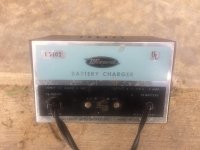
I had bought an old battery charger from an auction last year that I thought would be perfect for electrolysis. But when I connected it into outlet yesterday and checked it using voltmeter, the reading alternate btw positive and negative and values dont make much sense. Sounds like its shot and no good. Pic attached. Can it be fixed somehow?

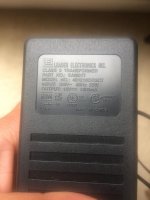
I have been saving chargers from all sorts of devices thinking they would come handy one day. But not sure if output from them would be enough. Here are couple of pics of what I have. I read on these forums about issues with solid state DC output chargers as opposed to transformer ones. Wondering what kind of issue solid state DC power would have? I am in no hurry but wondering if 1 Amp provided by transformer charger would be enough for a vise that is about 19 inches long and weighs about 90 lb or so? Two pics attached of the two chargers I am taking about.

If these dont work, what would be another source of DC power for electrolysis that I can buy these days. I have spent hours searching the internet and reading old threads from these forums and still not sure where I can buy something for my needs. Most of the older threads mention manual battery chargers which are not sold anymore. Due to the virus situation, garage sales and auctions are not really an option as most of them are postponed. Plus my wife has health conditions so wandering around gatherings of people is not something I would want if I can avoid it. Although I did found two manual battery chargers on online auctions around here after spending some time searching for them on auction sites. Already have asked around family members for a car charger and a add on Craigslist for looking for car charger but no luck so far.

One solutions several forms mention is desktop power supply, and McGivering them to work. But wondering if there are others options out there. Found these two battery chargers but not sure if they are manual or not? Wondering if someone with more know how can confirm for me if they are or not:

https://www.farmandfleet.com/produc...200-40-6a-farm-and-ranch-battery-charger.html

https://www.jegs.com/i/JEGS/555/81953/10002/-1?

To be honest, feeling pretty frustrated right now as I never thought finding a DC power source would be this hard. I cant be the only one facing this issue. Hoping someone here has better solution.

Thanks in advance for reading my long post/rant.
 

Attachments

  • IMG_3199.jpg
    IMG_3199.jpg
    111 KB · Views: 68
  • IMG_3201.jpg
    IMG_3201.jpg
    88.7 KB · Views: 53
  • IMG_3202 - Edited.jpg
    IMG_3202 - Edited.jpg
    92.3 KB · Views: 53
To avoid these ads, REGISTER NOW!

vanapplebomb

Well-known member
Joined
Jul 2, 2019
Messages
385
Location
Holland, MI
A cheap way to go is get an old scrap PC, remove the power supply, and use the 12V leg of that. I got a computer for free, and the 12V circuit was rated at 40 amps. I’m not sure the collie coating of wires is the same for all those power supplies, but 12 volts on mine was yellow and black. To turn on the power supply you had no jump the green wire to black. When I used it for high current applications, I wired all the yellow wires in parallel, and same with the black wires, since they are only 18 gauge.
 
Last edited:

seber

Well-known member
Joined
May 31, 2016
Messages
4,207
Location
Deep East Tx.
Any battery charger will work if you have a battery in the system with it. Hook your questionable one up to a battery and check voltage. They can be anything with an open circuit.
 
OP
A

afeef745

Well-known member
Joined
May 13, 2019
Messages
88
Location
Columbus, OH
A cheap way to go is get an old scrap PC, remove the power supply, and use the 12V leg of that. I got a computer for free, and the 12V circuit was rated at 40 amps. I’m not sure the collie coating of wires is the same for all those power supplies, but 12 volts on mine was yellow and black. To turn on the power supply you had no jump the green wire to black. When I used it for high current applications, I wired all the yellow wires in parallel, and same with the black wires, since they are only 18 gauge.

McGivering a computer power supply is my last resort. I was hoping someone could point out a better option. Thanks for your response.
 
OP
A

afeef745

Well-known member
Joined
May 13, 2019
Messages
88
Location
Columbus, OH
Any battery charger will work if you have a battery in the system with it. Hook your questionable one up to a battery and check voltage. They can be anything with an open circuit.

I've heard there is a chance the battery can explode. Would rather try a safer option coz I dont have electric in my barn, so electrolysis tank will be sitting on back patio.
 

Rabid Badger

Well-known member
Joined
Apr 2, 2018
Messages
1,338
A programmable bench power supply works great for electrolysis. They have many other uses, too.
 

matt_i

Well-known member
Joined
Mar 14, 2008
Messages
10,752
Location
SE Michigan
Any battery charger will work if you have a battery in the system with it. Hook your questionable one up to a battery and check voltage. They can be anything with an open circuit.

Just did a tractor wheel over the last couple months. 1.5A charger and a 12v truck battery hooked together.

I just used old metal strapping that was cut off a bundle of (??) Rebar is also a cheap source.

Wiring is a little cobbelty but it just came off the scraps pile.

If you start with hot water from the tap you will have a fast reaction untill it cools down.


OP
A

afeef745

Well-known member
Joined
May 13, 2019
Messages
88
Location
Columbus, OH
Just did a tractor wheel over the last couple months. 1.5A charger and a 12v truck battery hooked together.

I just used old metal strapping that was cut off a bundle of (??) Rebar is also a cheap source.

Wiring is a little cobbelty but it just came off the scraps pile.

If you start with hot water from the tap you will have a fast reaction untill it cools down.


Wondering how big was the tractor wheel and how many weeks did it take to de-rust? Thanks
 

Ole Slewfoot

Well-known member
Joined
Feb 22, 2016
Messages
5,098
Location
Freedom, CA
I had bought an old battery charger from an auction last year that I thought would be perfect for electrolysis. But when I connected it into outlet yesterday and checked it using voltmeter, the reading alternate btw positive and negative and values dont make much sense. Sounds like its shot and no good. Pic attached. Can it be fixed somehow?
one of the diodes is probably bad
 

dogdog

Well-known member
Joined
Nov 15, 2011
Messages
12,711
He might be reading those ripple voltages because the setting on the meter is on measuring AC or Bad filter cap also cause ripples as well... but should be simple enough to troubleshoot.

anyways... I have used the HF 12V 2/10/50 AMP manual/automatic charger that was $29.99 and it works fine flawlessly for most of the rusty metals ( about total of 4 big old style steam radiators)

For the stubborn ones that doesn't seems to want to do anything (de-rusting) , I have the 24V 10AMP power supply. That is all I have used... and worked fine so far. never did a vise though...


This is the few observations when I was cleaning the radiators..

Neg lead on the work piece, POS lead on the sacrificial electrode like your graphite or steel piece (mine is just those cheap rebar)

Just keep in mind the high the voltage, the faster but some warning about hydrogen embrittlement, so you'll probably don't want that for your vise.

The closer you put those electrodes ,the more amp it will draw... probably work faster... I think the people that reported exploding batteries might have shorted out the two pos and neg leads...

Clean your sacrificial electrodes when things start accumulate on it... I check once a day... took me about a week to get the 1 radiator clean.

also they work sort of line of sight... so the rust that is in the crevasse might not get de-rust as well as the one that faces the sacrificial directly...


Change a new fresh solutions once the water gets way too murky, it will help the process to go faster as well... I change about 7 day or when it foamed so bad up on the surface...
 
Last edited:
To avoid these ads, REGISTER NOW!

driftpin

Well-known member
Joined
Dec 22, 2016
Messages
11,314
Location
Miami-Dade/Broward Co. Florida
One place I've read about electrolysis, you only need a battery load to begin the charger output, you can even use a 9 V battery, leads in the water (NOT the whole battery!) so that the charger senses 'there's work to-be done.' Once the charger begins operation, you can remove the battery leads; if you turn-off the charger, you need to repeat the 9 V leads in the electrolyte solution method, to start the electrolysis again.

I'd be interested to see pics of the wheel de-rusted.

Instead of electrolysis:
I've been using 6% vinegar, it's at stores, labelled as 'cleaning vinegar,' I saw some at Home Depot labelled at 30% concentration. At five-times the concentration, I'd be very-careful about leaving anything in-there without checking on it a couple times a day. I also suggest not-using vinegar for anything having german silver or potmetal (high zinc content) as its base metal, as it could dissolve, from my experience.
 
Last edited:

matt_i

Well-known member
Joined
Mar 14, 2008
Messages
10,752
Location
SE Michigan
What's wrong with Evapo-rust ? It's about a thousand times easier to deal with.

Nothing wrong with it but its ~$80 for a 5 gallon bucket whereas you can probably have 80 gallons of electrolysis solution for $5.00 with the washing soda. The steel costs something but most people have some scrap laying around.
 

matt_i

Well-known member
Joined
Mar 14, 2008
Messages
10,752
Location
SE Michigan
I'd be interested to see pics of the wheel de-rusted.

The bottom wheel is de-rusted and after a very light wire brushing. I had just taken the center out of it to clean the ID of the wheel...but....

Ultimately I decided to change wheels hence the "newer" one on top. The lugs were severely damaged and a U shaped crack around 3 of the 4 lugs like there was some kind of a serious crash in the tractor's 60 year past. I can weld those up, but there's a 12" rotted section near the stem-hole and a bunch of nasty dings & folds to the edge of the rim, and so I'm weighing the value of my time & gas bottles vs finding something straighter, which the top one is, despite being 5 years older lol.

I tried the Evaporust but it wasn't even enough solution-depth to even touch the bottom of the dish in the rim, so right back it went for "future projects".


Last edited:

matt_i

Well-known member
Joined
Mar 14, 2008
Messages
10,752
Location
SE Michigan
Wondering how big was the tractor wheel and how many weeks did it take to de-rust? Thanks

Tractor wheel is a 24" dia.

I rotated it 8x thru, so about 8 days. Probably faster if it was a little warmer or I was sometimes delinquent in cleaning off the schnapp on the electrodes.
 

kngelv

Well-known member
Joined
May 25, 2011
Messages
2,235
Location
Detroit, MI
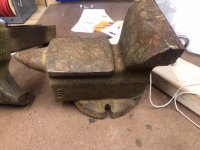
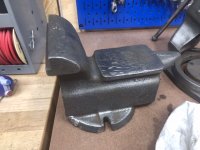
Is it that hard to find a manual battery charger. I use the 2 amp trickle setting and it works fine. Here is a recent vise my kid picked up. It took about eight hours to look like this.

James
 

Attachments

  • 1212C984-7100-4496-879A-F8CD497698A7.jpeg
    1212C984-7100-4496-879A-F8CD497698A7.jpeg
    110.6 KB · Views: 53
  • 927704CE-AFEE-4802-93FD-B7ABFDF644C6.jpeg
    927704CE-AFEE-4802-93FD-B7ABFDF644C6.jpeg
    112.8 KB · Views: 49
  • 9CE9AC01-34FA-4D1A-99CF-9A03051AF1C8.jpeg
    9CE9AC01-34FA-4D1A-99CF-9A03051AF1C8.jpeg
    102.8 KB · Views: 53
OP
A

afeef745

Well-known member
Joined
May 13, 2019
Messages
88
Location
Columbus, OH
Thanks a lot to everyone who responded. Evapo-Rust is easy but very expensive to de-rust large stuff. Although I feel like I went overbaord with graphite electrodes.

Yea manual battery chargers are hard to find. I found one at an online auction couple days ago and bidding on it. It doesnt end for about a week so I guess I ll have to wait until I get it. I will post updates here on how my electrolysis is going.
 
OP
A

afeef745

Well-known member
Joined
May 13, 2019
Messages
88
Location
Columbus, OH
He might be reading those ripple voltages because the setting on the meter is on measuring AC or Bad filter cap also cause ripples as well... but should be simple enough to troubleshoot.

I would be interested in making the old battery charger works if you or someone else is willing to guide me. Dont know much about electrical stuff...
 

dogdog

Well-known member
Joined
Nov 15, 2011
Messages
12,711
I would be interested in making the old battery charger works if you or someone else is willing to guide me. Dont know much about electrical stuff...

I don't know if I qualify to walk you through, I can explain the ones on the HF that I have or a typical one inside the manual craftsman manual charger. If you are not comfortable with the multi meter.. probably not a good idea.

A typical transformer base DC power supply.
It's just a full bridge rectifier inside and a filtering capacitor for ripple voltage/current. and a fuse. dependents on how it is constructed. but you'll have to open up and test it. The charger might have some automatic cutoff circuit once it reach certain voltage level...

There are two type of full wave rectifier, the clue is on the transformer.

a typical two lead output transformer use 4 diodes as full bridge rectifier

a typical 3 lead output transformer ( center tap transformer) uses 2 diode as the full bridge rectifier... the middle tap is the ground. Most smaller 12V lead acid transformer I encounter are these type.

after the transformer, the diodes, on the DC output side there is a large capacitor to act as a reservoir to smooth out the remaining ripple voltages.

there is a formula to calculate the minimum capacitor but for troubleshooting probably not necessary, you'll just have to verify if it works or not.

there after that there are various lead acid related circuity.. if it is a quasi manual charger.. basically it will cut off the output if it reaches over 15.6V ( I think, but not sure)

on the output side there is a automatic reset fuse usually on the negative lead. The HF unit at least the two I encounter is notorious to go bad.. $5 item from autozone.
 
To avoid these ads, REGISTER NOW!
Top Bottom