
7th Kahuna
Well-known member
Last week my father and I went to take a look at an industrial air compressor. We ended up coming home with a 1946 Delta Unisaw, 1944 Delta HD Shaper, +/- 1936 Red Fox 12" Planer, 1950's Davis and Wells Horizontal Boring Machine and early Davis and Wells 6" Long Bed Jointer. We passed on the air compressor. It was an old monster.
Price wise I believe we did ok. The items really didn't show well. They were stored in a garage that had been home to 30+ cats. The place hadn't been swept out in years. The urine smell was so strong. (Add to that 100 degree temps and humidity.) A smarter person would have turned around and run. Fortunately the damage was largely limited to surfaces within 18" of the floor.
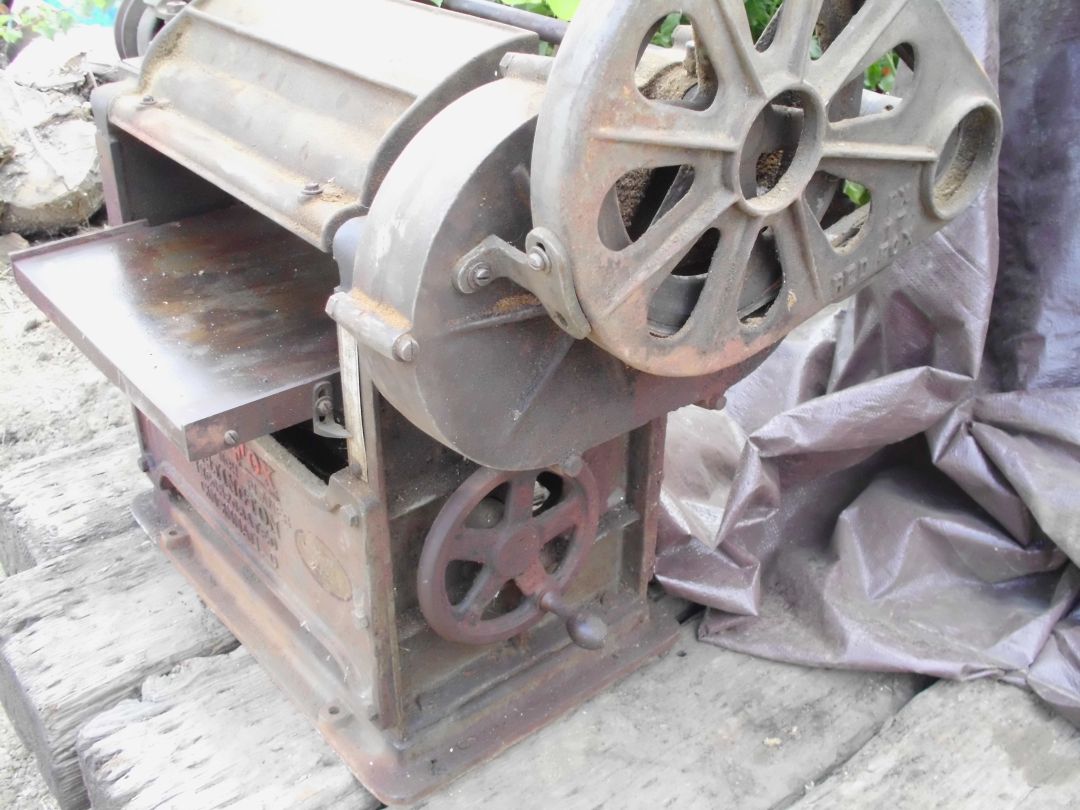
Sorry about the limited pictures guys. I got everything home, sprayed down the rust with WD40, quickly cleaned the tables and control surfaces, and set the tools into temporary storage. After three trips, all I had on my mind was getting a long well deserved shower. TOTALLY forgot about pictures. I did pull the Red Fox out again and snap a few shots for the curious (that little guy weighs in at 210 lbs). I promise I will share the restoration process when the time comes. So far, following that initial cleaning, they are looking pretty good.

I did have an unfortunate surprise with the Unisaw when I got the rust off the top. It appears someone may have used it as a welding table (and made a big puddle), or they were playing with thermite... either way I guess I will be looking for a new top. No rush though, the table is still flat.
Speaking of restoration . . .
I have been considering building an electrolysis tank for a while now and have read many of the electrolysis threads on this site. I have a well rusted pipe vise I planned to experiment with. I never considered anything large enough to fit a saw cabinet. Electrolysis however seems like the best option.
I'm imagining a wood box lined with heavy plastic maybe 36 inches square and 24 inches deep. For best results, in addition to the typical locations, I'm guessing I will need to figure out some way to rig an anode inside the cabinet. I would of course probably want to sleave it somehow (plastic livestock fence?). I seem to remember RedLeader doing something similar (box and sheet plastic) for the feet on a saw cabinet.
In general, I think I've got a good handle on the electrolysis process. But a couple specific questions come to mind:
Are there any issues mixing metals? The Delta cabinets are constructed of both sheet steal and cast iron. Can I treat them together or would the results be better if I separate them?
How well does it work for severely rusted surfaces especially cast iron? The Red Fox Planer is in by far the worst condition. It sat directly on the floor and seems to have been a favorite target for the cats. The cast iron looks as though it is flaking away. I have read that it is not wise to entirely dismantle this machine, so soaking it may be the only way to recover it. As it is, it may already be yard art.
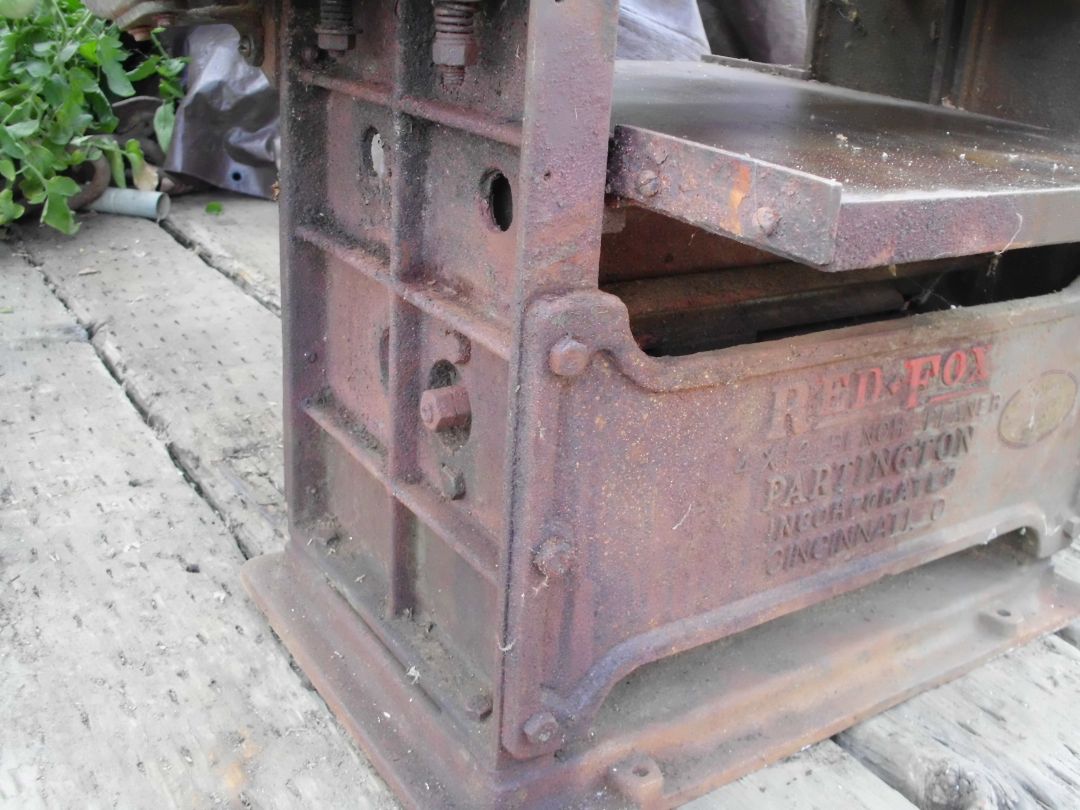
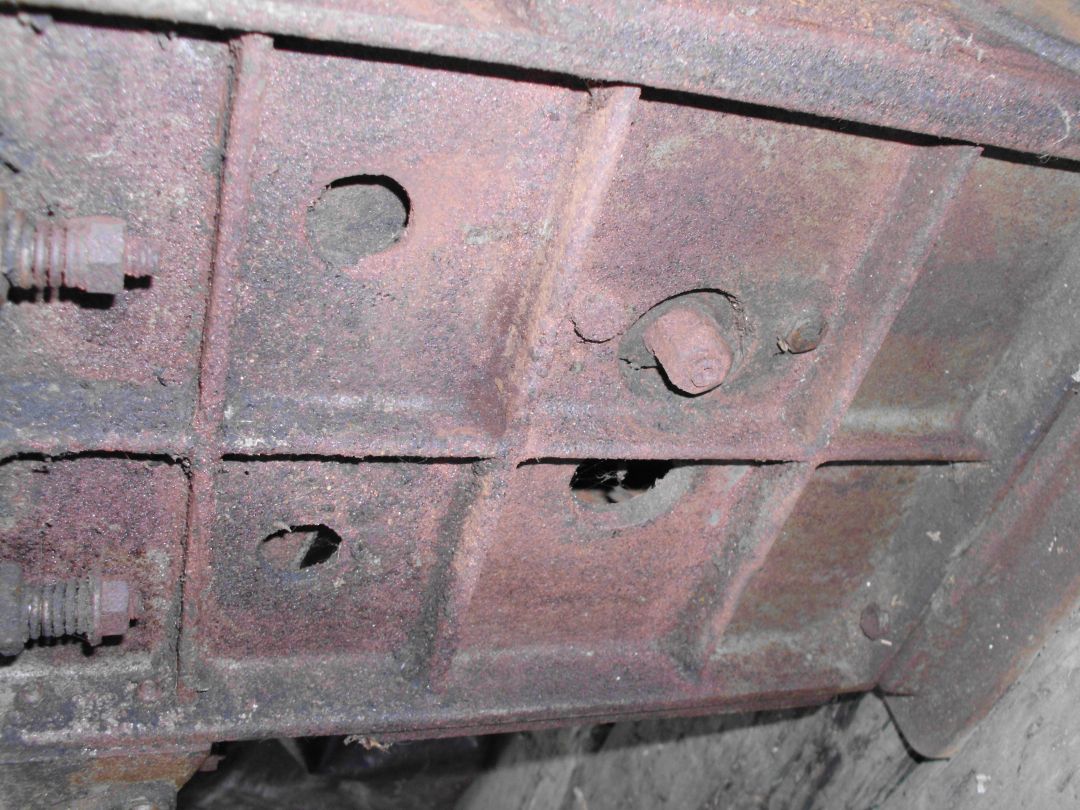
Of course, another option would be to soak it two or more weeks in a vat of molasses, but I am not sure how well that works if the item is not fully submerged. Would it just make the rust significantly worse at the water line? I'm guessing this particular cast iron may not be the hardest stuff.
Any tips or considerations for dealing with larger items would be appreciated. I guess larger is relative though. I am aware that folks derust entire cars so the bottom half of a saw cabinet should be easy, right?!
Again, I appreciate your thoughts.
I'll try to get some pictures of the others once I recover a bit.
Price wise I believe we did ok. The items really didn't show well. They were stored in a garage that had been home to 30+ cats. The place hadn't been swept out in years. The urine smell was so strong. (Add to that 100 degree temps and humidity.) A smarter person would have turned around and run. Fortunately the damage was largely limited to surfaces within 18" of the floor.
Sorry about the limited pictures guys. I got everything home, sprayed down the rust with WD40, quickly cleaned the tables and control surfaces, and set the tools into temporary storage. After three trips, all I had on my mind was getting a long well deserved shower. TOTALLY forgot about pictures. I did pull the Red Fox out again and snap a few shots for the curious (that little guy weighs in at 210 lbs). I promise I will share the restoration process when the time comes. So far, following that initial cleaning, they are looking pretty good.
I did have an unfortunate surprise with the Unisaw when I got the rust off the top. It appears someone may have used it as a welding table (and made a big puddle), or they were playing with thermite...
either way I guess I will be looking for a new top. No rush though, the table is still flat.Speaking of restoration . . .
I have been considering building an electrolysis tank for a while now and have read many of the electrolysis threads on this site. I have a well rusted pipe vise I planned to experiment with. I never considered anything large enough to fit a saw cabinet. Electrolysis however seems like the best option.
I'm imagining a wood box lined with heavy plastic maybe 36 inches square and 24 inches deep. For best results, in addition to the typical locations, I'm guessing I will need to figure out some way to rig an anode inside the cabinet. I would of course probably want to sleave it somehow (plastic livestock fence?). I seem to remember RedLeader doing something similar (box and sheet plastic) for the feet on a saw cabinet.
In general, I think I've got a good handle on the electrolysis process. But a couple specific questions come to mind:
Are there any issues mixing metals? The Delta cabinets are constructed of both sheet steal and cast iron. Can I treat them together or would the results be better if I separate them?
How well does it work for severely rusted surfaces especially cast iron? The Red Fox Planer is in by far the worst condition. It sat directly on the floor and seems to have been a favorite target for the cats. The cast iron looks as though it is flaking away. I have read that it is not wise to entirely dismantle this machine, so soaking it may be the only way to recover it. As it is, it may already be yard art.
Of course, another option would be to soak it two or more weeks in a vat of molasses, but I am not sure how well that works if the item is not fully submerged. Would it just make the rust significantly worse at the water line? I'm guessing this particular cast iron may not be the hardest stuff.
Any tips or considerations for dealing with larger items would be appreciated. I guess larger is relative though. I am aware that folks derust entire cars so the bottom half of a saw cabinet should be easy, right?!
Again, I appreciate your thoughts.
I'll try to get some pictures of the others once I recover a bit.


