To avoid these ads, REGISTER NOW!

De-Rusting a Red Fox

7th Kahuna

Well-known member
Joined
Aug 4, 2012
Messages
1,704
Location
Los Angeles, CA
Last week my father and I went to take a look at an industrial air compressor. We ended up coming home with a 1946 Delta Unisaw, 1944 Delta HD Shaper, +/- 1936 Red Fox 12" Planer, 1950's Davis and Wells Horizontal Boring Machine and early Davis and Wells 6" Long Bed Jointer. We passed on the air compressor. It was an old monster.

Price wise I believe we did ok. The items really didn't show well. They were stored in a garage that had been home to 30+ cats. The place hadn't been swept out in years. The urine smell was so strong. (Add to that 100 degree temps and humidity.) A smarter person would have turned around and run. Fortunately the damage was largely limited to surfaces within 18" of the floor.

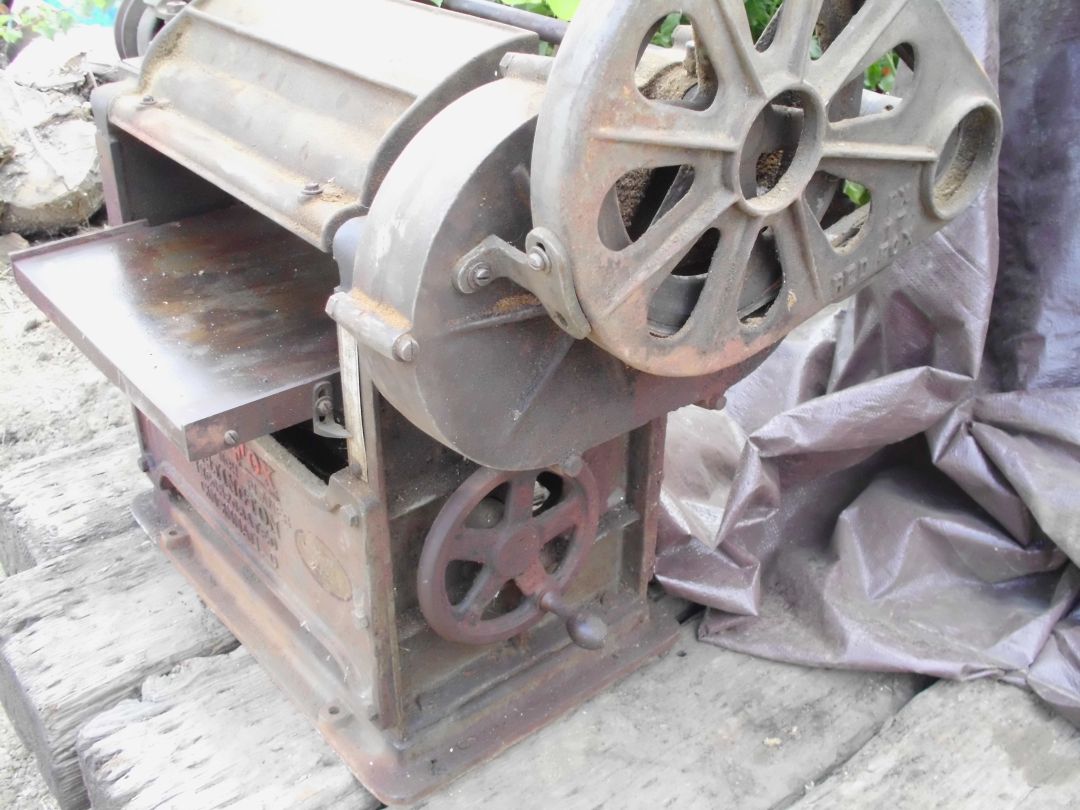
Sorry about the limited pictures guys. I got everything home, sprayed down the rust with WD40, quickly cleaned the tables and control surfaces, and set the tools into temporary storage. After three trips, all I had on my mind was getting a long well deserved shower. TOTALLY forgot about pictures. I did pull the Red Fox out again and snap a few shots for the curious (that little guy weighs in at 210 lbs). I promise I will share the restoration process when the time comes. So far, following that initial cleaning, they are looking pretty good.

DSCI0001.JPG


DSCI0004.JPG


I did have an unfortunate surprise with the Unisaw when I got the rust off the top. It appears someone may have used it as a welding table (and made a big puddle), or they were playing with thermite... :headscrat either way I guess I will be looking for a new top. No rush though, the table is still flat.


Speaking of restoration . . .

I have been considering building an electrolysis tank for a while now and have read many of the electrolysis threads on this site. I have a well rusted pipe vise I planned to experiment with. I never considered anything large enough to fit a saw cabinet. Electrolysis however seems like the best option.

I'm imagining a wood box lined with heavy plastic maybe 36 inches square and 24 inches deep. For best results, in addition to the typical locations, I'm guessing I will need to figure out some way to rig an anode inside the cabinet. I would of course probably want to sleave it somehow (plastic livestock fence?). I seem to remember RedLeader doing something similar (box and sheet plastic) for the feet on a saw cabinet. :)


In general, I think I've got a good handle on the electrolysis process. But a couple specific questions come to mind:

Are there any issues mixing metals? The Delta cabinets are constructed of both sheet steal and cast iron. Can I treat them together or would the results be better if I separate them?

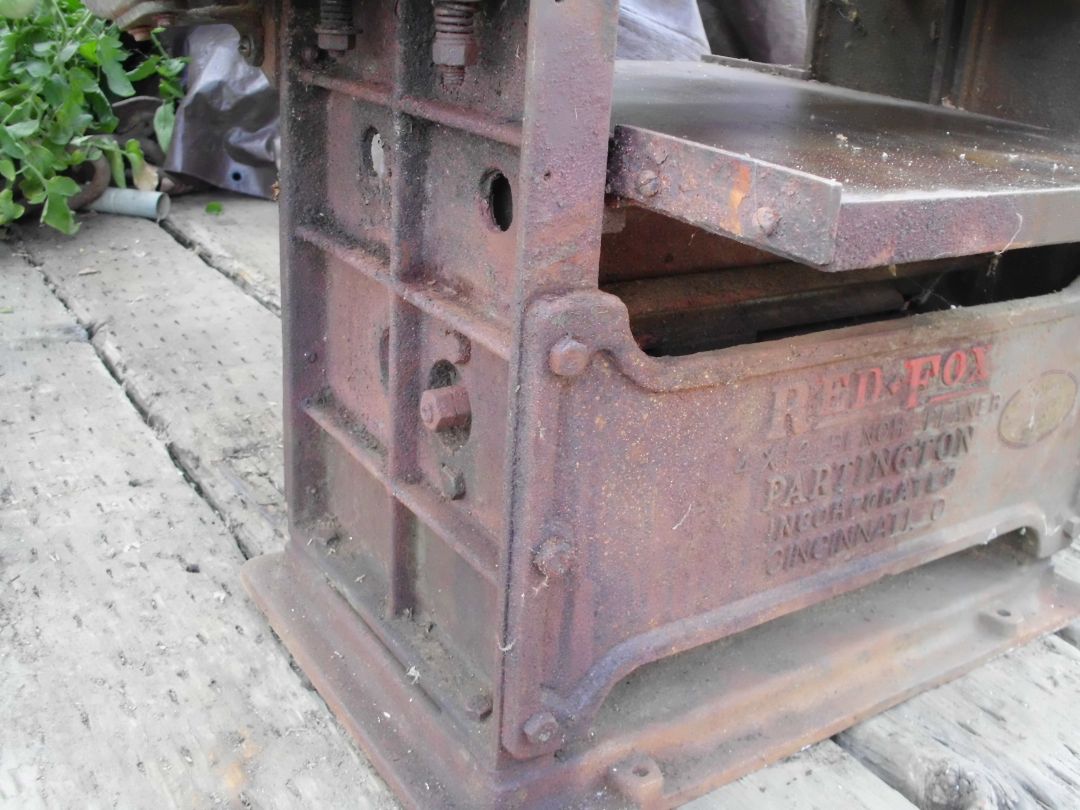
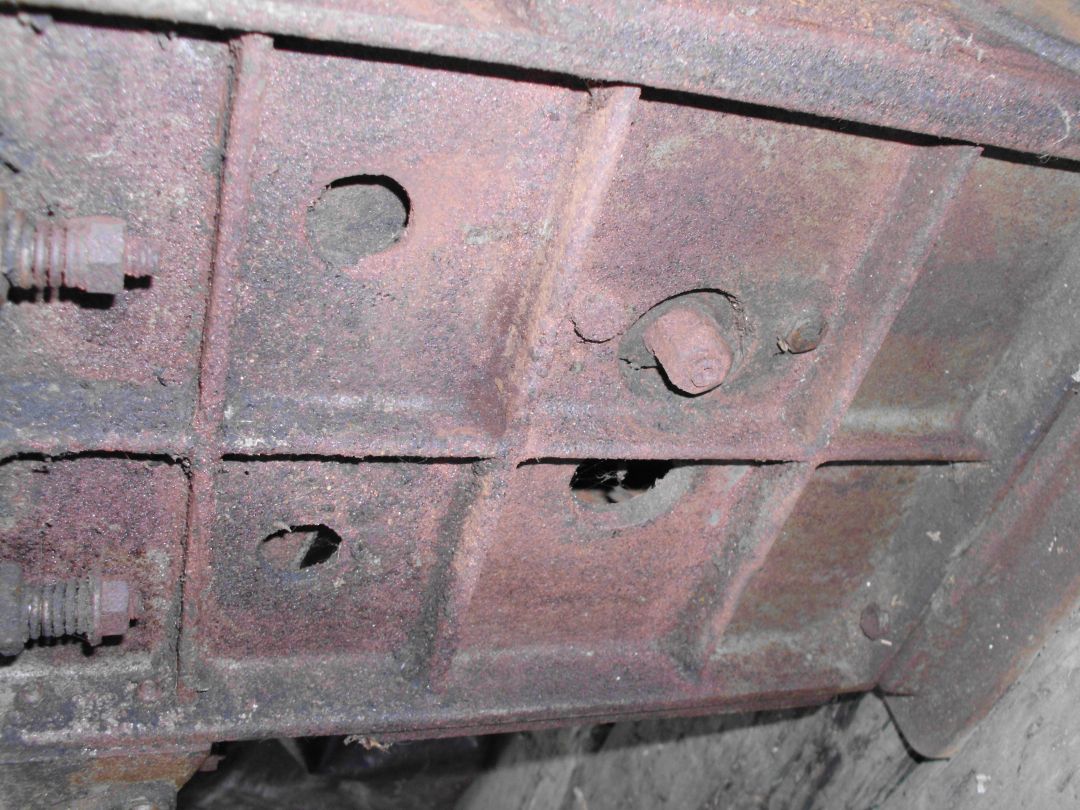
How well does it work for severely rusted surfaces especially cast iron? The Red Fox Planer is in by far the worst condition. It sat directly on the floor and seems to have been a favorite target for the cats. The cast iron looks as though it is flaking away. I have read that it is not wise to entirely dismantle this machine, so soaking it may be the only way to recover it. As it is, it may already be yard art.
DSCI0002.JPG


DSCI0003.JPG


Of course, another option would be to soak it two or more weeks in a vat of molasses, but I am not sure how well that works if the item is not fully submerged. Would it just make the rust significantly worse at the water line? I'm guessing this particular cast iron may not be the hardest stuff.

Any tips or considerations for dealing with larger items would be appreciated. I guess larger is relative though. I am aware that folks derust entire cars so the bottom half of a saw cabinet should be easy, right?! :lol:

Again, I appreciate your thoughts.

I'll try to get some pictures of the others once I recover a bit.
 
To avoid these ads, REGISTER NOW!

sselander

Well-known member
Joined
Nov 20, 2008
Messages
2,041
Location
CT
you can spray evapo-rust on it and bag it. (cover with plastic).
If it fits in a large garbage bag, place it in the bag first.
 
OP
7

7th Kahuna

Well-known member
Joined
Aug 4, 2012
Messages
1,704
Location
Los Angeles, CA
you can spray evapo-rust on it and bag it. (cover with plastic).
If it fits in a large garbage bag, place it in the bag first.

I hadn't thought about spraying it. Is there a spray version of evapo-rust or would you just use a cheap compression sprayer?
 

spongerich

Well-known member
Joined
Apr 17, 2010
Messages
2,339
Location
Monroe, NY
Electrolysis works great on cast iron. There's no problem at all mixing ferrous metals in there.

A big wooden box lined with some plastic sheeting will definitely work. I'd also keep an eye out on Craigslist for a plastic pond liner.. with the cost of plywood lately, it might be a lot cheaper.

I've done a few pieces that were in as bad shape as that. Start by wire brushing the really loose stuff away. Dunk it in the tank for a couple of days, then pull it out, brush it again, then back into the tank. Try to get your anodes fairly close (without touching) You can wrap them with a little plastic window screen if you want, then it's OK if they bump up against the metal.

With that much rust, you'll be a lot happier in the long run if you can track down some graphite rods or plates for your anodes. They last a lot longer and don't create a big glob of orange slime in your tank. They also don't crust up as they work.. if you use steel anodes, they tend to accumulate rust and you need to stop and clean them or the reaction slows to a crawl.

You're gonna need a shitload of evaporust for something that large.
 

PCO6

Well-known member
Joined
Dec 25, 2008
Messages
4,573
Location
Newmarket, Ontario
That looks like a fun project. Have you considered sand blasting the cast pieces? If you want to dip it yourself you may want to try phosphoric acid. I have a tank that's not quite as big as what you are thinking of. It's 32"x22"x20" and it has worked well for me.

If you are restoring it I'm assuming you plan to dismantle it. That being the case a lot of the parts would likely fit into a tank like mine. I've dipped 2 ends of a part one at a time and that has worked too.

I use a product called B&G Rust Remover in a few different types of containers.

Big tank ...


Small tank ...


Upright tube tank (not assembled yet in this picture) ...


Results ...
 

Outlawmws

Well-known member
Joined
Aug 9, 2011
Messages
39,094
Location
The Badlands
I vote for dissasembly and E-tanking the pieces. it's the least invasive to the base metal, and cost is minimal.

(Some sort of container, some scrap iron for the sacrificial anodes, a contianer of spa chem PH+ (Yuo anly need maybe 1/4 cup per 5 gallons or so...), and an old fashioned (transformer) battery charger, or a modern one with a battery to keep it "smart" enough to do the job.)

Anode can be rebar and the box stores sell that is 2-3 ft lengths pre cut if that is an issue...

Generally put it in in the evening and in the morning , scrub the parts off with a wire brush, dry, and either prime right away, Or treat to stop flash rust.
 
OP
7

7th Kahuna

Well-known member
Joined
Aug 4, 2012
Messages
1,704
Location
Los Angeles, CA
PCO6: I would give sand blasting a try, even just to get the process started but I still haven't found an air compressor (or a sand blaster for that matter :lol: )


I vote for dissasembly and E-tanking the pieces. it's the least invasive to the base metal, and cost is minimal.

(Some sort of container, some scrap iron for the sacrificial anodes, a container of spa chem PH+ (You only need maybe 1/4 cup per 5 gallons or so...), and an old fashioned (transformer) battery charger, or a modern one with a battery to keep it "smart" enough to do the job.)

Anode can be rebar and the box stores sell that is 2-3 ft lengths pre cut if that is an issue...

Generally put it in in the evening and in the morning , scrub the parts off with a wire brush, dry, and either prime right away, Or treat to stop flash rust.

Hey there Outlaw. How have I missed the spa chem PH+. That's a new one on me. Thought the magic was washing soda.

The Delta cabinets I could certainly disassemble but they would still be large. The Red Fox however needs to stay largely in one piece. There are several discussions of how difficult, if not impossible, it is to restore the original alignment once a complete disassembly has taken place. The result being that the bearings over heat when they are then used. I don't want to be responsible for that. :D
 

Outlawmws

Well-known member
Joined
Aug 9, 2011
Messages
39,094
Location
The Badlands
PCO6: I would give sand blasting a try, even just to get the process started but I still haven't found an air compressor (or a sand blaster for that matter :lol: )


Hey there Outlaw. How have I missed the spa chem PH+. That's a new one on me. Thought the magic was washing soda.

The Delta cabinets I could certainly disassemble but they would still be large. The Red Fox however needs to stay largely in one piece. There are several discussions of how difficult, if not impossible, it is to restore the original alignment once a complete disassembly has taken place. The result being that the bearings over heat when they are then used. I don't want to be responsible for that. :D

The magic is Sodium Carbonate, Spa-Kem (sp) is nearly pure, washing soda less so IIR. (Note it's NOT Sodium Bicarb. it will work, just not as well...)

OK, so assembled you just need a bigger tank. lots of cheap plastic tanks, tubs and what have you available.
 
OP
7

7th Kahuna

Well-known member
Joined
Aug 4, 2012
Messages
1,704
Location
Los Angeles, CA
OK, so assembled you just need a bigger tank. lots of cheap plastic tanks, tubs and what have you available.

Yeah, shouldn't be a problem. Just thought I would share the reason with you. You are such a repository of information, I could just imagine someone asking you about a Red Fox next week. Say, by the way, did you happen to see that we figured out what your odd motorized hammer devise was? I never got back to your thread to check if you had responded. :bounce:

I'll take a look for that Spa-Kem. Where have you seen it? Home Depot or a pool supply or?
 

Outlawmws

Well-known member
Joined
Aug 9, 2011
Messages
39,094
Location
The Badlands
Well, technically it wasn't my thread, it was Steevo's; but I sort of hijacked it when we got together on the deal and he helped me secure the thing till I could come get it.

The power hammer was actually a power nailer for flooring. The owner actually got back to the "scrap pile" he got it from and retrieved the nail hoppers and feed system. the Rawhide face was to save wear and tear on the punch that actually drove the nails. So I have it complete.

I'm going to mod it and set it up for light power forging.
 
To avoid these ads, REGISTER NOW!

Mr. Brooks

Well-known member
Joined
Dec 11, 2012
Messages
311
+1 for electrolysis.

I have a 55 gal drum that I use. I have 15 pieces of rebar on the inside, wired together on the outside via eye bolts. Have a 2X4 across the top to suspend whatever you're derusting. After I'm done and any harmful gas is released, I can put the drum lid back on and have it for the next project. Keeps for quite a while. I have my drum mounted on a 4 wheel dolly and have a hose spigot installed for easy draining.

Having a big tank is nice for thing like this. Helped out big time on my Wilton 1780 and will really help on my 600s.
 
OP
7

7th Kahuna

Well-known member
Joined
Aug 4, 2012
Messages
1,704
Location
Los Angeles, CA
I used the electrolysis method on an old shear....worked great. Here is a link to the project.

http://weldingweb.com/showthread.php?t=24293&highlight=electrolysis

Thanks for sharing. I finally had a moment to read through your thread. That shear came out great. The whole business has me wondering about amperage. I followed a link in your post to a guy using electrolysis on a trailer frame. He used a welder for the power source and I think was using 125 amps. I am guessing I would want more than 1 or 2 and a whole lot less than 125. I read where guys were using 6 to 10.
 
OP
7

7th Kahuna

Well-known member
Joined
Aug 4, 2012
Messages
1,704
Location
Los Angeles, CA
6-10 amps will work fine. Cranking up the amps just generates lots of wasted heat and ups the danger factor.

I've done a bunch of fairly large things (50lb vises, 150lb anvils, band saw tables etc) and I've had excellent results at 6 volts running 4-5 amps.

There's a bunch of info in this thread:

http://garagejournal.com/forum/showthread.php?t=154196

Thanks Spongerich, always helps to have someone with experience confirm what you think you already know. :beer:

Any hints on places to find those graphite rods (cheaply)?
 
OP
7

7th Kahuna

Well-known member
Joined
Aug 4, 2012
Messages
1,704
Location
Los Angeles, CA

Thanks for both links (your Electrolytic Rust Removal thread and the eBay link). I think I'm going to pick up a batch. I don't want to have to be tending the tank constantly and three of the tools are pretty rusty. Does the graphite wire up the same as the iron or do you need to add some sort of conductive material to get a good contact between the conductor and the graphite rod?
 
Last edited:

catalytic

Well-known member
Joined
Jul 16, 2011
Messages
636
Location
Boston, Los Angeles, Cleveland
I have restored many tons of old iron, and I've tried electrolysis, evaporust, vinegar, wire wheels/abrasives, solvents and scrapers...just about everything.

Electrolysis is a great choice for this small planer. MAKE SURE YOU:

1. Use washing soda (backup: baking soda, but it's less effective)
2. Surround the planer with anode metal. If you just put it on one side then that side will derust much more than the other side. Don't use galvanized...rebar and scrap steel are good, especially high surface area pieces (steel sheet is the best for this reason)
3. Watch your running amps. 12v 2amps will work, but it's pretty slow. If you can get more like 10 amps then you'll feel like you're getting somewhere.
4. Electrolysis removes rust, loosens rust and black oxide, and loosens paint. For this reason, I combine an electrolysis dip with a wirewheel (no wirewheel on the machined surfaces, and avoid knotted/go for brass if you want to be sure no scratches). Get it most of the way in the electrolysis tank, then wirewheel it to knock off the junk, then back in the tank to finish it.
5. When it's all done, hit it with compressed air, then Boeshield or something to prevent rerusting and flash rusting (it will happen within a few hours of taking it out, so be ready)


As you may know, Red Fox is arguably top dog of the small/lighter vintage planer designs. Congratulations on a really nice planer.
 
OP
7

7th Kahuna

Well-known member
Joined
Aug 4, 2012
Messages
1,704
Location
Los Angeles, CA
As you may know, Red Fox is arguably top dog of the small/lighter vintage planer designs. Congratulations on a really nice planer.

Catalytic, thanks for joining in. I appreciate the pointers.

I don't honestly know that much about the Red Fox and haven't found that much online thus far. Personally, I had been looking for a Parks but my dad saw this one and really liked it. I think he was a bit disappointed it wasn't any older than it was, however aside from the rust, it looked pretty good, and for $50 I didn't see how we could go wrong. I am glad to know it is well thought of and will do my best to see that it is returned to working condition. It appears to be complete aside from one or two screws on the guards.

Have you had any experience restoring one personally? Most of what I have read online talks about the difficulty of getting the alignment true after dismantling it. I'm not sure if it is an issue with the babbitt bearings or with the whole 'case' getting tweaked. I need to go back and re-read. I am hoping it is a case issue. I understand there are oil reservoirs under the bearings that will need to be cleaned.

Something else you might know, having restored so many machines. There is some minor pitting where urine puddled on the infeed table. I don't expect they will hurt anything but is there an accepted way of filling them? Some sort of resin or ?

Thanks
 
To avoid these ads, REGISTER NOW!
Top Bottom