Hi Garage Warrior... my responses in line:
For the performance test - the results were based on cleaning of fresh mineral oil and lithium grease. Could it be that performance would be much different when cleaning old oil such as found on engine underbelly (oxidized/broken down hydrocarbon chains)...
They do behave differently to some extent, depending on how far down the column the hydrocarbon has worked, so to speak (ie aromatics at the top, greases and tars at the bottom). I think Simple Green is a good example of that in the testing... hugely efficient on oil, very inefficient on grease.
In the testing, it comes down to what can be an easily controlled... and that a degreaser has low performance on the both oil and grease tested, it would be a reasonable next step to expect that it might have similarly low performance on tar. I was cautious to not include parts washer degreasers, for example, as they work under a whole different set of constraints (flash point, recyclability, heat) or any "one trick ponies" dedicated to a specific grime.
I know that Caterpillar has a protocol for the creation of a certain spec "grime" to be used for testing, but it is extremely elaborate and pricey (ie a certain mix of oil and contaminants heat cycled X number of times, etc). Might throw in a couple samples of that next year if I can afford to.
Would you expect corrosion results to be the same with CRC HydroForce Industrial Strength Degreaser? I suspect that CRC HydroForce Industrial Strength Degreaser would do the opposite and accelerate rust because it contains caustic lye (Potassium hydroxide). Have it been tested?
That is the top of my list for the next round of testing. ASTM humidity testing runs about $1000 per sample, and I was looking for first-level findings to dispute the myth that "all waterbased degreasers promote corrosion, and all solventbased prevent corrosion."
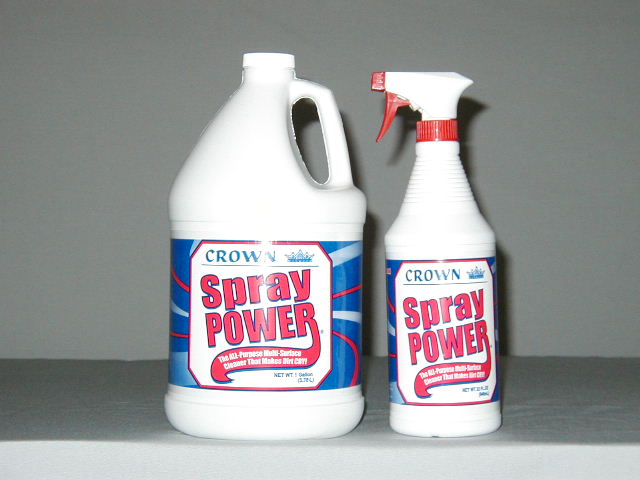
What about Purple Power corrosion performance? It uses 2-butoxyethanol like Oil Eater, but the note section say that it will promote corrosion - is it based on test results or product literature?
This is where things get interesting, in my opinion... the differences between claims and evidence. It all depends. Some manufacturers were amazingly thorough about warnings and cautions in regard to safety, surfaces to be avoided, etc. Some weren't. So, it becomes a question of product management, for example... one company's standard for "promotes corrosion" may be completely different from another's. There is even interpretation of safety across the MSDSs... some companies had a one-pager, others were 10+ pages and extremely specific.
For solvent corrosive test - CRC Heavy Duty (chlorinated solvent) seems to have no effect on corrosion, or promote it slightly. What about D-Limonene solvents, like CRC Hydroforce Super Citrus Heavy Duty Degreaser? Have they been tested for corrosion performance?
They were not corrosion tested in the 2013 findings... but will be of interest for the next round (I'm listening to what everyone is interested in to add to next year).
Here's what I know from my work in lubricants and some other areas that might help... additive packages can make all the difference in performance. So, while the "base" composition (say, limonene) may have characteristic A, it may be completely mitigated by additive X in the degreaser mix. Think of adding Stabil to ethanol gas. That 6oz (of which a fraction is probably active ingredient) can drastically change the properties of 20 gals of gasoline. So while you can look at component parts, I don't necessarily think there are hard and fast rules when getting into mixes.
That said, I do "garage tests" all the time. No better way than to give it a shot and see if there are drastic differences. I've done a lot of garage testing personally on magnesium and aluminum because I restore old chainsaws, will let soak over long periods, and am concerned about oxidation and paint compatibility.
For the purposes of the "real" published ratings, though, I believe it is really important to have ASTM Standard, non-biased, independent testing performed under controlled conditions.
Hope this helps... good discussion to have