To avoid these ads, REGISTER NOW!

Depressing Pictures

To avoid these ads, REGISTER NOW!

kwb

Well-known member
Joined
May 1, 2009
Messages
1,769
Location
PNW
Wow - that was complete. :(

I can't help but wonder though if the fact it was lined with OSB inside didn't make it substantially worse than if it had been either unfinished or sheetrocked.
 

ddawg16

Well-known member
Joined
Jul 11, 2008
Messages
21,005
Location
S. California
Being in the design stage of my own shop I would like to know how the interior of the walls and ceiling were finished? OSB? Sheetrock? Exposed studs? Reducing the spread of fire is one of my worries.

My garage is done...but you bring up a very good point....I think this is very much worth looking into....
 

Busted_Knuckles

Well-known member
Joined
Oct 9, 2009
Messages
2,613
Location
Northwest Illinois
Yes, Ive mentioned this on some other threads here on the subject of a ceiling in a shop, rock or tin would have made a difference in burn time. Ive seen too many shop/garage fires (used to volunteer fire fight and vehicles fires at work), Ive got no lid in my shop yet, but Im not putting any petroleum product (foam board) or OSB on the lid, Im going with tin or rock. Ive also been seriously considering a sprinkler system. 2 night ago, two neighbors down, the same thing as here, shop burned to the ground just after we went to bed, two cars and all the tools gone. Ive got hay storage on one side of the barn,,... that always has me worried.
 

ujmchris

Well-known member
Joined
Jun 6, 2009
Messages
53
Location
Central MN
Man that just *****, but at least no one was hurt. On the bright, it serves as a great reminder for all of us think about what we can do to reduce our risk of the same thing happening.

I woke up one morning about 8 years ago to my fathers pager going off (Volunteer FF). As he ran by my door I asked him what the call was, and he hollered back "the shops on fire." "The shop" was his place of employment, right across the road from our house. Someone had been doing some early morning trouble shooting on truck in one of the bays and had left only briefly to grab some breakfast. It's speculated by the inspectors, that he left one of those slinky style test leads clipped to ground and set it on the seat, and when he climbed out, the air ride seat rose and other end of the lead somehow made its way onto the floor of the truck where a constant power essex solenoid was mounted without the protective cover on it. The lead shorted and started the seat on fire, setting the truck on fire, setting the shop on fire.

Luckily someone driving by called it in, and response time was great as most of the FF's were on their way to work anyway. Our department was on scene within, I would say 10 min, and 3 Local fire departments were on scene within 20 min. (Man power was called for immediately do to the size of the facility and all of the flammables.) The fire was contained to one end of the shop (a recent addition) by the full fire wall between the sections. One thing to think about if you have garage door openers, is to make sure the door release is easily accessible. I'll never forget the site of the shop owner flying around the corner of the building with the forklift, tires squealing, flying full throttle into the bottom garage door panel and jacking the door open so they could get hoses in.

Sorry for thread jacking a bit, but the point is the same. Always be paying attention to what your doing while in the shop. There's too many things that can go wrong very quickly. Keep your stuff safe and yourself safer.
 

FCFDChief2

Active member
Joined
Nov 18, 2009
Messages
28
Location
Kentucky
I guess if you think about it, its not much more than some black iron pipe and sprinkler heads...[/QUOTE]

My residental system was done with a code complient, special PVC pipe. The only metal in the whole system is the heads and some valves in the basement. Three guys did the whole house in one and half days.
 

stricht8

Well-known member
Joined
Apr 20, 2008
Messages
1,714
I guess if you think about it, its not much more than some black iron pipe and sprinkler heads...


And a pump and a storage tank if your water main is too small? And a monitored fire alarm system that signals the fire department to come down should a sprinkler head go off. And of course the 300 dollar per year monitoring fee and the 300 dollars per year for the quarterly sprinkler system inspection. Not that this is not worth it for peace of mind. It probably is but my concern is that a residential sprinkler system is not going to be able to tackle a garage fire with all those combustibles. I honestly don't know enough about sprinkler systems but I do wonder what kind of system would be adequate for a shop/garage.
 

Skyline

Well-known member
Joined
Nov 11, 2008
Messages
3,586
And a pump and a storage tank if your water main is too small? And a monitored fire alarm system that signals the fire department to come down should a sprinkler head go off. And of course the 300 dollar per year monitoring fee and the 300 dollars per year for the quarterly sprinkler system inspection. Not that this is not worth it for peace of mind. It probably is but my concern is that a residential sprinkler system is not going to be able to tackle a garage fire with all those combustibles. I honestly don't know enough about sprinkler systems but I do wonder what kind of system would be adequate for a shop/garage.

A sprinler system must be designed for the potential fire load. More combustables means more heads and more gpm flow. Even if they do not extinguish a fire, they can do a huge amount to keep it contained untill the fire department can get there. There's really no downside to having a sprinkler system. But it can get a little more tricky if the building is not heated all winter....then you need a dry system.
 

stricht8

Well-known member
Joined
Apr 20, 2008
Messages
1,714
A sprinler system must be designed for the potential fire load. More combustables means more heads and more gpm flow. Even if they do not extinguish a fire, they can do a huge amount to keep it contained untill the fire department can get there. There's really no downside to having a sprinkler system. But it can get a little more tricky if the building is not heated all winter....then you need a dry system.

Or antifreeze.
 

JBurgess

Well-known member
Joined
Mar 1, 2008
Messages
372
Location
Arizona
Certainly is sad. Hope your friend gets it rebuilt in a timely fashion.

Unfortunately NFPA 13D, the residential standard does require sprinklers in attached garages much less detached garages.

Fuel load can overload even commercial sprinkler systems. This concrete and metal sprinkled building was brought down by wood pallets. You can see the 6” sprinkler pipes that have fallen down.

20.jpg
 

FNFS2000

Well-known member
Joined
Jan 12, 2009
Messages
859
Did I read that right? painted OSB interior sheeting???? Nobody reading this should consider flammable sheeting in thier garage anymore :) Structure would have probably been saved if sheetrock was used... It would have fought back fire for at least 15-20 minutes(deducting a little for intense heat source) instead of immediately helping to spread the flames like OSB would do...
 

Mr Mushman

Well-known member
Joined
Jul 7, 2009
Messages
113
Just came across this post and basically repeating what all the other members before me posted. Sorry for your loss but at least you are OK and nobody got hurt. I am in the final stage of my garage build and was considering OSB for the walls and ceilings but ended up going with sheetrock for many different reasons and glad I did ! ! ! This reminds all of us how quickly we could loose our most prized and favorite toys and favorite part of the house ... I hope everything will turn out Ok for you.
Keep us posted.
 

jmh21586

Well-known member
Joined
Aug 8, 2009
Messages
1,895
Location
Pine City, MN
Did I read that right? painted OSB interior sheeting???? Nobody reading this should consider flammable sheeting in thier garage anymore :) Structure would have probably been saved if sheetrock was used... It would have fought back fire for at least 15-20 minutes(deducting a little for intense heat source) instead of immediately helping to spread the flames like OSB would do...


Then you would end up with half burned shed, half burned tools, half burned car, etc.
How do you end up ahead in that case?

Get everyone out. Call the fire dept. Call the insurance guy. Start over fresh.

Last thing I want to do is dig around in a fire damaged, water damaged, smoke damaged garage trying to find something to salvage. You have sheetrock?? So what. By the time the fire is put out it's either singed, burned, or crumbling from the water the firefighters use. Then you have to tear it off, decide whether or not the wiring can be saved, on and on and on....
 
Last edited:

RbrtAWhyt

Well-known member
Joined
Aug 25, 2008
Messages
5,154
Location
North East Georgia
Certainly is sad. Hope your friend gets it rebuilt in a timely fashion.

Unfortunately NFPA 13D, the residential standard does require sprinklers in attached garages much less detached garages.

Fuel load can overload even commercial sprinkler systems. This concrete and metal sprinkled building was brought down by wood pallets. You can see the 6” sprinkler pipes that have fallen down.

20.jpg


Pallet fires are HOT. We had a pallet company catch on fire a few years ago. Total loss. I had the road blocked redirecting traffic about 500 yards away and could really feel the heat off of it...
 

FCFDChief2

Active member
Joined
Nov 18, 2009
Messages
28
Location
Kentucky
And a pump and a storage tank if your water main is too small? And a monitored fire alarm system that signals the fire department to come down should a sprinkler head go off. And of course the 300 dollar per year monitoring fee and the 300 dollars per year for the quarterly sprinkler system inspection. Not that this is not worth it for peace of mind. It probably is but my concern is that a residential sprinkler system is not going to be able to tackle a garage fire with all those combustibles. I honestly don't know enough about sprinkler systems but I do wonder what kind of system would be adequate for a shop/garage.

Yes an adequate water supply will be needed and if not available the price goes up. My system is not monitored and I live in rural Kentucky and no inspections are required.
 

JB4Pres

Member
Joined
Apr 17, 2009
Messages
7
Pallet fires are HOT. We had a pallet company catch on fire a few years ago. Total loss. I had the road blocked redirecting traffic about 500 yards away and could really feel the heat off of it...
I have a buddy who always says the only thing better than burning a pallet is burning 10 pallets ... I can only image an entire building of them.
 

cyamaha2007

Well-known member
Joined
Apr 20, 2009
Messages
2,001
Location
St.Charles MO
I burned 45 pallets in a bonfire stacked them up all nice poured a gallon of gas and it was so hot no one could even get within 20ft. Oh and not to mention the hundreds of nails... another one of those stupid 17year old mistakes
 
To avoid these ads, REGISTER NOW!

galwaytt

Well-known member
Joined
Oct 16, 2009
Messages
94
Location
Galway, Ireland
Being in the design stage of my own shop I would like to know how the interior of the walls and ceiling were finished? OSB? Sheetrock? Exposed studs? Reducing the spread of fire is one of my worries.

I can't help but wonder though if the fact it was lined with OSB inside didn't make it substantially worse than if it had been either unfinished or sheetrocked.
Honestly, no, I don't think it would have. Your forgetting that an 'unfinished' wall still has OSB typically on the outside, so potato, potatoe is what I say.

Did I read that right? painted OSB interior sheeting???? Nobody reading this should consider flammable sheeting in thier garage anymore :) Structure would have probably been saved if sheetrock was used... It would have fought back fire for at least 15-20 minutes(deducting a little for intense heat source) instead of immediately helping to spread the flames like OSB would do...
The answer to any fire barrier is a material like sheetrock. A single 1/2" sheet on a stud or solid OSB sheathed wall, will give you a 30 minute wall, for fire purposes. Time at the very least, to get out. A double slabbed wall would give you 60. But, if you use something like LaFarge Echek board, 15mm (Blue paper), double-slabbed,we've tested OSB faced SIP panels in a furnace, and took 94 minutes to breach. This far exceeds any code for compartment wall that I know of.

Fuel load can overload even commercial sprinkler systems. This concrete and metal sprinkled building was brought down by wood pallets. You can see the 6” sprinkler pipes that have fallen down.

20.jpg
Good point, with the 'right' fuel - gas in this case, it's a bit moot - this place is coming down, End Of Story. But something more important, 'cos another poster mentioned it - a steel sheet will do zip for you - in fact, in commercial buildings around here, which are commonly steel framed, the columns/beams need to be specifically fire-proofed themselves as, unlike timber, which chars, beams heat, twist, etc and you'll get Disproportionate Collapse - have a look at that pic and even the sprinkler pipes, despite carrying a coolant, are toast........funnily enough, in a fire, timber can be your friend, as something like a Glulam beam is inherently safer, fire-wise, than steel beam, as the natural charring that occurs helps mitigate flame spread and burn of the beam. The longer, the better ! Why do you think they make charcoal from timber ? Exactly, because of the slow burn characteristics.

For garages in particular, fire scares the bejeebus out of me: no fuel in the garage, for a start. Cans etc, all outside, and in the shade at that.

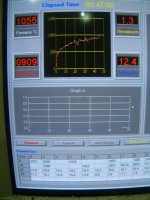
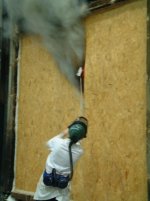
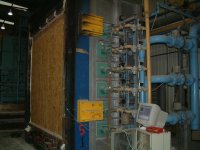
Here's our SIP clad panel under fire test, in the Burn Hall:

Pic 1
All wired up and nowhere to go. Note all the thermocouple wires...also dynamically loaded with hydraulic cylinders (at bottom of rig..) for the duration of the test.

Pic 2

Snapshot of the control screen, at the 47 minute mark (1/2 through the test actually...), Note furnace temp (over 1000deg C) and temp on OSB side of panel (over 16.7 deg C). This across only a 130mm deep panel...

Pic 3
The Moment of Truth - official fail time is when a piece of lint/cotton glows, on this side of the panel - remember, it's still 1000 deg C + on the other side.....:shocking:

Pic 4
Post Mortem.....note how the sheetrock has protected even the XPS...
 

Attachments

  • DSCF0028.jpg
    DSCF0028.jpg
    139.3 KB · Views: 76
  • DSCF0047.jpg
    DSCF0047.jpg
    142.2 KB · Views: 68
  • DSCF0048.jpg
    DSCF0048.jpg
    127.3 KB · Views: 94
  • DSCF0066.jpg
    DSCF0066.jpg
    140.6 KB · Views: 99
Last edited:

evs1

Well-known member
Joined
Jul 2, 2006
Messages
50
Location
West Virginia.
I hope he was well insured.
The good thing nobody was hurt.
things can be replace.
If he has good insurance he gets to rebuild and start buying new stuff.
Looks like Norwalk firedepartment was there.
They havn't lost a foundation yet.:lol_hitti

Well then, why don't you go join up and straighten them out? I'm sure they could use an expert like yourself and will benefit greatly from your years of experience and know-how.
 

Warg

Well-known member
Joined
Nov 17, 2009
Messages
62
Location
Malmo, Sweden
Talking about sprinklers and stuff, has anyone ever thought about a Halon system? In a confined space like a garage it would be very effective and it wouldn't have to be large either as you only need a 4% concentration of Halon in the air to effectively quench a fire and not having it relight.

We used them all the time at telecom exchanges and other places with sensitive electronics.
Best thing with it is that it's completely unintrusive and leaves no residue at all. It's not harmful to breathe in the concentrations needed, but you do get a change of pitch in your voice like with helium while breathing it.
 

D KRAGER

Well-known member
Joined
Oct 16, 2007
Messages
581
Location
Central IL
Then you would end up with half burned shed, half burned tools, half burned car, etc.
How do you end up ahead in that case?

Get everyone out. Call the fire dept. Call the insurance guy. Start over fresh.

Last thing I want to do is dig around in a fire damaged, water damaged, smoke damaged garage trying to find something to salvage. You have sheetrock?? So what. By the time the fire is put out it's either singed, burned, or crumbling from the water the firefighters use. Then you have to tear it off, decide whether or not the wiring can be saved, on and on and on....

As long as it's a detached shop or garage, I agree with this. We have a company locally that deals with restoring fire damaged homes, ect. They were telling me that even if one wall is still standing, the insurance company said they must use it. Stupid!! Just start over!

It's tragic to deal with either way.
 

rodnok1

Well-known member
Joined
Jan 27, 2005
Messages
853
Location
NC
Having lit a garage on fire a time or two(from welding). I used 3 extinguisers the first time to get it out(very small fire) Second one I only has a hose(set boxes on fire from grinding sparks). I do almost all my vehicle welding outside now...I set a floorboard on wire a couple years ago, one small piece of insulation went up and caught the dash on fire, god that extinguisher dush gets everywhere... Once it starts to go if you can't get it out very quickly you're sol...Glad it was a detached garage that it happened to. It ***** to lose a garage, but the house too would have not been any fun.
 

mrb

Well-known member
Joined
Dec 31, 2008
Messages
3,734
Talking about sprinklers and stuff, has anyone ever thought about a Halon system? In a confined space like a garage it would be very effective and it wouldn't have to be large either as you only need a 4% concentration of Halon in the air to effectively quench a fire and not having it relight.

We used them all the time at telecom exchanges and other places with sensitive electronics.
Best thing with it is that it's completely unintrusive and leaves no residue at all. It's not harmful to breathe in the concentrations needed, but you do get a change of pitch in your voice like with helium while breathing it.

FYI halon has been banned (since the mid 1990s I believe) and has generally been replaced with FM-200. This is a very expensive type of system...
 

Warg

Well-known member
Joined
Nov 17, 2009
Messages
62
Location
Malmo, Sweden
FYI halon has been banned (since the mid 1990s I believe) and has generally been replaced with FM-200. This is a very expensive type of system...

Ah, I knew there was a catch... It's been a while since I worked that area it seems...
Though, I would like to see a comparison of the expense of one of those systems and the expense of rebuilding and refurbishing a shop.
I don't know how insurance companies work on your side of the pond, but here you get pretty hefty rebates on the premiums if you take preventive actions against fire and theft. For me that means that I get 10% off for a burglar alarm, 15% off for fire extinguishers on all floors, another 5% for having other lifesavers like fire blankets and a rescue ladder on the second floor. All this pays for the stuff in about two years...
I must admit that I'm a bit **** on fire safety, I even have a fire blanket attached to the BBQ. :thumbup:
 

Evogun

Well-known member
Joined
Dec 28, 2009
Messages
74
If you have a welder and CO2 bottle use that to extinguish a fire.
 

madjack

Well-known member
Joined
Jun 18, 2008
Messages
296
Location
black hills of south dakota
WOW! This has opened my eyes. I'm just to the point of insulating and putting in walls in the new garage. I thought about osb because it's cheap. I have changed my mind. I'll spend the money on firestop sheet rock and steel sheeting over that for the ceiling. If i would lose my garage, I would lose what has taken a lifetime to collect.
 

caper

Well-known member
Joined
Feb 12, 2006
Messages
3,185
Location
cape breton

PassnThru

Well-known member
Joined
Jan 5, 2010
Messages
6,510
Location
Bowling Green KY
Well then, why don't you go join up and straighten them out? I'm sure they could use an expert like yourself and will benefit greatly from your years of experience and know-how.

It's been the same joke around here for years - they've never lost a foundation yet.
I do have the utmost respect for those that put themselves on call at a moments notice for others. But the fact remains - a volunteer fire department can only do so much. There is a big difference between a bunch of guys sitting around together near a fire truck waiting for a call versus guys at work all over the county with their truck at a different location waiting for their pager to go off. I live in the county - I am served by a volunteer fire department. As such I pay higher insurance rates - that is for a reason. I'm not kidding myself - if my house catches on fire it will likely be a total loss. Understand that I am not blaming the volunteers for that - despite their best efforts by the time they get there it will be out of control. The volunteers will save my neighbors houses and possibly my detached garage. I understand that and accept it and realize that I have to have fire extinguishers at the ready. And my garage has OSB walls. At the end of the day, another 15 or 20 minutes isn't going to help me either way if I can't put the fire out myself.
 

bazzateer

Well-known member
Joined
Oct 8, 2009
Messages
6,075
Location
Watford, Great Britain
The only wood constuction in my garage will be roof trusses, door/window frames and initially the roofing material (when funds allow the roof will be tiled).

Bricks tend not to catch alight. I'm surprised more of you guys in the USA don't go with brick.
 

jmh21586

Well-known member
Joined
Aug 8, 2009
Messages
1,895
Location
Pine City, MN
The tax assessors around here love brick. Not to mention the much larger up front cost for putting it on.
But brick is just like siding. It goes over your exterior sheating.

I'm guessing most fires start on the inside anyway so what diference would brick make?

By the way, I'm in the bricklayers union.
 

stricht8

Well-known member
Joined
Apr 20, 2008
Messages
1,714
Ok I may be a dummy but how does spraying a flammable liquid on a fire extinguish it?If you look at section 5 of this MSDS for antifreeze it shows it has a fairly high flashpoint at 254*f but still the stuff in the pipes should get heated up pretty quick I would think.

http://www.enterpriseoil.ca/i/pdf/msd/Antifreeze-PrestoneAdvancedFormula.pdf
I see where your coming from and you raise a good question. However antifreeze is routinely used in sprinkler pipes. Once the antifreeze in the pipe runs out which will be fairly quickly then the water supply takes over and water sprays out of the sprinkler heads. So the pipes are filled and pressurized with antifreeze but then either water from a water main or water stored in a large storage tank takes over.
 
To avoid these ads, REGISTER NOW!
Top Bottom