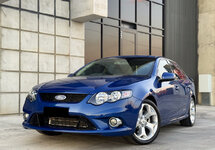
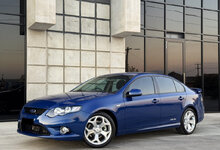
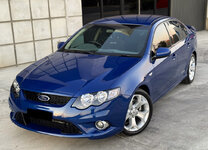
The Falcon No One Likes To Talk About………………………
Back in the late 2000’s, Ford were desperate to improve the fuel economy of the Falcon, which they believed would halt the sales decline. Sadly, that pursuit was a waste of time, money and energy. Buyers weren’t deserting Falcon being it was thirsty, but because it was the wrong type of car. Let me explain.

At the time, Ford and Holden were losing ground to smaller four cylinder vehicles such as the Toyota Corolla and Mazda 3. What they didn’t realise was those vehicles were popular for other reasons, not necessarily fuel economy. For example, the Corolla became the rental car of choice, famed for its reliability and durability. The Mazda 3 on the other hand was a giant hit with the private market, a by product of its styling and Mazda’s zoom-zoom marketing strategy.
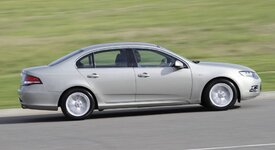

But there was another segment bubbling along in the background, one the flew against what we were being told. The common belief was that Aussies wanted smaller cars, more fuel efficient 4-cylinder cars. The irony being that the vehicles that eventually overtook the traditional 6-cylinder Aussie family sedan were bigger, worse to drive and more polluting than the a big Falcon or Commodore. The two top selling vehicles over the last 10 years have been dual cab pickup trucks with sooty diesel engines, ladder frame chassis, leaf springs and drum brakes. And are as expensive to run, if not more, than “our” Aussie sedans.

Returning back to the late 2000’s, Ford and Holden were desperate to remain relevant. The federal and state governments were providing a co-funding scheme to spur the car makers to produce more fuel efficient vehicles. This included new powertrain technology, alternative fuels and superior aerodynamic properties. And at one point, both companies announced intentions to start making small cars, the Focus for Ford and Cruze by Holden. However, Ford cancelled the Focus in 2009 and instead put that money into making a diesel Territory, an improved LPG powered inline 6, and……………………………a new four-cylinder engine for the Falcon, which was developed to the tune of $42-million dollars.


And oh how that rattled some cages. For context, in its then 50-years in production, the Falcon had always been powered by an inline 6-cylinder engine made right here in Australia. Sure, there were V8’s along the way, but the inline 6 was the bread winner of the family. Also clouding the announcement was a car Holden brought to market in the early 80’s……………….a four cylinder Commodore. The 4-cylinder Commodore was also a response to calls for greater economy, however, Holden went cheap. Instead of using something modern, they lopped two cylinders of their ancient OHV inline 6 and called it a day. Now, the Falcon also used an OHV inline 6 at the time, but it had a modern cross-flow alloy cylinder head. The Holden 6 was essentially a direct descendant of the 1948 original with all-iron construction and non-cross flow head. In 6-cylinder form, it was a nail, but chopping off two cylinders and calling it Starfire, well it was a disaster waiting to happen. It was painfully slow, completely lacking refinement and actually THIRSTIER than the 6. It was so poorly received Holden quietly discontinued it within a very short period.
The thing is, A LOT had changed since 1980. And yet, there was still the perception that a 4-cylinder had no place in an Aussie made large car. The journalists couldn’t help highlight how terrible the 4-cyclinder Commodore was, despite there being 30 years difference. As such, the 4-cylinder Falcon was being discredited before it even went into production. Which is a shame because it ended up being more than a new engine being slung into an existing platform.
From the period press release -
“It wasn’t a case of just dropping in an EcoBoost engine into the Falcon body,” Ford Australia powertrain development manager, David Mitchell said.
“This is the first rear-wheel drive application of this technology so there were a number of challenges to ensure it met both Ford Australia’s standards and the standards our customers expect from an engine in a large family sedan.”
“A great deal of durability work on the engine was done at our You Yangs Proving Ground and at our Geelong Research and Development Centre,” he said.


Ford’s choice of 4-cylinder engine was the higher spec version of their 2.0 GTDI 2.0 producing 179 kW and 353 Nm. Ford then paired it with the ZF 6-speed automatic, which was a lower torque capacity variant of this gearbox was made in China and would eventually end up on certain 6-cylinder versions as well. Because of the higher rev limit of the EcoBoost, 6700 rpm instead of 6250 rpm, a shorter diff ratio was used. The EcoBoost engine reduced vehicle mass by up to 74kg, as such, Ford re-tuned the chassis to make the most of this reduced weight.
“We incorporated several changes associated with the introduction of EcoBoost engine into the Falcon,” de Vlugt said.
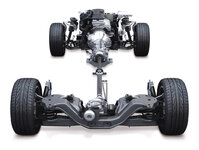
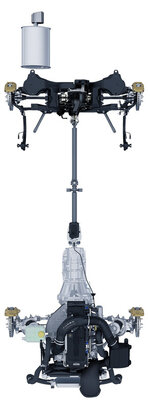
“Among them, retuned spring and damper rates, a mass damper on the rear axle, 13mm lower ride height on the XT model and new exhaust system to provide minimum noise intrusion into the cabin.
“Our customers know and love the precise steering and dynamic qualities of the Falcon and we’ve made sure the EcoBoost also has those qualities.”
Key Chassis Changes Include -
- Larger front stabiliser bar (31mm to 32mm) (XT)
- 13mm lower ride height (XT)
- The G6 used a smaller rear stabiliser bar
- A universal spring and damper tune for XT, G6 and G6E.
- Variable displacement power steering pump
- New Goodyear low rolling resistance tyres (XT only)
- Increased recommended tyre pressures, 33 psi to 38 psi (XT only)


Ford also put considerable effort into disguising the sound of the 4-cylinder engine, or more to the point, tuning out certain unpleasant sound frequencies common to this engine layout.
- Improved outer firewall sound insulation
- Increased inner firewall insulation thickness
- Increased front floor sound barrier
- Upgraded hood insulator
- Engine cover insulation (the 6 and 8-cylinders had no engine cover)
- Additional under engine insulation (G6 and G6E only)
- An acoustic windscreen (which was first implemented on the diesel Territory)
- A specific exhaust system

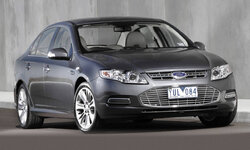

Other changes to the Falcon for the EcoBoost include the following -
- A revised climate control system, needed to account for the different location of compressor and a/c lines
- Specific engine mounts to isolate 4-cylinder vibration.
- Revised cooling system
- Revised fueling systems to account for direct injection (the only Falcon to have DI)
- Revised electrical system
- Increased aerodynamic measures to reduce fuel consumption
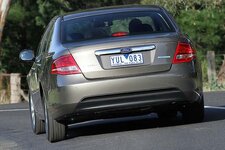
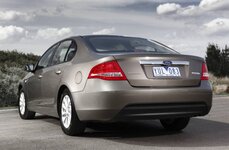


From there, it was about tuning the engine and gearbox to work in a predictable and seamless manner.
“The powertrain is matched to ensure the initial response and the transition to full boost pressure is as linear as possible,” he said.
“We wanted the response to build effortlessly, rather than peak early. We also didn’t want the gearbox to ‘hunt’ through gear changes to find the appropriate one.”


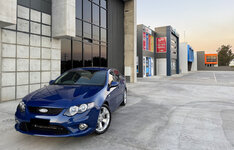
The EcoBoost Falcon went on sale in April 2012, four months after the FG MK II update went on sale. Only available on the XT, G6 and G6E sedans, the engine was a no-cost-option, essentially the same price as the naturally aspirated 4.0 inline 6. Initial reviews were positive, in particular the improved steering and chassis dynamics afforded by the lighter engine over the front axle. To equalize the performance between the old inline 6 and the lighter 4-cylinder, Ford programmed a slower gearchange on EcoBoost cars. This is something noticed during the press launch, the EcoBoost’s upshifts being slower. Which brings us to a little comparison.

The numbers show it being a case of swings and roundabouts. The big 6 naturally had more power and torque, but the EcoBoost produced its torque peak noticeably earlier. Combined with the nature of a boosted engine and the lighter weight, the EcoBoost felt sprightlier in everyday driving. And combined with the NVH measures, an EcoBoost Falcon was overall more refined. However, the real-world fuel economy difference between the engines was not as big as you would think. Despite being double the cubic capacity, the old warhorse didn't have to work as hard, which in turn skews the economy numbers. Balancing that, in some states, 4-cylinder vehicles had lower annual registration charges. It was also noted that for towing, the 4.0 engine was the one to buy, simply because you weren't relying on boost to maintain speed under load. Then there was something most wouldn't care about, but the raspy nature of the 6-cylinder gave it a more characterful sound.
EcoBoost -
4.0 Inline 6 - (Just listen to the induction at the 1-min 30, one of my favorite car sounds ever)
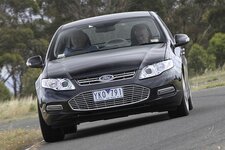


Despite being the smaller engine, I get the feeling that putting this powertrain into a Falcon was a loss leader. Why? Because the EcoBoost engine was expensive to make, and expensive to import from Spain. With all-alloy construction, the addition of a turbo and all the associated hardware (intercooler, intake piping ect), then items such as the acoustic windscreen and additional sound deadening made it costlier to manufacture than a similar spec Barra-powered Falcon. All without charging extra for it. I also get the feeling that this is one of the reasons why the EcoBoost was never advertised…………………………they much preferred to sell the simpler and cheaper Barra instead.

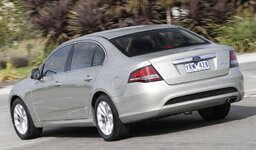


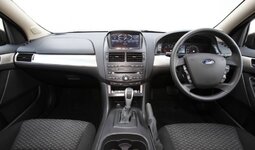


So, why did the EcoBoost fail? Oh boy, where do I start? First, the cost to make EcoBoost vehicles as outlined above. Secondly, a public perception of Falcon being anti-social gas-guzzler bought by bogans. Thirdly, it didn’t change the fact the Falcon was a sedan, not a desirable SUV or pickup truck. And crucially, by the time the EcoBoost was launched, Ford had already sealed the Falcon’s fate, even though that announcement wasn’t made public until 13-months later. Advertising and pushing a dead platform was seen as a waste of money. The only advertising they did was an online video posted on Youtube. You will note by this stage, Ford were fully committed to making the Ranger the best in class, and ultimately, a segment leader. Falcon was simply yesterday’s hero, and no amount of powertrain options was going to change that.
To be 100 per cent clear, the EcoBoost didn’t fail because of a lack of talent, be that from the engineering team or the brilliance of the final result. Sadly, it was too little, too late to save the Falcon, and Ford Australia’s manufacturing as a whole.