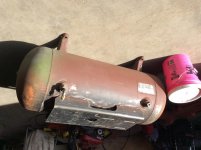
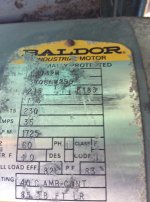
You don't need the copper lines going to the tank if you plumb in a check valve in the tank and run a bleed line to the little brass fitting on the side of the pressure switch to blow down the pump and discharge line at shutdown, but this compressor has a lube oil pressure switch unloader system that is a superior method of blowing down the pump. When the pump runs and makes oil pressure it cuts off the air to the head unloaders which allows the inlet valves to function normally. Once the pump shuts off, the oil pressure signal disappears and the little valve on the end of the crankshaft opens and lets air back up to the head unloaders, holding the inlet valves open. This blows down the LP cylinder and prevents the compressor from pumping any air at startup. This allows for a loadless start, and also protects the compressor if for any reason there is no oil pressure. This is by far the preferred method of unloading this machine and it would be a shame to bypass it.
It looks like someone also installed a pilot valve for a continuous run. That is the big brass valve with the aluminum toggle on the top which is plumbed into the bottom of the oil pressure unloader switch. This might be useful if you use the compressor very hard, such as for sandblasting, where you would not want the compressor to be cycling on and off excessively.
Overall you have a very nice machine there, every bit as good as a Quincy QR series.
I am not sure if you are going to be much further ahead with a tank from 1951 though.