To avoid these ads, REGISTER NOW!

Difference between 1 and 2 stage compressors producing same PSI?

stickshift

Well-known member
Joined
Nov 16, 2011
Messages
1,215
Location
northeastern US
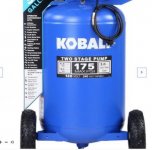
I used to think 2 stage compressor design allows you to reach higher pressure than single stage design. Home Depot has a Husky 175psi single stage, which is a direct competitor to the similarly priced Lowes Kobalt 175psi dual stage.

Husky single stage, 30-gal, 175psi, oiled, belt drive

Kobalt dual stage, 30-gal, 175psi, oiled, belt drive

Interestingly, not only does the Husky have the same psi, it has significantly higher scfm at 90psi (6.2 vs 4.1). How is the Husky achieving this? Better motor?

The motor on the Kobalt has "Duty: CONT." on it, so I assume it's rated for continuous use. Doesn't say anything about it in the manual. The Husky manual says motor is rated for continuous use, but they recommend 50% duty cycle.

Does the rationale for dual stage compressors still exist if there are single stage compressors that can achieve the same compression and produce higher scfm as well? Other than the cool looking 'V' cylinder configuration? :pimpflash
 
To avoid these ads, REGISTER NOW!

electroman187

Well-known member
Joined
Feb 27, 2016
Messages
147
Location
NH
I think the Lowes butchered the specs for the Kobalt.
4.1 SCFM @90 PSI
5.2 SCFM @100 PSI
3.9 SCFM @175 PSI

Yeah, that's not adding up haha.
 
OP
S

stickshift

Well-known member
Joined
Nov 16, 2011
Messages
1,215
Location
northeastern US
I think the Lowes butchered the specs for the Kobalt.
4.1 SCFM @90 PSI
5.2 SCFM @100 PSI
3.9 SCFM @175 PSI

Yeah, that's not adding up haha.
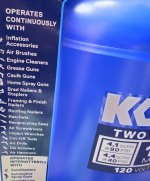
The factory sticker on the tank also shows 4.1 SCFM @ 90 psi, as does the manual (link).

Not only does the Kobalt look weak compared to the Husky, but also the HF 29-gal single stage, which shows 5.9 SCFM @ 90 psi, which is pretty close to the Husky. So the Kobalt looks very anomalous compared to both these single stage units in the same price class.

But the advertising tag lists the following for continuous use (I'm just listing the more air-demanding tools):
  • cut-off tools
  • air drills
  • die grinders
  • air hammers

And the following for intermittent use:
  • sandblasters
  • automotive spray guns
  • high speed sanders
  • dual action sanders
  • jitterbug sanders

That list does not sound reasonable for a ~4 SCFM @ 90 compressor.
 
Last edited:

Don1357

Well-known member
Joined
Apr 15, 2019
Messages
948
Location
Palmer, AK
If you ask me (and I guess you did) high PSI compressors are a gimmick. The only values that really matter are CFM and the duty cycle.

If you use intermittent tools like nailers it doesn't matter; a small pancake compressor will do. If you use air hungry tools it doesn't matter; they will drain that tank in no time anyways and you are left to what the pump can muster.

And yes the motor and pump is what determines the CFM that can be generated.

What do you want the compressor for? That's what determine what you need and were you should put your compromises.
 

electroman187

Well-known member
Joined
Feb 27, 2016
Messages
147
Location
NH
The factory sticker on the Kobalt says:
5.3 CFM @90 PSI
6.1 CFM @40 PSI

The manual and website both say 4.1 SCFM @90 PSI. Clearly, there's a discrepancy.
 
OP
S

stickshift

Well-known member
Joined
Nov 16, 2011
Messages
1,215
Location
northeastern US
The factory sticker on the Kobalt says:
5.3 CFM @90 PSI
6.1 CFM @40 PSI

The manual and website both say 4.1 SCFM @90 PSI. Clearly, there's a discrepancy.
Where are you seeing that factory sticker?

Even at 5.3 scfm, still a significant gap to Husky and HF, but certainly more reasonable.

Here's the one I saw.
4.1 SCFM @ 90 psi
4.4 SCFM @ 40 psi - WTF? Either this is the wimpiest 2hp compressor ever, or as you suggested, they botched the specs.
 

Attachments

  • 2020-12-22 20.47.35.jpg
    2020-12-22 20.47.35.jpg
    106.5 KB · Views: 57

Don1357

Well-known member
Joined
Apr 15, 2019
Messages
948
Location
Palmer, AK
Where are you seeing that factory sticker?

Even at 5.3 scfm, still a significant gap to Husky and HF, but certainly more reasonable.

Here's the one I saw.
4.1 SCFM @ 90 psi
4.4 SCFM @ 40 psi - WTF? Either this is the wimpiest 2hp compressor ever, or as you suggested, they botched the specs.

Nope. Just like there are some people that put "Premium" gas on their low compression motors, there are folks that all they look at is the max PSI as the end all/be all of features.

Putting a cheap pump/motor on a tank that can take 175PSI is a lot cheaper than a good pump/motor on a 135 PSI tank. Guess which one people buy?
 

Don1357

Well-known member
Joined
Apr 15, 2019
Messages
948
Location
Palmer, AK
What do you mean by that? The Husky has very good reviews so it's probably getting to 175psi.

Yeah, I had a 175PSI 30-gallon Husky that was pretty darn quiet and filled up in a reasonable amount of time. I sold it to buy my 60-gallon 13.5PSI@90 CH compressor.
 

seber

Well-known member
Joined
May 31, 2016
Messages
4,192
Location
Deep East Tx.
Look at the pressure gauge in those photos. Notice that the red range begins at 125 psi. You may be able to exceed that but that doesn't mean the compressor will survive long. That lookl like an aluminum head. If it is, I'd be hesitant to exceed 100 psi.
 

TNToy

Well-known member
Joined
Oct 11, 2006
Messages
1,385
Location
West Tennessee
What do you mean by that?

Heat. He means heat.

No way I’d have any of these Chinese compressor’s pressure switches sent any higher than 120psi. Certainly not unless your pump has a cast iron head & block.

The discharge air of my Husky similar to this is already well over 250 F at 120, and so is the pump.
 
OP
S

stickshift

Well-known member
Joined
Nov 16, 2011
Messages
1,215
Location
northeastern US
Heat. He means heat.

No way I’d have any of these Chinese compressor’s pressure switches sent any higher than 120psi. Certainly not unless your pump has a cast iron head & block.

The discharge air of my Husky similar to this is already well over 250 F at 120, and so is the pump.
Got it.

The Husky has a cast iron block, but the head is aluminum:
Aluminum head and valve plate to maximize heat dissipation

The Kobalt doesn't specify, but I can confirm the block AND head are ferrous, only the head cover is non-ferrous.

Also, the listed weight for the Husky is 152 lbs, while the Kobalt is 178 lbs, so the iron vs aluminum in the head of Kobalt, plus the pipe (at least the fins on this are also ferrous) connecting the two stages on the Kobalt will account for a decent amount of the 26 lb weight difference.

So the extra heat of compressing to 175 will wear out the aluminum head more quickly than a cast iron head? How does that wear manifest? Leaks that cannot be sealed with new gaskets? :dunno:
 
OP
S

stickshift

Well-known member
Joined
Nov 16, 2011
Messages
1,215
Location
northeastern US
I have the Kobalt 30 Gallon 2 stage. I wired it for 220. So far so good. It is much more quiet than my last compressor (oil less Craftsman).
The noise improvement is really driven by the belt, so no real difference between your Kobalt and the Husky I linked to in the OP. I have a 20+yr old 20-gal belt drive compressor. So much quieter than a direct drive Husky I bought brand new last year and sold this year.

Once you have a belt drive compressor, there is no going to direct drive unless it's one of those quiet oil-less units such as the Cal Air models. Not only is the db level lower with the belt, but the pitch is very different and much less irritating. Those direct drive screamers rattle my nerves - I won't even turn one of those on without ear pro.
 

electroman187

Well-known member
Joined
Feb 27, 2016
Messages
147
Location
NH
Where are you seeing that factory sticker?

It's on the website from your link. Had to use the 360 view.

Considering the other specs from the website, I'd say the 5.3 CFM @ 90 PSI makes the most sense. You could certainly ask the manufacturer but it's probably a crapshoot with who answers the phone.
 

Attachments

  • 2020-12-23 09_55_20-Kobalt 30-Gallon Two Stage Portable Corded Electric Vertical Air Compressor .jpg
    2020-12-23 09_55_20-Kobalt 30-Gallon Two Stage Portable Corded Electric Vertical Air Compressor .jpg
    18.5 KB · Views: 20
  • 2020-12-23 10_01_17-Kobalt 30-Gallon Two Stage Portable Corded Electric Vertical Air Compressor .jpg
    2020-12-23 10_01_17-Kobalt 30-Gallon Two Stage Portable Corded Electric Vertical Air Compressor .jpg
    17.6 KB · Views: 20

strutaeng

Well-known member
Joined
Dec 12, 2011
Messages
2,248
Location
Dallas, TX
I don't understand how these little 30 gallon units are so expensive. You can get the basic 60 gallon for just a bit more and it has like double the CFM. Needs 240V and not portable, I know, but not like those 30 gallon units are lightweight either.

From experience, 5.5 CFM is not much to get real work done with some air tools. Some rotary air tools consume a lot of air. I always recommend the 60 gallon if you can wire it up. It will run ANY air tool you can hook up to it in a DIY garage setting, except a media blaster.

"Go big or go home" applies to air compressors very well.
 

Stedlin

Well-known member
Joined
May 29, 2019
Messages
318
Location
Duluth, MN
While I was mentoring an apprentice I decided to design and build an air compressor that could be configured as either a single or two stage.
It's all aluminum.
The single stage version is so quiet you can barely hear it. The two stage version is pretty loud.
One of the interesting things about it is how cool it runs. The head and cylinder temperature never exceed 160F. I attribute this to the total lack of restriction between the head and tank. I made a 1/2" bore gate valve to eliminate the need for a restrictive tank check valve and it makes a huge difference.

Here is a video of the two stage version temporarily mounted to a 20 gallon tank.
Two stage uncooled air compressor prototype.
 

PhantomEB

Well-known member
Joined
Feb 6, 2006
Messages
6,697
Location
Medicine Hat, AB, Canuckistan
To avoid these ads, REGISTER NOW!
OP
S

stickshift

Well-known member
Joined
Nov 16, 2011
Messages
1,215
Location
northeastern US
It's on the website from your link. Had to use the 360 view.

Considering the other specs from the website, I'd say the 5.3 CFM @ 90 PSI makes the most sense. You could certainly ask the manufacturer but it's probably a crapshoot with who answers the phone.
Yeah, that definitely makes more sense, as does the 6.1 @ 40psi vs the 4.4 @ 40 psi shown on the sticker on the unit at my local Lowes.

Not often do we have manufacturer's understating the performance of their products.
 
OP
S

stickshift

Well-known member
Joined
Nov 16, 2011
Messages
1,215
Location
northeastern US
I don't understand how these little 30 gallon units are so expensive. You can get the basic 60 gallon for just a bit more and it has like double the CFM. Needs 240V and not portable, I know, but not like those 30 gallon units are lightweight either.

From experience, 5.5 CFM is not much to get real work done with some air tools. Some rotary air tools consume a lot of air. I always recommend the 60 gallon if you can wire it up. It will run ANY air tool you can hook up to it in a DIY garage setting, except a media blaster.

"Go big or go home" applies to air compressors very well.
I think the appeal of the 30-gal units (and you'll note that the HD and Lowes 30-gal units I linked in the OP, as well as the HF 29-gal unit, all get very good reviews, so there are lots of satisfied owners of these models) is:

1. 120v. Yes, for many on this forum, wiring up a 240v outlet isn't a big deal, but for the average DIY'er who wants something larger than a pancake compressor, wiring and installing a 240v outlet is either outside of his bailiwick or just more hassle than it's worth.

2. portability. The vast majority of consumer compressor owners aren't looking to install permanent air piping in their garage - for starters, most of them use their garage as a garage, not a workshop. And they want to be able to use air anywhere on their property. Yes, the Kobalt I listed in the OP is 178lbs, but with the wheels, it's pretty easy to move it around, even for a skinny guy.

3. size. Again, most consumer compressor owners have garages, not workshops. And those garages are *full*. Squeezing a 30-gal unit into some open space as needed is easier than permanently dedicating space to a 60-gal beast on a platform.

4. home harmony. 30-gal portable probably easier to sell to or sneak past the spousal unit than a 60-gal compressor.

5. Given that these 30-gal units can handle stuff like impact wrenches on down, and even the occasional/intermittent use of more air-hungry tools, for the average DIY'er, the additional volume and CFM of a 60-gal just doesn't outweigh the disadvantages listed above.

6. All that and we haven't even talked about price. Obviously the 30-gal units are less expensive, though I agree that $500 is too much. And they go on sale. Sometimes a great sale, which is what I got. And then the price comparison is to 20-gal direct drive units, not to 60-gal belt drive units.
 
Last edited:
OP
S

stickshift

Well-known member
Joined
Nov 16, 2011
Messages
1,215
Location
northeastern US
While I was mentoring an apprentice I decided to design and build an air compressor that could be configured as either a single or two stage.
It's all aluminum.
The single stage version is so quiet you can barely hear it. The two stage version is pretty loud.
One of the interesting things about it is how cool it runs. The head and cylinder temperature never exceed 160F. I attribute this to the total lack of restriction between the head and tank. I made a 1/2" bore gate valve to eliminate the need for a restrictive tank check valve and it makes a huge difference.

Here is a video of the two stage version temporarily mounted to a 20 gallon tank.
Two stage uncooled air compressor prototype.
You might have some insight on this. With add-on tanks, you don't get as much condensation in the add-on tank because the air is cooler by the time it reaches that second tank.

On a two stage compressor, while the air is certainly cooler by the time it enters the second stage, I suppose it doesn't matter from a condensation perspective? Because all that moisture is already trapped in the system, so it will end up in the tank? Or am I not thinking about this correctly?
 

Stedlin

Well-known member
Joined
May 29, 2019
Messages
318
Location
Duluth, MN
You might have some insight on this. With add-on tanks, you don't get as much condensation in the add-on tank because the air is cooler by the time it reaches that second tank.

On a two stage compressor, while the air is certainly cooler by the time it enters the second stage, I suppose it doesn't matter from a condensation perspective? Because all that moisture is already trapped in the system, so it will end up in the tank? Or am I not thinking about this correctly?
Depending on the design the air temperature from the first stage may or may not be cooler than the intake air temp.
Condensation should not be a factor.
 

volaredon

Well-known member
Joined
Oct 7, 2012
Messages
1,611
Location
IL
if I am to have a compressor built for 120V, Id rather have a gas powered unit instead.
 

setfocus

Well-known member
Joined
Jan 15, 2020
Messages
413
Location
rust belt
At the previous garage I worked at they had a Dewalt 30 gallon single stage unit just for a self serve outdoor air pump. The Dewalt broke and they replaced it with a kobalt 2 stage. The kobalt was much quieter.
 

finn

Well-known member
Joined
Mar 27, 2005
Messages
16,186
Location
The UP, God's country
The two stage Kobalt was on clearance last spring and has, I believe, since been discontinued and replaced with an oilless twin “silent “ compressor similar to the CalAir and HF silent compressors.


I picked up one of the clearance two stage compressors last year for the small garage at our Arizona house. So far, it looks like the right choice. It’s manufacured by Campbell Hausfield, like many other private brands, and is extremely quiet, likely due to the cast iron compressor block and head and relatively low compressor speed. It’s not silent, but my wife doesn’t know it’s running if shin the house. Much quieter than my ancient belt drive Craftsman single stage with an aluminum Devilbiss pump, my Champion 80 gallon, or my IR at the shop and house in Michigan. Nothing like the annoying scream of the 60 gallon direct drive torture machine in the yard shed in Michigan or the PC pancake compressor.

The cfm ratings were confusing when I bought it, and I briefly considered the single stage Husky, but ended up with the two stage Kobalt for reasons of longevity. The two stage design should have lower crankshaft loads and lower acoustic output, all other things being equal. From memory, the claimed life was something like 6 or 8k hours, compared to 2k hours of the “silent” replacement, although, realistically, I doubt it will run more than twenty to fifty hours per year for my use.
 

Greg5OH

Well-known member
Joined
Jun 24, 2014
Messages
196
If you ask me (and I guess you did) high PSI compressors are a gimmick. The only values that really matter are CFM and the duty cycle.

If you use intermittent tools like nailers it doesn't matter; a small pancake compressor will do. If you use air hungry tools it doesn't matter; they will drain that tank in no time anyways and you are left to what the pump can muster.

And yes the motor and pump is what determines the CFM that can be generated.

What do you want the compressor for? That's what determine what you need and were you should put your compromises.
some Industrial/commercial applications require minimum 150+ psi. Like my coats tire machine. at 120PSI input rims will slip in the jaws. 150-170...welded to the jaws
 

pcmeiners

Well-known member
Joined
Aug 13, 2009
Messages
7,831
Location
In the only town in Pennsylvania, Bloomsburg.
"Shortened motor life from compressing so much in one stage?"

How about shortened motor and compressor life.

Now as to temperature.... the higher the temp the more air and the moisture expands, this is just lost energy as cooler denser compressed air has more energy, this is where a two stage shines over a single stage. Very large multi stage compressor use intercooler between stages to lower the temperature of air between each stage to gain approx 10% extra horse power output. Actually most 2 stage compressors have small intercoolers, but they do not lower the air temp a great deal.

"The Husky manual says motor is rated for continuous use, but they recommend 50% duty cycle."

Funny, yes the motor itself may be rated for continuous use (which I doubt at it's true rated HP), but not the compressor. You have to laugh at the BS the low end manufacturers give out. Low end compressor manufacturers believe in the following.....

“If you can't dazzle them with brilliance, baffle them with ********.”​


― W.C. Fields
 
Last edited:

Downwindtracker 2

Well-known member
Joined
Jun 13, 2019
Messages
1,715
Location
BC
Standard mill air is 90psi in the many mills I have worked in . How to maintain that at the far corner is an engineering problem. It's been a long time since college, butStandard Cubic Feet per Minute is 90psi, or maybe a 100. There temperature limits on that ,too. None of the consumer compressors list SCFM , so basically, they are all BS .

Rough estimates of CFM produced are 5 at 15amps 120 volts and 10 at 15amp at 240volts .
 

finn

Well-known member
Joined
Mar 27, 2005
Messages
16,186
Location
The UP, God's country
Standard mill air is 90psi in the many mills I have worked in . How to maintain that at the far corner is an engineering problem. It's been a long time since college, butStandard Cubic Feet per Minute is 90psi, or maybe a 100. There temperature limits on that ,too. None of the consumer compressors list SCFM , so basically, they are all BS .

Rough estimates of CFM produced are 5 at 15amps 120 volts and 10 at 15amp at 240volts .
When I was looking last year, all of these small compressors listed Scfm, most at 90 psi and some also at a lower pressure. Some also listed a value that is just swept volume at a rated speed, a value that isn’t very useful, as it doesn’t take efficiency into account.

Scfm is a term that corrects gas flow at an observed pressure, and temperature, using the rules of thermodynamics and the ideal gas law to a universally accepted pressure and temperature condition.
 

bsaint

Well-known member
Joined
Apr 26, 2010
Messages
5,109
Location
Manchester, CT
Crazy talk flying around this thread. AmericanLocomotive and myself are both air compressor techs. I am no longer a full time tech but here's the scoop, locomotive can feel free to correct me.

It's simple for a single stage compressor to be 175 psi. It just means it would physically take longer to build pressure so flow will be less. A large high pressure cylinder has 175 pounds per square inch of the piston. So even tho the piston is smaller on the 2nd stage of a 2 stage unit the pressure is 70 psi higher than first so it's a ratio. Horsepower is horsepower. Just like every teaspoon of gasoline contains the same amount of nominal energy. It's just how efficiently it's extrapolated.

When companies would only buy American made compressors they all were 100-105 psi machines. With foreign companies coming in they are usually 10 bar or 150 psi. You can make more air with 50hp at 100 psi than 50 hp at 150 psi. It's why high pressure retro kits have different pulleys but also derate cfm at 90 psi. I always recommend with a 100% duty cycle machine to buy the psi range closest to your application. I recommend buying a high pressure 2 stage machine for partial duty cycle applications.
 

Downwindtracker 2

Well-known member
Joined
Jun 13, 2019
Messages
1,715
Location
BC
Thanks, you made my day. At my age remembering the psi of SCFM , forgot the temperature, though. That apprenticeship was some time ago.

In one old mill I worked in, they used a very old IR two stage piston compressor. A big tall thing. A real museum piece.
 
Last edited:

MacMcMacmac

Well-known member
Joined
Oct 21, 2014
Messages
1,576
Location
canada
150psi for a single stage compressor is pretty much the limit, and even that is probably too high. When you go so high in one step you make the air very hot. This raises it's pressure, but it's a "false" pressure as it goes away once it cools. That's a waste of energy. It's much more efficient to raise it to about 40 psi, cool it, then raise it to the final pressure. We have 1250hp Worthingtons at work and they are 3 stage.
 

u3b3rg33k

Well-known member
Joined
Dec 18, 2017
Messages
4,047
150psi for a single stage compressor is pretty much the limit, and even that is probably too high. When you go so high in one step you make the air very hot. This raises it's pressure, but it's a "false" pressure as it goes away once it cools. That's a waste of energy. It's much more efficient to raise it to about 40 psi, cool it, then raise it to the final pressure. We have 1250hp Worthingtons at work and they are 3 stage.
I think it's also about volumetric efficiency. if you have a single piston compressing to 175 PSI, then the air in the cylinder at TDC can never be less than 175 PSI. on the downstroke that'll fill the piston and you'll be able to **** in less fresh air. the higher the pressure, the more air "remains" in the cylinder.

With a two-stage you can do less compression on the first stage, which improves first stage efficiency.
 

cvairwerks

Well-known member
Joined
Aug 12, 2016
Messages
7,187
Location
Within hearing distance of Texas Motor Speedway
One you get past 150 psi per stage, the cooling needs become very apparent. The Clark 5 stage we had in our high speed lab, required a 500 hp coolant pump to maintain temps within limits. The compressor was rated at 3000 CFM @ 2000 psig. We derated it on install to 2000 CFM, as we didn't need the 3K flow rate for our lab.

We drew so much power running the compressor, we had time of day limits as to when we could even start it.
 
To avoid these ads, REGISTER NOW!
Top Bottom