To avoid these ads, REGISTER NOW!

Difference between "insulated" tools and normal tools

Itsjustdirt

Well-known member
Joined
May 15, 2013
Messages
531
Location
San Diego, California
Just wondering what the mechanical difference is between "insulated 1000v" tools and regular tools.

Knipex electrical pliers (yellow/red grip) appear almost identical to the knipex comfort grip pliers. Is there a true difference or is the only difference in the testing and certs behind the scenes?

Aren't any plastic/rubber dipped pliers/cutters technically insulated when it comes to simple 110v housework? I even have klein strippers that state "non isulated" but guys use those on electrical all the time. I guess I'm just confused.
 
To avoid these ads, REGISTER NOW!

Gmonkee

Well-known member
Joined
May 9, 2010
Messages
2,887
I finished the wiring in my home asking what the guy before me did every one of six sections. I had to work in a hot breaker box the entire way. Each section I had to identify the hot and in some sections red was hot, another all the wires were red and another black was hot.

Multiple lights each circuit meant constant testing. Insulated tools did help me stay safer.

Working proper code wiring cold any old tool could work. I didn't have that luxury.
Many simply will not or are not allowed to work a hot circuit. Thus the fancy tools hold no advantage.
 

Fbmoose48

Well-known member
Joined
Sep 26, 2017
Messages
202
Location
GJ
110V and 1000V are very different electrical potentials. Just because it worked at 110V doesn't make it safe at 1000V.

Realistically, if you don't understand the benefits and proper application of insulated tools then you don't need them.
 

Wamsutta

Well-known member
Joined
Jan 8, 2014
Messages
10,885
Location
Amarillo, Texas
Those Klein screwdrivers with the insulated shanks are pretty cool looking though. Makes them look spiffy professional.
 

MattT

Well-known member
Joined
Feb 20, 2010
Messages
3,201
The insulated tools typically have pronounced hand guards to prevent contact with the steel head. The handles also often feature different colored layers so you can tell when the outer layer has been cut.
 
OP
I

Itsjustdirt

Well-known member
Joined
May 15, 2013
Messages
531
Location
San Diego, California
110V and 1000V are very different electrical potentials. Just because it worked at 110V doesn't make it safe at 1000V.

Realistically, if you don't understand the benefits and proper application of insulated tools then you don't need them.

Thanks for the reply. Understanding something and needing something are two different things completely.

I don't need them. No doubt. I'm just trying to educate myself. Is there a mechanical, physical, or chemical difference between them or is it simply a "yup, we've verified it will insulate!"?

Again, I'm NOT advocating to use normal tools instead of approed insulated when working on high power electrical stuff. I just want to know what the actual difference is, in say, the below two pliers.

https://www.amazon.com/dp/B001H1HJXM/?tag=atomicindus08-20

https://www.amazon.com/dp/B000X4MOVG/?tag=atomicindus08-20
 
Last edited:

WhiskeyRanger

Well-known member
Joined
Mar 28, 2015
Messages
398
Insulated 1000V tools will protect you, the other ones may protect you.

Many of them also have a color indicating layer so you know if the insulation has been compromised.
 
OP
I

Itsjustdirt

Well-known member
Joined
May 15, 2013
Messages
531
Location
San Diego, California
The insulated tools typically have pronounced hand guards to prevent contact with the steel head. The handles also often feature different colored layers so you can tell when the outer layer has been cut.


Ahhhh! That makes perfect sense! Thanks for answering directly!
 

Toothaker

Well-known member
Joined
Nov 25, 2016
Messages
1,367
Location
Wichita, Kansas
A friend of mine worked for the local electric utility, and he described the various voltages he worked with. When they worked with certain voltages they had to test their PPE every day and use only tools designed for those voltages. As the voltages went up, the tools got more expensive, the safety rules more stringent and the risks grew.
 

Crazyjake8493

Well-known member
Joined
Sep 26, 2014
Messages
3,977
Location
Upstate NY
Tools with an insulated shaft such as screwdrivers or insulated ratchets and sockets also prevent you from shorting between the screw/lug you're tightening and another metal surface, such as inside a panel.
 

ttpete

Well-known member
Joined
Mar 8, 2011
Messages
6,737
Location
Dearborn, MI
I think those 1000V insulated tools are a Euro thing that's required by some nanny state bureaucrat.

I think that it would make the tools very clumsy to use. Not for me.
 
To avoid these ads, REGISTER NOW!

Gmonkee

Well-known member
Joined
May 9, 2010
Messages
2,887
I have Facom and some clones in the screwdrivers. I rather like those. Not much different than others in the hand.
All my pliers in the kit are old things with gas line hose on thr handles. Not kosher on a pro level but that kit has not been used in over a year here.
 

neophyte

Well-known member
Joined
Apr 23, 2012
Messages
9,758
Location
Pennsylvannia
The main difference between “insulated” tools, such as the ones usually seen that say inulated to 1000v, is that the tools are actually tested at high voltage, usually with a tank full of conductive liquid, to verify that the insulative handles and other surfaces, are actually insulated and safe. This ads an extra step to the production process, which costs more money, which is the reason the insulated versions of tools usually cost more.

In some cases the insulated grips look practically the same, between insulated and non-insulated tools from the same manufacturer, such as the bimaterial molded grips found on pliers from companies such as Knopex and Facom.
There are some differences between the pliers grips though. The insulated pliers have larger guards to prevent a users hand from slipping up the grip onto the uninsulated portion of the pliers.
Spring loaded pliers seem to be less common, I’m not sure whether this is a code requirement anywhere for safety reasons, although a loose spring could fall and cause safety issues so this might be the reason. Facom has spring loaded insulated pliers, but their pliers use a plastic spring, so this might be the reason they manufacture spring loaded pliers and other companies don’t.
I’m not sure if there’s any difference between the material, or material thickness of the insulated and ininsulated grips.
Different countries and regions seem to have different standards for their insulated tools.
In Europe, a number of the insulated tools manufacturers produce tools that are almost fully insulated. Not only are the grips insulated and tested, but the heads of the tools are coated as well on tools such as pliers, so the only areas not insulated might be the actual plier jaw gripping surfaces. There are also pliers made from non-conductive materials like plastics, with inset jaws made from steel or possibly ceramic.
Some manufacturers produce more than one type of insulated tool grip. Knipex and Facom for instance both produce two different series if insulated tools. One type has injection molded grips, whereas the other type, has grips that dipped in a thick insulated coating. The dip insulated tools are almost always more expensive, sometimes significantly. I read somewhere that the dip insulated tools where manufactuered for workers who need to work on live electrical circuits, whereas the molded grip tools where meant for people who had to service lines where they might accidentally encounter live electrical circuits. I’m not sure how accurate this is though.
The dip insulated tools have some more especifics as far as manufacturing goes. If the insulation is applied in more than one ayer, the different layers have to be color coated, so that damage can be spotted. If the outer layer is broken and an inner layer is visible, use of the tools should be discontinued. I believe most of the dip insulated tools used to have two layers. Now some newer versions, such as Irega insulated wrenches, mention three differently colored layers for the insulation.
Some of the dip insulated tools seem to have a textured grip surface, whereas other manufacturers leave the surface smooth. I’m not sure if this is a requirement for some countries or not. Facom, Sibille, and older klein tools were made with insulated grips that had “treads” molded into them. Facom and Sibille are French or at least produce items for the French markets so maybe France has some sort of requirement for this. There was another French insulated tool supplier who also used textured dip insulated grips. All the grips including the Klein pliers were also orange.
There is a British manufacturer of insulated tools that uses nylon 11, and directly molds the grips onto the tool handle surface. Their claim for this being better us that the nylon is more impact resistant, and because it’s molded directly onto the tool, the handle surface won’t dislodge, and slip from the tool, which is shown to happen to grips that are pushed on, like the lower cost molded Knipex insulated plier grips.
Another thing that should be noted about insulated pliers, is that unless the manufacturer is actually also a tool maker, such as Knipex, Klein, Facom, etc., most insulated tool “manufacturers” buy tools from other manufactuers, then apply the appropriate insulation, and do the safety testing.
 

Fbmoose48

Well-known member
Joined
Sep 26, 2017
Messages
202
Location
GJ
I think those 1000V insulated tools are a Euro thing that's required by some nanny state bureaucrat.

I think that it would make the tools very clumsy to use. Not for me.

A real nanny state would forbid you from working on energized circuits.
 

Monte

Well-known member
Joined
Dec 23, 2008
Messages
12,675
Location
Germany
Insulated/VDE approved tools are individually tested in a water bath to make 100% sure that the insulation is ok.

You can see a small glimpse of the testing at 8:20
 
Last edited:
OP
I

Itsjustdirt

Well-known member
Joined
May 15, 2013
Messages
531
Location
San Diego, California
The main difference between “insulated” tools, such as the ones usually seen that say inulated to 1000v, is that the tools are actually tested at high voltage, usually with a tank full of conductive liquid, to verify that the insulative handles and other surfaces, are actually insulated and safe. This ads an extra step to the production process, which costs more money, which is the reason the insulated versions of tools usually cost more.

In some cases the insulated grips look practically the same, between insulated and non-insulated tools from the same manufacturer, such as the bimaterial molded grips found on pliers from companies such as Knopex and Facom.
There are some differences between the pliers grips though. The insulated pliers have larger guards to prevent a users hand from slipping up the grip onto the uninsulated portion of the pliers.
Spring loaded pliers seem to be less common, I’m not sure whether this is a code requirement anywhere for safety reasons, although a loose spring could fall and cause safety issues so this might be the reason. Facom has spring loaded insulated pliers, but their pliers use a plastic spring, so this might be the reason they manufacture spring loaded pliers and other companies don’t.
I’m not sure if there’s any difference between the material, or material thickness of the insulated and ininsulated grips.
Different countries and regions seem to have different standards for their insulated tools.
In Europe, a number of the insulated tools manufacturers produce tools that are almost fully insulated. Not only are the grips insulated and tested, but the heads of the tools are coated as well on tools such as pliers, so the only areas not insulated might be the actual plier jaw gripping surfaces. There are also pliers made from non-conductive materials like plastics, with inset jaws made from steel or possibly ceramic.
Some manufacturers produce more than one type of insulated tool grip. Knipex and Facom for instance both produce two different series if insulated tools. One type has injection molded grips, whereas the other type, has grips that dipped in a thick insulated coating. The dip insulated tools are almost always more expensive, sometimes significantly. I read somewhere that the dip insulated tools where manufactuered for workers who need to work on live electrical circuits, whereas the molded grip tools where meant for people who had to service lines where they might accidentally encounter live electrical circuits. I’m not sure how accurate this is though.
The dip insulated tools have some more especifics as far as manufacturing goes. If the insulation is applied in more than one ayer, the different layers have to be color coated, so that damage can be spotted. If the outer layer is broken and an inner layer is visible, use of the tools should be discontinued. I believe most of the dip insulated tools used to have two layers. Now some newer versions, such as Irega insulated wrenches, mention three differently colored layers for the insulation.
Some of the dip insulated tools seem to have a textured grip surface, whereas other manufacturers leave the surface smooth. I’m not sure if this is a requirement for some countries or not. Facom, Sibille, and older klein tools were made with insulated grips that had “treads” molded into them. Facom and Sibille are French or at least produce items for the French markets so maybe France has some sort of requirement for this. There was another French insulated tool supplier who also used textured dip insulated grips. All the grips including the Klein pliers were also orange.
There is a British manufacturer of insulated tools that uses nylon 11, and directly molds the grips onto the tool handle surface. Their claim for this being better us that the nylon is more impact resistant, and because it’s molded directly onto the tool, the handle surface won’t dislodge, and slip from the tool, which is shown to happen to grips that are pushed on, like the lower cost molded Knipex insulated plier grips.
Another thing that should be noted about insulated pliers, is that unless the manufacturer is actually also a tool maker, such as Knipex, Klein, Facom, etc., most insulated tool “manufacturers” buy tools from other manufactuers, then apply the appropriate insulation, and do the safety testing.


Incredible amount of knowledge shared here! Thank you!
 

rlitman

Well-known member
Joined
Oct 18, 2010
Messages
24,650
Location
Long Island
Insulated/VDE approved tools are individually tested in a water bath to make 100% sure that the insulation is ok.

You can see a small glimpse of the testing at 8:20


Yes. And the testing is done at ten times the rated voltage.

But they test, because some will fail. I do not know what the failure rate is (I would hope it is small), but for those who use untested tools around voltage, they should know that some of the best ones, designed with insulating handles, still can fail.
 

MBfreak

MEMBER EMERITUS
Joined
Dec 10, 2010
Messages
2,301
Location
Linkoping , Sweden
Hey to all.
One of the really big manufacturers (ABB)of electrical components from a simple residential light switch to Circuit Breakers for 800 kV and 4000 A(63kA sc and tens of thousands of stuff in between has a company rule forbidding employees and contracted personnel work on any live equipment. DC below 50 V and AC below 24 V allowed.
And there is continuos education, method statements and follow up at all levels.

And is many high power installations you do not need to actually touch a live part. It is enough to drop a small piece of metal into a field and thus start a electric arc at many kiloamps, which will very seriously hurt a person.

So, please avoid using derogatory and uneducated expressions like "Nanny State". You obviously do not know what you are talking about. At all.

Ola
 

rick carpenter

Well-known member
Joined
Jan 20, 2011
Messages
3,786
Location
Huntsville, East Texas
I use Milwaukee insulated drivers for my household electrical work because when I twirl them by the shanks the insulation provides a much better grip than slick chrome.

I've never been tempted to work hot on anything.
 

AmishFury

Well-known member
Joined
Jan 22, 2015
Messages
872
one has a lower risk of having a really bad day when working around the angry pixies
 

ultgar

Well-known member
Joined
Jan 11, 2005
Messages
1,119
Location
New Jersey
Some manufacturers produce more than one type of insulated tool grip. Knipex and Facom for instance both produce two different series if insulated tools. One type has injection molded grips, whereas the other type, has grips that dipped in a thick insulated coating. The dip insulated tools are almost always more expensive, sometimes significantly. I read somewhere that the dip insulated tools where manufactuered for workers who need to work on live electrical circuits, whereas the molded grip tools where meant for people who had to service lines where they might accidentally encounter live electrical circuits. I’m not sure how accurate this is though.

The dip insulated tools have some more especifics as far as manufacturing goes. If the insulation is applied in more than one ayer, the different layers have to be color coated, so that damage can be spotted. If the outer layer is broken and an inner layer is visible, use of the tools should be discontinued. I believe most of the dip insulated tools used to have two layers. Now some newer versions, such as Irega insulated wrenches, mention three differently colored layers for the insulation.

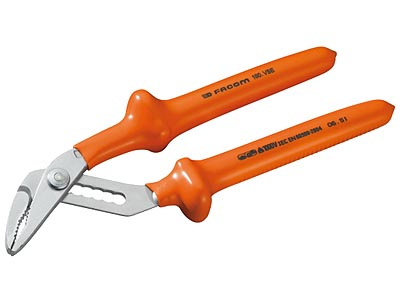
You know more about Facom than most dealers I know. You're correct........Facom's 1000V tools come in two classes. VE Series tools are designed for contractors who install and maintain electrical equipment in buildings, and combine the safety requirements needed for working on or near live components with ergonomics and practicality. VSE Series tools are aimed at users who work around higher live voltages, as is the case in electrical power plants. As an added safety feature, Facom's current VSE tools have two layers of insulation: an orange top layer and an underlying yellow layer.When the top layer becomes worn or damaged, it exposes the underlying yellow layer which indicates to the user that it’s time to replace the tool. The VSE tools also have larger guards to help keep hands clear of the non-insulated parts of the tool.

The previous generation of VSE tools (before 2000) had 3 layers....outer layer was "orange" showing maximum protection, middle layer was "green" indicating reduced insulating capacity and recommending that the tool be replaced, and bottom layer was "yellow" meaning discard immediately. I suspect they went to 2 color as too many customers would ignore the green warning.

180vse.jpg


180ve.jpg
 
To avoid these ads, REGISTER NOW!
Top Bottom