To avoid these ads, REGISTER NOW!

Digital vs incan. test light vs Powerprobe

scooby074

Well-known member
Joined
Oct 26, 2008
Messages
5,231
Location
Nova Scotia
Looking to replace a worn out and cracked testlight, been my goto for 15 yrs, but the clear plastic body has a hairline crack and is clouded and stained, probably from years of brakeclean.

Im curious about the SnapOn EECT400 "digital" tester vs a traditional incandescent bulb tester like the EECT4H vs a powerprobe.


I like the convenience of the coil cord on the eect400 and low draw "computer safety" factor although Ive never had a problem using a traditional light. A voltage readout could be handy too I suppose.

Ive seen next to no discussion on GJ about the eect400. Wonder why?

The traditional eect4 is just that traditional. The light we all know.

The PP3 or 4. The most expensive option by far. Having a combined meter and testlight could be nice (PP4), but I have a quality meter that I regularly use so I dont really need that function. PP has a nice long cord which is both good and bad. Digging out and putting away the PP would also be a lot of work compared to a testlight. I also dont really need it to inject power because I have sets of long test leads I use for that. The PP would be an all in one unit, so the PP is more convenient in that sense.

I guess the PP isnt really comparable to a simple testlight, so maybe its not a fair comparison and it has a place of its own??

Im leaning digital, mostly for the coiled cord, plus I still could dig out my old incan when needed and I have a standalone meter, test leads, and test loads

If you had to pick one of the 3 what would you pick?
 
Last edited:
To avoid these ads, REGISTER NOW!

Bobioz1

Well-known member
Joined
Jun 26, 2013
Messages
821
Location
Northern il. (For now)
I had an EECT400. I didn't like it so I traded it back in. If you get a Power Probe and use it for a while, you won't be asking these questions.
 

Crazyjake8493

Well-known member
Joined
Sep 26, 2014
Messages
3,952
Location
Upstate NY
I have a coiled cord test light, AC/DC clamp meter, and a Power Probe and I use all three. Each have their advantages, I wouldn't want to be without any of them.
 

tjude05

New member
Joined
Apr 10, 2017
Messages
1
I have a power probe and won't go back.

Sent from my SM-G900V using Tapatalk
 

californiaHank

Well-known member
Joined
Nov 20, 2015
Messages
487
Buy a $10 (or thereabouts) LED test light on-line or at your local auto parts place.
It's a useful timesaver for go/no go testing.
Use your DMM when you need to actually measure voltage, current, or resistance.

The EECT400 is an overpriced gimmick to me. There are lots of better ways to spend $90+ on the Snap-on truck.

Power Probes are cool. I don't own one, but I can understand how they save a lot of time for someone who specializes in car electrical problems. I've seen the PP IV for about $160 on-line, and at that price I'm tempted to get one, even though I don't do much work on car electrics.

PS: IMHO opinion, coiled cords are more of a liability than an asset. Sooner or later you'll try to extend it and the gator clip will pop off the battery post or wherever, causing much swearing.
 

FigureItOut

Well-known member
Joined
Sep 14, 2015
Messages
3,267
Location
Bentonville AR
PP3 is a mighty handy diagnostic tool. The high and low tones are nice for when you have your hands face way up in the guts of a dash, or when you must actuate a component away from the test point.

It is a little unwieldy. I shortened the cables on mine to about six feet and bought the extension and the cigarette lighter adaptor. This makes it a lot more convenient.

Sent from my SAMSUNG-SM-G930AZ using Tapatalk
 

bdelmar2

Well-known member
Joined
Apr 5, 2013
Messages
276
You might want to check out what they call a 'Logic Probe'. Similar to a test light but is led based, computer safe and has both positive and negative leads.

Its quick and handy, can check injectors and other things a regular test light isn't good at.

This is what I grab for quick checks under the hood or dash quite often.

Although it doesn't load the circuit like a regular bulb test light does, which you sometimes need, though I haven't seen mine for some time now that I think about it.

I also have a power probe, I think its the II. If I am expecting to be at something for a bit I usually grab it, or if I'm looking at a fuel pump or something at the back of a vehicle, like taillights or whatnot. Not as quick as the logic probe, but more functional.

I also have a couple meters, a cheaper craftsman for most stuff and a better Esi w/tach for more in depth electrical investigation. Don't use the better one much, I keep it in its case so it takes more to get out and I only grab it when I have to basically.

I also have an oscilloscope module for my Otc Genisys Scanner, but its a piece of ****, by the time I get a reading I trust from it I could have about 3 cars diagnosed.

I also have meters at home with Amp clamps for household stuff - just ones from harborfreight, but they work to check motors or fuse boxes and what have you.


Really you need more than one option these days - as an occasional reference check if nothing else, but if I was going to pick just one of the above, it would be the Power Probe.
 

WittHay

Well-known member
Joined
Jan 6, 2016
Messages
2,157
Location
Surrey, BC Canada
I think the only reason to buy the Snap-on EECT400, is if your using it as a voltmeter. I have one and use it a lot for checking the voltage on 6 volt batteries and to see if alternators are working on off road equipment.
 

Tallpilot

Well-known member
Joined
Jan 13, 2017
Messages
2,384
Location
Orlando
I have a coiled cord test light, AC/DC clamp meter, and a Power Probe and I use all three. Each have their advantages, I wouldn't want to be without any of them.

I have an LED and an incandescent test light, a DMM, scope with amp clamps, and a PP4 (I paid about $120, they can be found well discounted). Perhaps I am some kind of tool junkie?

The PP4 is nice when you are somewhere without a decent ground or you wish to activate something while it's disconnected but it's a pain to pull out and hook up so it's no good for something quick.

You might want to check out what they call a 'Logic Probe'. Similar to a test light but is led based, computer safe and has both positive and negative lead

The LED is good for protecting computers and the red/green positive/negative indication can be helpful but it doesn't carry enough current to activate much (maybe a driver).

The incandescent is nice for checking that a circuit can actually carry current and for activating relays.

If I had to give one up it would be the PP4 but it is nice to have options and each has strengths and weaknesses.
 
Last edited:

GTA Matt

Well-known member
Joined
Aug 30, 2010
Messages
3,148
Location
Zebulon, NC
Three different tools for different purposes. Personally, the led or digital test lights should be thrown in the trash, they will eventually lead you down the wrong path. If the argument is that you will fry something with an incandescent test light, my response is that you should have a wiring diagram and firm understanding of how a circuit works before testing... A nice, heavy duty incandescent test light is a very useful tool. The powerprobe compliments it, but would typically serve a different purpose. Even a multimeter, by itself, on an unloaded circuit, can lead you down the wrong path.A test light, powerprobe and a set of load pro leads for your meter, along with an understanding of what each of their purposes should be, are all effective time savers.
 

dnschmidt

Well-known member
Joined
Oct 3, 2014
Messages
7,270
Location
Phoenix, AZ
Incandescent is the only way to go for a test light. The LED's don't draw enough of current to show where the voltage drops are happening. You need to load the circuit and neither a DVOM nor LED test light does that as they are very low current drain devices.
 

Skin

Well-known member
Joined
Feb 24, 2010
Messages
11,713
Location
Boston
Depends how rooted you are in your ways. Solid understanding of circuitry and a test light will do a whole lot. DMM/Scope will get you the rest of the way. PP isn't going to bring anything new to the table other than convenience. That said when I bought my PP I went for the kit and the short finder has actually saved me some time on a few occasions.
 
Last edited:

fordnut85

Well-known member
Joined
Sep 6, 2012
Messages
231
An incandescent test light and a scope are "must have" for electrical diagnosis. That being said I have a power probe and it gets used often for things like lights and quickly powering up a fuel pump to test fuel pressure and current waveform.

Sent from my Pixel using Tapatalk
 

Mr_B

Well-known member
Joined
Nov 21, 2016
Messages
5,374
Location
Reading
incandescent test light, a length of wire with 2 crock clips and multimeter are what gets me done on most electrical testing. Adding scope and probes to that for less basic easy check stuff covers me fully. I never bothered with power probe as never find much need power circuits but when do I use the wire to turn my test light into a power probe .
Most important thing with elec testing is due diligence and good wiring diagrams .
 
To avoid these ads, REGISTER NOW!

jimindm

Well-known member
Joined
Oct 29, 2011
Messages
2,397
Location
Des Moines, Iowa
I agree with GTA. They are three different tools, with three different uses.

If you do not understand the circuitry you are testing. Any one of them can take you down the wrong path.

I think they are like many other tools. Get one, get good at using it, use it to its full potential. So you can trust the results it is giving you.
 

Brownsfan

Well-known member
Joined
Apr 16, 2012
Messages
5,974
Location
Cleveland Ohio
I also agree with GTA. I only do automotive electrical. And I don't own a conventional test light. I use a meter and load pro leads. Or if possible I will try and test with the component on to create the load. I also own a Waekon logic probe and Hi Vis volt pro as well as a power probe to test components. I just don't like regular text lights. Just a personal preference.
 

theoldwizard1

Well-known member
Joined
Feb 22, 2011
Messages
43,111
Location
SE MI
I got PP, LoadPro and a couple others but my EECT sees the most action and hasn't let me down.

An old fashioned incandescent test light is the best general purpose 12V test tool. You can test most "computer circuits" because these lights only draw about 250 mA. You still have to use common sense (it would like load down a communication/network line).

I just recently bought a ATD Tools 5513 Heavy-Duty Circuit Tester. No coiled cord, but if I find one I will swap it in.
 

Rarified27

Well-known member
Joined
Jan 22, 2010
Messages
763
Location
Between PA and NJ
I get by fins for basic stuff with an incandescent light, meter and leads if I need them.

Seems like a lot of you prefer the coiled cords for the test lights.

I've never been a fan, particularly after a clamp worked loose and launched into me.

Is there an non-safety reason you all like coils over straight cords?
 

GTA Matt

Well-known member
Joined
Aug 30, 2010
Messages
3,148
Location
Zebulon, NC
I never paid much attention until I got a light with a coiled cord. Not a fan at all. I have an older snap on light at work with a straight cord and have an otc light with a coiled cord at home. I wouldn't want to use the otc every day, hell, that heavy cord would have gotten tangled up in a cooling fan by now anyhow :lol:
 

MadeFromMetal

New member
Joined
Aug 5, 2024
Messages
3
I'm very late to the party but I am a firm believer that PP isn't really needed, for me it's harder to get out and on 98% of circuit problems I can find the problem using a incandescent test light.
I always prefer incandescent over LED circuit testers because they actually put a 150-250mA load on circuit that stresses the circuit to show you the problem most of the time. If you test from start to the end of the circuit you will find if it's a short, open, partial open, corrosion Or a lack of signal from a computer. As long as you know where the diodes or transistor base is and have your wiring diagrams you won't dry any computer/driver circuits because you know what you are loading and which way your load is going.

LED circuit testers only pull around 10-30mA draw on circuit which won't stress anything including 5V computer signals which is usually ground controlled.

I do actually use LED circuit testers with Voltmeter to check circuit voltage potential and see if there's voltage drop in places I can't test with incandescent. But 90%+ of my diag is done using heavy duty 200mA incandescent bulb circuit tester.
Like the OTC 3636 Heavy Duty Circuit Tester for $40 or less
Like this OTC 3636 for $30:


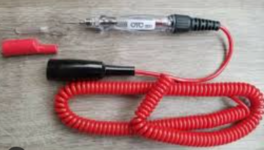
OTC 3636 has a coiled lead and insulated probe and a press in to open wire compatible spring clip that I many times connect to my back probe pins or alligator clips. The probe also fits 4mm alligator clips and back probes but if your's don't, get the alligator clip to back probe testers.
Ohh the OTC 3636 is compatible with the OTC 3633-10 incandescent bulb replacement bulbs (10 Pack Red light) and it comes with the red incandescent bulb that tested at 200mA
I think it runs you $30-$47 for the Test Light and $16 for the ten pack of bulbs.
There is no need to pay Matco or Snap-On prices for a test light since OTC is a great brand and has Lifetime Warranty for their test lights and even their Digital LCD Circuit Testers. So you can pay $30 for OTC and have the same quality and warranty of Snap-On for in some cases 30% the price.

As for the PP circuit power function this is easily accomplished with jumper leads or by using the Lisle32900 which has a Jumper button that turns your test light into a power jumper to activate relays or power test components with the press of the tiny red button, it's only $17 and has incandescent bulbs available:

Lisle 32900 Heavy Duty Circuit Tester and Jumper, Red https://www.amazon.com/dp/B000TTFWX2?tag=atomicindus08-20

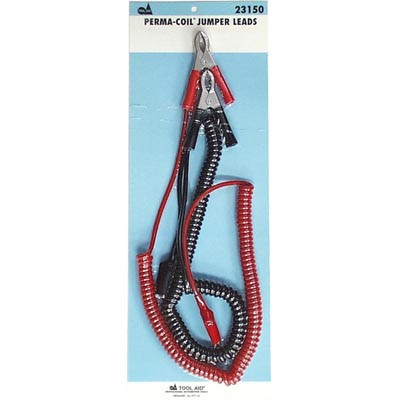
Here's the perma coil jumper leads for power testing components:

It's only $17 and way cheaper than a $100-$180 Power Probe. They all have their uses but I've never needed my PP.

You can also buy other bulbs from other sources that have different ranging bulbs that list their amp draw, some are 150mA, others all the way up to 300mA bulbs and 6V, 6.3V, 8V, and 12V bulbs.
The 6V bulbs are handy for testing 5V signal wires used as controls.
Here they are:

For traditional yellow light bulbs for T2 size test lights like OTC 3636 circuit tester there's

Here's a alternative OTC 3633 mini coil test light that uses a mini incandescent red bulb. What's special about it is it has a thinner probe and a screw on fitting at base of the needle probe that you can screw on lead connectors like the alligator clip that comes with it:
https://www.finditparts.com/product..._target_id=&utm_match_type=&utm_feed_item_id={feed_item_id}&utm_extension_id={extension_id}&utm_location_interst=&utm_location_physical=9023771&utm_product_id=1857509&gad_source=1&gclid=CjwKCAjwk8e1BhALEiwAc8MHiBMc-gb5noWYkn_GIroPfKc_PXn1ShQTEbtgaT6HTNQ5WGAS5K1-kxoCZ4cQAvD_BwE

And I Believe Power Probe III leads screw on it. But you'll have to test the bulbs amp draw, itigjt be 100mA-150mA but that I'm unsure of. I have heard others incorrectly claim the OTC 3633 has an LED light and that's absolutely incorrect. The 3633 is the same as Craftsman brand and both come with incandescent that just have a red translucent film on bulb to make it glow red.
Besides any LED T2 or T1 bulb accepting test light can be replaced with incandescent lights to have proper load of the circuit to stress test.
 
Last edited:

theoldwizard1

Well-known member
Joined
Feb 22, 2011
Messages
43,111
Location
SE MI
I like the convenience of the coil cord on the eect400 and low draw "computer safety" factor although I've never had a problem using a traditional light
Do NOT get a "digital" (LED) test light. It defeats one of the main purposes of having a test light which is to "load" the circuit. The typical incandescent test light draws about 250ma (1/4A). The vast majority (can't say 100%) of all computer circuits can handle that.

As for Power Probe, I never see the 2 BEST YouTube diagnosticians (Eric on South Main Auto and Ivan on Pine Hollow Auto Diagnostics) use one. Improper use of a Power Probe COULD cause a failure in a computer. They do use "home made" test lights of 1A and 5A (larger bulbs).

Either the OTC or the Lisle 12V test lights are quality pieces.

Segue
  • Always test your test light immediately before testing any circuit. You need to validate that you have a good ground or positive.
  • If you want to "upgrade" your test light, buy a small, cheap (HF) pair of locking plier. Remove the alligator/crocodile clip from the test light wire, install a crimped ring terminal and bolt it to the pliers.
  • Ivan bought a Power Probe, but I have never seen him use it. He DOES use the long 12V positive/negative extension cord that came with the Power Probe. He connects one end of each lead directly to the battery and there are banana jacks on the other end. Very useful when testing circuits under the dash,
 

theoldwizard1

Well-known member
Joined
Feb 22, 2011
Messages
43,111
Location
SE MI
LED circuit testers only pull around 10-30mA draw on circuit which won't stress anything including 5V computer signals which is usually ground controlled.
Voltage without that small amount of current is not useful. I have never seen a automotive computer circuit that can not handle 250mA.

Lisle 32900 Heavy Duty Circuit Tester and Jumper, Red https://www.amazon.com/dp/B000TTFWX2?tag=atomicindus08-20
Not sure about that one ! Accidentally pushing the button turns your 250mA load into a DEAD SHORT!

Here's the perma coil jumper leads for power testing components:
These would be more useful if they were 25' long a had banana jacks !

You can also buy other bulbs from other sources that have different ranging bulbs that list their amp draw, some are 150mA, others all the way up to 300mA bulbs and 6V, 6.3V, 8V, and 12V bulbs.
Most 12V tester use a "festoon" bulb. I have looked for a 1A festoon bulb but have not found any.

Here's a alternative OTC 3633 mini coil test light that uses a mini incandescent red bulb. What's special about it is it has a thinner probe and a screw on fitting at base of the needle probe that you can screw on lead connectors like the alligator clip that comes with it:
Screenshot 2024-08-06 162350.png
So maybe you could add a resistor between the handle and the needle probe and up the load to 1A !
 
Last edited:

no704

Well-known member
Joined
Apr 27, 2016
Messages
5,208
I used to do a lot of 12v diagnostics. Use a incondesent bulb tester if you are testing trailer lights. Other than that get out the led, meter, or scope on a modern car. I like the ones that can plug into a cigarette lighter port and show +\-
 

no704

Well-known member
Joined
Apr 27, 2016
Messages
5,208
For old cars like pre fuel injection, incondessent is great.
 

Wrench97

Well-known member
Joined
Jun 23, 2018
Messages
12,057
Location
Southeastern Pa
I use a incandescent test light, a led will light up bright in a circuit with a bad connection where the incandescent doesn't light at all.
I use a PP mainly for lighting but will also test fan motors and relays(in combination with the test light) volt meter/clamp meter for quick charging/starting system tests.
 
To avoid these ads, REGISTER NOW!
Top Bottom