I never mentioned dipping in oil. All my ratchets are sealed. Proper lubrication is vitally important to proper function and corrosion prevention which leads to tool longevity.What does dipping in oil to lube gears have to do with shiny things? Lubrication is more important to longevity than polishing

You are using an out of date browser. It may not display this or other websites correctly.
You should upgrade or use an alternative browser.
You should upgrade or use an alternative browser.
Dipping Ratchets in Oil
- Thread starter Gangly
- Start date
YoshiMoshi3
Well-known member
- Joined
- Nov 2, 2022
- Messages
- 495
So I'm thinking it works like this.
You can lower the amount of force required to push the pawl back to allow the ratchet mechanics to occur, by replacing the stock springs with springs that require less force to compress, this will decrease back drag. At some point, the amount of force will be too little, and malfunction will begin to occur, and when you start to go in the reverse direction, instead of preventing movement it will skip. So we have to find the sweet spot. We can do trial and error. Not sure if there's a way to calculate it.
I think grease will provide better lubrication and longer lasting, in-between re-application over oil. However, it will have a higher coefficient of friction, increasing back drag. This is because you will have a semi-liquid solid to plow through, requiring more force to engage the next tooth, had just a liquid lubricant.
Oil will drip out and will require more frequent lubrication, and offer a lower coefficient of friction (in most cases).
One thing I cannot wrap my head around, is why is back drag less on an unlubricated ratchet (dry) over most oils? I've tested this myself, and yes, it's true. I don't understand this. One would venture that you would have a lower coefficient of friction with an oil film between two pieces of metal, over metal rubbing against metal without any lubricant. But the collected data says otherwise (for most oils). Or maybe we just don't understand what the data is suggesting, maybe something less obviously. But what? I am having some difficulty understanding what we are observing here. Any guesses?
You can lower the amount of force required to push the pawl back to allow the ratchet mechanics to occur, by replacing the stock springs with springs that require less force to compress, this will decrease back drag. At some point, the amount of force will be too little, and malfunction will begin to occur, and when you start to go in the reverse direction, instead of preventing movement it will skip. So we have to find the sweet spot. We can do trial and error. Not sure if there's a way to calculate it.
I think grease will provide better lubrication and longer lasting, in-between re-application over oil. However, it will have a higher coefficient of friction, increasing back drag. This is because you will have a semi-liquid solid to plow through, requiring more force to engage the next tooth, had just a liquid lubricant.
Oil will drip out and will require more frequent lubrication, and offer a lower coefficient of friction (in most cases).
One thing I cannot wrap my head around, is why is back drag less on an unlubricated ratchet (dry) over most oils? I've tested this myself, and yes, it's true. I don't understand this. One would venture that you would have a lower coefficient of friction with an oil film between two pieces of metal, over metal rubbing against metal without any lubricant. But the collected data says otherwise (for most oils). Or maybe we just don't understand what the data is suggesting, maybe something less obviously. But what? I am having some difficulty understanding what we are observing here. Any guesses?
You posted a chart on page 2 and the chart you posted doesn’t corroborate your statement. Light oils all resulted in lower back drag than a dry ratchet. And Lord knows what ”dry” means. As @Hohn said, even a drop or 2 of oil makes a difference. If you were testing back drag, you'd have to soak parts in acetone to really get them dry.One thing I cannot wrap my head around, is why is back drag less on an unlubricated ratchet (dry) over most oils?
Remember, the purpose of lubricants in your ratchet head isn’t just for back drag, it’s to prevent wear. There are finishes inside your ratchet head. Those finishes are there to prevent corrosion. So you want to protect those finishes.
At the end of the day, I would offer the following advice:
- Back drag isn’t a concern for every single ratchet. Generally, long ratchets are used for their leverage. Back drag is fundamentally important after the hardware has been loosened. I often switch ratchets or just work hardware out by hand.
- Everyone should have something I call an ”installation” ratchet. It could be a round head, or a 3/8” ratchet in a 1/4” body. I use these primarily to install hardware, finishing with a torque wrench when necessary.
- Back drag reduces over time. Ratchets are gear boxes and gear boxes wear. Because wear takes place, you really should change your oil just as you would in any other gear box.
- Modifying a ratchet to reduce back drag is probably a waste of time. Messing with the spring can easily do more harm than good. The best way to improve a ratchet is to polish the gear teeth, but this can be time consuming and may only produce modest or imperceptible benefits.
- If you want a high performing ratchet, buy a high performing ratchet and lubricate it per the manufacturer’s advice. If there is no advice or the ratchet doesn’t come pre-lubed (unlikely if you are buying quality) CLEAN the body and mechanism to thoroughly degrease. Re-lube all components with a high quality light oil, and grease with a light compatible grease per my instructions. If you aren’t sure what to use, to ensure you are compatible with whatever seals you have, use Superlube oil and NLGI 00 SuperLube grease.
Last edited:
YoshiMoshi3
Well-known member
- Joined
- Nov 2, 2022
- Messages
- 495
I see what your saying and thanks for pointing that out. It seems like the ones that were higher than "dry" were thicker oils, and possible fit into the cateogry of "grease". Supporting the idea that grease will increase backdrag.You posted a chart on page 2 and the chart you posted doesn’t corroborate your statement. Light oils all resulted in lower back drag than a dry ratchet. And Lord knows what ”dry” means. As @Hohn said, even a drop or 2 of oil makes a difference. If you were testing back drag, you'd have to soak parts in acetone to really get them dry.
Remember, the purpose of lubricants in your ratchet head isn’t just for back drag, it’s to prevent wear. There are finishes inside your ratchet head. Those finishes are there to prevent corrosion. So you want to protect those finishes.
At the end of the day, I would offer the following advice:
- Back drag isn’t a concern for every single ratchet. Generally, long ratchets are used for their leverage. Back drag is fundamentally important after the hardware has been loosened. I often switch ratchets or just work hardware out by hand.
- Everyone should have something I call an ”installation” ratchet. It could be a round head, or a 3/8” ratchet in a 1/4” body. I use these primarily to install hardware, finishing with a torque wrench when necessary.
- Back drag reduces over time. Ratchets are gear boxes and gear boxes wear. Because wear takes place, you really should change your oil just as you would in any other gear box.
- Modifying a ratchet to reduce back drag is probably a waste of time. Messing with the spring can easily do more harm than good. The best way to improve a ratchet is to polish the gear teeth, but this can be time consuming and may only produce modest or imperceptible benefits.
- If you want a high performing ratchet, buy a high performing ratchet and lubricate it per the manufacturer’s advice. If there is no advice or the ratchet doesn’t come pre-lubed (unlikely if you are buying quality) CLEAN the body and mechanism to thoroughly degrease. Re-lube all components with a high quality light oil, and grease with a light compatible grease per my instructions. If you aren’t sure what to use, to ensure you are compatible with whatever seals you have, use Superlube oil and NLGI 00 SuperLube grease.
Also soaking in acetone, would act as a degreaseer? So just submerge in liquid acetone, and then pull out and wait to get to the "dry" state?
I understand that your saying messing with the springs could do mroe harm than good, could I just ask why you think this?
Also are you suggesting to use both grease and oil? I have been contemplating this combination. I'm thinking grease underneath the gear and pawl would ensure that it's lubricated longer, and wouldn't risk gumming up the teath. Just enough grease to lube up the underneath surfaces of the objects that move. Oil could go elsehwere on the teeth.
This guy does an experiment with greases
I have never seen 0 or 00 grease in person before. Just on YouTube. There's also 000 grease, but it's not cheap.
Thanks for sharing the information.
Also I think you are right, a majority of the backdrag is from springs. So polishing up the internals may have little to no measureable effect. Still would be a neat experiment to try and confirm if it's the case.
Last edited:
You posted it and should be curious as to what those materials are. SuperLube 21030 is NLGI 2 grease. This is not the grease snap on ships with rebuild kits.I see what you’re saying and thanks for pointing that out. It seems like the ones that were higher than "dry" were thicker oils, and possible fit into the cateogry of "grease". Supporting the idea that grease will increase backdrag.
Also, all those numbers are really small. The difference between 8 inoz and 10 inoz would be imperceptible in normal conditions.
No, I was just trying to make a point. DO NOT soak your ratchet guts in acetone. Acetone is a strong solvent. Point is: define “dry”. Most hardware manufacturers deal with is not ”dry”. There are almost always residual oils/finishes from manufacturing or corrosion inhibiting.Also soaking in acetone, would act as a degreaseer? So just submerge in liquid acetone, and then pull out and wait to get to the "dry" state?
I’ve already posted this, pretty sure in this thread. The purpose of the spring is to maintain full contact between the pawl and the gear. If you lighten that spring pressure, you run the risk of losing contact area.I understand that your saying messing with the springs could do more harm than good, could I just ask why you think this?
YES. In my opinion, no ferrous metal hardware should ever be dry. And I wouldn’t use grease to wet out my hardware. Look: grease is used in ratchets to reduce friction and preserve finishes at the metal to metal sliding interface. Grease is a physical barrier. Think of it like a Teflon washer, between the rotating gear and the body. If you had no grease and just a light oil, the oil would collect where gravity dictated and there would be no or very little lubrication between the sliding surfaces.Also are you suggesting to use both grease and oil? I have been contemplating this combination. I'm thinking grease underneath the gear and pawl would ensure that it's lubricated longer, and wouldn't risk gumming up the teath. Just enough grease to lube up the underneath surfaces of the objects that move. Oil could go elsehwere on the teeth.
So: yes, you need to oil all the components. I recommend a light machine oil of some sort, then you need to grease under and over the gear with a grease that’s compatible both with the oil and with whatever seals your ratchet has.
Every grease is unique and was developed for specific needs. But all US made greases are categorized by the NLGI (National Lubricating Grease Institute) based on their viscosity. So all NLGI 2 greases have similar viscosities at room temp.This guy does an experiment with greases
And the 00 grease drips out of the whole in the cup, while the 0 John Deer Grease doesn't. He also mentions that the 00 grease might be a little thin. Are all 00 greases that thin? I was thinking if so, then 0 may be better at not leakign out of the ratchet?
I have never seen 0 or 00 grease in person before. Just on YouTube. There's also 000 grease, but it's not cheap.
The grease snap on recommends is well documented here and is a NLGI 00 grease, which is pretty soft. While we’re here, just a quick reminder about Superlube. There are mineral based oils and greases with PTFE additives. Superlube is 100% synthetic, so like all synthetic oils and greases, it has a very constant viscosity over a broad temperature spectrum, which is great if you are like me and are stuck fixing cars in 100F summers and 20F winters here in PA.
Back drag is essentially normal force x coefficient of friction. Cutting the springs reduces the normal force. Polishing the gear teeth reduces the friction coefficient. As a side benefit, polished specimens are stronger since scratches are like perforations in a roll of paper towels. Also, smoother surfaces should wear less, since rough surfaces abrade like sand paper.Thanks for sharing the information.
Also I think you are right, a majority of the backdrag is from springs. So polishing up the internals may have little to no measureable effect. Still would be a neat experiment to try and confirm if it's the case.
Pure speculation: the lovely tool nerds at Koken make low tooth count ratchets, with beautifully low back drag. My guess is, they tweaked their springs to get just the right amount of force. I’ll bet that wasn’t easy and some degree of trial and error testing, the likes of which no low cost Chinese or Taiwan manufacturer would have patience for, was required.
Also, whatever manufacturing process they use to produce their gears and pawls probably produces a better surface finish than other makers’ gears. Together, these things are attributes Chiwan makers can’t simply steal and duplicate. I don’t own any Koken tools, but my guess is, their ratchets are special and we likely won’t see their equal from another manufacturer any time soon. I really like dual 80 and like supporting US companies. If I were starting over, I would probably choose Koken just because I admire their dedication, curiosity and attention to detail.
Hope I’ve cleared up what why and how to grease your ratchets. Seriously, go back a read the entire thread. I’m not the only senior engineer here. There are excellent contributions in this thread (and goes without saying, elsewhere).
Last edited:
Watch the Koken factory video of ratchet assembly and you'll see the worker apply one drop of oil on the pawl before inserting the anvil into the head. The ratchets are not sealed and anything more lube than that single drop of oil would leak out. You can tell by the sound and feel that by the time the ratchets hit a purchasers hand, the oil has dissipated and the ratchet head is essentially "dry".You posted it and should be curious as to what those materials are. SuperLube 21030 is NLGI 2 grease. This is not the grease snap on ships with rebuild kits.
Also, all those numbers are really small. The difference between 8 inoz and 10 inoz would be imperceptible in normal conditions.
No, I was just trying to make a point. DO NOT soak your ratchet guts in acetone. Acetone is a strong solvent. Point is: define “dry”. Most hardware manufacturers deal with is not ”dry”. There are almost always residual oils/finishes from manufacturing or corrosion inhibiting.
I’ve already posted this, pretty sure in this thread. The purpose of the spring is to maintain full contact between the pawl and the gear. If you lighten that spring pressure, you run the risk of losing contact area.
YES. In my opinion, no ferrous metal hardware should ever be dry. And I wouldn’t use grease to wet out my hardware. Look: grease is used in ratchets to reduce friction and preserve finishes at the metal to metal sliding interface. Grease is a physical barrier. Think of it like a Teflon washer, between the rotating gear and the body. If you had no grease and just a light oil, the oil would collect where gravity dictated and there would be no or very little lubrication between the sliding surfaces.
So: yes, you need to oil all the components. I recommend a light machine oil of some sort, then you need to grease under and over the gear with a grease that’s compatible both with the oil and with whatever seals your ratchet has.
Every grease is unique and was developed for specific needs. But all US made greases are categorized by the NLGI (National Lubricating Grease Institute) based on their viscosity. So all NLGI 2 greases have similar viscosities at room temp.
The grease snap on recommends is well documented here and is a NLGI 00 grease, which is pretty soft. While we’re here, just a quick reminder about Superlube. There are mineral based oils and greases with PTFE additives. Superlube is 100% synthetic, so like all synthetic oils and greases, it has a very constant viscosity over a broad temperature spectrum, which is great if you are like me and are stuck fixing cars in 100F summers and 20F winters here in PA.
Back drag is essentially normal force x coefficient of friction. Cutting the springs reduces the normal force. Polishing the gear teeth reduces the friction coefficient. As a side benefit, polished specimens are stronger since scratches are like perforations in a roll of paper towels. Also, smoother surfaces should wear less, since rough surfaces abrade like sand paper.
Pure speculation: the lovely tool nerds at Koken make low tooth count ratchets, with beautifully low back drag. My guess is, they tweaked their springs to get just the right amount of force. I’ll bet that wasn’t easy and some degree of trial and error testing, the likes of which no low cost Chinese or Taiwan manufacturer would have patience for, was required.
Also, whatever manufacturing process they use to produce their gears and pawls probably produces a better surface finish than other makers’ gears. Together, these things are attributes Chiwan makers can’t simply steal and duplicate. I don’t own any Koken tools, but my guess is, their ratchets are special and we likely won’t see their equal from another manufacturer any time soon. I really like dual 80 and like supporting US companies. If I were starting over, I would probably choose Koken just because I admire their dedication, curiosity and attention to detail.
Hope I’ve cleared up what why and how to grease your ratchets. Seriously, go back a read the entire thread. I’m not the only senior engineer here. There are excellent contributions in this thread (and goes without saying, elsewhere).
I've disassembled all five of my Koken 72T Zeal series ratchets and at the most you find the very slightest hint of where that residual oil was, but the anvil gears and where the anvil rotates in the head were dry.
YoshiMoshi3
Well-known member
- Joined
- Nov 2, 2022
- Messages
- 495
Cataloging manufactured recommendations. Please let me know if you can find others written somewhere.
Snap-On
Some of the Snap-On rebuild kits, specify "Lubricate with light machine oil. DO NOT USE ANY KIND OF GREASE", for the older ratchets.
The newer Snap-On rebuild kits come with the described SuperLube 00 grease, and you can see where they apply it and how much in the videos. They do not sue any oil.
Koken
Koken Zeal series state "Z-series 72T model ratchet handles are maintenance free. Do not grease up. High viscosity oil reduces upper pawl movement, which causes gear slippage."
TRO Design

 www.trodesigns.com
Their ratchet manual indicates where to apply grease
www.trodesigns.com
Their ratchet manual indicates where to apply grease


Seems to agree with the concept that grease increases backdrag. I didn't know NLGI 1.5 was a thing. But I do find interesting that they recommend NLGI 1.5 or NLGI 2 grease. Agrees with concept of applying to sliding parts on gear of the ratchet. Agrees with concept of not applying grease to the teeth.
Thanks for the help. I see what you are saying. That there's less force pressing the pawl into the gear. It's been many moons, but I thought the normal force was the force opposing gravity? I'm not sure how lowering the force applied onto the pawls by the spring lowers the normal force? Thansk for the help in understanding this.
This video shows them rebuilding a ratchet. They specify it comes pre-greased and adding any additional grease is not necessary. They don't mention adding any oil.
Snap-On
Some of the Snap-On rebuild kits, specify "Lubricate with light machine oil. DO NOT USE ANY KIND OF GREASE", for the older ratchets.
Koken
Koken Zeal series state "Z-series 72T model ratchet handles are maintenance free. Do not grease up. High viscosity oil reduces upper pawl movement, which causes gear slippage."
TRO Design
DOWNLOADS
TITANIUM RATCHET MANUAL PDF V4 Oil Filter Installation Guide PDF V4 오일 필터 설치 안내서 PDF
www.trodesigns.com
Seems to agree with the concept that grease increases backdrag. I didn't know NLGI 1.5 was a thing. But I do find interesting that they recommend NLGI 1.5 or NLGI 2 grease. Agrees with concept of applying to sliding parts on gear of the ratchet. Agrees with concept of not applying grease to the teeth.
Cutting the springs reduces the normal force.
Thanks for the help. I see what you are saying. That there's less force pressing the pawl into the gear. It's been many moons, but I thought the normal force was the force opposing gravity? I'm not sure how lowering the force applied onto the pawls by the spring lowers the normal force? Thansk for the help in understanding this.
Do you have this video, like a link? I can't find it. I would love to look at it, and curious as to which oil they use. I see some of their repair videos on YouTube, that are different then the one you are referencing.Watch the Koken factory video of ratchet assembly and you'll see the worker apply one drop of oil on the pawl before inserting the anvil into the head.
The video I watched was the factory in Japan assembling new ones. Go to the 30 second mark. Notice that in your video and the video from the Japan factory, the only part that gets lubed is the face of the pawl. The head and anvil are completely dry.Cataloging manufactured recommendations. Please let me know if you can find others written somewhere.
Snap-On
Some of the Snap-On rebuild kits, specify "Lubricate with light machine oil. DO NOT USE ANY KIND OF GREASE", for the older ratchets.
The newer Snap-On rebuild kits come with the described SuperLube 00 grease, and you can see where they apply it and how much in the videos. They do not sue any oil.
Koken
Koken Zeal series state "Z-series 72T model ratchet handles are maintenance free. Do not grease up. High viscosity oil reduces upper pawl movement, which causes gear slippage."
TRO Design
Their ratchet manual indicates where to apply greaseDOWNLOADS
TITANIUM RATCHET MANUAL PDF V4 Oil Filter Installation Guide PDF V4 오일 필터 설치 안내서 PDF
Seems to agree with the concept that grease increases backdrag. I didn't know NLGI 1.5 was a thing. But I do find interesting that they recommend NLGI 1.5 or NLGI 2 grease. Agrees with concept of applying to sliding parts on gear of the ratchet. Agrees with concept of not applying grease to the teeth.
Thanks for the help. I see what you are saying. That there's less force pressing the pawl into the gear. It's been many moons, but I thought the normal force was the force opposing gravity? I'm not sure how lowering the force applied onto the pawls by the spring lowers the normal force? Thansk for the help in understanding this.
Do you have this video, like a link? I can't find it. I would love to look at it, and curious as to which oil they use. I see some of their repair videos on YouTube, that are different then the one you are referencing.
This video shows them rebuilding a ratchet. They specify it comes pre-greased and adding any additional grease is not necessary. They don't mention adding any oil.
Last edited:
YoshiMoshi3
Well-known member
- Joined
- Nov 2, 2022
- Messages
- 495
Thanks. Ah dang, they appear to use some oil or something not to clear what oil they use from the video. I wonder what they use. Looks like they apply it to the pawl. One thing interesting to note is that the video on my post mentions that it comes pre greased and not pre oiled. I can't really see what they are doing in the video at around 30 seconds because there hand is covering it.
The video I watched was the factory in Japan assembling new ones. Go to the 30 second mark. Notice that in your video and the video from the Japan factory, the only part that gets lubed is the face of the pawl. The head and anvil are completely dry.
Yeah, the hand was blocking what type of lube they were using.Thanks. Ah dang, they appear to use some oil or something not to clear what oil they use from the video. I wonder what they use. Looks like they apply it to the pawl. One thing interesting to note is that the video on my post mentions that it comes pre greased and not pre oiled. I can't really see what they are doing in the video at around 30 seconds because there hand is covering it.
I've purchased their rebuild kits to convert 1/4" to 3/8" and the pawls are coated in a VERY light coating of VERY light grease.Thanks. Ah dang, they appear to use some oil or something not to clear what oil they use from the video. I wonder what they use. Looks like they apply it to the pawl. One thing interesting to note is that the video on my post mentions that it comes pre greased and not pre oiled. I can't really see what they are doing in the video at around 30 seconds because there hand is covering it.
YoshiMoshi3
Well-known member
- Joined
- Nov 2, 2022
- Messages
- 495
They warn against applying thick oils. But I don't think 0W-8 could gum up the teeth lol.
YoshiMoshi3
Well-known member
- Joined
- Nov 2, 2022
- Messages
- 495
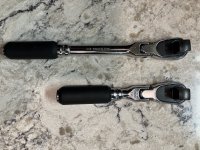
You converted 1/4 zeal to 3/8?I've purchased their rebuild kits to convert 1/4" to 3/8" and the pawls are coated in a VERY light coating of VERY light grease.
Yes. I have two of them. Short and long flexhead.You converted 1/4 zeal to 3/8?
Last edited:
oscarsnapkin
Well-known member
- Joined
- Feb 22, 2025
- Messages
- 480
These threads make my head spin. I took apart 4 of my old Snap-On ratchets a few months back, two old 1/2” drives from the 40’s, an old 3/4” drive and the massive L-78 1 1/2”er. I cleaned them all out until I could eat out of them, sprayed them with some PB Blaster and then stuffed them with globs of grease. I used the IR branded grease that they sell for their air tools because it’s got that nice little pump on it to make it easy to apply. Now I feel the need to take them apart again, clean out all the grease I applied and lube it “lightly” with one of the aforementioned lubes. Mamma Mia. The 3/4” is probably the only one that will ever be used again, so maybe I should just leave the others alone and consider the grease as a rust preventative.
Assuming NLGI 2 grease? That’s pretty stiff. Did you slather up the gear teeth? You might be fine on ratchets this old and this big. Cleaning was smart. I think the subject of this thread is more pertinent to high tooth count ratchetsThese threads make my head spin. I took apart 4 of my old Snap-On ratchets a few months back, two old 1/2” drives from the 40’s, an old 3/4” drive and the massive L-78 1 1/2”er. I cleaned them all out until I could eat out of them, sprayed them with some PB Blaster and then stuffed them with globs of grease. I used the IR branded grease that they sell for their air tools because it’s got that nice little pump on it to make it easy to apply. Now I feel the need to take them apart again, clean out all the grease I applied and lube it “lightly” with one of the aforementioned lubes. Mamma Mia. The 3/4” is probably the only one that will ever be used again, so maybe I should just leave the others alone and consider the grease as a rust preventative.
YoshiMoshi3
Well-known member
- Joined
- Nov 2, 2022
- Messages
- 495
Do you have the part numbers? Like you took the 1/4 anvil out of ratchet 1234 and inserted the 3/8 anvil from ratchet 4321?Yes. I have two of them. Short and long flexhead.
I take it your custom 3/8 ratchet is even lower profile then the lowest profile 3/8 zeal ratchet?
YoshiMoshi3
Well-known member
- Joined
- Nov 2, 2022
- Messages
- 495
It made my head spin to. But I think I fully understand the concept though.These threads make my head spin. I took apart 4 of my old Snap-On ratchets a few months back, two old 1/2” drives from the 40’s, an old 3/4” drive and the massive L-78 1 1/2”er. I cleaned them all out until I could eat out of them, sprayed them with some PB Blaster and then stuffed them with globs of grease. I used the IR branded grease that they sell for their air tools because it’s got that nice little pump on it to make it easy to apply. Now I feel the need to take them apart again, clean out all the grease I applied and lube it “lightly” with one of the aforementioned lubes. Mamma Mia. The 3/4” is probably the only one that will ever be used again, so maybe I should just leave the others alone and consider the grease as a rust preventative.
1. Disassemble ratchet.
2. Clean ratchet and parts with acetone or brake parts cleaner
3. Let dry.
4. Dip anvil teeth and pawl teeth into some clean 0W-8 oil.
5. Let dry and allow droplets to drop off. You will have to rotate the anvil several times and repeat this process of dipping just the teeth into the oil, until all teeth have a thin film of oil on it.
6. Apply a thin coat of grease to sliding surfaces of pawls and anvil. Lots of debate on which type and which grade of grease. We have even identified two manufacturers who recommend different grades on the opposite spectrum. If you want to air on the ide of caution pick the thinner one. Note that it's important to apply a thin coat to make sure grease does not go on the teeth. Grease on the teeth can prevent full mesh of the teeth
7. Completely assemble ratchet
Bingo?
2725RK-2(3/8) The screw is a 6IP Torx Plus. Regular Torx will not work. It's the 1/4" ratchet head with a 3/8" anvil. Much smaller than 3/8" ratchet head. Koken also offers factory versions of these ratchets as well.Do you have the part numbers? Like you took the 1/4 anvil out of ratchet 1234 and inserted the 3/8 anvil from ratchet 4321?
I take it your custom 3/8 ratchet is even lower profile then the lowest profile 3/8 zeal ratchet?
YoshiMoshi3
Well-known member
- Joined
- Nov 2, 2022
- Messages
- 495
Ah ok got you. I think that ratchet is supposed to come that way?2725RK-2(3/8) The screw is a 6IP Torx Plus. Regular Torx will not work. It's the 1/4" ratchet head with a 3/8" anvil. Much smaller than 3/8" ratchet head. Koken also offers factory versions of these ratchets as well.
Oh ok got you. What is the 1/4" Ratchet Handle you put it in?
YoshiMoshi3
Well-known member
- Joined
- Nov 2, 2022
- Messages
- 495
Documenting proof that Snap On kits come with SuperLube 00

Updating the database.
Tekton
comes with Super Lube 2
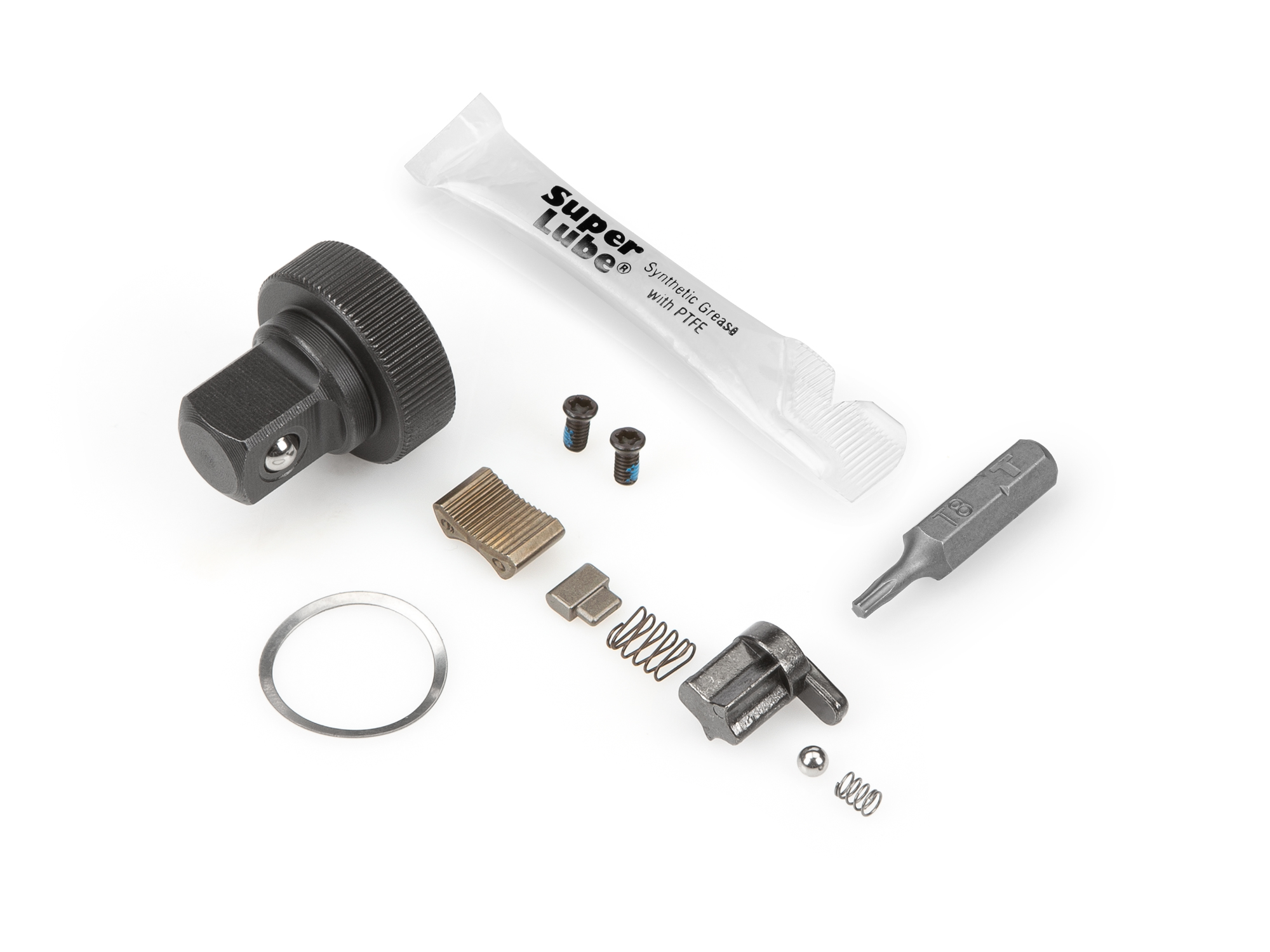
 www.tekton.com

They do not recommend applying to the sliding surfaces, but inside the detent spring hole, and between the pawl and switch gear. They also recommend not getting grease on the teeth.
Interesting how one company provides 00 grease while another provides 2 grease, polar opposites
Hazet
The rebuild kits come with some sort of grease. I cannot find any information on which grease it is. You can see how they apply it in the video. They apply it to the teeth as well.
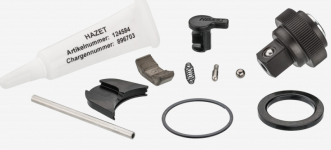
Updating the database.
Tekton
comes with Super Lube 2
3/8 Inch Drive Non-Quick-Release Ratchet Service Kit | TEKTON
Use this kit to repair your broken 3/8 inch drive Tekton non-quick-release ratchet or micrometer torque wrench head. Includes Super Lube® and T8 star bit. SRH9X013.
They do not recommend applying to the sliding surfaces, but inside the detent spring hole, and between the pawl and switch gear. They also recommend not getting grease on the teeth.
Interesting how one company provides 00 grease while another provides 2 grease, polar opposites
Hazet
Last edited:
It's already been well documented that the Snap-On repair kits come with 00 Super Lube.Documenting proof that Snap On kits come with SuperLube 00
Updating the database.
Tekton
comes with Super Lube 2
3/8 Inch Drive Non-Quick-Release Ratchet Service Kit | TEKTON
Use this kit to repair your broken 3/8 inch drive Tekton non-quick-release ratchet or micrometer torque wrench head. Includes Super Lube® and T8 star bit. SRH9X013.
They do not recommend applying to the sliding surfaces, but inside the detent spring hole, and between the pawl and switch gear. They also recommend not getting grease on the teeth.
Interesting how one company provides 00 grease while another provides 2 grease, polar opposites
Hazet
The rebuild kits come with some sort of grease. I cannot find any information on which grease it is. You can see how they apply it in the video. They apply it to the teeth as well.
driftpin
Well-known member
I like to use PB Blaster spray penetrating oil on my metal tools, let 'em sit awhile, and give 'em a bit of a wipe-down before going back into a drawer or a bag.
I also use the corn head grease on some of my tools, I find it works well for me. Like impact tools, for the grease reservoir.Try some corn head grease for a few dollars a tube from a farm equipment dealer. It is #0. I get mine from the John Deere dealer.
oscarsnapkin
Well-known member
- Joined
- Feb 22, 2025
- Messages
- 480
I used corn head grease in the steering box for one of my old VWs. Supposedly it’s thick like grease until there is some type of movement and then it becomes more like an oil. Was suggested on a VW site because it isn’t as prone to leaking out of an old steering box with leaky seals. If nothing else it’s a neat color.I like to use PB Blaster spray penetrating oil on my metal tools, let 'em sit awhile, and give 'em a bit of a wipe-down before going back into a drawer or a bag.
I also use the corn head grease on some of my tools, I find it works well for me. Like impact tools, for the grease reservoir.