To avoid these ads, REGISTER NOW!

Dipping Ratchets in Oil

To avoid these ads, REGISTER NOW!

Kaervak

Well-known member
Joined
May 12, 2010
Messages
826
Location
Cleveland, OH
Nope, don't dip my ratchets in oil or coat any of my tools in oil/WD-40. I do wipe them off after every use and keep them clean. To keep them from rusting, I have multiple overlapping sheets of VCI paper covering all the drawers in my toolbox. I get the sheets from work, our rotors and several other parts come wrapped in large 30"x30" sheets. With how quickly our squads go through brakes, I have a never ending supply. :ROFLMAO:
 

YoshiMoshi3

Well-known member
Joined
Nov 2, 2022
Messages
495
It's possible to overgrease a ratchet. I've experienced this myself. You can either put in to much grease or put in to thick of a grease. This can "gum up" the teeth, resulting in the gears on the anvil not engaging with the pawl resulting in "skipping". I do not see any downside into dipping into oil, other than the oil may drip out onto you or your toolbox. It's oil, so an excess oil will just drip out, and it's not possible to gum up the gears with the oilm, unless it's really dirty oil. Can you over-oil a ratchet, meaning negative impacts on ratchet performance or damage to it? I wouldn't consider oil seeping out as a negative side effect to the ratchet, but a negative side effect to me lol.

Are there truely sealed ratchets that are water tight? I would love to have a water tight ratchet that has a fill and drain port. Could fill up every internal cavity with oil, it could never drain out. Since there's no combustion could never get dirty, and it's sealed from the outside environment. Seems like a no brainer, other than the down side of never being able to rebuild it.
 

seber

Well-known member
Joined
May 31, 2016
Messages
4,195
Location
Deep East Tx.
This is an old thread but might be worth bringing back up. I've been experimenting with the new ceramic and carbon nano car waxes lately. I coated one shower door with it and left the other bare. I squeegee the doors every morning after I shower so they get a good wear exercise. That one coating lasted almost four months and is just now starting to loose it's beading ability. Seems like a no brainer for protecting tools.
 

CHI_Tool&Die

Well-known member
Joined
Jul 20, 2021
Messages
1,380
Location
Chicago, IL
I switched ratchet brands a year or so back just to avoid having cruddy feeling gear action when my greased ratchets sat in oil at work. Now I just use oil for lube and if they happen to sit in oil while I’m working on a project it makes no difference.
 

AEAdam

Well-known member
Joined
May 27, 2023
Messages
2,738
Location
SE PA
This was a silly thread. The answer to whether its a good idea or not wholly depends on the specific tool in question.

Lubrication is a complicated subject. Oils and greases are designed and manufactured usually for fairly specific applications. Because ATF works great in an automatic transmission does not mean its the right lubricant for a ratchet.

Here are the issues you would need to learn/discuss to have a smart conversation about this:
1) Is the ratchet sealed or not?
2) What is the tooth count? Finer teeth will be more suseptible to foreign matter, & thicker greases than coarser ratchets
3) What is the temperature range in which the tool is: a) used, b) stored?
4) What is the work environment like? Coastal? Dusty? Corrosive dust like jet engine soot?

For sealed, fine toothed ratchets (like Dual 80) you want NLGI 1 type grease under and over the ratchet gear and you want some form of light compatible oil on all surfaces for corrosion prevention. The specific grease must be compatible with the O-rings/seals. Synthetic greases are typically preferable due to the consistency of their properties over a wide range of temperatures. Snap on didn't choose SuperLube because the got a deal on grease. That said, plenty other greases would work to varying degrees as good as or better than Superlube. SuperLube is NOT a superior grease for all applications. It was designed as a food safe material for food processing equipment.
 

YoshiMoshi3

Well-known member
Joined
Nov 2, 2022
Messages
495
This was a silly thread. The answer to whether its a good idea or not wholly depends on the specific tool in question.

Lubrication is a complicated subject. Oils and greases are designed and manufactured usually for fairly specific applications. Because ATF works great in an automatic transmission does not mean its the right lubricant for a ratchet.

Here are the issues you would need to learn/discuss to have a smart conversation about this:
1) Is the ratchet sealed or not?
2) What is the tooth count? Finer teeth will be more suseptible to foreign matter, & thicker greases than coarser ratchets
3) What is the temperature range in which the tool is: a) used, b) stored?
4) What is the work environment like? Coastal? Dusty? Corrosive dust like jet engine soot?

For sealed, fine toothed ratchets (like Dual 80) you want NLGI 1 type grease under and over the ratchet gear and you want some form of light compatible oil on all surfaces for corrosion prevention. The specific grease must be compatible with the O-rings/seals. Synthetic greases are typically preferable due to the consistency of their properties over a wide range of temperatures. Snap on didn't choose SuperLube because the got a deal on grease. That said, plenty other greases would work to varying degrees as good as or better than Superlube. SuperLube is NOT a superior grease for all applications. It was designed as a food safe material for food processing equipment.
Right. I was just thinking. With grease this is the possibility of adding to much grease or to little. You cannot over oil a ratchet. Excess oil will just seep out. It will get on you and your tool box but there will be no negative impact to the ratchet. Proper grease, and the rigth amount, would be great becuase it wouldn't "gum up" the teeth, and since it's thicker than oil will not seep out, unless it gets really hot. Like you mention about having to consider the heat. So great is more a long term solution, where as oil will require more frequent lubrication than grease. The problem is that it is unknown what NGLI grease should be used, what type, and how much. There's more variables under consideration wtih grease than with oil. Oil just simplifies things? Even if you put in a really thick oil, it won't gum up the gears.
 

AEAdam

Well-known member
Joined
May 27, 2023
Messages
2,738
Location
SE PA
Right. I was just thinking. With grease this is the possibility of adding to much grease or to little. You cannot over oil a ratchet. Excess oil will just seep out. It will get on you and your tool box but there will be no negative impact to the ratchet. Proper grease, and the rigth amount, would be great becuase it wouldn't "gum up" the teeth, and since it's thicker than oil will not seep out, unless it gets really hot. Like you mention about having to consider the heat. So great is more a long term solution, where as oil will require more frequent lubrication than grease. The problem is that it is unknown what NGLI grease should be used, what type, and how much. There's more variables under consideration wtih grease than with oil. Oil just simplifies things? Even if you put in a really thick oil, it won't gum up the gears.
The problem with unsealed oiled stuff is that foreign debris can get in and will be attracted to oil and will stay in there.

Usually with mechanisms, you either want them sealed or you want some sort of oil flush system which soaking in oil is not.

Used motor oil has bits in it, which is why you change it. So that's the last thing you want inside an expensive ratchet.

In general all oils will pool to a place that likely isn't helping you. That's why grease is better. Greases are really just oils with thickeners.

Some greases, like assembly lubes have tackifiers added that make them sticky. Lots of people on GJ recommend engine assembly greases. Again, that's the last thing you want in your ratchet.
 

YoshiMoshi3

Well-known member
Joined
Nov 2, 2022
Messages
495
So are the "sealed ratchets" with o-rings, water tight or oil tight? I would imagine that if those type of ratchets are truely sealed, filling them up with oil, and reassembling the ratchets with the o-rings to maintain the water tight design. Are sealed ratchets with o-rings really oil tight though?
 

jblnut

ALLIANCE MEMBER
Joined
Jan 17, 2015
Messages
6,990
Location
In the Middle of MN
Snap on didn't choose SuperLube because the got a deal on grease. That said, plenty other greases would work to varying degrees as good as or better than Superlube. SuperLube is NOT a superior grease for all applications. It was designed as a food safe material for food processing equipment.
Remember folks, food safe doesn’t mean it’s a ketchup replacement. Naturally as it says “food safe…..” on the can I had to try it. It’s not as nasty as mustard but it’s a close 2nd.
 

YoshiMoshi3

Well-known member
Joined
Nov 2, 2022
Messages
495
Remember folks, food safe doesn’t mean it’s a ketchup replacement. Naturally as it says “food safe…..” on the can I had to try it. It’s not as nasty as mustard but it’s a close 2nd.
I've never greased any of the stuff in my home kitchen 😋
 

AEAdam

Well-known member
Joined
May 27, 2023
Messages
2,738
Location
SE PA
So are the "sealed ratchets" with o-rings, water tight or oil tight? I would imagine that if those type of ratchets are truely sealed, filling them up with oil, and reassembling the ratchets with the o-rings to maintain the water tight design. Are sealed ratchets with o-rings really oil tight though?
I think a dual 80 is pretty fluid tight. Again, the problem with oil in a ratchet is that it will collect in spots, starving the places that need oil. This is why engines have oil pumps.

Thicker oil could make back drag worse than grease, again by collecting in places.

You’re not going to hurt anything by trying it tho. Try something like stinky gear oil, like 90W hypoid gear oil. I don’t think you’ll like what you get.

3 in 1 oil would be better. You just aren’t doing much to prevent wear. But if you have a sealed ratchet, try it. Use it for a month, then take it apart and inspect
 

Retired dozer fixer

Well-known member
Joined
Aug 6, 2022
Messages
330
Location
Leesburg Indiana
The problem with unsealed oiled stuff is that foreign debris can get in and will be attracted to oil and will stay in there.

Usually with mechanisms, you either want them sealed or you want some sort of oil flush system which soaking in oil is not.

Used motor oil has bits in it, which is why you change it. So that's the last thing you want inside an expensive ratchet.

In general all oils will pool to a place that likely isn't helping you. That's why grease is better. Greases are really just oils with thickeners.

Some greases, like assembly lubes have tackifiers added that make them sticky. Lots of people on GJ recommend engine assembly greases. Again, that's the last thing you want in your ratchet.
So…..Let me as you this….Do you use grease in your rear end? Your transmission? Ratchets are gears no different than any other gears. Grease doesn’t flow like oil. I pulled wrenches professionally for most of my life (retired now) and I never greased my ratchets. Soaked in oil overnight several times a year. Still have 1 or 2 from years ago still working. Last few I had were sealed Snap-On. Didn’t soak those. Some of you older folks like me probably remember seeing ratchets that had an oiling hole on the head for lubrication. Bottom line is they are yours to wear out. They are too damn expensive to not take care of. And I don’t mean polishing them everyday. You can tell by the looks of a tool of the owner actually uses a tool and the ones that have a box of shiny **** just for show
 

AEAdam

Well-known member
Joined
May 27, 2023
Messages
2,738
Location
SE PA
So…..Let me as you this….Do you use grease in your rear end? Your transmission? Ratchets are gears no different than any other gears. Grease doesn’t flow like oil. I pulled wrenches professionally for most of my life (retired now) and I never greased my ratchets. Soaked in oil overnight several times a year. Still have 1 or 2 from years ago still working. Last few I had were sealed Snap-On. Didn’t soak those. Some of you older folks like me probably remember seeing ratchets that had an oiling hole on the head for lubrication. Bottom line is they are yours to wear out. They are too damn expensive to not take care of. And I don’t mean polishing them everyday. You can tell by the looks of a tool of the owner actually uses a tool and the ones that have a box of shiny **** just for show
Do you oil the pins on your loaders? Skid steers? Tractors? Why grease those joints? Why not just squirt a little wd-40 on your heavy equipment joints?

In Britain, we’d say “horses for courses”. Hopefully you get the point.

Lubrication is application specific. Best to follow manufacturers’ recommendations.
 

908Jim

Well-known member
Joined
Aug 1, 2013
Messages
555
For unsealed ratchets like my old-school 36 Tooth Matco's or SK round heads I just blast them around the edge of the covers with aerosol lubricant. Tri-flow? Sure. PB Blaster? fine. WD-40? Great. This is slow speed stuff where contact and shear stresses take over concerns about sliding. Being contaminant free is orders of magnitude more important than ideal lubrication so I just flush and go.

Sealed ratchets get some of my expired krytox stash. If it's good for monomethylhydrazine and basically any o-ring material, it's probably good enough for my $100 ratchet.
 
To avoid these ads, REGISTER NOW!

hailwood1965

Well-known member
Joined
Nov 28, 2014
Messages
160
As standard procedure, I will wipe my tools down after every use, and then again with a lightly oiled rag after every couple of uses. However, there are tools that I don't typically use as as often as others, and I will on occasion dip them into a cup of clean oil and work them a few times before wiping them down for longer term storage. Living on the gulf coast, tools will rust pretty quickly if not maintained, so I do this if I know it's a tool that I don't use very often. This will generally include tools like pliers, side cutters, adjustable wrenches, etc. that get minimal use between long periods of sitting unused. Again, its typically just pliers and the like, but I have also dipped the heads of some older ratchets in oil and worked the action while submerged. I haven't noticed any adverse affects to doing this, but that doesn't mean that I'm not creating long term issues that I just haven't observed yet.

Does anybody else do the same? If so, has anybody had any bad experiences with dipping their ratchet heads in oil for storage preservation? Is there a significantly better approach?
No. I use the tools so I don't want them pre-oiled.
 

seber

Well-known member
Joined
May 31, 2016
Messages
4,195
Location
Deep East Tx.
Try some corn head grease for a few dollars a tube from a farm equipment dealer. It is #0. I get mine from the John Deere dealer.
There is a lot of misunderstanding about grease. As previously stated, it is a soap with oil mixed in. The theory of operation is that when friction is encountered, the grease heats up and releases oil. When the part cools, some oil remains on the part and keeps it lubricated for the next time. That theory does not work well in a ratchet as the gears don't heat up enough to melt the soap. All that happens is the grease hardens over time. It may or may not release the oil during that hardening. Gear oil on the other hand is made just for the purpose.
 

OccupantRJ

Well-known member
Joined
May 15, 2009
Messages
11,022
Location
Eastern North Carolina
There is a lot of misunderstanding about grease. As previously stated, it is a soap with oil mixed in. The theory of operation is that when friction is encountered, the grease heats up and releases oil. When the part cools, some oil remains on the part and keeps it lubricated for the next time. That theory does not work well in a ratchet as the gears don't heat up enough to melt the soap. All that happens is the grease hardens over time. It may or may not release the oil during that hardening. Gear oil on the other hand is made just for the purpose.
#0 grease is used in Delta Rockwell two speed bandsaw gearboxes as gear lube.
 

teagueo

Well-known member
Joined
Mar 7, 2017
Messages
463
Anyone here ever put their ratchet pawls and gear into a tumbler to polish them up?

On our latest run of ratchets, we polished the gear bearing journals and the teeth (very lightly). You'd have to tune the process and media if you wanted to ISF (Isotropic Super Finish AKA tumbling) your ratchet gears without removing too much material or removing material inconsistenly.

We DLC coat the gears afterwards, so we gained a few microns back in coating thickness.

To take it to the next level, we also WPC shot peen the gears and pawls, then DLC coat them on our highest option ratchet. The micro dimples act like tiny air bearings, so the friction is ridiculously low.


1772040117847.jpeg
1772040070560.jpeg
 

AEAdam

Well-known member
Joined
May 27, 2023
Messages
2,738
Location
SE PA
On our latest run of ratchets, we polished the gear bearing journals and the teeth (very lightly). You'd have to tune the process and media if you wanted to ISF (Isotropic Super Finish AKA tumbling) your ratchet gears without removing too much material or removing material inconsistenly.

We DLC coat the gears afterwards, so we gained a few microns back in coating thickness.

To take it to the next level, we also WPC shot peen the gears and pawls, then DLC coat them on our highest option ratchet. The micro dimples act like tiny air bearings, so the friction is ridiculously low.


1772040117847.jpeg
1772040070560.jpeg
Assume some sort of gear hobbing tool? What is the surface finish (RA) on the main gear teeth?
 

YoshiMoshi3

Well-known member
Joined
Nov 2, 2022
Messages
495
On our latest run of ratchets, we polished the gear bearing journals and the teeth (very lightly). You'd have to tune the process and media if you wanted to ISF (Isotropic Super Finish AKA tumbling) your ratchet gears without removing too much material or removing material inconsistenly.

We DLC coat the gears afterwards, so we gained a few microns back in coating thickness.

To take it to the next level, we also WPC shot peen the gears and pawls, then DLC coat them on our highest option ratchet. The micro dimples act like tiny air bearings, so the friction is ridiculously low.


1772040117847.jpeg
1772040070560.jpeg
What media did you use to tumble? What is WPC and DLC?
 

YoshiMoshi3

Well-known member
Joined
Nov 2, 2022
Messages
495
There is a lot of misunderstanding about grease. As previously stated, it is a soap with oil mixed in. The theory of operation is that when friction is encountered, the grease heats up and releases oil. When the part cools, some oil remains on the part and keeps it lubricated for the next time. That theory does not work well in a ratchet as the gears don't heat up enough to melt the soap. All that happens is the grease hardens over time. It may or may not release the oil during that hardening. Gear oil on the other hand is made just for the purpose.
I think the principle is correct here. It has to heat up. So if you highly polish your ratchet gears and pawls, low friction, grease especially not good for this?

What about very low speed rotation items like tie rods or ball joints, do those heat up enough?
 

Hakeem

Well-known member
Joined
Jan 22, 2024
Messages
1,247
Location
Chicago
There is a lot of misunderstanding about grease. As previously stated, it is a soap with oil mixed in. The theory of operation is that when friction is encountered, the grease heats up and releases oil. When the part cools, some oil remains on the part and keeps it lubricated for the next time. That theory does not work well in a ratchet as the gears don't heat up enough to melt the soap. All that happens is the grease hardens over time. It may or may not release the oil during that hardening. Gear oil on the other hand is made just for the purpose.

I don’t believe that’s entirely correct. Shear forces are what cause the viscosity of grease to decrease (approaching the viscosity of its base oil), not heat or friction.
 

Lassen Forge

Well-known member
Joined
Apr 26, 2014
Messages
15,120
Location
The romantic hills of central Umbria, Italy,
I'm pretty **** about breaking down ratchets, cleaning them out, regreasing them, and giving them the once over before reassembly. I'll wipe down the outside with a WD40 dampened rag (wich over 3-4 days evaporates off) every so often (keeps rust at bay) but the only time I'd actually drown my ratchets in oil id I stored them in an etreme environment - like on a boat, or like when I was working on the bridge (7 miles over salt water)... the environment was SO harsh you did anything to keep them from rusting out in a year. (Side note - that's also where I learned about Beryllium/Bronze tools (usually sold as "non-sparking", but also sold in the tool section of the local ships chandlery) which, while softer than steel, are also rust-resistant.

But yeah, our bridge tools got dipped/dunked/stored in fresh oil... since we wore gloves all the time (which were filthy McNasty) the oil wasn't about a thing. But for MY tools? Unh Unh - clean and dry.
 

CoThG

Well-known member
Joined
Dec 10, 2022
Messages
638
Location
Ohio
So…..Let me as you this….Do you use grease in your rear end? Your transmission? Ratchets are gears no different than any other gears. Grease doesn’t flow like oil. I pulled wrenches professionally for most of my life (retired now) and I never greased my ratchets. Soaked in oil overnight several times a year. Still have 1 or 2 from years ago still working. Last few I had were sealed Snap-On. Didn’t soak those. Some of you older folks like me probably remember seeing ratchets that had an oiling hole on the head for lubrication. Bottom line is they are yours to wear out. They are too damn expensive to not take care of. And I don’t mean polishing them everyday. You can tell by the looks of a tool of the owner actually uses a tool and the ones that have a box of shiny **** just for show
You know, some of us like to keep our tools looking good and in good maintenance while still using them.
 

YoshiMoshi3

Well-known member
Joined
Nov 2, 2022
Messages
495
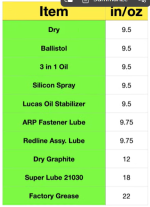
1772140337889.png1772140362446.png
He doesn't say which ratchet he used, but it's some sort of Icon ratchet. He doesn't specify how much of each oil he used either. But interesting, look at Dry at 9.5 inch/ounce, it's less than some of the other lubricants.
I'd like to see some unpolished vs polished numbers as well.
 

YoshiMoshi3

Well-known member
Joined
Nov 2, 2022
Messages
495
I think there are a few things with adding lubes to ratchets:
  1. Reduce wear
  2. Prevent Rust
  3. Reduce friction
Polishing the ratchet internals would lower friction, reducing back drag.
 

Wrench-Polisher

Well-known member
Joined
Aug 29, 2025
Messages
305
Location
DEEP in the rusty rust of rust belt
tools that I use get covered in oil. I live in the rust belt by lake Erie. This basically means I live inside a large dogs mouth as far as moisture levels are concerned.
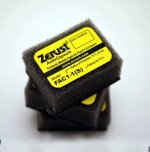
I leave multiple zerust sponges in my tool drawers. This stuff "offgasses" chemical that coats the tools and slows down rust.
 

Attachments

  • Screenshot 2026-02-27 112655.jpg
    Screenshot 2026-02-27 112655.jpg
    43.5 KB · Views: 2
To avoid these ads, REGISTER NOW!
Top Bottom