To avoid these ads, REGISTER NOW!

Direct vent furnace question

ScaldedDog

Well-known member
Joined
Jan 15, 2008
Messages
1,065
Location
Sedalia, CO/NSB, FL
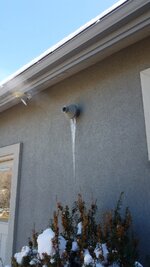
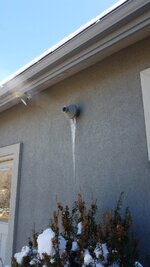
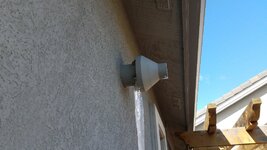
Does the venting on this direct vent furnace look right? I've had direct vent water heaters vented horizontally like this, and got no moisture bleeding over into the intake side, as is obviously happening here.

Marka972f6c7755e1195d63b4d73a5d53e82.jpg5b777aeccba4012f32047047ff526937.jpg

Sent from my SM-G935V using Tapatalk
 

Attachments

  • a972f6c7755e1195d63b4d73a5d53e82.jpg
    a972f6c7755e1195d63b4d73a5d53e82.jpg
    110.2 KB · Views: 0
  • 5b777aeccba4012f32047047ff526937.jpg
    5b777aeccba4012f32047047ff526937.jpg
    440.7 KB · Views: 0
To avoid these ads, REGISTER NOW!

brewchief

Well-known member
Joined
Sep 20, 2008
Messages
2,370
Location
Michigan
You shouldn't have water dripping out of the intake side of that concentric vent. Check and see it the cap is glued on or if it was just press fit, the one pic makes it look like it's not 100% on. Those caps can be secured with a screw instead of gluing but that allows for the possibility of some water seeping back at the joint.

Sent from my SM-G965U using Tapatalk
 
OP
S

ScaldedDog

Well-known member
Joined
Jan 15, 2008
Messages
1,065
Location
Sedalia, CO/NSB, FL
Thanks man. This is a new-to-us-home, and it hadn't occured to me the cap may not be glued on. When it stops snowing sideways I'll get out and check it.

Can these concentric vents be extended easily? I'd like this to vent vertically and above the roof line. As is, the vent faces into the wind most of the time, and the condensation makes an icy mess on the adjacent patio and gutter.

Mark

Sent from my SM-G935V using Tapatalk
 

danski0224

Well-known member
Joined
Jan 29, 2005
Messages
13,506
Location
Near Naperville, IL
The ice is probably from exhaust condensate weeping through the unglued joint.

Extended as in continuing it out further and then up? Bad idea.

It's hard to judge distances, but it certainly doesn't look like it is low enough under the soffit to meet the installation requirements listed in the instruction manual.

Edit: in the second picture, it looks like the inner PVC is not pushed firmly against the cap, leaving a gap for moisture to collect and then drip back along the inner surface of the cone and out. This is the only logical explanation.

Another possibility is that your house is under positive pressure, and indoor air is being pushed outside while the equipment is off, and is the condensating on the inlet cap. Possible, but the scenario above is much more likely.
 
Last edited:

brewchief

Well-known member
Joined
Sep 20, 2008
Messages
2,370
Location
Michigan
Install manuals I've seen specify a clearance below the soffit equal to or greater then the depth of the soffit. A 12" soffit would require a 12" vertical clearance.

Concentric vents are not designed to have any additional pipe or fittings added, if you to get it out of the way you could go vertical through the roof inside and completely eliminate the vent through the wall.

Sent from my SM-G965U using Tapatalk
 

Showkey

"MEMBER EMERITUS"
Joined
Aug 9, 2014
Messages
8,638
Location
Wausau WI
Install manuals I've seen specify a clearance below the soffit equal to or greater then the depth of the soffit. A 12" soffit would require a 12" vertical clearance.

Concentric vents are not designed to have any additional pipe or fittings added, if you to get it out of the way you could go vertical through the roof inside and completely eliminate the vent through the wall.

Sent from my SM-G965U using Tapatalk


Then the ice and vapor condensate will be on the roof forming an ice build eventually into an ice dam ........really really bad idea !
 
OP
S

ScaldedDog

Well-known member
Joined
Jan 15, 2008
Messages
1,065
Location
Sedalia, CO/NSB, FL
Actually, I had a direct vent boiler that powered my last garage and powered the snowmelt system, vented through the roof, and extending a little less than three feet above it. Worked great, with zero issues.

Mark

Sent from my SM-G935V using Tapatalk
 

yeldogt

Well-known member
Joined
Jan 2, 2012
Messages
18,184
Then the ice and vapor condensate will be on the roof forming an ice build eventually into an ice dam ........really really bad idea !

Typically there is a drain trap -- I forget how they work -- inside the boiler.
 

yeldogt

Well-known member
Joined
Jan 2, 2012
Messages
18,184
Does the venting on this direct vent furnace look right? I've had direct vent water heaters vented horizontally like this, and got no moisture bleeding over into the intake side, as is obviously happening here.

Marka972f6c7755e1195d63b4d73a5d53e82.jpg5b777aeccba4012f32047047ff526937.jpg

Sent from my SM-G935V using Tapatalk

How close is the boiler?

I'm wondering if close --The heat and force of the exhaust is taking more water with it vs when the boiler is further away and the exhaust traveling over a longer run cools a bit more and the water flows back to the boiler and out the pump.

At least you know it condensing and working correctly ..!
 

Attachments

  • a972f6c7755e1195d63b4d73a5d53e82.jpg
    a972f6c7755e1195d63b4d73a5d53e82.jpg
    110.2 KB · Views: 0
  • 5b777aeccba4012f32047047ff526937.jpg
    5b777aeccba4012f32047047ff526937.jpg
    126.1 KB · Views: 0

Showkey

"MEMBER EMERITUS"
Joined
Aug 9, 2014
Messages
8,638
Location
Wausau WI
Typically there is a drain trap -- I forget how they work -- inside the boiler.

I Don’t have concentric vent ........my exhaust gets ice build up on the ground. So I would not want that on the roof.

Had a similar issue with roof vent radon exhaust. Created a huge mess, until I moved the radon vent to the side wall.
 

danski0224

Well-known member
Joined
Jan 29, 2005
Messages
13,506
Location
Near Naperville, IL
Then the ice and vapor condensate will be on the roof forming an ice build eventually into an ice dam ........really really bad idea !

This does not happen.

Certainly not under normal and expected conditions and within proper installation guidelines.

Contractors (residential) typically do not use a concentric kit due to the added cost.
 

danski0224

Well-known member
Joined
Jan 29, 2005
Messages
13,506
Location
Near Naperville, IL
I Don’t have concentric vent ........my exhaust gets ice build up on the ground. So I would not want that on the roof.

Had a similar issue with roof vent radon exhaust. Created a huge mess, until I moved the radon vent to the side wall.

A condensing furnace/boiler exhaust has a lot of moisture in it, and the temperature is much lower than an 80% AFUE appliance.

The exhaust piping is supposed to be pitched back to the furnace.

The exhaust piping in an attic space is supposed to be insulated with Armaflex.

Your radon exhaust is also moisture laden, and most likely should be insulated.

Sometimes, putting a 3x2 reducer on the outlet forces the damp air a little further away and minimizes these issues.
 

yeldogt

Well-known member
Joined
Jan 2, 2012
Messages
18,184
I Don’t have concentric vent ........my exhaust gets ice build up on the ground. So I would not want that on the roof.

Had a similar issue with roof vent radon exhaust. Created a huge mess, until I moved the radon vent to the side wall.

I use concentric for side exit -- if not possible ... I do a single exhaust on the roof and the intake on the side.

On long runs the exhaust can get cool -- so you do want insulation if it goes through an unheated attic ... they can plug up with ice
 
To avoid these ads, REGISTER NOW!

Jackfre

Well-known member
Joined
Dec 26, 2010
Messages
4,411
Location
N CA
Exhaust gases are saturated air. What does the install manual say about grading the vent, either back to the unit or to the outside. I notice the ice is not impeding the operation of the appliance, but it may. I will use the Rinnai DV Wall Furnace as an example because I know it well. It has a concentric vent and must terminate graded to the outside. It does not freeze up unless the vent is level or pointing up. IN that condition the condensate rather than dripping off the bead at the end of the vent it flows back around it, down the bell on the vent to the CA intake. It then freezes the inlet side, locking out the appliance. The solution is to reset the vent to manuf specs.
Also, do check the clearances on the soffit. It appears that you have good velocity of the exhaust plume fro the pictures, but confirm that clearance. The clearance on the Rinnai tankless DV water heaters is three ft below and overhang. That is not a fire clearance. It is to prevent the re-circulation of exhaust gases back into the intake. What does the manual say and what is the appliance?
 

danski0224

Well-known member
Joined
Jan 29, 2005
Messages
13,506
Location
Near Naperville, IL
The clearance on the Rinnai tankless DV water heaters is three ft below and overhang.

This is what I have seen... certainly 30". It's in the venting instructions, and the manufacturers provide several pages now of information.

Unfortunately, that information has to be read and followed. :bounce::beer:
 
OP
S

ScaldedDog

Well-known member
Joined
Jan 15, 2008
Messages
1,065
Location
Sedalia, CO/NSB, FL
I'm not sure I have a manual for this furnace, but the vent is only about 18" below the soffit, and has been since house was built in 2005, or so.

Mark

Sent from my SM-G935V using Tapatalk
 

danski0224

Well-known member
Joined
Jan 29, 2005
Messages
13,506
Location
Near Naperville, IL
If you have this thing called the Internet, and this other thing called Google, you can find an installation manual. Usually.

Some brands it is difficult.

But, anything that is condensing will have similar vent instructions, with 2 pages of a house diagram with required clearances.
 

Showkey

"MEMBER EMERITUS"
Joined
Aug 9, 2014
Messages
8,638
Location
Wausau WI
A condensing furnace/boiler exhaust has a lot of moisture in it, and the temperature is much lower than an 80% AFUE appliance.

The exhaust piping is supposed to be pitched back to the furnace.

The exhaust piping in an attic space is supposed to be insulated with Armaflex.

Your radon exhaust is also moisture laden, and most likely should be insulated.

Sometimes, putting a 3x2 reducer on the outlet forces the damp air a little further away and minimizes these issues.

Come to the north.......every radon vent has a stalagmite either on the ground or on the roof. The air is moisture laden and about 40* so in 10* and below a small cloud forms at the vent. They drip and form ice by their very nature. The ice is bad news on the roof as the 24/7 large volume of air.

Don’t have pictures but my radon stalagmite post can get 4’-6’ tall........a true work of yard art
 

brewchief

Well-known member
Joined
Sep 20, 2008
Messages
2,370
Location
Michigan
https://images.app.goo.gl/5k3jNEHobjswiQ6v7

This is the vent clearance chart I have seen with the equipment I deal with and many other brands, this is for direct vent(two pipe) equipment only.


In my 25 years or so of working as an HVAC installer I have never seen a roof termination that had any significant ice buildup except for a few that the homeowner knew better then the engineer that specced the termination and added extra elbows to keep the rain out of something that wouldn't be bothered by a few rain drops.

Sent from my SM-G965U using Tapatalk
 
Last edited:

Showkey

"MEMBER EMERITUS"
Joined
Aug 9, 2014
Messages
8,638
Location
Wausau WI
I have not seen roof ice build up from furnace vent either.......but.......I sure as hell would not put another hole in the roof to solve the OP none problem.

The whole concept of through the wall venting is to avoid roof penetrations.
 

cosmopedro

Well-known member
Joined
Mar 21, 2016
Messages
122
Location
Southwest VT
Install manuals I've seen specify a clearance below the soffit equal to or greater then the depth of the soffit. A 12" soffit would require a 12" vertical clearance.

Concentric vents are not designed to have any additional pipe or fittings added, if you to get it out of the way you could go vertical through the roof inside and completely eliminate the vent through the wall.

Sent from my SM-G965U using Tapatalk


Agree... plus, it looks to ME like it’s venting kinda close to both windows (or doors?) and, if the boiler’s used for hot water could be a carbon monoxide issue in warmer weather when windows might be open?

Venting straight up removes one 90° elbow from the venting distance which might by itself help because the intake/exhaust flow will increase.

YMMV


Sent from my iPhone using The Garage Journal mobile app
 

cosmopedro

Well-known member
Joined
Mar 21, 2016
Messages
122
Location
Southwest VT
https://images.app.goo.gl/5k3jNEHobjswiQ6v7

This is the vent clearance chart I have seen with the equipment I deal with and many other brands, this is for direct vent(two pipe) equipment only.


In my 25 years or so of working as an HVAC installer I have never seen a roof termination that had any significant ice buildup except for a few that the homeowner knew better then the engineer that specced the termination and added extra elbows to keep the rain out of something that wouldn't be bothered by a few rain drops.

Sent from my SM-G965U using Tapatalk


Brewchief’s chart is from the national standard for gas appliances, so it applies, period... UNLESS you have a stupid/stubborn inspector (AHJ) who follows the “we’ve always done it this way” school of thought...

Another thought: if - IF - the installer or previous owner made adjustments that forced the burner to operate at temps above the condensing range, there could be more moisture in the airstream?


Sent from my iPhone using The Garage Journal mobile app
 

Jackfre

Well-known member
Joined
Dec 26, 2010
Messages
4,411
Location
N CA
NFPA 54 Clearances on a direct vent are:
Less than 50 kbtu= 9" to a door or window. Min 12" to ground...or snow level (and that is a hell of a conversation)
More than 50 kbtu= 12" to a door or window. Same on ground.
You have to exercise care in inside and outside corners. Clearances on most manuf will be 12". I have had problems on inside corners especially as you can in certain conditions watch the exhaust plume curl right back into the intake side. I had one on an outside corner on a 180,000 kbtu tankless that was right on the 12" to the outside corner. It would rumble on start-up. I had that thing apart a couple times and could not find anything amiss. I was about to authorize pulling the unit and when walking out of the basement saw a manila folder sitting on a box. For no particular reason I picked it up went outside, rolled up the folder and put it on the exhaust pipe, creating an extension tube. Smooth as silk on start up. Dumb luck and I'll take it. Anyway, the eddy currents were leaking havoc on that system.
 

Jackfre

Well-known member
Joined
Dec 26, 2010
Messages
4,411
Location
N CA
The vent may meet "Code" but, IMHO should not have a tail of ice hanging from it.
Agreed, but every system has a personality and some side wall DV's will on occasion have an icicle. It is definitely a problem if it can build up to the point of tripping the pressure switch causing a no heat. If it is intermittent and falls off itself I would not be terribly concerned. I don't know what the install spec is so cannot say it is improperly installed.
 
OP
S

ScaldedDog

Well-known member
Joined
Jan 15, 2008
Messages
1,065
Location
Sedalia, CO/NSB, FL
I figured out what was wrong tonight. Sure enough, the cap was not glued on. It was seated firmly on the outside intake pipe, but the vent pipe had slid back into the cap about a quarter of an inch, and the lip at the end of the cap forced the condensate back and out the intake vent, resulting in icicles when it's cold out.

I got it back in correct position, but only siliconed the pipe/cap joint, as I found other problems that need fixed inside. The intake pipe inside the house is cracked in two places. One has been "repaired" with clear packing tape, but the other is just cracked. The net is that I'm probably going to have the thing re-vented, and may have it vented out the roof to fix the constant cloud-on-the-patio issue. I already need to have some roof and stucco repairs done, so the net cost, if I can coordinate all the help, shouldn't be too bad.

Many thanks for everyone's help!! As many of you know, any new-to-you house comes with a lot of mysteries, and you helped me solve this one.

Mark
 

Jackfre

Well-known member
Joined
Dec 26, 2010
Messages
4,411
Location
N CA
Good find. Well done on your part. I have always been amazed at how decisions are made as to vent termination locations. "Well, we'll just stick it our here. What could go wrong?"
 
To avoid these ads, REGISTER NOW!
Top Bottom