n8n
Well-known member
Good afternoon folks,
First of all I apologize as this is going to be long, but I don't know how this is going to make sense unless I explain why I'm looking at these now.
So I have a little project that I want to do. As I have been playing with audio gear a lot lately, I occasionally need to mess with a turntable. Now typically a cartridge will be mounted to a headshell with either M2.5 or 3-48 (I think? It's a number 3 for sure, obviously will confirm before going at it.) Usually M2.5 is used but some headshells like an old AR XA (which I have) use a threaded brass insert in a blind hole for each screw so not only MUST I use a #3 screw, but I need a pretty specific length, at least within 1/8" or so.
So here's my thought. Once upon a time, I collected a pile of vintage pressed brass switch and receptacle plates for an old house, and when I went to install them, I found I needed several different lengths of screw. So I bought a box of solid brass oval head screws from McMaster-Carr that was the longest length I needed, and when that was too long, I'd cut them down using a cheap crimp tool. I was thinking of doing the same with stainless filister head screws. I've already determined that the washers that come with cartridge hardware kits are most likely Mil-Spec NAS620 #3 washers (M2.5 and 3-48 being close enough they will work on both.)
So my first thought was that someone ought to make a screw cutting tool for these because this shouldn't be an odd request. Well, there is one for metric that ought to work, but it's $44
https://www.amazon.com/gp/product/B000YTAAUW/?tag=atomicindus08-20
Every similar tool I've found, for metric, will cut M2.6 and I cannot find a fractional one that has a smaller size than 4-40. My next thought, then, would be to buy one of those tools where the pivot is a bolt so it can be disassembled, and just drill two new holes in it to make cutters for the sizes that I want.
So I look it up and the thread pitch for M2.5 is not 0.5 as you'd expect but .045 (????) for a theoretical tap drill of 2.05mm. which is 0.0807".
I have letter, number, and fractional drill bits but no metric. I've never even heard of a 2.05mm drill bit although now that I look I see that they in fact exist, presumably for just this purpose. It certainly isn't part of any set I've seen as they usually step by 0.5mm, or 0.1mm if you buy the big fancy set.
I do have both my grandfather's old Ace Super Set (fractional) and a newer Irwin Super Set (both fractional and metric) but only have letter, number, and fractional drill bits.
To tap a M2.5 hole in what I assume is at least semi-hardened steel, what do I do?
a) use a #46 (.0810") drill bit and let it be a little sloppy
b) use a #47 (.0785") drill bit and hope the tap doesn't break
c) stop being such a cheap illegitimate child and buy the damn 2.05mm bit, and leave it in the box with my tap and die set as that's literally the only time it'd be used.
d) oh, come on, just pay the $10 for a hardware kit every time you get a new headshell, why are you doing things the hard way? (that doesn't solve the AR XA problem though, and that's the simplest - read most reliable - turntable I have and yet at the same time it sounds great, and I'm not the only person who thinks so.) In case you aren't familiar, the hardware kit usually has a bunch of different M2.5 screws with a pair of each length, stepping up by 2mm or so increments so you can pick the right ones for the cartridge/headshell combo that you have.
I'm leaning toward a) as being just fine as the difference is only .0003"
sidebar question: being a completist I now am thinking having a metric drill bit set might be good anyway if I ever get back into doing serious work, as this is the Way of the Future (tm). My existing drill bits are a mix of old stuff from an employer 20 years ago, whatever they have in the pick a bins at Fastenal to replace missing or broken ones, and a number set that I bought from McMaster-Carr as I didn't have any of those at all (I think maybe Chicago-Latrobe?)
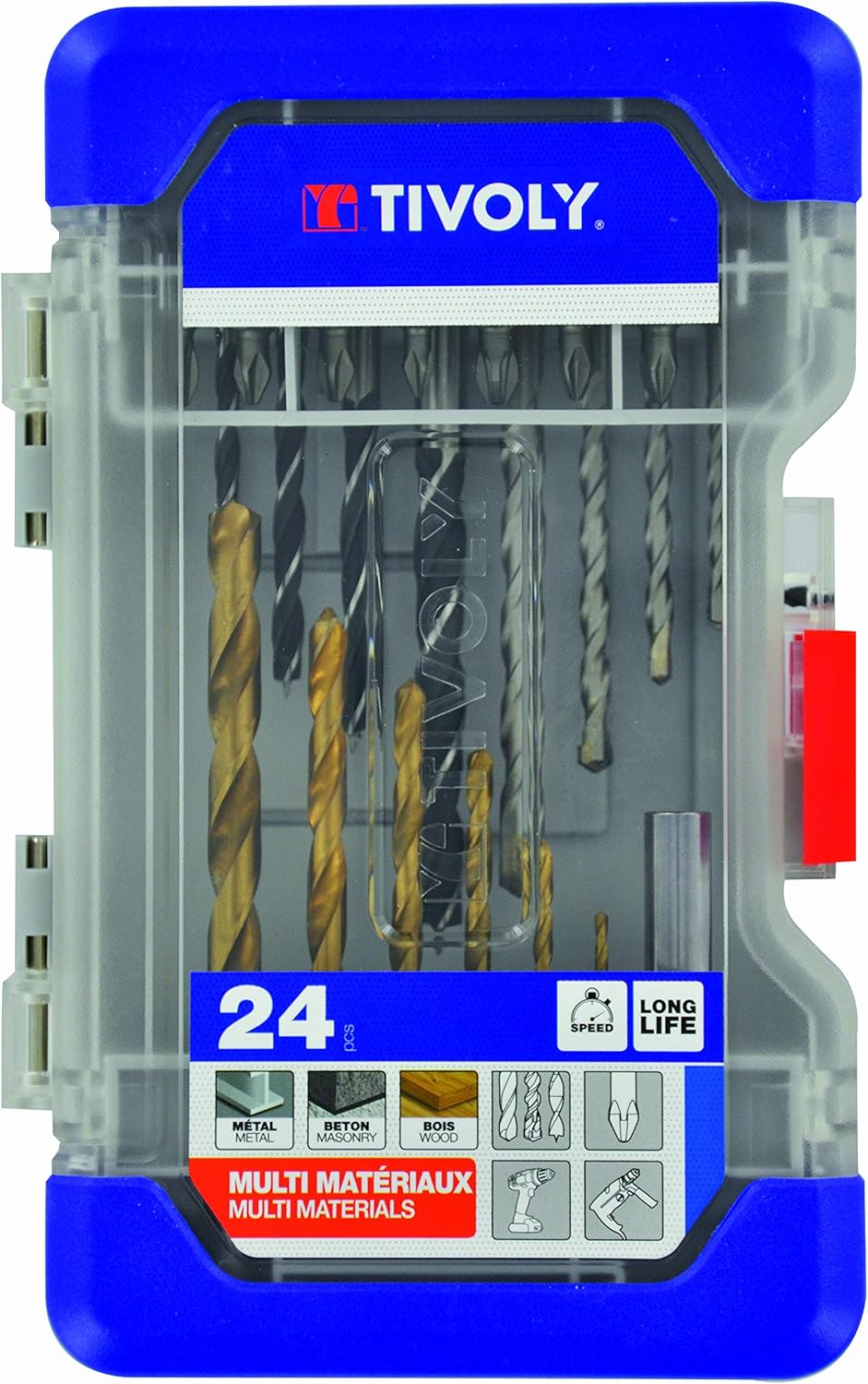
What brand would you recommend? Thinking just bog standard black oxide, 118 degree, jobber length. 0.5mm steps good enough for having to drill and tap a hole maybe once a year and most likely on automotive stuff? Or pop for a 0.1mm set?
Thanks for reading my long winded post and for any opinions.
First of all I apologize as this is going to be long, but I don't know how this is going to make sense unless I explain why I'm looking at these now.
So I have a little project that I want to do. As I have been playing with audio gear a lot lately, I occasionally need to mess with a turntable. Now typically a cartridge will be mounted to a headshell with either M2.5 or 3-48 (I think? It's a number 3 for sure, obviously will confirm before going at it.) Usually M2.5 is used but some headshells like an old AR XA (which I have) use a threaded brass insert in a blind hole for each screw so not only MUST I use a #3 screw, but I need a pretty specific length, at least within 1/8" or so.
So here's my thought. Once upon a time, I collected a pile of vintage pressed brass switch and receptacle plates for an old house, and when I went to install them, I found I needed several different lengths of screw. So I bought a box of solid brass oval head screws from McMaster-Carr that was the longest length I needed, and when that was too long, I'd cut them down using a cheap crimp tool. I was thinking of doing the same with stainless filister head screws. I've already determined that the washers that come with cartridge hardware kits are most likely Mil-Spec NAS620 #3 washers (M2.5 and 3-48 being close enough they will work on both.)
So my first thought was that someone ought to make a screw cutting tool for these because this shouldn't be an odd request. Well, there is one for metric that ought to work, but it's $44
https://www.amazon.com/gp/product/B000YTAAUW/?tag=atomicindus08-20
Every similar tool I've found, for metric, will cut M2.6 and I cannot find a fractional one that has a smaller size than 4-40. My next thought, then, would be to buy one of those tools where the pivot is a bolt so it can be disassembled, and just drill two new holes in it to make cutters for the sizes that I want.
So I look it up and the thread pitch for M2.5 is not 0.5 as you'd expect but .045 (????) for a theoretical tap drill of 2.05mm. which is 0.0807".
I have letter, number, and fractional drill bits but no metric. I've never even heard of a 2.05mm drill bit although now that I look I see that they in fact exist, presumably for just this purpose. It certainly isn't part of any set I've seen as they usually step by 0.5mm, or 0.1mm if you buy the big fancy set.
I do have both my grandfather's old Ace Super Set (fractional) and a newer Irwin Super Set (both fractional and metric) but only have letter, number, and fractional drill bits.
To tap a M2.5 hole in what I assume is at least semi-hardened steel, what do I do?
a) use a #46 (.0810") drill bit and let it be a little sloppy
b) use a #47 (.0785") drill bit and hope the tap doesn't break
c) stop being such a cheap illegitimate child and buy the damn 2.05mm bit, and leave it in the box with my tap and die set as that's literally the only time it'd be used.
d) oh, come on, just pay the $10 for a hardware kit every time you get a new headshell, why are you doing things the hard way? (that doesn't solve the AR XA problem though, and that's the simplest - read most reliable - turntable I have and yet at the same time it sounds great, and I'm not the only person who thinks so.) In case you aren't familiar, the hardware kit usually has a bunch of different M2.5 screws with a pair of each length, stepping up by 2mm or so increments so you can pick the right ones for the cartridge/headshell combo that you have.
I'm leaning toward a) as being just fine as the difference is only .0003"
sidebar question: being a completist I now am thinking having a metric drill bit set might be good anyway if I ever get back into doing serious work, as this is the Way of the Future (tm). My existing drill bits are a mix of old stuff from an employer 20 years ago, whatever they have in the pick a bins at Fastenal to replace missing or broken ones, and a number set that I bought from McMaster-Carr as I didn't have any of those at all (I think maybe Chicago-Latrobe?)
What brand would you recommend? Thinking just bog standard black oxide, 118 degree, jobber length. 0.5mm steps good enough for having to drill and tap a hole maybe once a year and most likely on automotive stuff? Or pop for a 0.1mm set?
Thanks for reading my long winded post and for any opinions.